Scientists have found the oldest known poisoned arrows, dating back 60,000 years. These small quartz arrowheads unearthed in South Africa are laced with plant toxins. This means the use of poison for hunting started tens of thousands of years earlier than we thought.
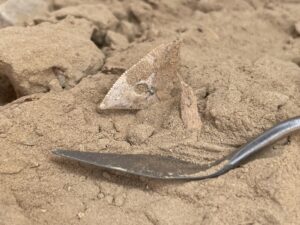
The arrow tips came from the Umhlatuzana Rock Shelter in KwaZulu-Natal Province, South Africa. The site is rich in Stone Age artifacts, including innovative hunting tools from early Homo sapiens.
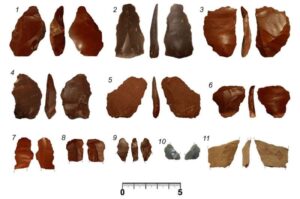
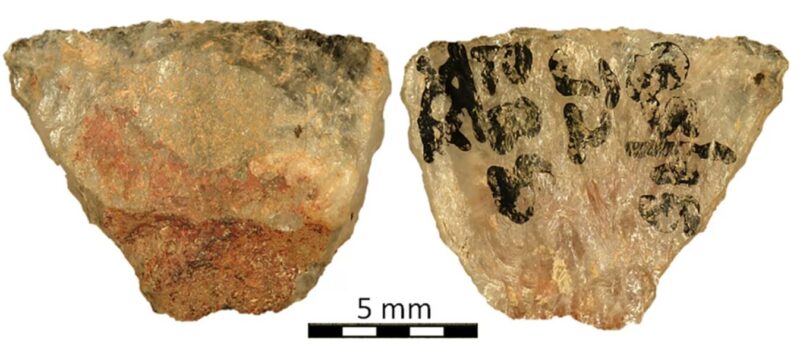
Paleontologists originally excavated the unusually small arrowheads decades ago. Their size would not inflict a significant injury, but they could have pierced the skin and delivered poison.
Recent chemical analysis has revealed toxic plant compounds on the surfaces of some arrowheads — specifically, the alkaloids buphandrine and epibuphanisine. These compounds come from Boophone disticha, commonly known as the century plant or the poison bulb. For plants like B. distichia, alkaloids serve as chemical defense. Local hunters still use this African plant as a poison.
In humans, the toxins cause nausea, respiratory paralysis, visual impairment, and comas. Hunters do not use them to kill but rather to slow down a prey animal.
“In persistence hunting, poisoned arrows did not usually kill prey instantly,” lead study author Sven Isaksson told CNN. “Instead, the poison helped hunters reduce the time and energy needed to track and exhaust a wounded animal.”
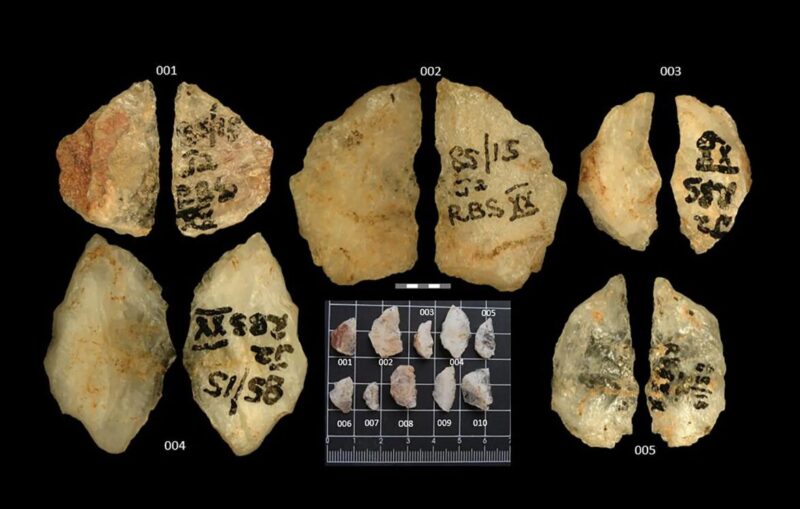
Some of the poison arrowheads. Photo: Isaksson et al., 2026
Passed down for 1000s of years
Using the toxins, ancient hunters would have been able to strike from a distance and track wounded animals as they grew weaker. Such tactics require both technical weapon-making skills and intellectual capacity.
“Understanding that a substance applied to an arrow will weaken an animal hours later requires cause-and-effect thinking and the ability to anticipate delayed results,” explained Isaksson. “The evidence points to prehistoric humans having advanced cognitive abilities, complex cultural knowledge, and well-developed hunting practices.”
Before this find, the earliest poison arrows date back only 6,700 years, to Kruger Cave, also in South Africa. Possible tools used to apply poison to hunting tools have also turned up in South Africa, and these date back 35,000 years. This new discovery pushes the use of such methods back by at least 25,000 years.
What makes this find especially fascinating is that it hints at knowledge of plants and poisons being passed down over millennia. The same poisons on these 60,000-year-old stone tools also turned up on much more recent arrowheads crafted by southern African hunter-gatherers in the 18th century.
“If I speculate, Boophone poison was probably discovered by people eating the bulbs and then becoming sick or dying from it,” co-author Marlize Lombard told New Scientist.
The team now wants to explore other archaeological sites around South Africa to look for even older poisoned arrows.