Brown bear attacks on Japan’s northern island of Hokkaido continue to grow more frequent every year. Depleting food sources and expanding human populations have led to hungry and emboldened bears coming into contact with people. This year alone, there have been 13 recorded fatalities from bear attacks and over 200 injuries.
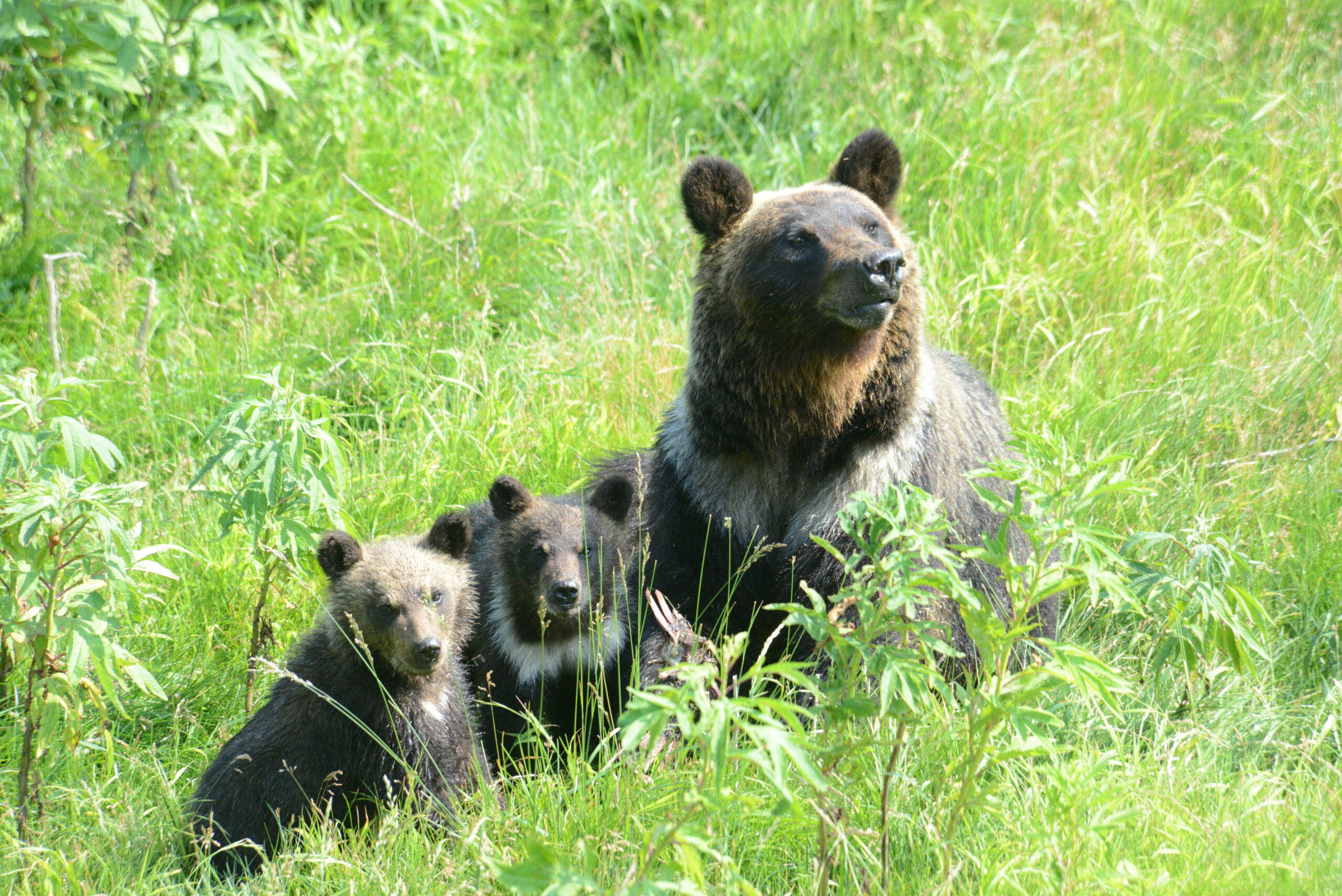
One such incident occurred on August 14 on Mount Rausu. A young man, hiking with a friend, was attacked and killed by a well-known local bear. Officials located the man’s remains the next day and recovered his body as well as a number of personal effects. The bear and her two cubs were killed for the safety of hikers and area residents.
Hokkaido police surrendered his remains and effects to his parents. His watch was among those items, and now his parents have shared with the media the chilling data it captured.
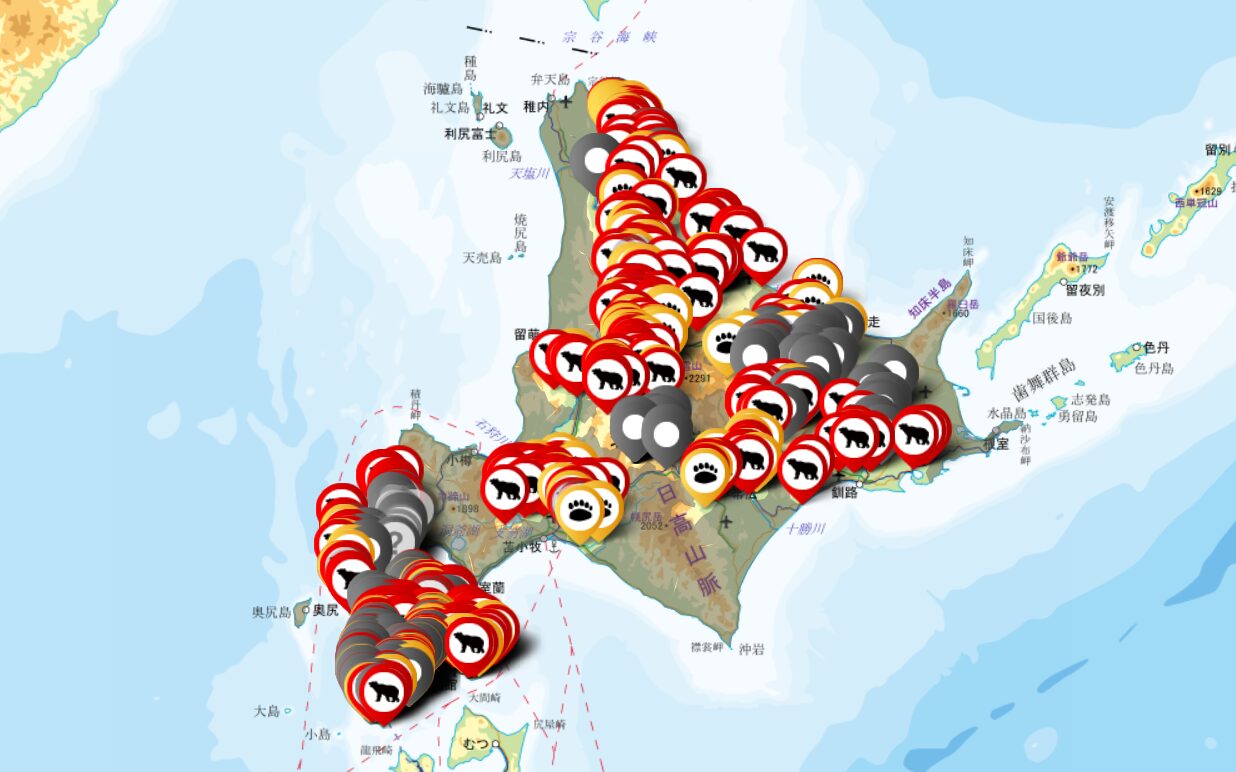
There have been so many bear sightings and incidents that Hokkaido’s bear sighting map is nearly unreadable. Photo: higumap.info
A chronological record of the attack
At around 11 am on August 14, GPS data shows that the watch and its owner suddenly veered off the hiking trail on Mount Rausu. The 26-year-old Tokyo resident was about 200 meters ahead of his hiking partner as they descended from the 1,661m summit. The sudden change in direction that his watch logged was the bear dragging the young man off the trail and down the slope, into a patch of bushes.
The watch circled around this spot in the bushes, seemingly tugged and whirled back and forth. Soon, between 100m and 130m from the trail, the watch stopped detecting a heartbeat. It did not register movement again until around 9 am the next morning. Location data shows the watch moved a few hundred meters further into the bush, as the bear dragged the man’s body.
Later that day, hunters found the three bears, with the mother bear feasting on part of the victim’s body. A hundred meters away, more of his remains were buried in a mound of earth. Brown bears will often bury uneaten food in this way.
The victim’s father, Shinobu Sota, spoke to Japanese media, questioning why nothing was done before the attack. This particular bear was known to be active in the area. She had repeatedly displayed a lack of fear of humans and had even chased another hiker.
In the aftermath of the young man’s death, the bear attacks have continued. As winter arrives, the bears should enter hibernation, but it seems that some remain active. Warmer weather and changing behavior may delay their hibernation, as new incidents have been confirmed even into December.