All climbing above 5,000m in Peru’s Huascaran National Park has been prohibited until the end of March. That includes 6,757m Huascaran, the country’s highest peak, as well as the stunning 5,947m Alpamayo, and the rest of the nevados — 5,000’ers and 6,000’ers — of the Cordillera Blanca.
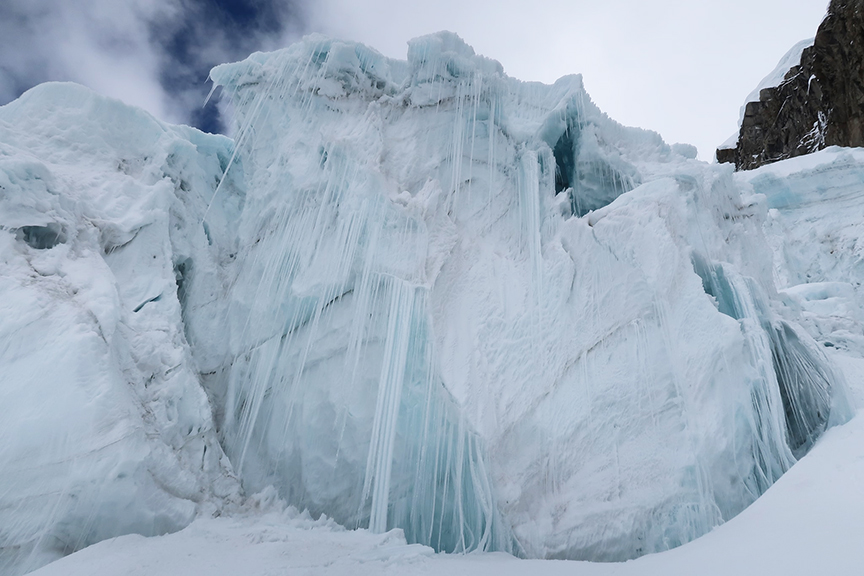
Like other mountain regions worldwide, Peru’s Cordillera Blanca has been affected by climate change. Glacial retreat, more open crevasses, unstable ice, and changing weather have increased the danger for climbers.
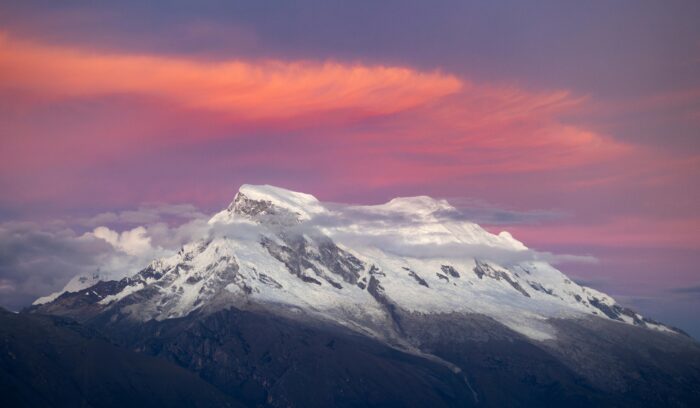
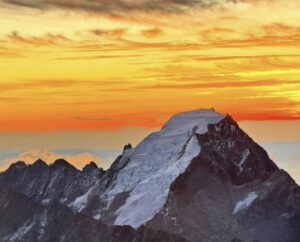
Nevado Huascaran, the highest peak in Peru. Photo: Marek Piwnicki/Pexels
Safety and conservation
Due to this threat, the authorities at Huascaran National Park, which encompasses all the Cordillera Blanca, have decided to “temporarily” stop all climbing on the nevados. The restrictions began on December 24 and will remain until the end of March.
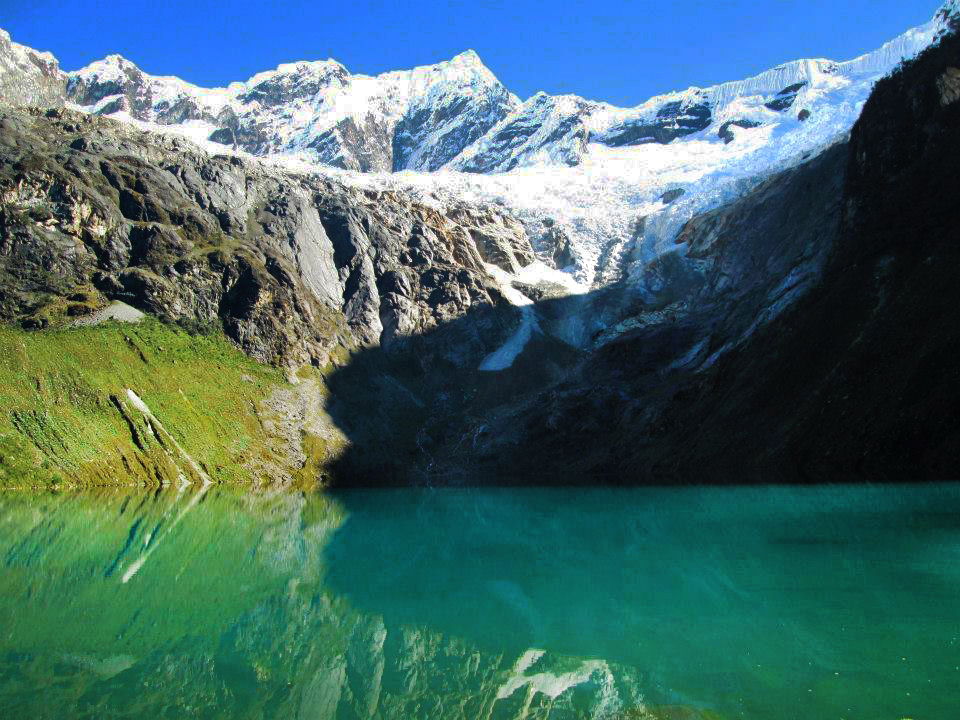
Laguna (lake) Yanarraju was formed between 1930 and 1980 as the Yanarraju Glacier retreated. Photo: Wikipedia
It is important to note that this policy affects only high-altitude climbing. Climbing on lower crags, such as Los Olivos and Hatun Machay, is allowed. The Cordillera Blanca also has treks such as the Quebrada de Santa Cruz, which are popular worldwide and remain open.
Low season
The good news is that this is the rainiest and therefore the least desirable season to climb the region’s nevados. The high climbing season runs from June to August, during the Southern Hemisphere’s winter. The weather is more stable, drier, and the conditions are better.
During the rainy season from November to March, few climbers head for the high peaks, since snow and bad weather are common. Fresh snow can hide crevasses and increase the risk of a fall.
During these months, conditions are better in Ecuador and Colombia to the north, or further south in Chile or Argentina, beyond Peru’s tropical strip, where the summers are hotter and drier.
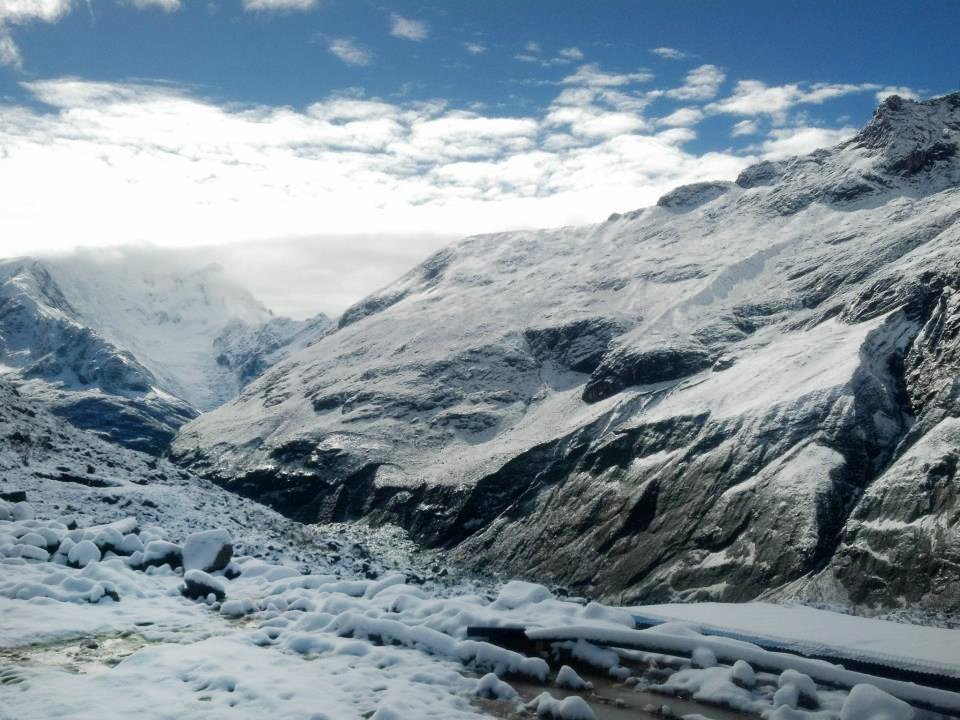
Quebrada Honda in the Cordillera Blanca, covered in fresh snow during the Southern Hemisphere’s summer. Photo: Wikipedia
However, some climbers head to the Cordillera Blanca year-round to attempt the easier peaks, such as Pisco, Ishinca, and Urus. They are out of luck.

Hatun Machay’s rock forest. Photo: Share-explore
Peru’s Cordillera Blanca spans nearly 180km from north to south. It has 663 glaciers, 16 peaks above 6,000m, and 17 above 5,000m, plus 269 lakes and 41 rivers.
Specific changes
In recent years, climbers have warned of collapsing seracs and cornices due to higher temperatures. Fotis Theorachis of Greece highlighted this in a climbing report about Alpamayo in June 2022.

Alpamayo’s delicate-looking summit ridge in 2022. Photo: F. Theorachis
Iker and Eneko Pou of Spain, who have opened over 20 routes in Peru, told ExplorersWeb that conditions have been very dry over the last few years. This has changed the ice profile and the characteristics of numerous routes.
The recent 2025 season was unusual, the brothers said, because of all the snow above 5,500m they witnessed at the end of May.
“Our original plan was to open routes on a 6,000’er, but we had to change our minds when we saw there was much more snow than usual, [beginning at] 5,500m,” Eneko explained. “We even found high avalanche risk, which is rare during the Peruvian winter.”
Two Japanese women became stranded near the summit of Huascaran at the beginning of that season after climbing the overloaded peak. One was rescued, but her climbing partner died.
Bare peaks
On the 5,000m peaks, however, the situation was different. Not long ago, the Pou brothers climbed Nevado Churup (5,493m). During the 1980s and 90s, it was a classic ice-and-snow peak. No longer.
“Due to rising temperatures, it is currently not so popular because the rock that is now exposed is rotten and hardly climbable,” they explained.
The brothers climbed the southwest face and had to deal with lots of fragile rock and risky rappels on descent.
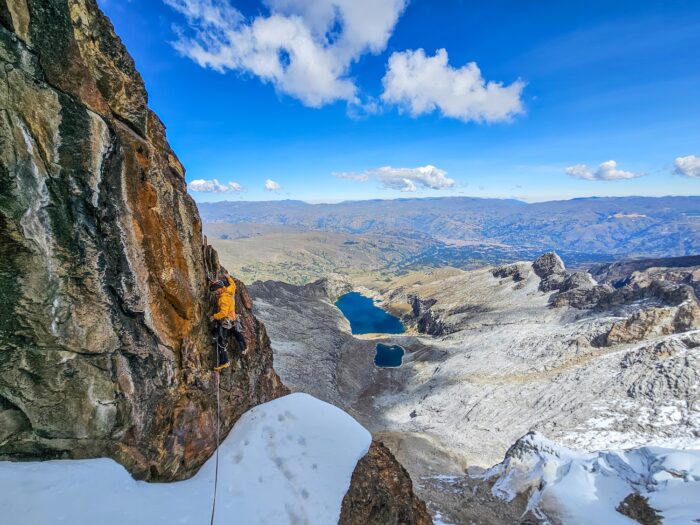
Iker Pou on Churup in 2025. Photo: Eneko Pou