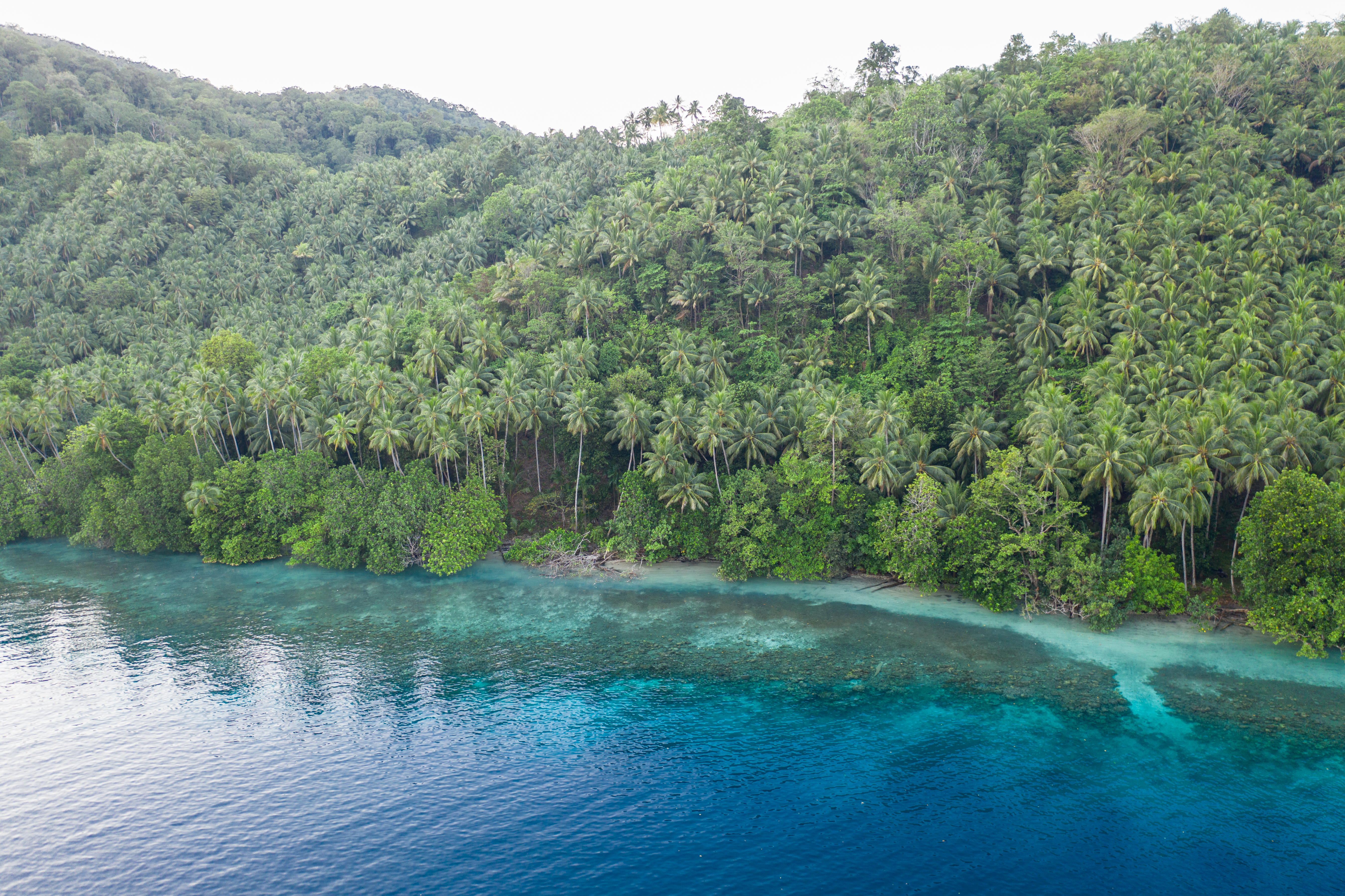
In the summer of 1880, dozens of impoverished families crammed themselves into immigrant ships bound for the prosperous, bustling settlement of New France. Unfortunately for them, New France did not actually exist. Instead, a French con man named De Rays was about to strand them in an isolated, undeveloped jungle.
The De Rays Expeditions saw a series of ships dropping off unprepared hopefuls, who were left to fend for themselves. They battled starvation, disease, and the elements. The con man himself absconded with the cash, forcing the survivors to make a desperate escape attempt in order to save themselves.
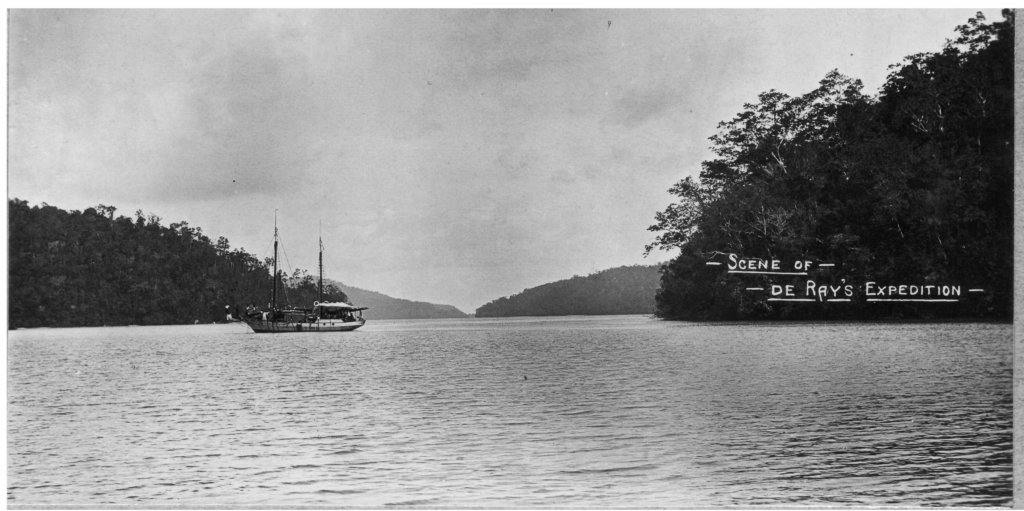
The glorious kingdom of New France. Photo: Naval Historical Society of Australia
The promised land
Jean Baptiste Octave Mouton was 14 when he and his father boarded the Nouvelle Bretagne. From a poor family, Mouton had dropped out of school three years earlier to work as a barber. When his father learned of New France through the colony’s official newspaper, he was “quite taken” with the scheme.
It went as follows: Far away across the ocean, there was a tropical paradise under the control of one Marquis de Rays. Propaganda described New France as a land of “perpetual springtime,” where natural disasters and epidemics were practically unknown, and the soil was extremely fertile.
The Marquis sold land in the colony to shareholders, who would then profit from having colonists work it. The colonists, meanwhile, would escape the destruction and economic depression of the recent Franco-Prussian War. They could pay a fee of 1800 francs, about $300 then and $7,500 today. In exchange, they got passage to the colony, a four-bedroom house, and 20 hectares of cleared, arable land.
Those who couldn’t pay could work as indentured servants in the colony for five years, and then receive the same land and house as paying colonists. The bulk of hard labor, the Marquis assured them, would be done by indigenous locals, Chinese or Malay laborers, and other ethnic minorities at the bottom of the social ladder.
As he recorded in his memoirs, Mouton and his father were interviewed by the Marquis in Paris, then put up in various boarding houses, being shuttled back and forth across Europe with other prospectives, before finally setting sail.
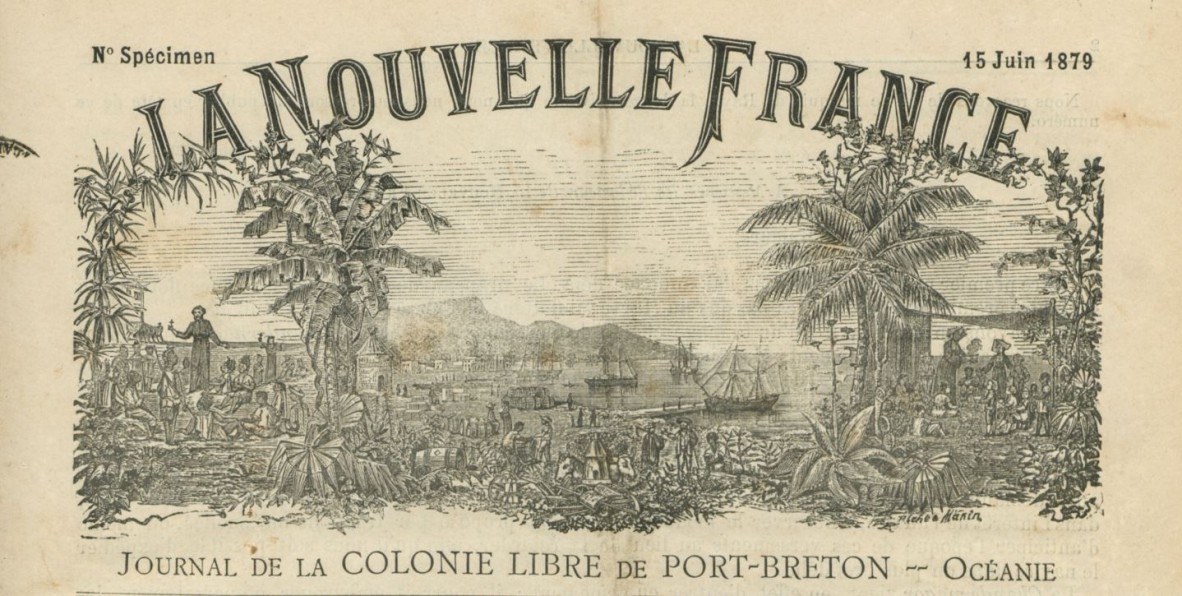
The colony newspaper shows a bustling and prosperous port in New France. Photo: State Library of Queensland
The false Marquis
It’s often said that America loves a con man. But actually, if there is one other nation that consistently produces and celebrates this archetype, it is the French. This particular French con man was born in 1832 on his father’s estate in Finistère, where he was baptized Charles Marie Bonaventure De Rays.
He inherited his father’s title only a few years later. Shockingly, he wasn’t lying about being a nobleman. From a young age, allegedly inspired by an encounter with a fortune teller, De Rays was convinced he was destined for greatness. His school friends called him “the little colonist” because of his utopian schemes. Hint: if your friend is called “the little colonist,” you should probably not be friends with them.
The ambitious Marquis spent his early years gallivanting in search of fame and fortune, spending time in the United States, Senegal, Madagascar, and French Indo-China — now Vietnam, Laos, and Cambodia. Unsuccessful, he eventually returned to his estates, married, and had several children.
But the chaos of the war years seemed to stir him up again. Perhaps he was bored, or perhaps he knew that desperate people meant opportunity for the enterprising and unethical. In 1877, he pointed at an ostensibly unclaimed area of the map, spanning from the Solomon Islands to eastern New Guinea. This, he said, was his possession, and he was its king.
This may seem ridiculous to us now, but this is basically the same way that King Leopold got the Congo, and the world let Belgium get away with it for nearly a century.
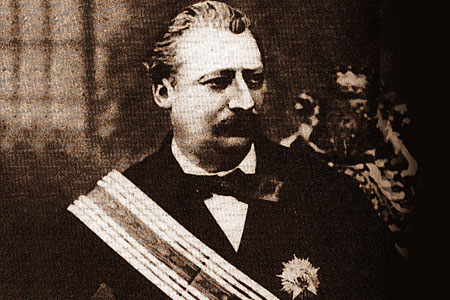
The self-proclaimed ‘King Charles of New France.’ Photo: Musée Maritime de Nouvelle-Calédonie
Recruiting for Utopia
Now the king needed subjects for his kingdom. De Rays began energetically planning and advertising his colonial venture. There was the aforementioned newsletter, written by a Belgian doctor, friend, and accomplice to the Marquis, Dr. Paul de Groote.
De Rays’ recruiters spread far and wide, luring in desperate Europeans. Milanese agent Edwige Schenini was especially successful, signing up hundreds of Italians. As well as the Italians and French, Spaniards, Belgians, Swiss, and Englishmen signed onto the venture.
A kingdom modeled on the French ancien régime would be incomplete without the church. De Rays offered a Catholic missionary organization free passage, food, and housing, as well as privileged rank within the colony. These religious officials would, he imagined, form the administrative body of New France.
The first ship he chartered was the Chandernagore. It spent months bouncing from port to port, looking for a government willing to be complicit in his plans. Having been kicked out of French and Belgian ports, it finally set sail from Antwerp in September 1879. In addition to 82 passengers, the ship carried agricultural, distilling, and manufacturing equipment, a year’s worth of food, 180,000 bricks, and various tools and machines.
The Marquis himself was not on board, but assured his representative, Titeu de la Croix, that he’d join them shortly.
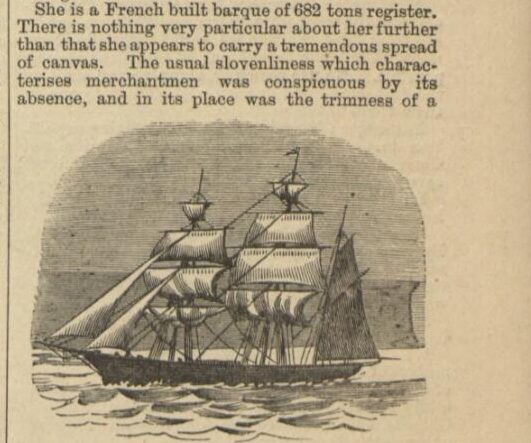
The Chandernagore caused a minor stir in Sydney on the return journey, where it was mistaken for a pirate vessel. Photo: The Sydney Bulletin, March 1880
Expectation versus reality
The captain was an American named MacLaughlin, who, to his credit, seemed determined to make the best of things, despite constant setbacks. There was no doctor on board, and they had no health papers, preventing them from docking for resupply along the way. The navigator, accounts claim, was a violent drunk who had to be occasionally tied to the mast until he calmed down, and MacLaughlin and De la Croix hated each other.
The Chandernagore sailed into Likiliki Bay in January 1880. They soon discovered that New France, while it may have had a national anthem and a king, didn’t have, well, buildings.
The Marquis had claimed that there were already schools, roads, factories, a hospital, and a cathedral. In reality, New France’s Port Breton was a jungle-covered spit of land on the island of New Ireland in the Bismarck Archipelago. Their landing site was covered in dense jungle, with spongy coral soil unsuited to their agricultural demands.
After a perfunctory poke around, De la Croix took their drunken navigator and got right back on the ship, sailing off. MacLaughlin and the remaining settlers were left to make the most of it.
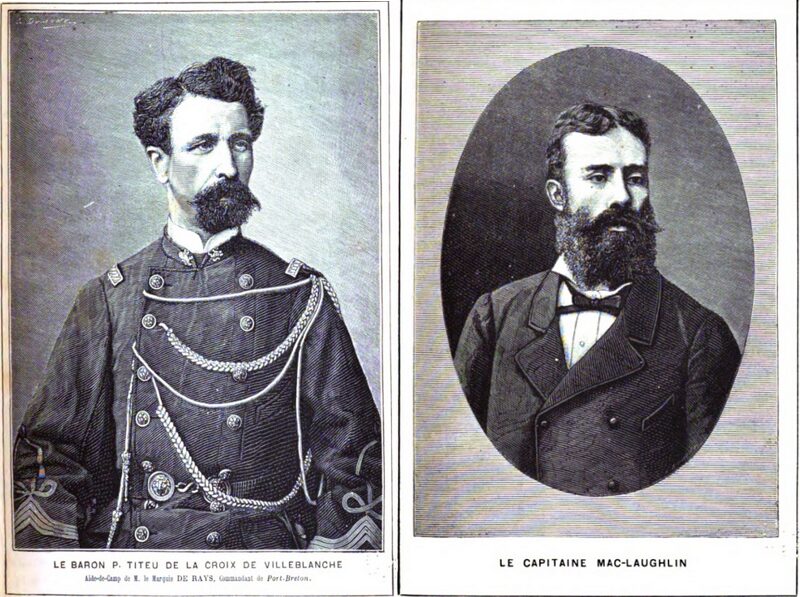
Captain MacLaughlin and would-be Governor De la Croix. Photo: Nouvelle-France newsletter, 1880
Fresh meat
While his subjects were quarreling, losing hope, and acquiring tropical diseases, the king of New France was already loading more settlers into ships.
The steamer Genil set off from Barcelona in March of 1880. Commanded by the brutal Captain Rabardy, most of the settlers jumped ship in Singapore in protest of the captain’s harsh punishments. With 25 new Malay recruits and seven remaining colonists, Rabardy reached Port Breton in August.
This time, in addition to finding a jungle in place of New France, they found the ruins of the first expedition. Out of provisions and unable to feed themselves, or to erect strong, warm shelters, and riddled with fever, MacLaughlin and company had sent a metaphorical SOS to a missionary organization on the Duke of York Islands, some 100 kilometers away.
The missionary leader George Brown had found them a pitiful lot, with 27 of 89 already dead. He thought that being French, they were uniquely prone to homesickness, which had sunk the venture. Sure, I guess. Less than half of the original Chandernagore lot survived. The rest died or were lost to the jungle, which is to say they also died but more mysteriously.
With so few people left, the Genil waited at Port Breton for the next, much larger ship: the India.
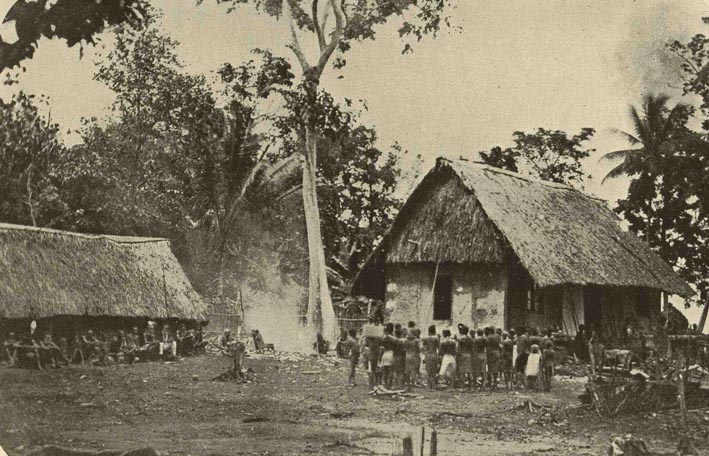
The mission house at Port Hunter, on Duke of York island. Photo: Wikimedia Commons
The ordeal of the Italians
The colonists aboard the India, which left Barcelona in July of 1880 under Colonel Le Prevost, were mostly Italian peasants. Unlike the earlier shipments of primarily young men, the India carried around fifty families, including women, children, and the elderly. It took three difficult months to reach Port Breton. During this time, many of the settlers died of disease, privation, or accident.
Once they arrived, their struggles compounded. Once again, they found they had been lied to. Though they worked long and hard to establish infrastructure and agriculture in the deserted swamp, conditions wore them down quickly. The heat was intense, the rain torrential, and the soil unsuited to the crops and techniques they knew. Mosquito-and water-borne illness ripped through the population, while food supplies were inedible.
It is worth noting, by the by, that the island was already populated, and had been for some 33,000 years. The Port Breton site was in the territory of the Lak people, though they largely avoided the immediate area due to it being, well, a bad place to live. While contemporary newspaper reports contain lurid mentions of settlers being “eaten by headhunters,” there isn’t strong evidence of significant conflict between the groups up to this point. The settlers were dying well enough on their own.
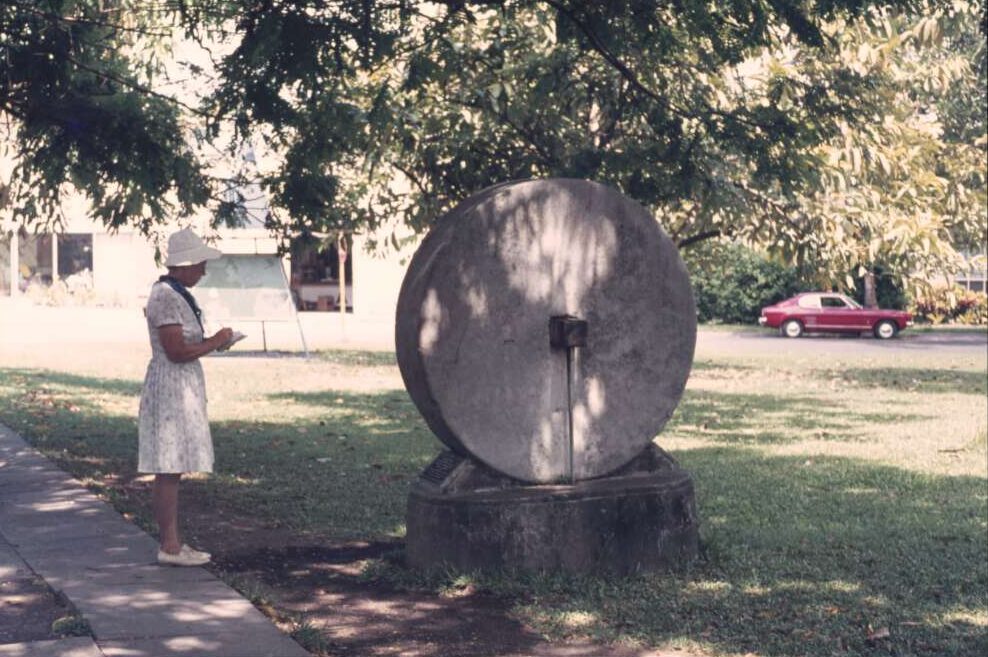
A stone grinding wheel from the Port Breton settlement. Photo: National Library of Australia
The escape
By late 1880, they’d become so good at dying that the Genil was sent for help. At some point, MacLaughlin, who had packed up for Sydney in August, was dragged back into the project. It was he, along with Le Prevost and Rabardy, who undertook the Genil’s rescue mission.
They promised to be back within 40 days. After 70 days of waiting, the desperate survivors packed onto the India, which was in bad condition. In a literal “ships passing in the night” situation (though it was probably daytime), the India departed on the same day, February 20, that the Genil finally returned. Neither saw the other.
The India made for Australia, by way of the French penal colony of Noumea. Still sick and hungry, on a battered ship, over a dozen more died before they staggered into Noumea. There, authorities found that the India was unfit to sail, and could not continue on to Australia. They were stranded on a remote prison, and King Charles was nowhere to be found.
Luckily, the government of New South Wales heard about the situation and took pity on them, sending the steamer James Patterson to pick them up. A passenger list from the James Patterson reveals the toll of New France. A full 340 colonists had sailed from Spain on the India. Only 217 arrived alive in NSW.
The very day they arrived in Sydney, the Nouvelle Bretagne had landed in Port Breton. Aboard, Jean Baptiste Octave Mouton, his father, and 150 others were ready to start their new lives.

Convicts on Noumea around the turn of the 19th century. Photo: Wikimedia Commons
The final expedition
Meanwhile, Rabardy and the Genil were, once again, at an abandoned Port Breton waiting for another ship to arrive. Captain Rabardy, who some reports call eccentric, some insane, and most brutal, was bored, unsupervised, and equipped with a Gatling gun. Traders on the Duke of York islands reached out, and he worked with them to corner and massacre a local tribe on nearby Méoko island.
He was back in Port Breton to welcome the Nouvelle Bretagne, whose passengers were rocked, like all the others, by the revelation that they’d been deceived. “What a delusion!” Mouton wrote. “Our paradise has become a hell, rather than a land of promise.”
He described the small, perpetually damp bay, strewn with the evidence of ill-planned attempts at settlement: Abandoned sugar-processing machines, with no sugar cane planted, wheelbarrows missing wheels, and failing gardens. They worked hard to clear land and improve shelters, but soon the food ran low and malaria set in.
Nouvelle Bretagne‘s Captain Henry made for Manila for more supplies, wiring De Rays for funds. None came, and the captain was detained until he could pay for the goods he had taken on. Taking advantage of a storm to slip his anchor, he returned to Port Breton, bringing vital supplies. A Spanish man of war soon turned up to arrest Henry, and found the colonists so sick, hungry, and pathetic that their criminal pursuit became a rescue mission.
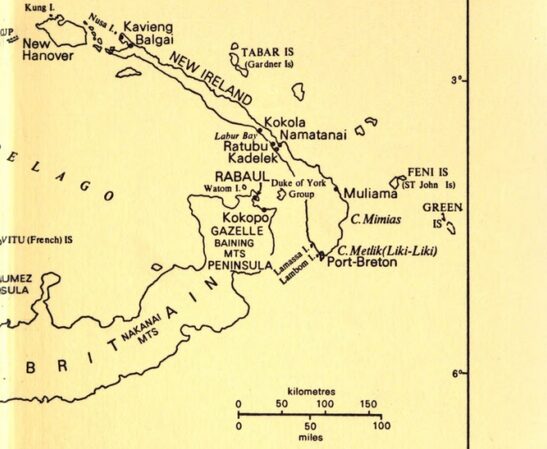
A map of so-called New France. Photo: The New Guinea memoirs of Jean Baptiste Octave Mouton
De Rays on trial
The Spanish authorities arrested Captain Henry, but also took most of the remaining colonists off the island, leaving 40-odd stragglers. Dr. Alexandre Baudouin, the medical officer, struggled with the violent, chaotic Captain Rabardy, begging him to admit defeat and evacuate the colony. Baudouin and the others deposed Rabardy and his ally, the appointed governor Chambaud, on February 4, 1882.
They declared New France a republic and unanimously voted to abandon it, at which point they packed into the Genil and departed for NSW. Rabardy died en route to Sydney, to general relief.
Of the 700-odd colonists roped into De Ray’s scheme, only about 360 are confirmed to have survived. Most settled in Australia, including Captain MacLaughlin, who became a newspaper editor and died of old age in 1927. The Italians from the India founded the settlement of New Italy in NSW, which still exists today. Captain Henry was acquitted. Mouton became a successful independent trader in German New Guinea and retired to the Sydney suburbs, where he wrote his memoir.
The Marquis de Rays was arrested for embezzlement and tried in France, where Dr. Alexandre Baudouin testified against him. He was fined and served five years in prison. Unreformed, he turned to seducing rich American women and selling fake gunpowder after his release, until his scheming was finally ended by his death in 1893.