After training on the glacier for some days, the Icefall Doctors have started their dangerous task of fixing a route across the Khumbu Icefall. With Tibet closed and no teams attempting alternative routes, all Everest climbers will have to use the fixed ropes. The fee for this is higher this year.
The Sagarmatha Pollution Control Committee (SPCC), which manages the Icefall Doctors, has also made public an updated document outlining waste-management regulations. This will also increase the costs for climbers.
Cost of fixed ropes
As in the last few years, the Icefall route fee for 2026 is $600 per climber. The expedition operators must promptly transfer these fees to the SPCC. Those who haven’t submitted the money by the end of April will face a late fee.
From Camp 2 to the summit, the Expedition Operators Association of Nepal (EOAN) formerly assigned a company to fix the ropes. The other groups then paid for this service, which amounts to around $200 per climber. Last year, 8K Expeditions handled the task. This year, the EOAN will provide its own team of rope fixers.
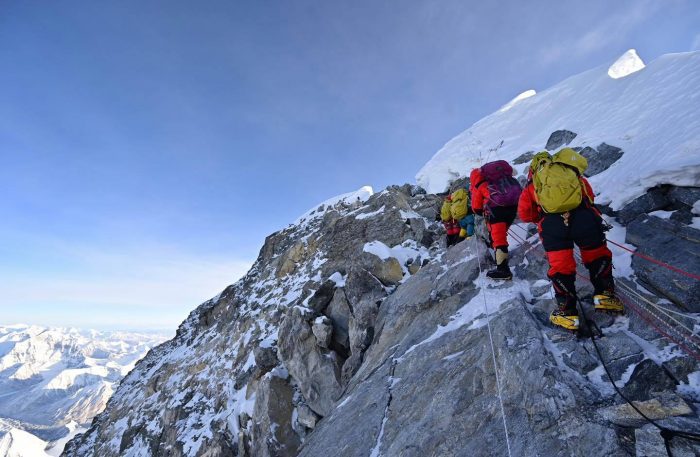
Climbers clipped to the fixed ropes on Everest. Photo: Imagine Nepal
Poo bags and segregated bins
The new regulations require garbage to be segregated into plastic, tin/cans, paper, glass bottles, and organic waste at Base Camp and all higher camps.
Like last year, climbers will have to use poo bags. They dispose of them in barrels, and workers later take them back to Base Camp to deposit them in special containers. The SPCC then handles the retrieval and disposal down the valley. The measure, meant to prevent pollution on the glacier that would eventually contaminate the valley’s water, worked well during 2025.
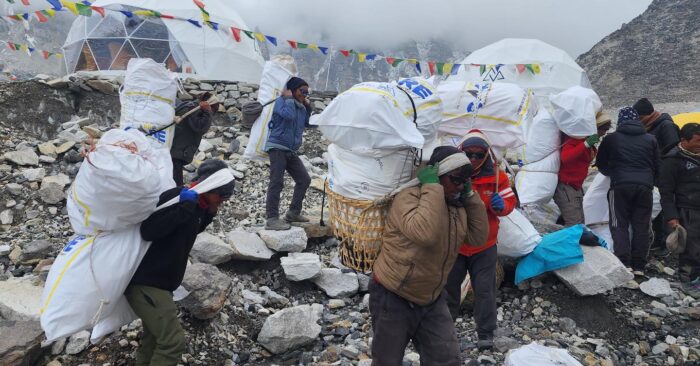
Employees of the Sagarmatha Pollution Control Committee retrieve garbage bags from Everest Base Camp. Photo: SPCC
Eight kilos from higher camps
According to the latest SPCC update, each climber (or a local hired for the task) must retrieve 8kg of garbage from the higher camps, including at least 2kg from above Camp 2. An SPCC team stationed at Camp 2 will monitor the garbage brought down from Camps 3 and 4.
In addition, expeditions must submit a complete list of the food, supplies, and gear they stock above Base Camp at the beginning and end of the expedition. This is to “ensure [that] all camps are thoroughly cleaned while wrapping up their expeditions.” The question is, how to really make sure everything is retrieved at the end of the season.
The South Col: a garbage heap
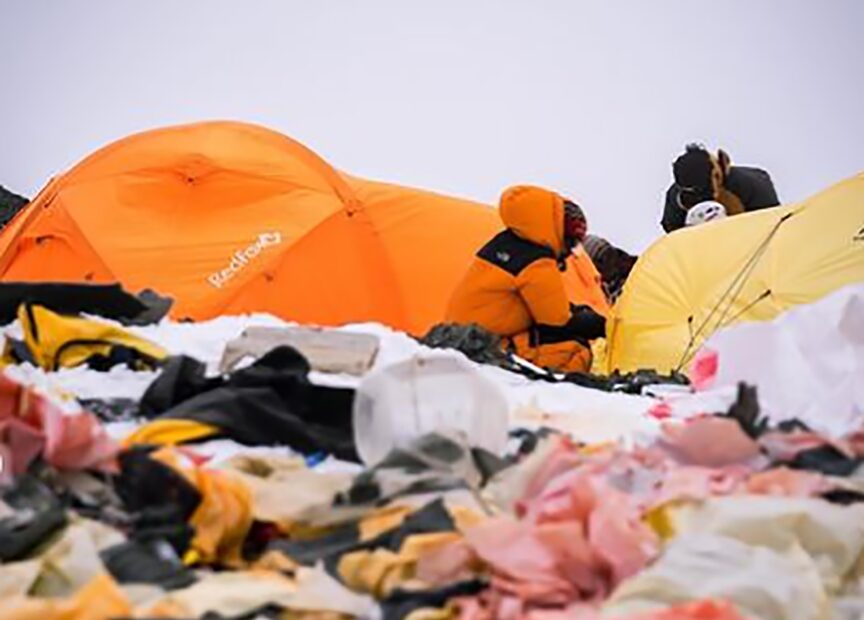
These new measures respond to a general outcry from Sherpas and climbers about the state of the highest sections of Everest, especially Camp 4. The reason: Camp 3 is a rather uncomfortable camp pitched on a steep slope of ice and snow on the Lhotse Face. Climbers remain there for as short a time as possible. Snow soon buries whatever is left there at the end of the season and is slowly dragged down the glacier.
Camp 4, on the other hand, is at 7,900m on the hugh, flattish South Col. The relentless winds, and in recent years, the higher temperatures have exposed the underlying scree, piled with garbage and the ragged shreds of tents that have accumulated over the years.
With the Tibetan side closed, plus higher prices and new restrictions expected for 2027, this Everest season should be particularly busy. Expedition operators will carry and deposit as many tents, oxygen canisters, and supplies as necessary.
However, retrieving everything at the end of an expedition is more complex. Some last-minute summit pushes take place at the very end of the season, when the monsoon approaches and high winds and snow rake the upper sections of Everest. Moreover, deploying staff to retrieve the gear is considerably more expensive than abandoning tents and supplies and buying new ones before the next expedition.
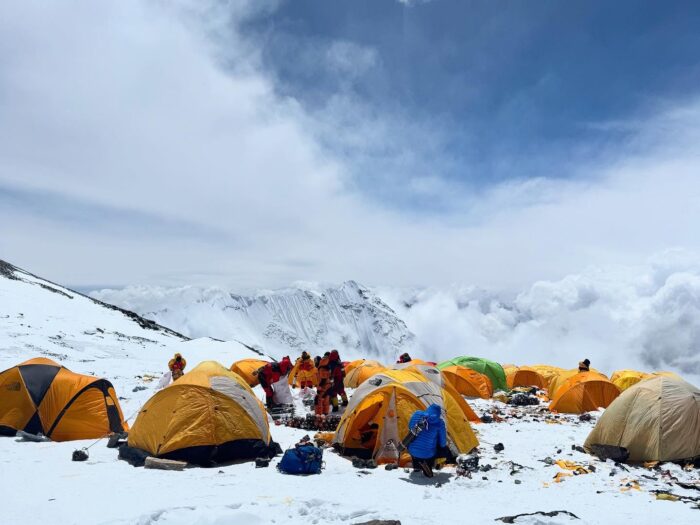
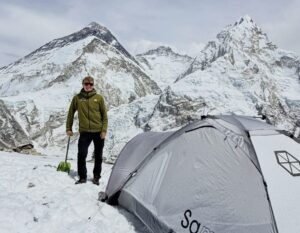
Camp 4 on Everest earlier today. Photo: Garrett Madison
SPCC regulations are flexible regarding safety, noting that conditions must be safe enough for those in charge of the retrieval. This is why in recent years, the EOAN and the SPCC close the Khumbu Icefall while conditions are still favorable, even if this spoils the last-minute summit plans of some climbers. It gives workers a little pre-monsoon window for the clean-up.