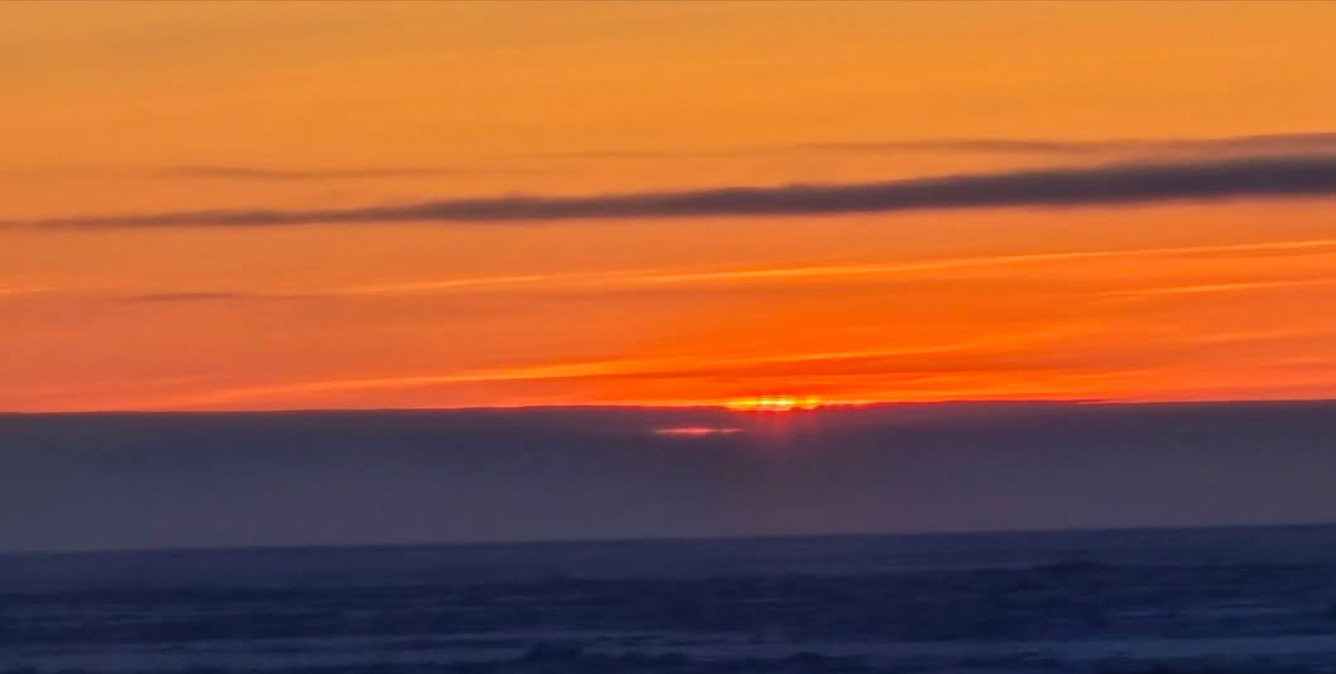
After months of darkness, the sun is returning to communities in the High Arctic. Many villages celebrate the glorious event: They’ve been in shadow or darkness since at least November.
The Arctic Circle is defined as the region where the sun does not rise for one day each year. The farther north you travel, the longer the sun disappears (and, conversely, the longer the summer midnight sun lasts). In the High Arctic, the first sunrise of the year isn’t until late January or early February.
The Inuit hamlet of Clyde River, on Canada’s Baffin Island, is just above 70° north and celebrated the sun’s return on January 19. More than two degrees closer to the North Pole, Pond Inlet — Clyde’s northern neighbor on Baffin — had its first sunrise at 12:02 pm on January 28. The sun set again less than an hour later. Several of the world’s most northern communities are still eagerly awaiting the sun’s first brief appearance.
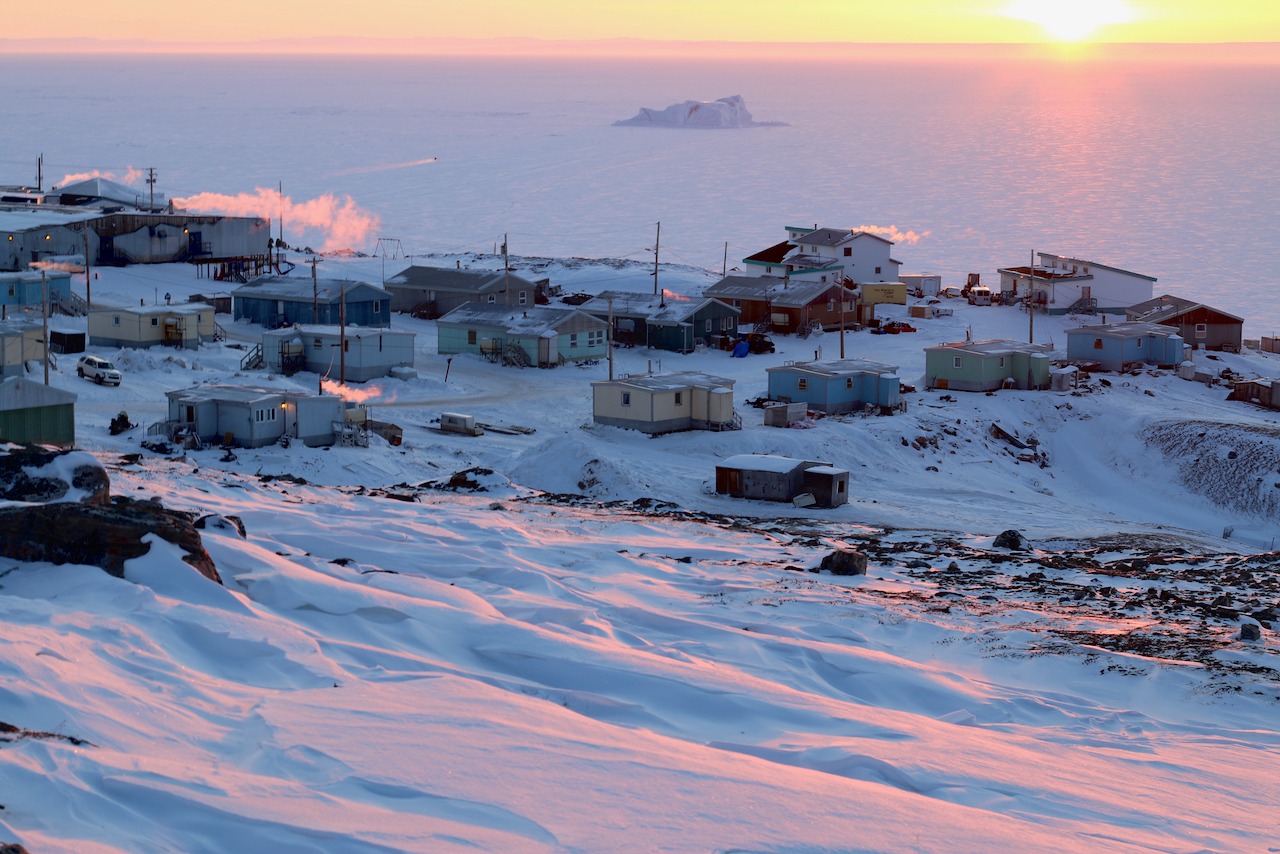
A pink sunrise over Pond Inlet. Photo: Parks Canada Nunavut
Even farther north
Resolute Bay, a Nunavut hamlet well-known to polar adventurers because it is the last stop for jets from the south, will continue to experience the Arctic night until February 4. It is about another two degrees further north than Pond Inlet, and its Inuktitut name, Qausuittuq, means “place where the sun doesn’t rise.”
Nunavut’s northernmost civilian settlement, Grise Fiord on Ellesmere Island, has to wait even longer. Their roughly 144 citizens will see the sunrise on February 10. At over 76 degrees north, Grise Fiord’s Arctic night started in early November. The days aren’t completely without light, though: Even in the depths of winter, a faint orange glow is visible to the south at noon.
The longer the polar night, the faster the transition to polar day. By April 1, Grise Fiord’s nights won’t be dark enough to see any stars. From April 22 to August 20, the sun won’t set at all.
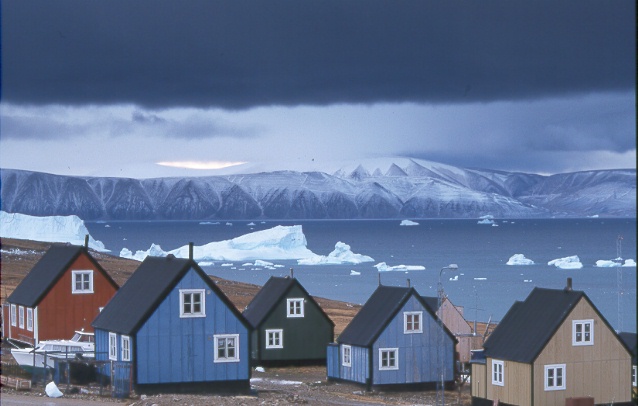
Qaanaaq, Greenland, shortly before the polar night sets in. Photo: Jerry Kobalenko
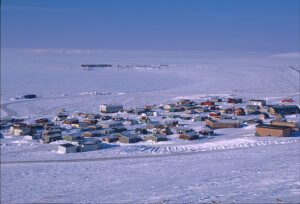
Leaving Nunavut for Greenland, a few communities will wait even longer for their sunrise. In Qaanaaq, 77°28′ north of the equator, the polar night ends on February 17. Though it is the largest of Greenland’s far north towns, Qaanaaq’s population of humans, around 600, is outnumbered by its sled dogs.
In these small High Arctic settlements, the return of the sun is a time for celebration. Many communities hold festivals or ceremonies, like Pond Inlet’s February 9 Return of the Sun Festival. In Qaanaaq, many elders take off one mitten and hold their bare hand (briefly) up to the sun when it first appears.
Though the sunshine is welcome, it typically signals even colder temperatures, with the bitterest Arctic weather occurring in the weeks after polar night ends.