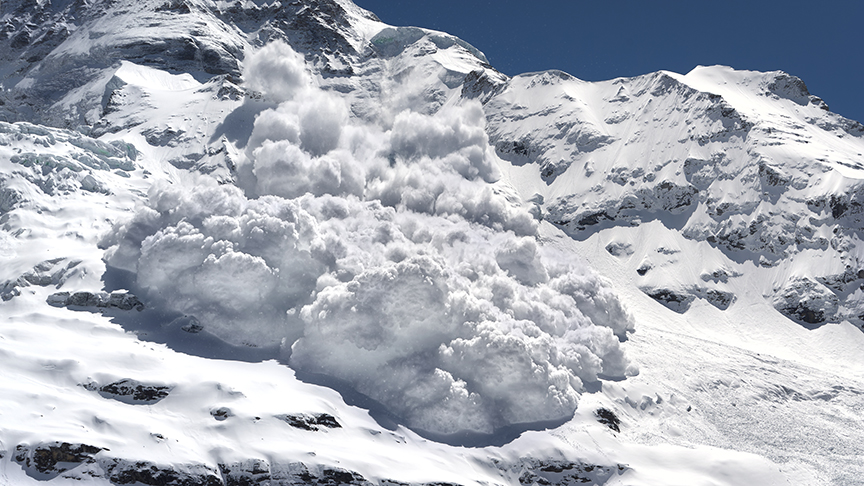
The tons of snow that have fallen in the Alps this month have triggered massive avalanches and many fatalities. Some of the biggest avalanches even reached towns and ski resorts. Snowfall blocked roads and isolated several villages near Chamonix. People were evacuated. Viral images of huge slides and snow-covered villages dominated the social media feeds of outdoor enthusiasts. More than 20 people have died in two weeks.
But is 2026 the coldest, snowiest, and deadliest winter ever? We checked the figures.
From February 12 to 20, the situation was truly dire through much of the Alps. The avalanche risk in the Chamonix area reached 5 on a scale of 5 for the first time in 17 years. Popular ski resorts at La Plagne, Les Arcs, Peisey-Vallandry, and La Grave ski resorts closed. There was just so much snow that they couldn’t keep the slopes safe.
A Swiss train derailed in an avalanche that left five injured, including the train driver, as it went through the canton of Valais, in southwest Switzerland.
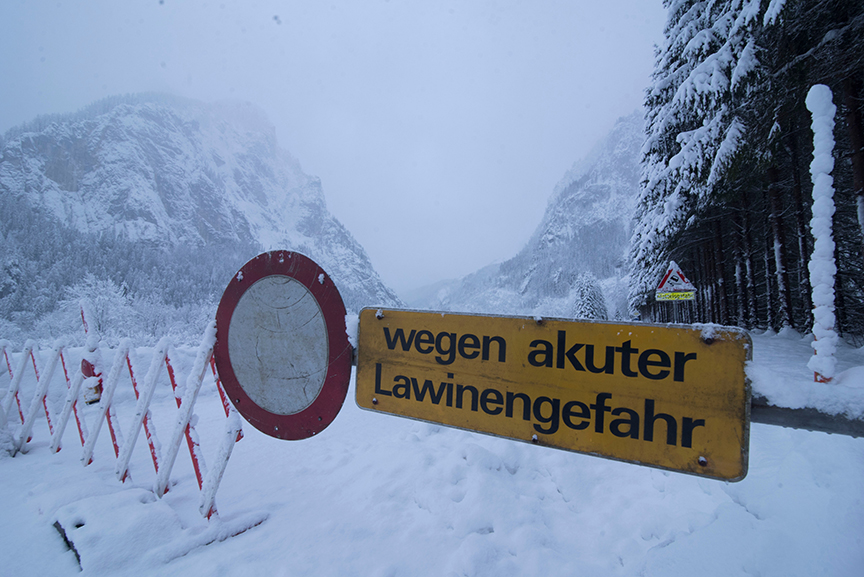
Avalanche warning sign. Photo: Shutterstock
The toll
Almost two dozen people have died in the Alps since February 13, when three people from a group of five died in an incident near Val d’Isere. On February 15, another slide in Courmayeur on the Italian side of Mont Blanc killed two off-piste skiers and seriously injured another.
February 17 was particularly deadly. On that day, two snowboarders died in Stubai, in the Austrian Tyrol. Two skiers died in La Grave, France; another slide swept away a pedestrian in La Rivine, and five skiers were caught in a slide that reached the pistes of Verbier, Switzerland. At least in this last avalanche, there were no casualties.
Three more died in a huge avalanche in the popular resort of Sankt Anton am Arlberg, in Austria, on February 20. Four more deaths occurred in France and Italy on February 22.
While avalanches cause several deaths every year, the figures this winter are already alarming. Nearly 100 people have died in slides, according to the European Avalanche Warning Services (EAWS). The death toll in the French Alps alone is currently 28, and we are only in the middle of the ski season.
“That is a huge increase from the average of eight deaths typically seen at this point in the season,” France’s National Association for the Study of Snow and Avalanches told CNN. The numbers are also abnormally high in Italy and Switzerland.
This season has also affected other mountain ranges in western Europe.
The stats
The EAWS lists accidents and statistics dating back to the beginning of the twentieth century, providing a wider perspective.
So far this season, 112 people have died in European avalanches, 94 of them in the countries of the alpine range (Austria, France, Italy, and Switzerland). That is above the average of 100 people killed in European snow slides in an entire year.
But is 2026 Europe’s deadliest avalanche year in recent memory? According to EAWS statistics, it is not:
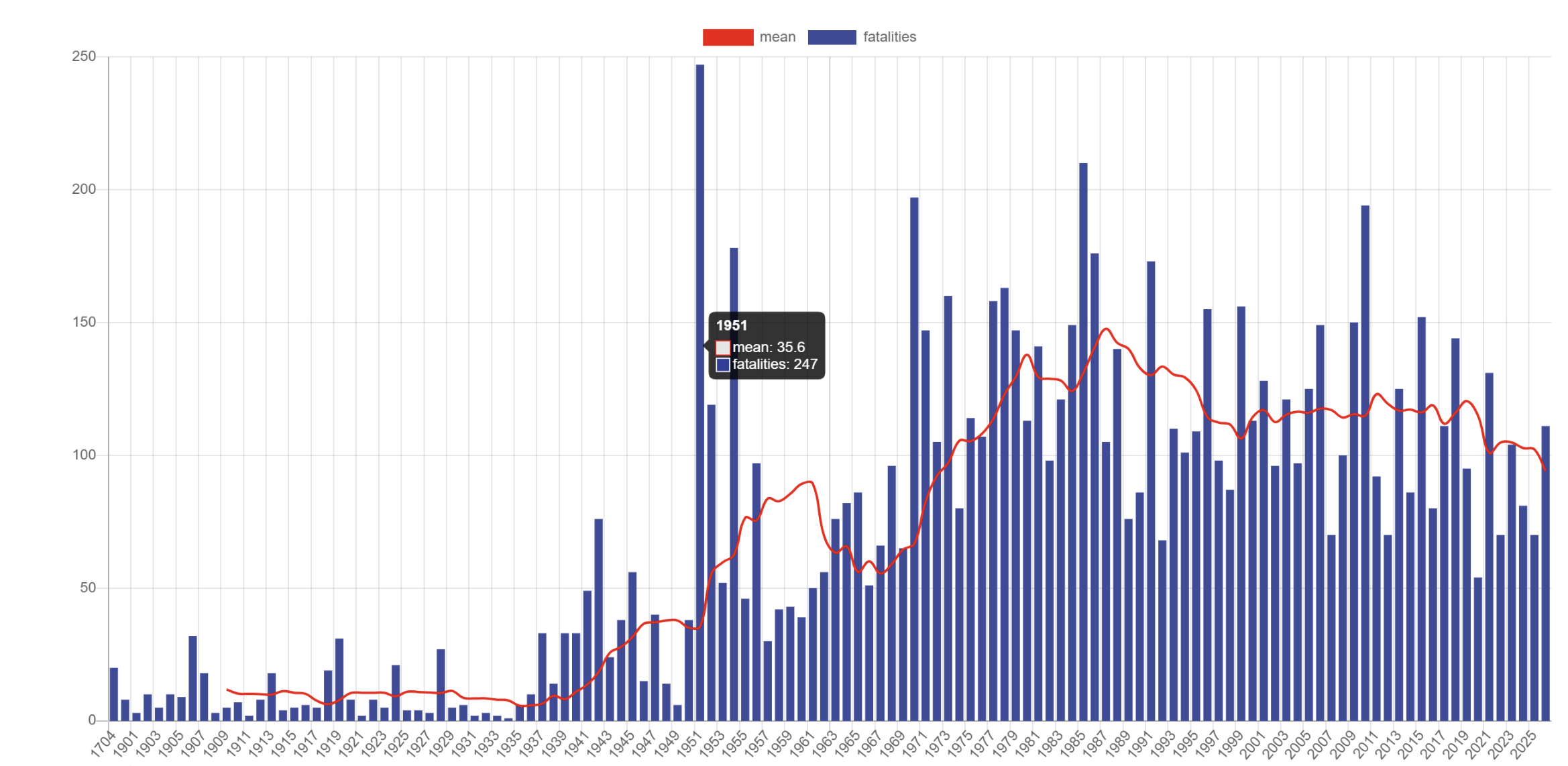
Avalanche victims and the mean yearly figure in Europe. Source EAWS
Winter of terror
The death toll this season is already the highest in the last seven years, but the numbers have been even higher several times in the past.
The highest number of avalanche victims on record was during the winter of 1950-1951. Known as the Winter of Terror, it counted 247 victims. So many fatalities came from a combination of extreme and atypical weather, similar to this year. During that terrible winter, the constant snowfall and high winds lasted even longer.
An additional factor made it even worse, according to the Swiss Institute for Snow and Avalanche Research (SLF): severe deforestation coupled with the post-WWII increase in people moving to avalanche-prone areas.
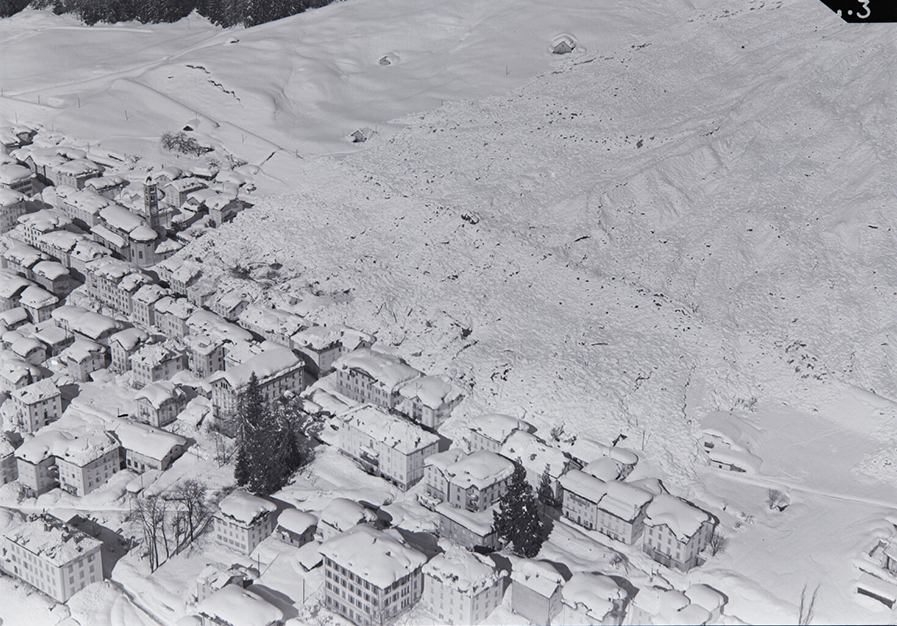
The scene near Airolo, Switzerland, following an avalanche on the night of February 11–12, 1951. Photo: SLF Archive
That winter, 98 people died in avalanches in Switzerland alone, 1,500 buildings were destroyed, 234 people were buried, and 235 head of livestock were killed. The catastrophic winter was so bad that it prompted Swiss researchers at the SLF (founded in 1945) to develop a system for mapping areas at risk from avalanches. Through the years, these evolved into the current avalanche hazard maps.
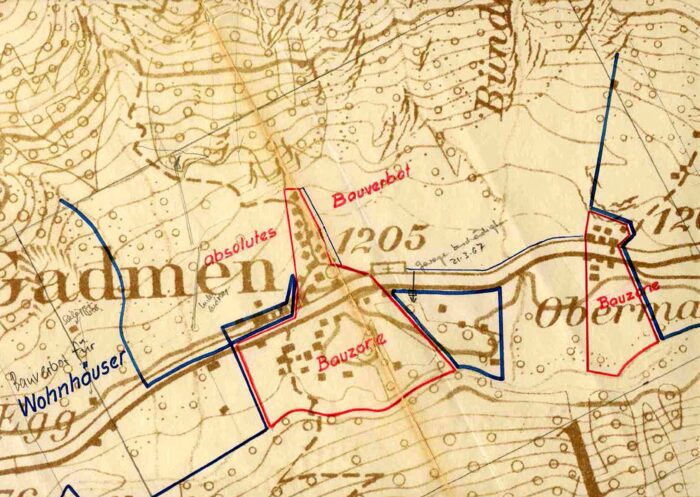
Switzerland’s first avalanche hazard map, produced in 1954 for the municipality of Gadmen (Canton of Bern). At that time, building zones were marked in red. Photo: SLF Archive
2026: a lethal combination
The high number of victims this year, despite warnings and the superior technology, monitoring, and understanding of avalanche risks among outdoor enthusiasts, is worth examining.
One unavoidable question is, how much can we blame climate change?
“There is evidence that climate change will lead to sharper, more intense precipitation followed by long periods without,” Dr. Ben Pickering of the University of Manchester and National Centre for Atmospheric Science told the BBC.
Pickering adds that precipitation is only one factor in the avalanche risk. In other words, it is not just how much it snows, but how.
Recently, two major storms within a week, both following an unusual southerly airflow, dumped over two meters of snow each, accompanied by strong winds. Wind slabs in all quadrants are sitting on unstable layers of snow, ready to release at any moment.
Unlike the huge snowfalls in Japan and, this week, in the U.S., these intense mid-February storms are rare in Europe. Frederic Jarry, project manager at the French National Association for the Study of Snow and Avalanches, told the Daily Mail: “This is a winter unlike any we’ve experienced in the past few years.”
Current conditions
High-pressure systems and higher temperatures returned to the Alps last weekend. The sun is now shining on Europe’s ski resorts, and the avalanche danger has diminished but not entirely disappeared. The loads of snow atop those unstable layers will need time to settle down.
One example of this is the avalanche that occurred yesterday in La Flégère, a ski area in the Chamonix Valley. The slide caught three resort skiers, but they luckily escaped with no major injuries.
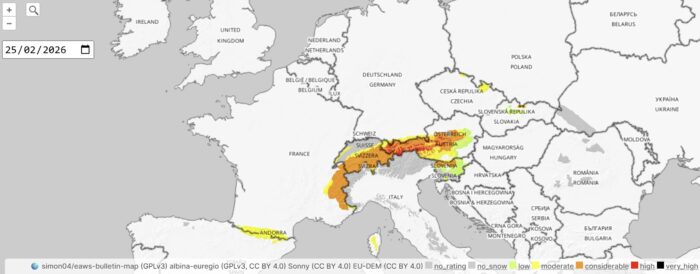
Avalanche risk in Europe today. Graph and info by EAWS
Risk still high
Meteofrance reports a risk level of 3 on a scale of 5 in the Alpine areas. That level of avalanche danger is considered “marked,” and it’s where most accidents occur. The risk is not high enough to deter many skiers, but high enough for avalanches to occur. According to the data gathered by AENA, many avalanches with victims in France this season happened at the higher Level 4 risk. It seems that many, unwilling to give up their vacations, are pushing the limits of risk.
Firefighters in Haute-Savoie are urging extreme caution during this period of milder weather, Radio Mont Blanc warned.
“Despite the current sunny weather, some areas received significant amounts of snow just a few days ago…Steep, south-facing slopes at higher altitudes are particularly prone to spontaneous triggering of avalanches,” the station reports.
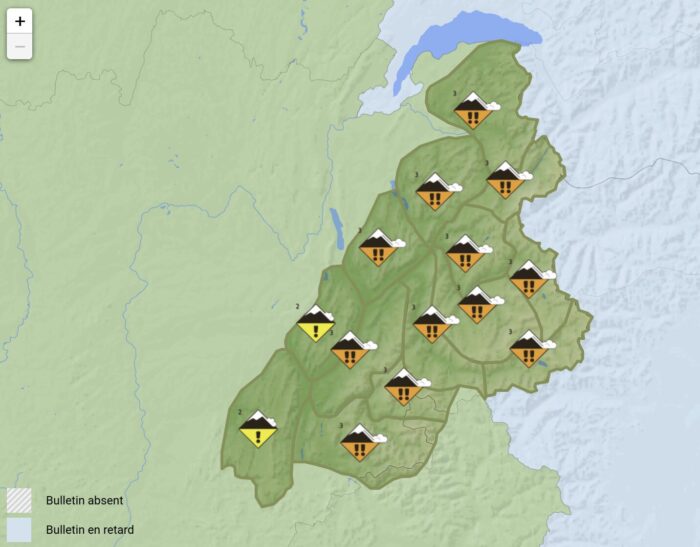
Avalanche risk map today in the northern Alps of France. Bulletin by Meteo France
Check the daily weather forecast and avalanche bulletins on the Meteo France website.