Another of the 20th century’s greatest mountaineers has left us. Jim Whittaker, the first American to summit Mount Everest, died at his home in Port Townsend, Washington, on April 7 at the age of 97.
Jim Whittaker was born in Seattle on Feb. 10, 1929, and grew up with his twin brother, Lou, who was born 10 minutes after him. The two boys climbed trees and fences around Seattle, then started climbing mountains in the Pacific Northwest. Jim later said that his mother never told them, “Be careful” or “You will fall” when they climbed. Instead, she’d say, ”Have fun” or ”Isn’t that wonderful?” Her encouragement made the guys self-confident.
In their mid-teens, the Whittaker brothers ascended Mount Rainier together and climbed most of the other big peaks in Washington State. Those early climbs led both to careers in mountaineering.
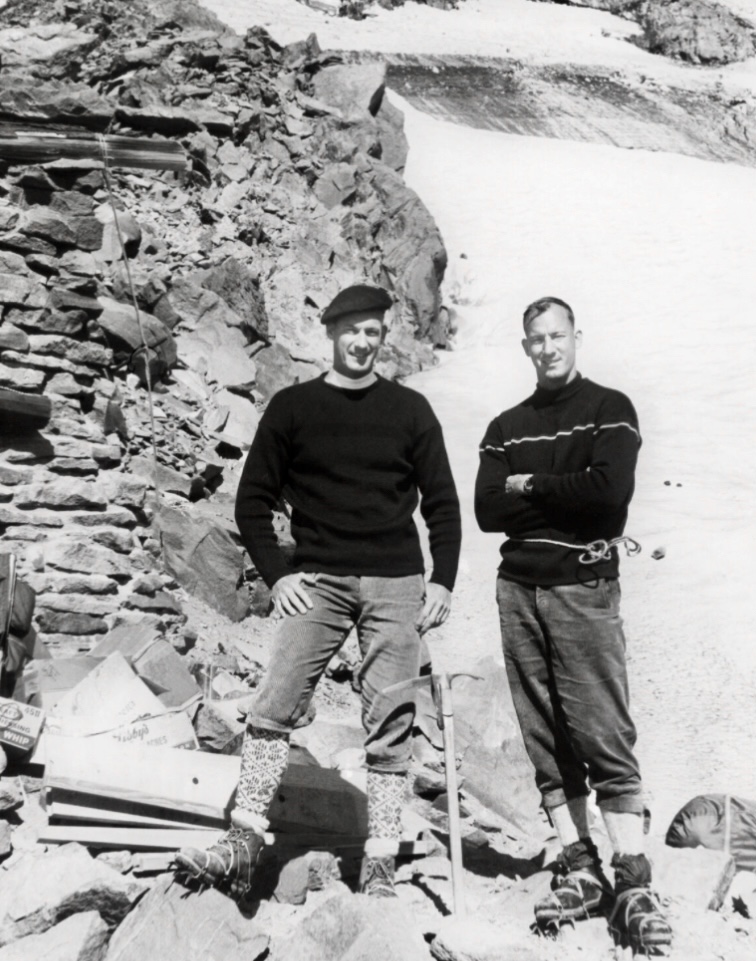
Jim Whittaker, left, and his twin brother Lou. Photo: Whittaker Family Collection via cascadiadaily.com
On top of the world
Jim Whittaker reached the summit of Everest on May 1, 1963, during the American Mount Everest Expedition, led by Norman Dyhrenfurth. He was the first American to reach the top of the world. Whittaker climbed alongside Nawang Gombu Sherpa. The two climbers pushed up the South Col route through strong winds and very cold temperatures. It was exactly 10 years after Edmund Hillary and Tenzing Norgay first climbed Everest.
Upside down
The Everest climb was tense. According to Whittaker in his notes for the Himalayan Database, a large cornice suddenly fractured below the main summit while Gombu was leading. A huge slab of snow and ice broke away silently between them and fell toward the glacier below.
About 20 minutes later, while descending to the saddle between the two summits and then heading up toward the South Summit, Whittaker stopped to remove his pack. The rope tangled, and when the snow steps gave way, he was yanked upside down by the tight rope from above, hanging half a meter off the ground. Gombu, who was higher up and couldn’t see what had happened, felt the sudden strain on the rope and wondered what was wrong. Whittaker managed to right himself in about a minute, saying with a smile, “It’s the first time I’ve been upside down.”
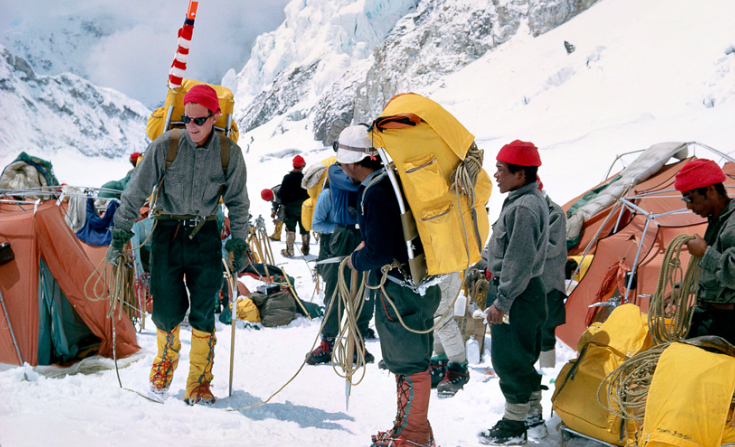
Jim Whittaker, left, and Nawang Gombu leave Advanced Base Camp on Everest. Photo: Whittaker Family Collection via cascadidaily.com
Gentlemen together on the summit
Near the top, with Whittaker leading and just a few meters below the summit, he stopped and waited for Gombu to draw even with him. After several polite rounds of “You go first,” Whittaker said, “Okay, both together.”
On reaching the top, he famously radioed back: “I’m at the top of the world.” Shortly after, he received a congratulatory telegram from President John F. Kennedy, a moment that forged a deep and lasting friendship between Whittaker and the Kennedy family.
Mountaineering historian James Ramsey Ullman, one of the expedition’s members, wrote that Whittaker “is a driving force and one of the less complicated members. Not dissimilar to Hillary, physically and psychologically — tremendous shoulders, tremendous energy; was swimming in a lake near Seattle [where] he lives through winter to toughen self.”
Ullman also mentions that Whittaker had been doing 50 push-ups a day while he was training for Everest.
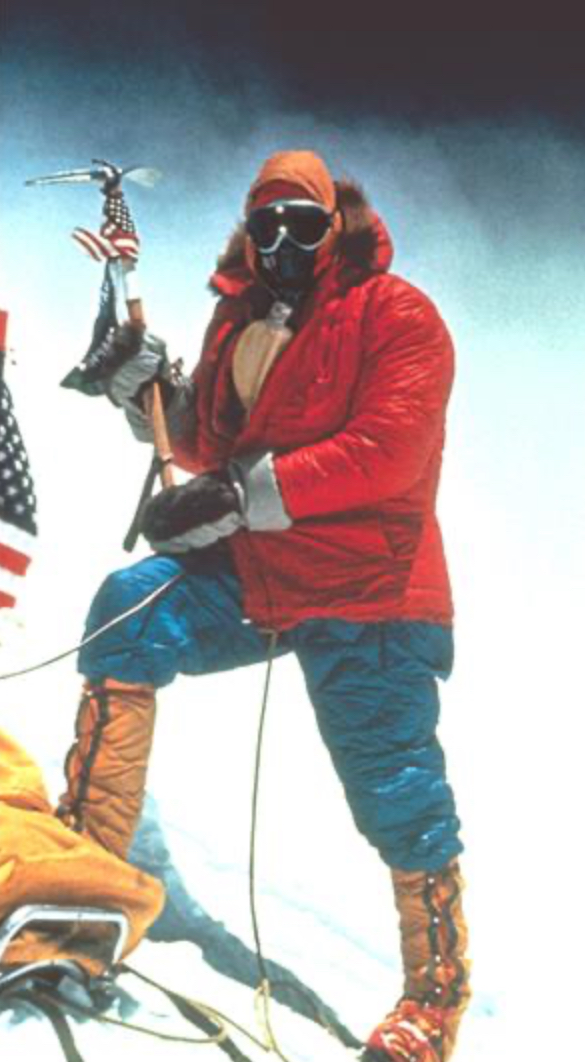
Jim Whittaker on the summit of Everest. Photo: Nawang Gombu Sherpa /Whittaker Family Collection
Whittaker’s Everest climb made him famous. There was a parade for him when he returned to Seattle, and President John F. Kennedy presented him with the Hubbard Medal from the National Geographic Society for his achievement.
In 1965, he led a National Geographic-sponsored expedition and guided Senator Robert F. Kennedy on the first ascent of a 4,300m peak in the Yukon, which was named Mount Kennedy after the late President John F. Kennedy.
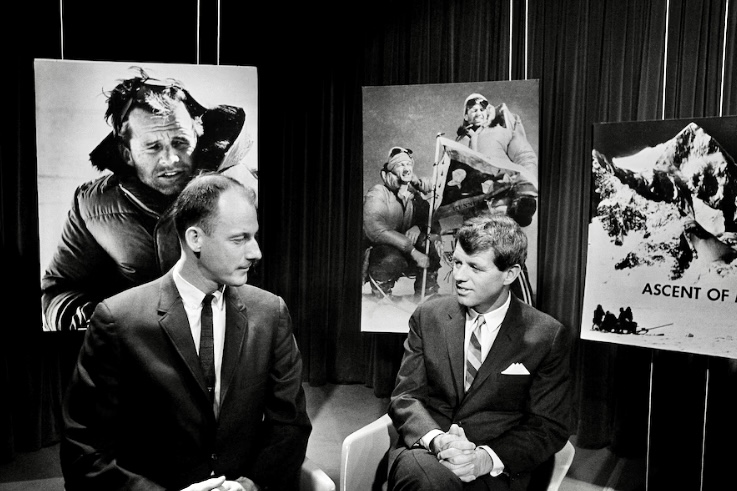
Jim Whittaker with Robert F. Kennedy in 1965. Photo: Byron Rollins/AP via Washington Post
K2 and the Peace Climb
In 1978, Jim led the first successful American expedition to K2. Four climbers reached the top, marking the first success by an American team after four previous attempts.
In 1990, he put together the Mount Everest International Peace Climb, which included climbers from the United States, the Soviet Union, and China.
He climbed Mount Rainier more than 80 times. He liked to say that his brother Lou had the family record with more than 250 ascents.
Outside of climbing, Whittaker helped grow the outdoor gear business. In 1955, he became the first full-time employee at REI — Recreational Equipment Inc. He later served as its president and CEO, and he spent a total of 25 years with the company. He and his brother Lou also started Rainier Mountaineering Inc., a guiding company based at Mount Rainier that trained many climbers over the years, leaving a huge legacy in the mountaineering history of Mt. Rainier.
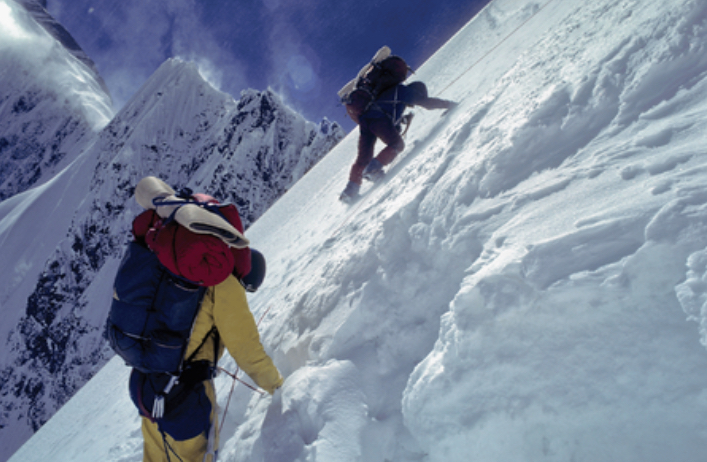
On K2. Photo: jimwhittaker.com
Sailing the Pacific
Affectionately known as Big Jim for his 1.95m stature and commanding presence, he was also an accomplished sailor. With his second wife, Canadian-born photographer, writer, and publicist Dianne Roberts, and their two sons, he completed a four-year, 32,000km sailing trip across the Pacific to Australia and back to Port Townsend aboard their 16.5m steel ketch, Impossible.
In his book, A Life on the Edge: Memoirs of Everest and Beyond, Whittaker wrote: “You don’t really conquer a mountain, you conquer yourself.”
His twin brother, Lou, died two years ago in March 2024, at age 95. The two brothers climbed together from the start, and their work helped make the Pacific Northwest a center for mountaineering in the U.S. — a huge legacy.
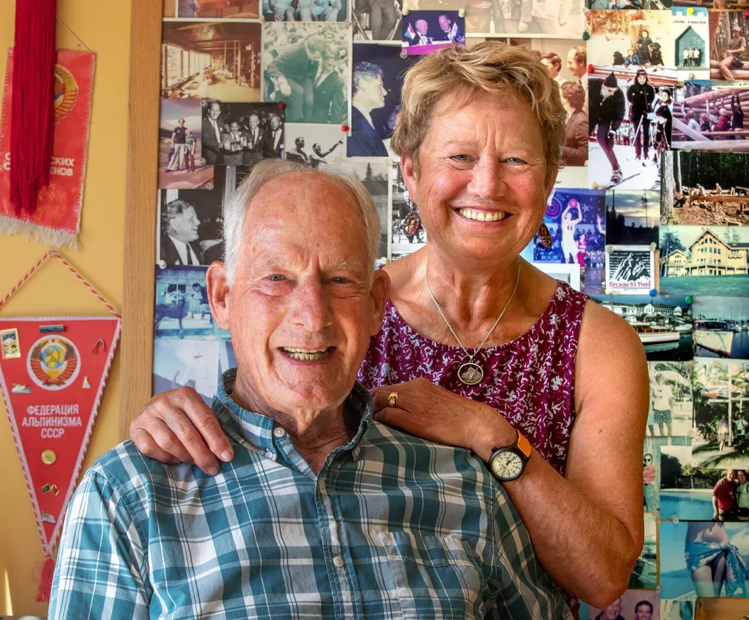
Jim Whittaker and his wife, Dianne Roberts, in 2019. Photo: Mike Siegel
As Jim Whittaker often reminded us, the true summit isn’t a place on a map, but a state of mind. He lived by the belief that “if you’re not living on the edge, you’re taking up too much space.”
“Whether at home, in the mountains, or at sea, he sought to share adventure, joy, and optimism with those around him,” wrote the Whittaker family in a statement, quoted in The Seattle Times.
He is survived by his wife, Dianne Roberts, their two sons, as well as his sons from his first marriage.
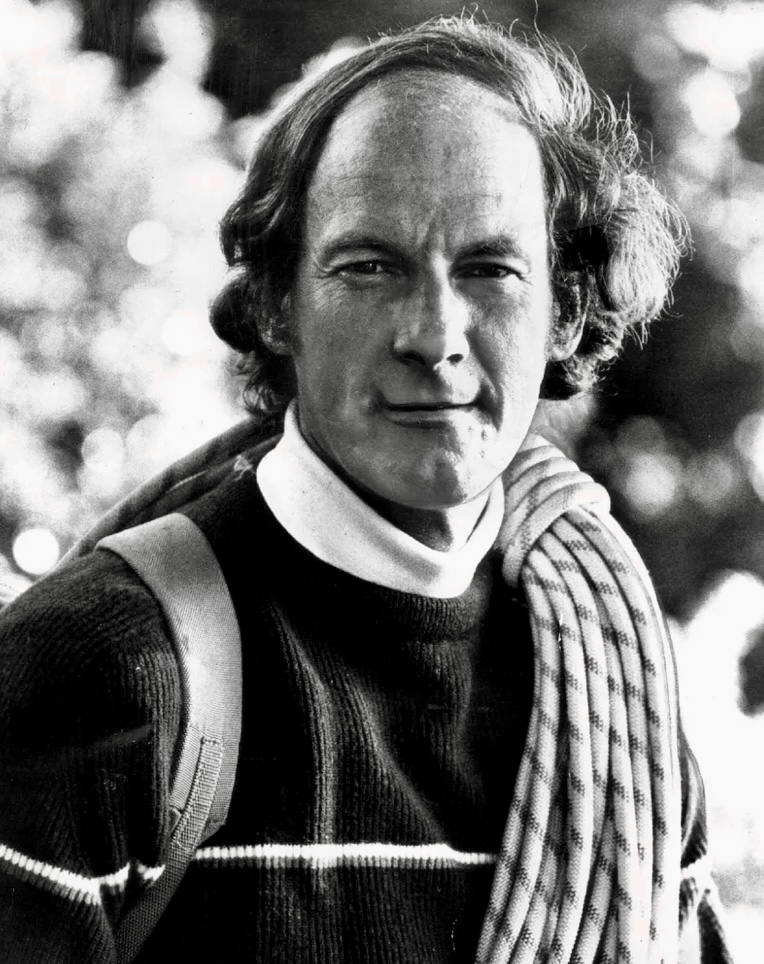
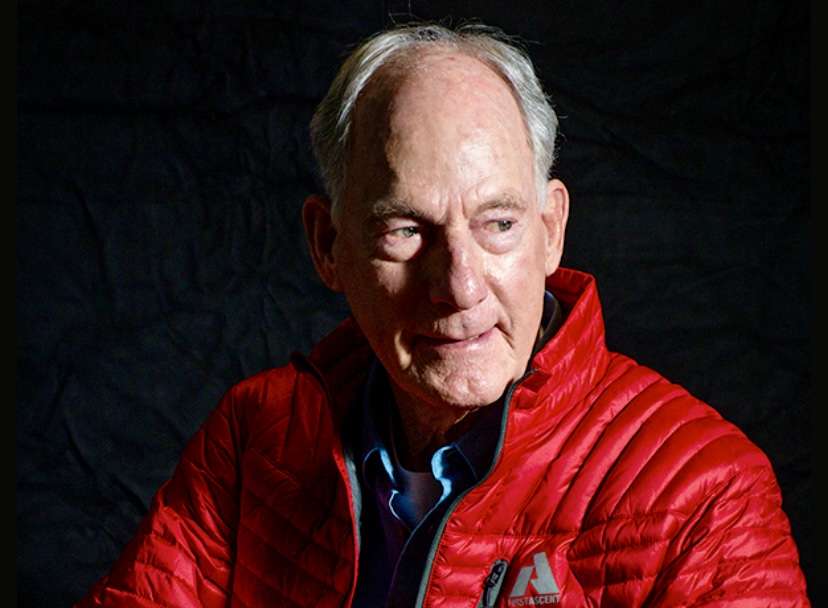
Jim Whittaker. Photo: Dianne Roberts