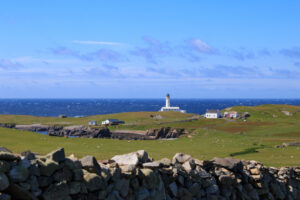
Want a change of scenery? Possess a detailed knowledge of birds? Then the Scottish Wildlife Trust (SWT) has a job for you. The SWT is hiring a ranger for a six-month position on Handa, an uninhabited island off the coast of the Scottish Highlands.

About 10 percent of all guillemots in the British Isles breed on Handa. Photo: Boaworm/Wikimedia Commons
Handa is accessible from the mainland only by a 10-minute ferry. The ranger position, which covers the summer tourism season, requires weekly ferry trips to resupply at the nearby 200-person town of Scourie. The only visitors are summer volunteers and the 5,000-odd tourists who arrive each summer, mostly for birdwatching.
The island boasts thriving bird populations, including puffins, skuas, guillemots, and razorbills. Monitoring the species’ health is a crucial part of the ranger’s job. The guillemots and razorbills on Handa each contribute to about 10% of the populations in the British Isles.
The summer ranger will support wildlife conservation and tourism at the head of a team of volunteers. Despite the isolated location, the position is a social one.
“It’s a challenging role, but the successful candidate will spend some warm, sunny days in one of the most beautiful and exciting places in Scotland,” said Rab Potter, reserves area manager for the SWT.

The first recorded ascent of the Great Stack was in 1876. Photo: Karl and Ali/Wikimedia Commons
Handa was not always uninhabited
People lived on Handa year-round until 1847, when the Highlands Potato Famine forced the population to emigrate to Nova Scotia. The remnants of a church can still be found on the island, as well as centuries of graves. Inhabitants of the mainland often buried their dead on Handa to prevent wolves from eating the bodies.
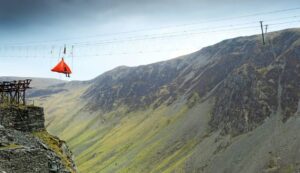
Connections between Handa and outsiders extended not just to the mainland but to the archipelago of St. Kilda, now also uninhabited. In 1876, a man named Donald MacDonald from St. Kilda first crossed the 24m gap between the shore of Handa and a 72m tower of rock called the Great Stack. He made the ascent by swinging hand over hand on a rope across open water. In 1969, a team that included well-known Scottish mountaineer Hamish MacInnes made the first ascent from the water.
During the summer, however, climbing the Great Stack is off-limits due to the presence of nesting birds. But if you’d like to spend six months monitoring puffins and guillemots, then the SWT ranger position may be for you. It runs from March to September and pays £26,112 ($35,311). The SWT provides free lodging in a ranger bothy.