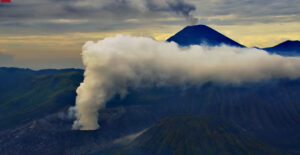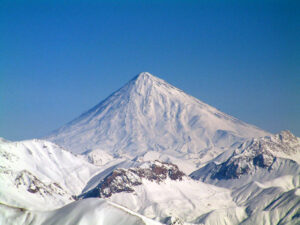
On March 30, 1956, Kamchatka’s Bezymianny volcano erupted. The massive explosion blew the lid off the mountain and generated massive clouds of ash. A peak, which once reached 3,113m in altitude, lost 700,000 square meters of material.
Until Bezymianny awoke in 1955, it was considered dormant. Since then, it’s been continually active with smaller eruptions.
Then, a 2020 study found it had almost completely regrown.
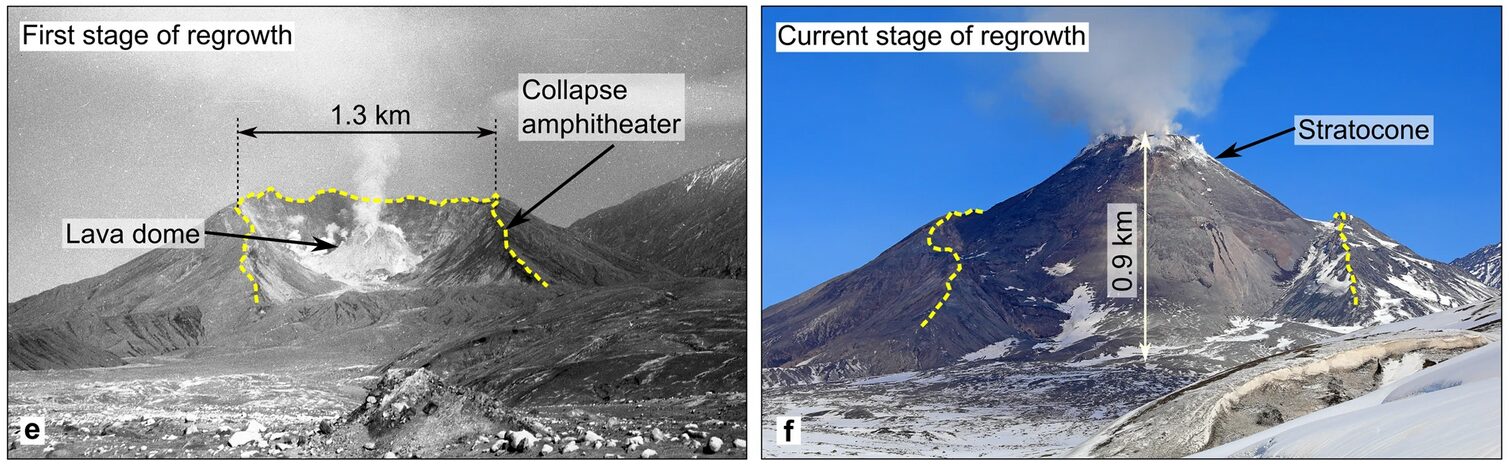
Bezymianny after the 1956 eruption, then photographed again in 2020. Photo: Shevchenko et al
How volcanoes are reborn
After a massive eruption, volcanoes may continue to be active. Over time, that activity can build up a new cone to replace the old, exploded one. However, Bezymianny is the first such volcano that scientists have been able to observe reforming in real time.
Photographs from the past seven decades show the evolution of Bezymianny’s edifice. Slow by human standards, in geologic terms, it’s all happened very quickly. Not long after the initial eruption, two lava domes formed about 400m apart. Over the next 20 years, they shifted and expanded, becoming 200m closer. Fifty years after the 1956 eruption, the two vents merged into one central cone.
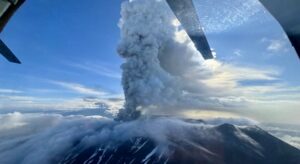
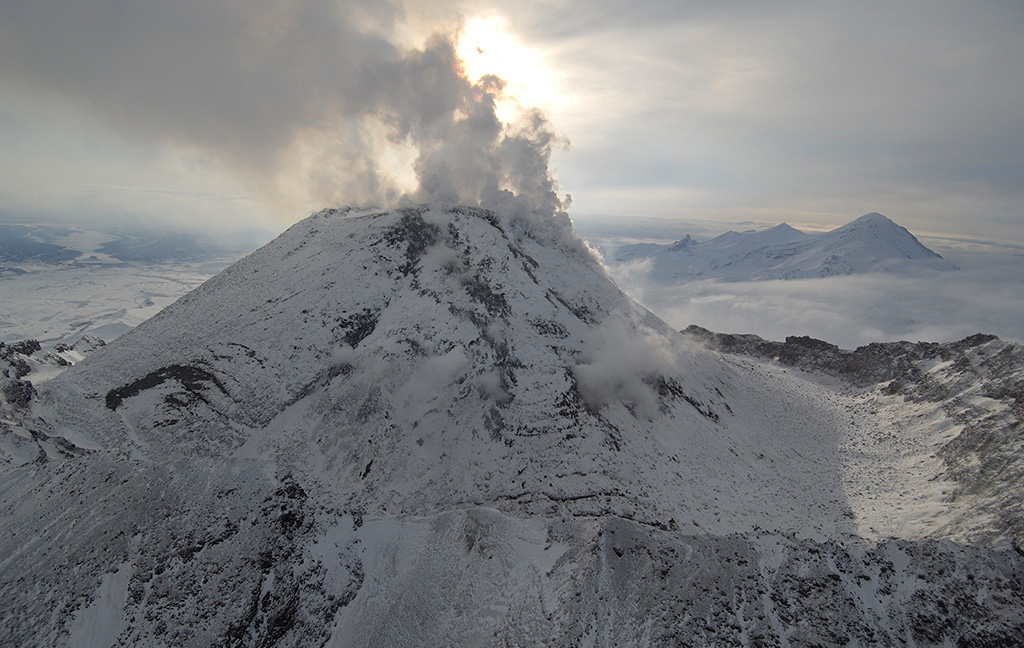
Based on current projections, Bezymianny will completely regain its old size within the next decade. In the past few years, Bezmianny has seemed particularly eager to reclaim its old height. October 2023 was notable, with lava flows, avalanches, and ash plumes, which prompted authorities to issue aviation warnings.
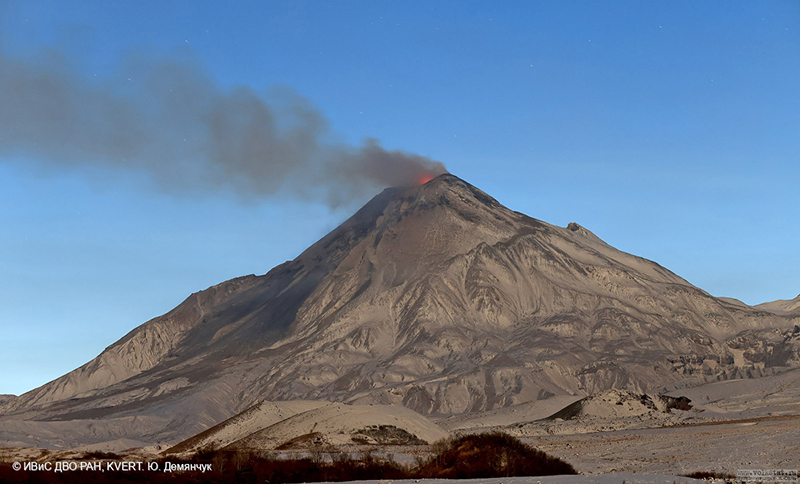
Bezymianny in October of 2023. Photo: Yu. Demyanchuk/Kamchatka Volcanic Eruptions Response Team
Not the first time
Like the mythical phoenix, which repeatedly dies only to be reborn from its own fiery remains, Bezmianny has regenerated before. The 2020 study analyzed images of the volcano from before 1956 and observed older collapse scars. They noted a much older, now grown-over crater around the mountain near its summit.
The eruption that formed the pre-1956 Bezmianny occurred around 4,700 years ago.
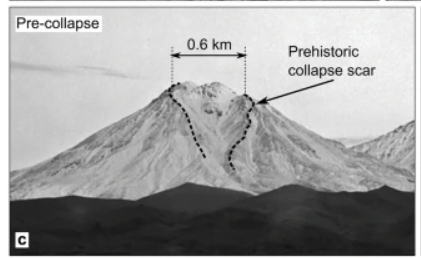
Photograph from 1909, showing prehistoric collapse scars. Photo: Shevchenko et al
As Bezymianny demonstrates, volcanic regrowth is not consistent. Domes grow in two different ways, from the inside and from the outside. Endogenous growth occurs when an inflow of magma beneath the surface causes it to swell outwards. Exogenous growth occurs when expelled lava hardens into rock, building up the volcano from outside.
The lava can also be expelled quickly and violently, resulting in extrusive growth, or in a gradual outflowing, called effusive eruption. Between 1956 and 1977, Bezymianny transitioned from endogenous to extrusive growth. After a 1977 spike in activity, it became dominated by extrusive and effusive activity.
Part of the Pacific Ring of Fire, Kamchatka has over 300 volcanoes, of which 29 of them, including Bezymianny, are active.