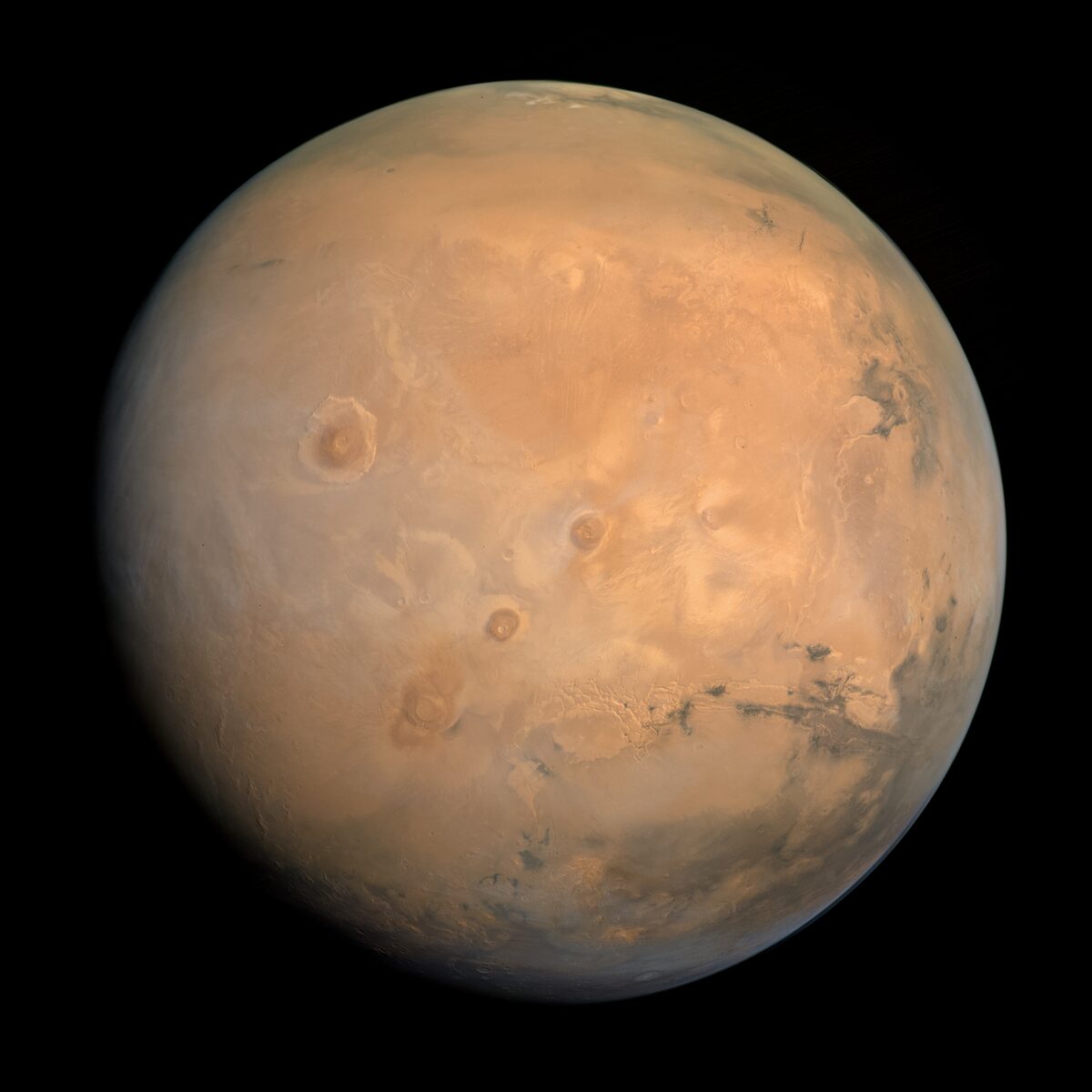
The National Institute of Standards and Technology (NIST) fulfills a vital role in national security: employing the sort of people who would, if they got bored, take over the world. It takes a specific kind of person to run the persnickety gravitational calculations of exactly how fast clocks tick on Mars relative to the Earth.
Thanks to NIST, two of these people have recently published their calculations, instead of building a lair under a volcano to perform evil experiments. They found that Mars time runs faster than Earth time, and considerably messier.
The purpose of clock rate models
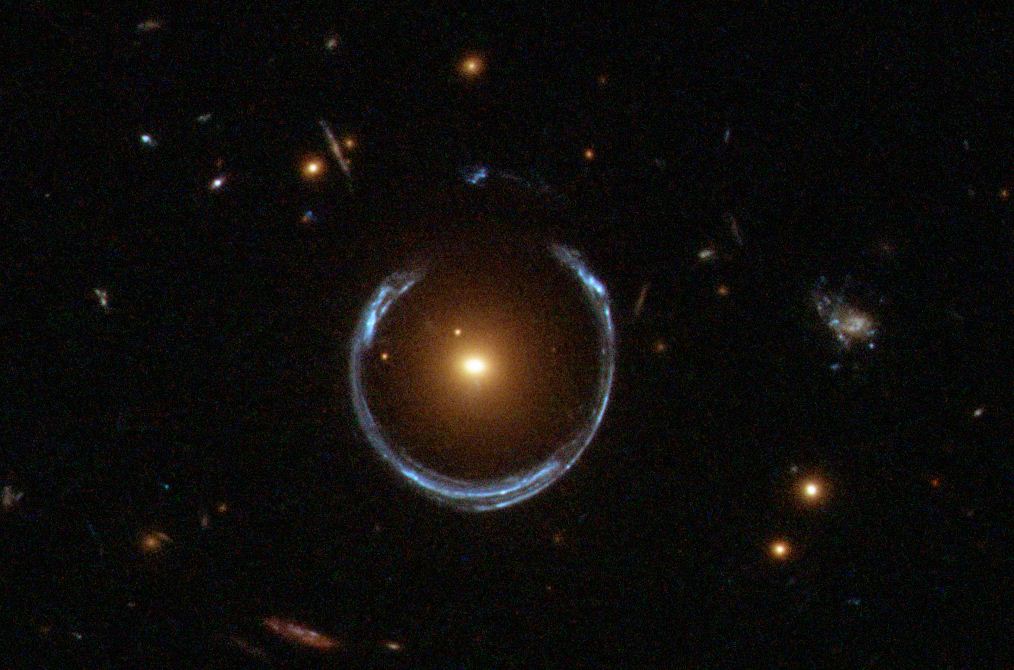
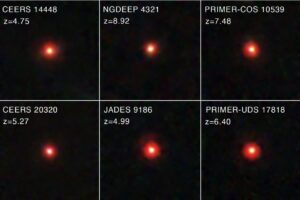
Gravitational lensing, or light bending around massive objects, is another example of general relativity at play. Photo: NASA/ESA/HST
In strong gravitational fields, time flows more slowly. Albert Einstein first described this effect, known as time dilation, in his 1915 theory of general relativity. Scientists working in precision timekeeping must account not only for the Earth’s gravity, but also that of the Sun and Moon.
They have become very good at that. The evidence is on your phone: the accuracy of GPS is thanks to minute adjustments to clock rates in different locations around the Earth.
Future spacefarers will need to know the exact time on Mars relative to the Earth. Any kind of precision location system, such as GPS, depends on clock rate conversions. The new paper from NIST models the gravitational field on Mars at different points throughout its orbit to predict what that clock rate should be. They double-check their results using in-situ gravitational observations from Mars.
Mars’ messy time
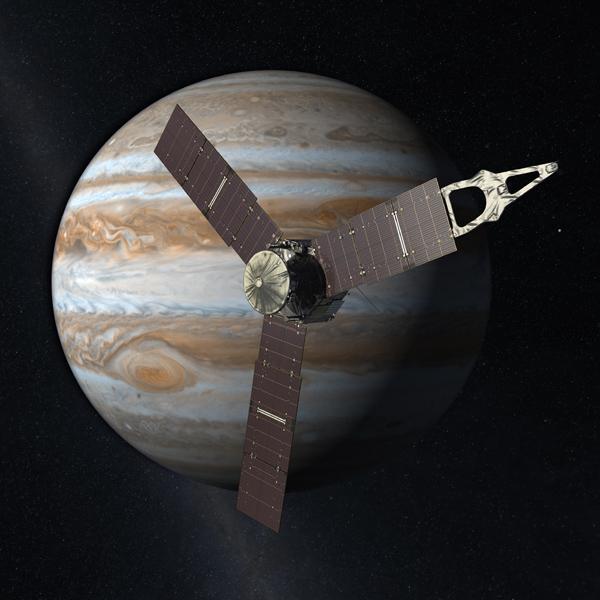
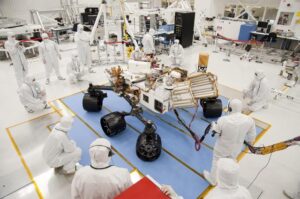
The Juno spacecraft contributed Martian gravity measurements as it flew past the red planet. Photo: NASA/JPL/Caltech
Modelling Martian time is a lot more complicated than it is for the Earth. Not only is it harder to actually take measurements that would allow scientists to check their math, but the math itself also involves more factors.
Mars’ lower mass means gravity is a lot weaker on its surface than on Earth. Even without external effects, Martian time flows faster than Earth time.
But the Mars time to Earth time conversion depends on a lot more than Mars’s gravitational field. The biggest complication for time on Mars is the eccentricity of its orbit. Eccentricity describes how elongated and oval-shaped an orbit is, as opposed to circular. Since Mars’ orbit is considerably more eccentric than Earth’s, its distance from the Sun varies much more.
Mars’s lower mass, only 10% of the Earth’s, also makes it easier for other bodies in the Solar System to push it around. While the motion of Mars doesn’t affect the Earth’s gravity much, the motion of Earth matters a lot to Mars.
The ever-changing locations of the Sun and the Earth push and pull on the surface gravity of Mars and, consequently, its clock rate.
We understand Earth time 100 times better than Mars time
Although Mars time changes over the course of a Martian year, the authors found an average difference of 421.5 microseconds (millionths of a second, or μs) per day between Mars and the Earth. It doesn’t sound like much, but think of it this way: For every day that passes on Earth, Mars falls behind our clocks by 421.5 μs. If we don’t model and compensate for the difference, that’s enough to render 5G wireless, for instance, totally useless.
By predicting this discrepancy, the authors have theoretically enabled 5G cell service on Mars, although some minor technological advancements will be necessary to make this happen. But their model does come with big error bars.
Make no mistake: the new model of Martian time is vastly more precise than the previous model. (The previous model was created by the exact same people who made the new one, because NIST only employs people with worrying dedication.) Nonetheless, it fits the data about a hundred times worse than the current best model of Moon to Earth time conversion. You’ll never guess who the authors are on that one.
When they compare their model of clock rate to real gravitational observations from Mars, their guesses are only off by an average of 100 ns (a billionth of a second) every day. This is astoundingly precise, but still a hundred times worse than their errors on the Moon, which are about 1 ns every day. Mars is a messier place to visit than the Moon, and time runs strangely there.