
The death of Nigerian singer Ifunanya Nwagene has ignited urgent questions about access to lifesaving treatment for snakebites. Nwagene, 26, who was a contestant on The Voice Nigeria, died in January after being bitten by a venomous snake while sleeping in her apartment in Abuja, the nation’s capital.
According to reports, Nwagene was bitten during the night and sought medical help immediately. She first went to a nearby clinic but was turned away because the facility did not have the required antivenom. She was then transferred to the Federal Medical Centre (FMC) in Jabi. Later footage on social media showed a snake being removed from her apartment, with onlookers claiming it was a cobra, though this has not been officially confirmed.
Nwagene’s condition deteriorated rapidly. She struggled to breathe as the fast-acting venom took hold. Although she eventually received antivenom, the damage was already severe when treatment began. After her death, FMC Jabi faced public backlash, with questions raised about the speed of her treatment and whether antivenom was available when she arrived.
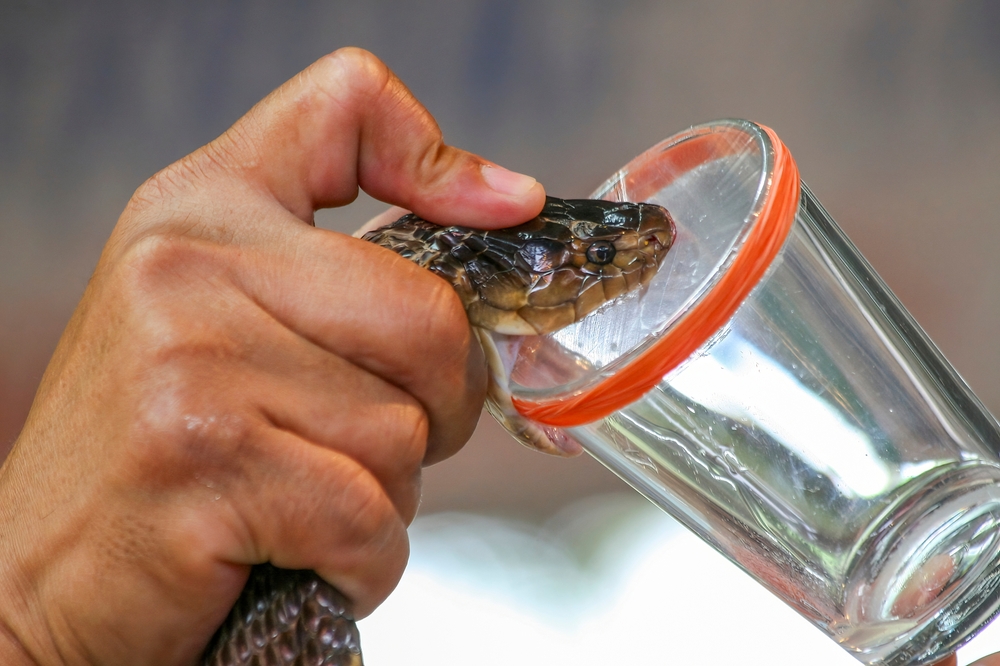
Extracting venom from a cobra. Photo: Shutterstock
Died from complications
In a statement, the hospital said Nwagene was assessed promptly and given the polyvalent snake antivenom, but that she had already developed severe neurotoxic complications. While preparing to transfer her to the Intensive Care Unit, her condition suddenly worsened.
Despite CPR and other emergency lifesaving procedures, she could not be revived. FMC Jabi stressed that claims of non-availability of antivenom and inadequate response were untrue.
Nwagene’s death has raised the broader issue of snakebite as a neglected health emergency in many parts of the world. Nigeria is home to a wide variety of venomous snakes, yet many healthcare facilities lack antivenom.
Healthcare workers in Nigeria have been raising alarms about this for years. Dr. Nicholas Amani, Medical Director of the Snakebite Hospital and Research Centre in Kaltungo, Gombe State, told Punch that the shortage is both chronic and global. He explained that antivenom scarcity persists worldwide because snakebite predominantly affects the less privileged, including farmers and rural dwellers who often lack political influence.
‘Scarcity, scarcity’
“Everywhere we attend conferences and international meetings, it is the same issue, scarcity, scarcity,” he said. “Ultimately, there are no free anti-snake venoms available. Most of them are now being sold by pharmacy vendors.”
Dr. Amani went further, claiming that even specialist centers such as his own often do not have antivenom in stock. While the government is trying to improve this, he noted that solutions remain stuck in bureaucratic pipelines.
In the wake of Nwagene’s death, Nigeria’s Senate has called for policies to improve nationwide availability of antivenom, but the problem extends far beyond Nigeria. The World Health Organization estimates that snakebites cause around 138,000 deaths and 400,000 permanent disabilities every year.
Despite these figures, the Global Strike Out Snakebites Initiative reports that many healthcare systems remain dangerously unprepared. Healthcare workers across Nigeria, Brazil, India, and Indonesia admitted that around half the facilities were not properly equipped to treat snakebites.
In Nigeria, 98 percent of surveyed healthcare workers reported challenges administering antivenom, citing delays in patients reaching hospitals, poor infrastructure and equipment, and a lack of training and clinical guidelines. Across all four countries, 35 percent of respondents reported daily shortages of antivenom.
Snakebite is now considered one of the world’s most serious neglected tropical diseases.