Next week, three young Canadian paddlers will push off from the shores of Tadoussac, Quebec, beginning an 8,000km canoe journey to Prince Rupert, British Columbia, on the Pacific Ocean. This route across the breadth of the country will take more than 200 days.
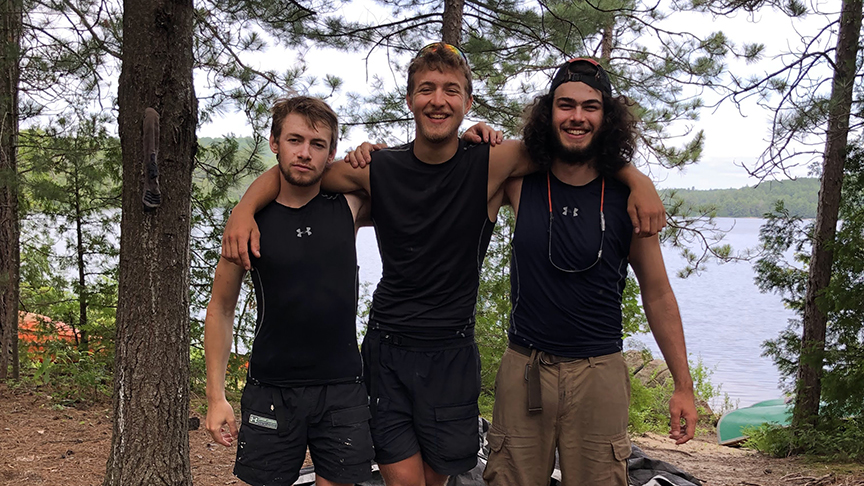
Will Vyse, Georges Kirijian, and Nolan Aziz are all 24-year-olds from Toronto. Despite their age, they bring a combined 893 days of canoe tripping experience and have worked as professional canoe guides since 2019.
Rather than following more common cross-Canada paddling routes, the trio has chosen a distinctly northern line. Their plan is to avoid major urban areas and spend as much time as possible in remote lake systems. They intend to have 18 resupply stops.
The route
The 8,000km journey begins in Tadoussac, where the St. Lawrence Estuary meets the Atlantic Ocean. The route spans the full width of Canada, linking waterways from the Atlantic coast to the Pacific.
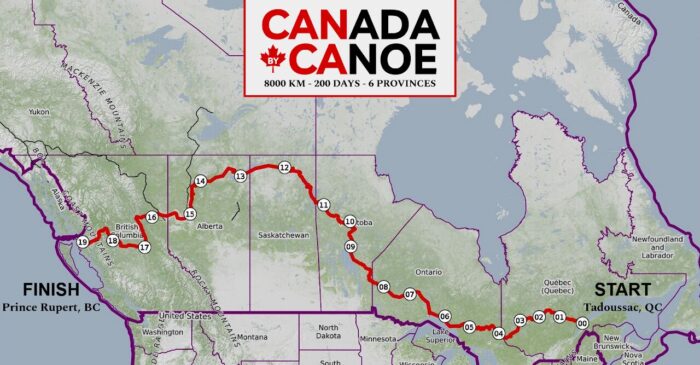
The route. Map: canadabycanoe.com
“This route has never been paddled in recorded history. Many parts of the route are based on old Indigenous travel ways and fur trading routes, as well as more modern trip reports,” Aziz told ExplorersWeb. “However, the whole route has never been attempted.”
From Tadoussac, the team will canoe inland via the Saguenay Fjord and Lac Saint-Jean, then continue through remote river systems, including the Asuapmushuan River, before linking into the Ottawa River in Ontario.
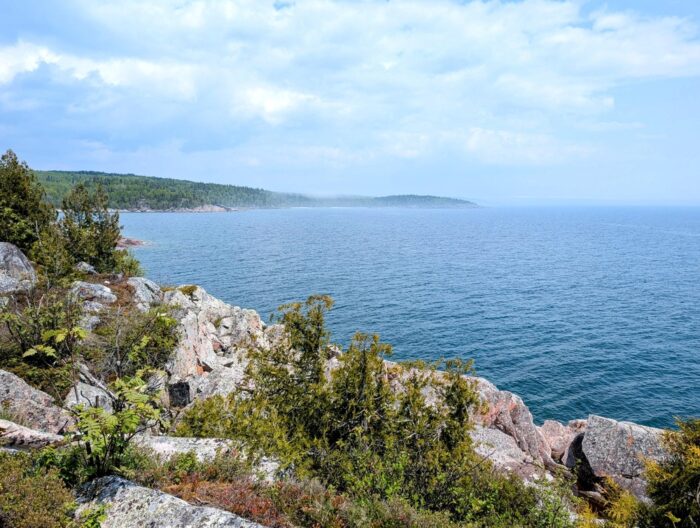
Lake Superior, Ontario, Canada. Photo: Shutterstock
Upriver paddling and portages
The team expects significant upstream travel and extended portages along the route. “Plenty of portages in the 10 to 14km range, but our longest portage is only 18km,” said Aziz.
“We have done longer portages on other trips. As for upriver, about one-third of the trip is upriver. The longest river that we have to paddle up is the Peace River, which will take us over a month to complete.”
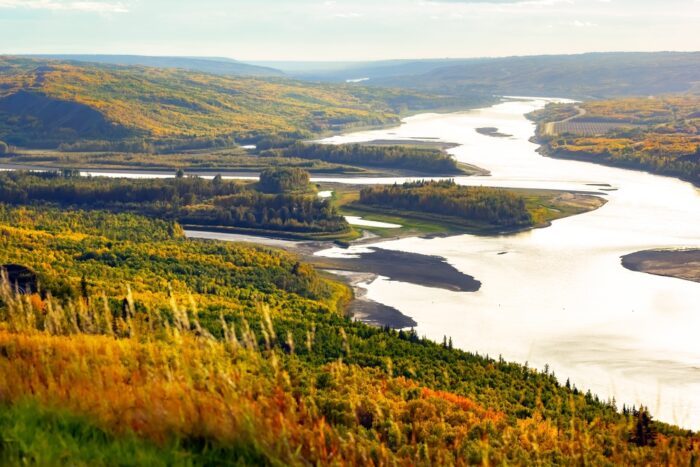
The Peace River, Alberta, Canada. Photo: Shutterstock
Ice conditions early in the expedition are another major concern. “Specifically, we are concerned with ice on Lac St Jean, as it is the largest lake we will encounter for the first month of the trip and a major crux for our trip’s success. Due to its size, it retains its cold longer and can take until mid-May to thaw in cold years.”
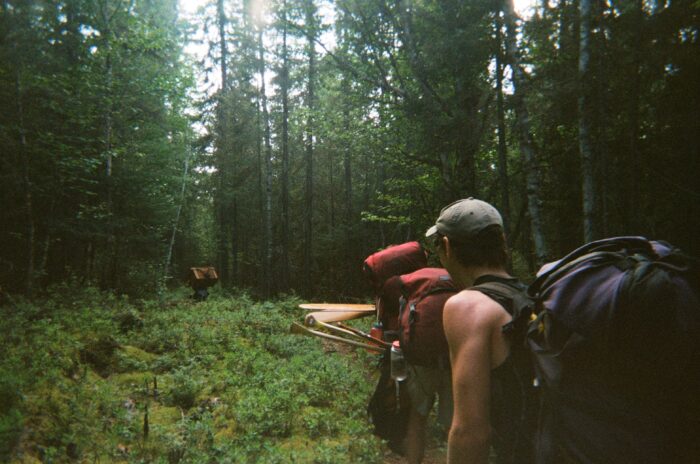
A past portage. Photo: canadabycanoe.com
“If the lake is still frozen when we get to the top of the Saguenay River, we’ll have to resort to portaging 80 to 100km around the lake until we reach faster-moving currents on the Ashuapmushuan. The portage would take us more than twice the time, but moving slowly is better than not moving at all.”