An article today in Nepal’s The Tourism Times suggests that even more climbers will be heading for the Nepali side of Everest “after China reportedly closed the Tibetan route (North Col) for the spring season, following a controversial fireworks show jointly conducted by Arc’teryx and [fireworks artist] Cai Guo-Qiang.”
The ever-opaque China Tibet Mountaineering Association (CTMA) has neither confirmed nor denied whether Everest North Side will close. Nor has Chinese media said anything. However, sources at The Tourism Times have told ExplorersWeb that they are certain about the closure.
We consulted four expedition operators with climbs planned for Everest North Side this spring. One of them insisted they had heard nothing from the CTMA.
“They are saying we have to wait,” said the operator, who also wondered whether economic interests in Nepal might prompt unfounded rumors. However, another outfitter believes the Chinese side of Everest will likely be closed to foreigners this year. To avoid such uncertainty and prevent their clients’ potential disappointment, they have decided to operate solely on the mountain’s South, or Nepal, Side.
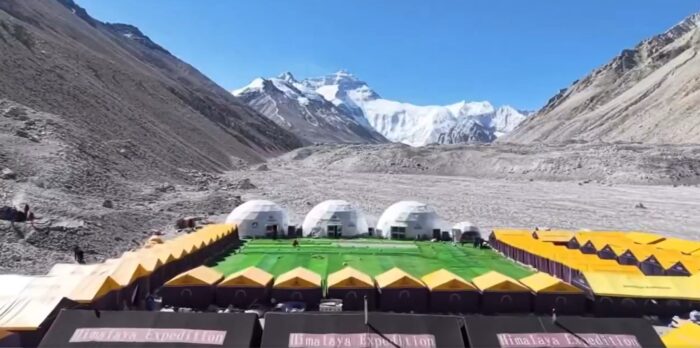
Everest North Side Base Camp. Photo: Tibetan World
In recent years, uncertainty has surrounded the North Side of Everest before every season. The North Side has been closed for five of the last 10 years, including during COVID.
Tibet’s closure, Nepal’s win
A closure of the North Side of Everest is, of course, good news for Nepal, as Nepalese tourism would inherit most of the climbers booked for Tibet. The Tourism Times article also notes that there have been “misunderstandings” about the potential new regulations for Everest. Some climbers have inquired if they need to summit a 7,000m peak in Nepal first. However, as an ExplorersWeb story about this recently explained, this Tourism Bill is still months away from approval and will not be applied before 2027 at the earliest.
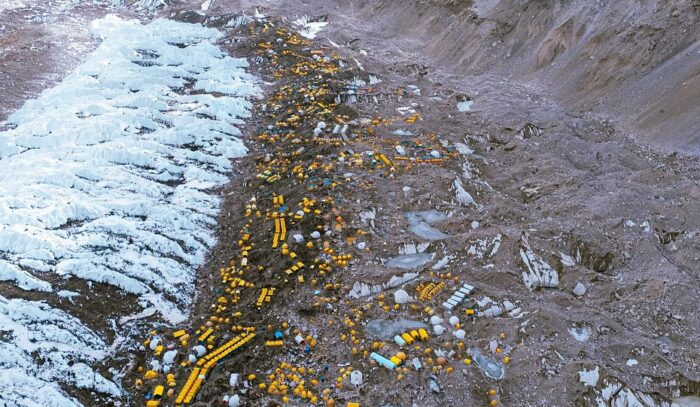
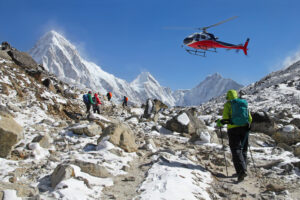
The huge Base Camp beside the Khumbu Glacier on the South Side of Everest. Photo: Lakpa Sherpa/8K Expeditions
The main change for Everest climbers this year is that permit fees have risen from $11,000 to $15,000. Note that Nepal doesn’t limit the number of Everest permits, while China caps it at around 300.
The fireworks faux-pas
Usually, the CTMA cites safety reasons for closing Tibetan peaks to foreign expeditions. That was their official position during the COVID pandemic, and in the fall of 2023, after an avalanche killed two American women and their Nepalese guides on Shisha Pangma. It led to the mountain’s early closure that season.
However, the “controversial fireworks” mentioned in the article makes little sense as a reason. That event took place months ago, and it didn’t happen on Everest, but on the outskirts of Shigatse, a city southwest of Lhasa. Here’s the story.
Last September, the outdoor gear brand Arc’teryx sponsored a performance by Chinese pyrotechnics artist Cai Guo-Qiang on the outskirts of that Tibetan city. Three sets of fireworks went off along a mountain ridge, creating the allegory of a “rising dragon.” The event precipitated criticism and an investigation by Chinese authorities.
Although organizers stated that the fireworks were eco-friendly and biodegradable, and they cleaned up the site afterwards, critics argued that the noise and smoke harmed the fragile ecosystem.
“Critics also denounced the performance as an act of cultural arrogance, noting that local traditions include reverence for mountain deities and taboos against loud explosions,” Global Times reported.
Issue settled
The backlash spread internationally. The organizers deleted the videos of the event, and Arc’teryx issued an apology, according to CNN. Four local officials lost their jobs after the Chinese investigation, and Arc’teryx and Cai were ordered to pay to “restore the environment,” according to the BBC.
The 52-second event took place on a grassy hill at nearly 5,000m, far from Everest Base Camp. Some weeks later, a large American team came to Everest with no problem, including a film crew led by Jimmy Chin and skier Jim Morrison, who skied down the Hornbein Couloir.
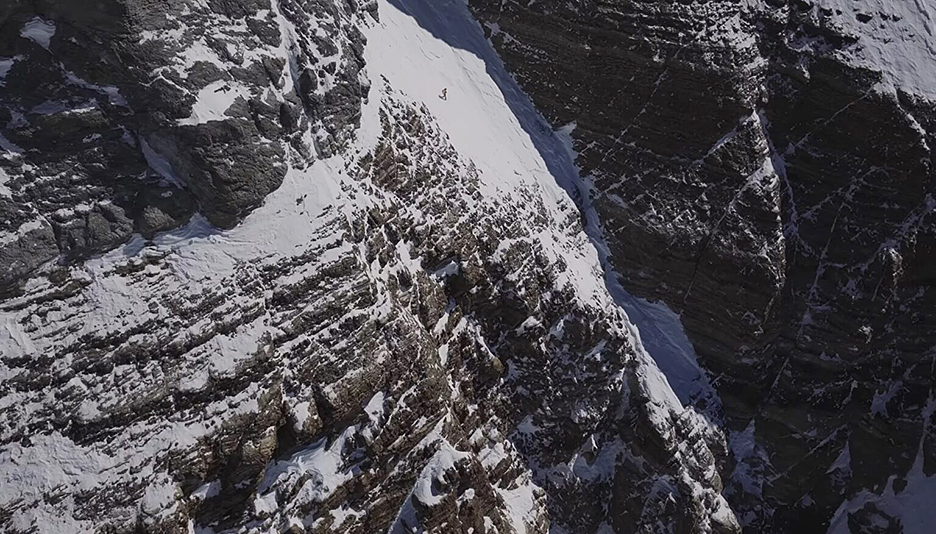
Jim Morrison skis down the huge Hornbein Couloir on the North Face of Everest. Photo: Frame from the video shared by National Geographic on YouTube
It is hard to see how this fireworks event relates to a possible Everest closure this spring. However, as we’ve often seen, Chinese authorities need no particular reason to ban foreigners from their side of Everest.