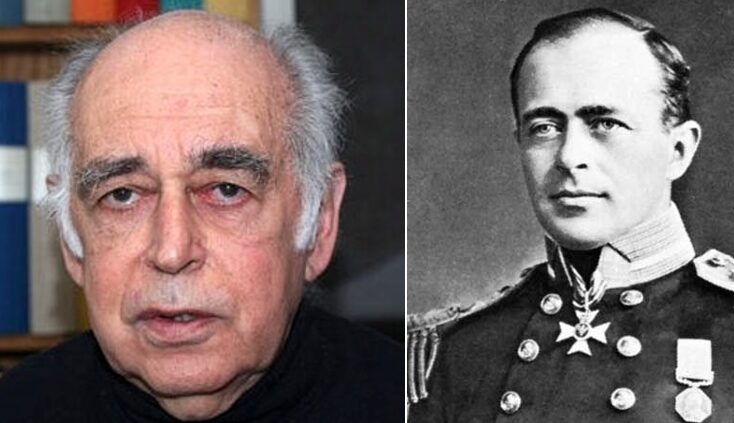
Roland Huntford, author of polar histories and biographies, passed away on Friday, January 23, after a brief illness. Huntford wrote bestselling biographies of Ernest Shackleton, Fridtjof Nansen, and Robert Falcon Scott, as well as nonfiction works on the history of skiing and our cultural perceptions of snow.
A controversial figure in polar exploration history, Huntford’s work transformed the narrative of Captain Scott and the race to the South Pole. His exact birth date is hard to verify, but Huntford was born in the year 1927, making him 98 or 99 at the time of his death.
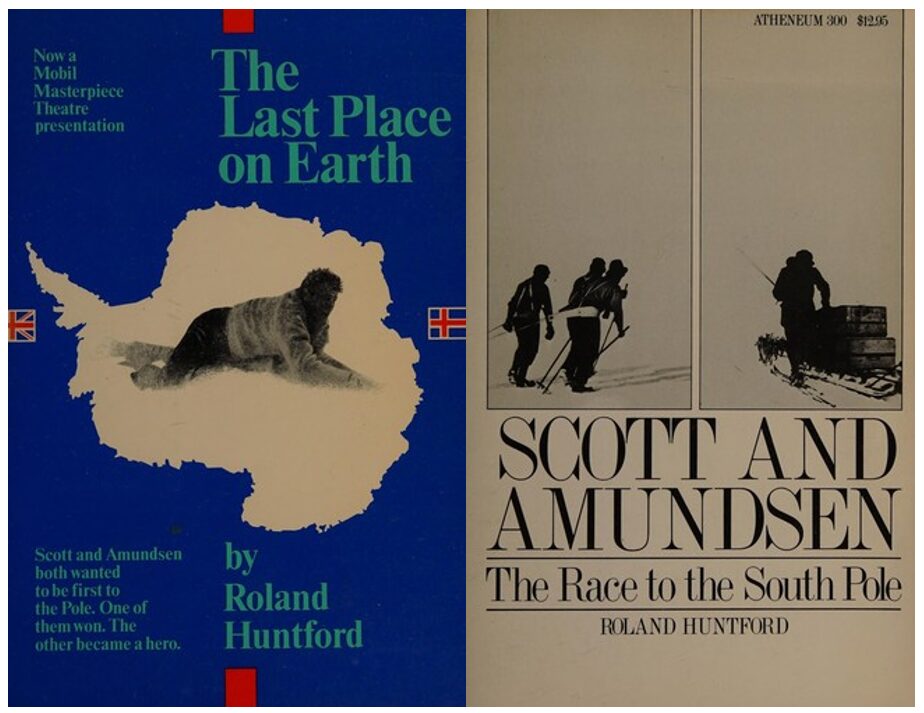
Two editions of Huntford’s bestselling work comparing Scott and Amundsen. Photo: Internet Archive
A complicated figure
While much of his life was spent writing biographies, his own is quite obscure. According to his own account, Huntford’s father was an English gentleman, and his mother was a Russian woman. They met before the Russian Revolution and settled in South Africa, where Huntford was born. Later investigation by polar explorer (and Huntford critic) Ranulph Fiennes found that Huntford was the son of two Lithuanian immigrants to South Africa. He changed his name from Horowitz to Huntford at the age of 32.
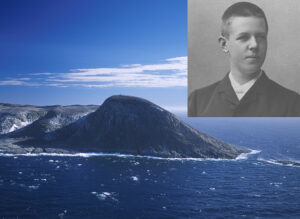
Huntford spent his youth in various careers, including a stint in Geneva working for the UN. Based on his later comments, he left the organization on somewhat bad terms. By the early 1960s, he was making his living as a correspondent for magazines like The Observer. In 1974, he interviewed Tryggve Gran, the only Norwegian on Robert Falcon Scott’s South Pole expedition, and then one of its final survivors.
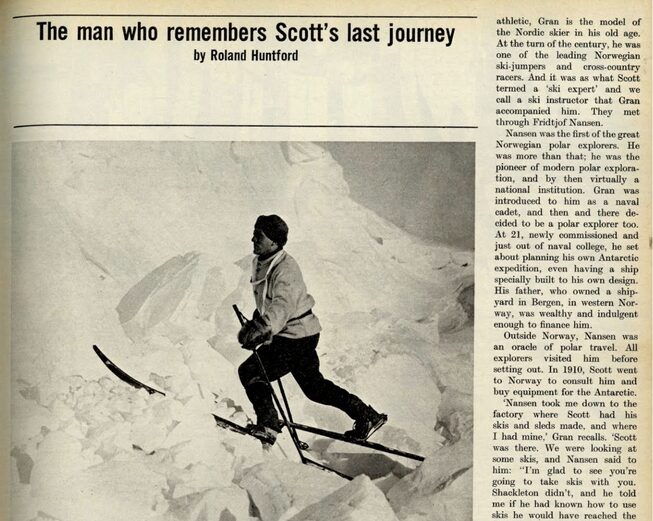
Photo: Observer Colour Magazine, hosted by Those Who Dared
Huntford later recalled that his editor read the story and told him there was a book in it. Five years later, Huntford published Scott and Amundsen. Alternatively titled The Last Place on Earth, it was an immediate success. It became a television show in 1985. It was a completely different version of the Scott story than anyone had read before, depicting Scott, formerly a tragic hero, as an incompetent leader and an unlikable, difficult man.
Lasting influence on the genre
Later writers like Fiennes criticized Huntford’s work, particularly his influential Scott biography. Huntford had no personal experience in the polar regions, and he consistently alienated the friends and family of deceased explorers. Scott’s son, Peter, actually brought legal action against Huntford and won.
Huntford’s work as entertainment, however, has enjoyed a better reception even among critics. Fiennes found his work “very well written, in the style of an exciting novel.” His modern, entertaining biographies revive public interest in polar exploration. His staunch opposition to the dominant narrative, if perhaps lacking in historiographical nuance, helped trigger a broader re-examination of how the Heroic Age of exploration is remembered.
Even Roland Huntford’s strongest detractors could not deny that the world of polar history has lost a man of massive impact.