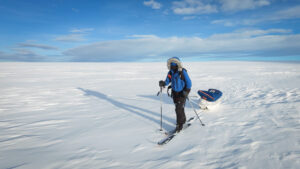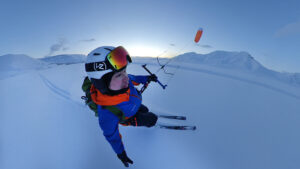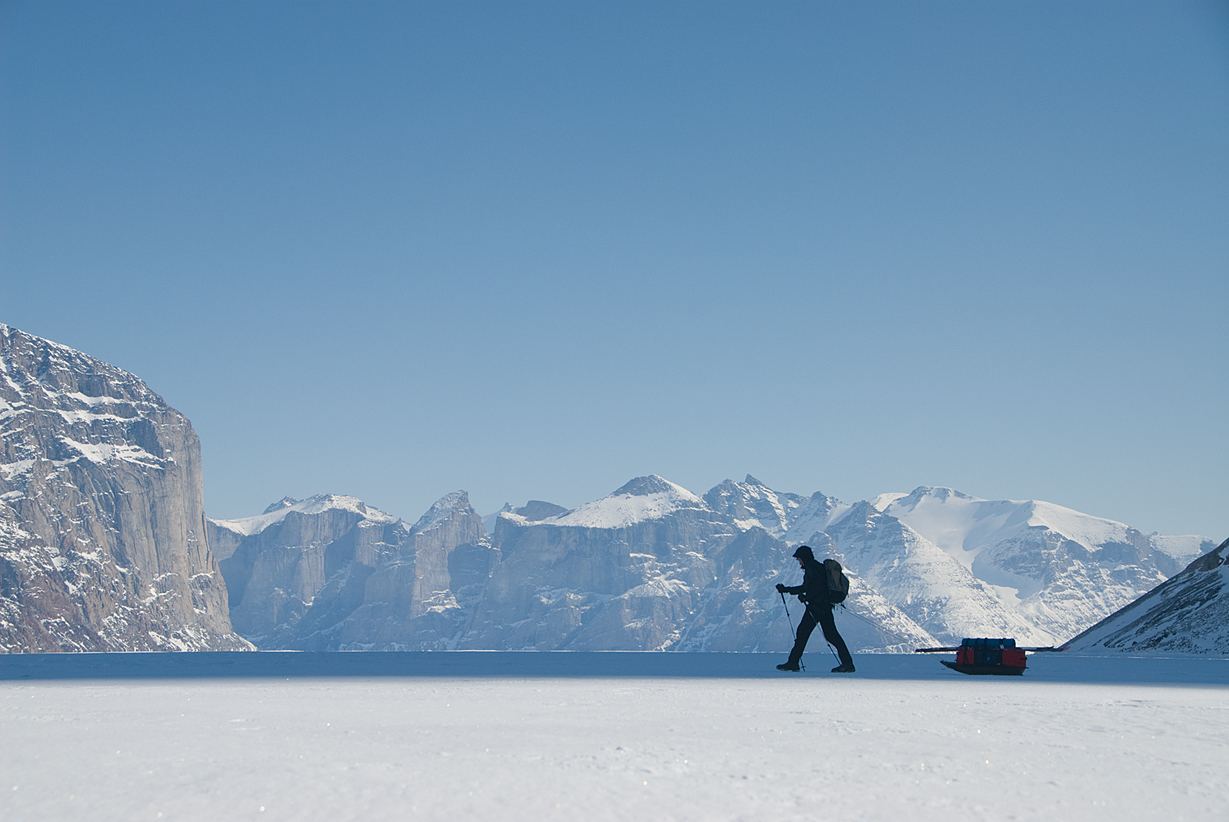
Down south, we don’t think of the sea freezing, but it does freeze solid in the Arctic. For at least half the year, all those channels and bays and straits become essentially flat land. Arctic islands then become one big landmass, glued together by nice, flat arteries of ice.
The Inuit are experts in sea ice travel, and some explorers were, too. The real Arctic travel season is in springtime, when the sea is frozen, but the light has returned. Travel starts in earnest around March and continues until early or even late summer, when the sea ice finally breaks up, and the ocean briefly becomes water again. The free pieces of ice drift around with the currents and winds and tides, gradually dwindling away. Some pieces manage to hang around until freeze-up in the fall.
Here is a primer of what it’s like to travel on this magical ocean surface.
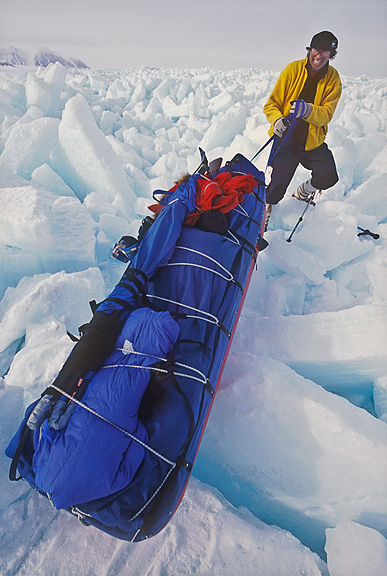
Some areas of sea ice are unpredictably rough. Avoid them as much as possible, even if it means a long detour. It’s easier (and you’re at less risk of injury) to do 10km on flat ice than 1km through a mess like this, which can take all day. If you’re stuck in the middle, there’s nowhere to pitch a tent.
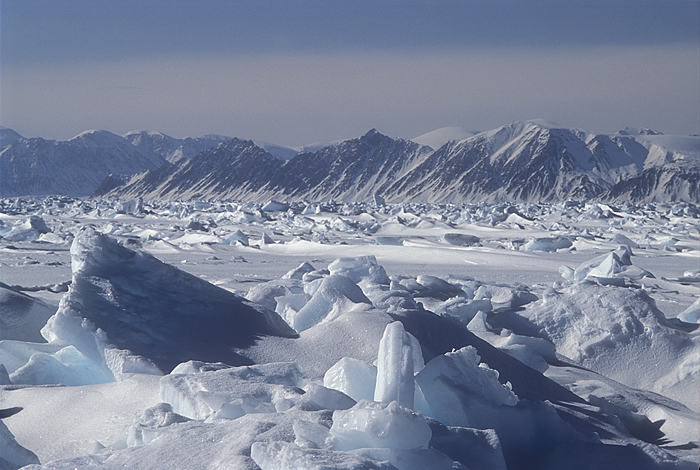
When. the ice is rough but there are channels of flat ice to sneak through, test whether the channels are common enough, and oriented in your direction, to continue straight ahead, or whether a detour is necessary.
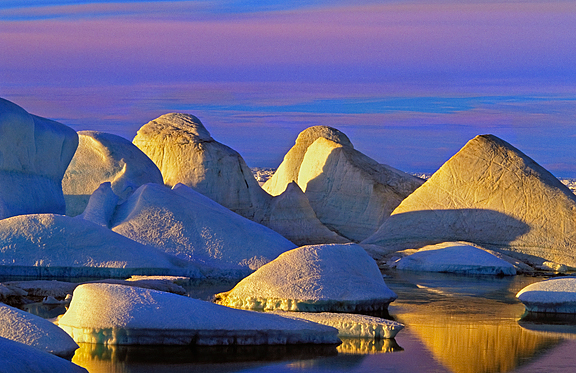
Multiyear sea ice still exists, but it’s much rarer than it used to be. The ice peaks are rounder than first-year sea ice, because they’ve melted over the previous summer. Multiyear sea ice is also thicker, but that affects ships more than foot travelers.
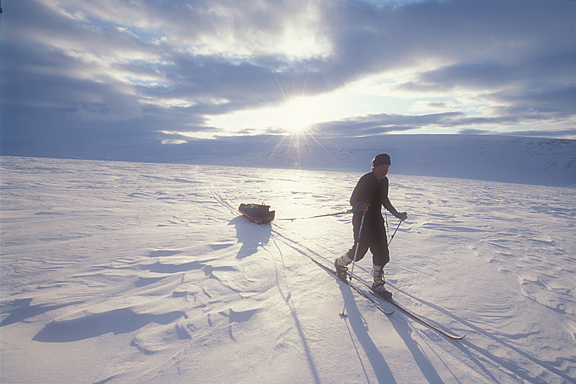
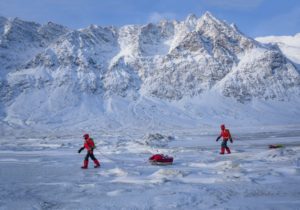
Ideal sea ice conditions for travel. Sometimes, the windblown snow is so hard that you don’t even need skis and can walk, if your footwear is comfortable enough. For technically good cross-country skiers, skiing is still faster than walking, but for most sledders, who just shuffle on their skis, walking is faster if you have a fast cadence.
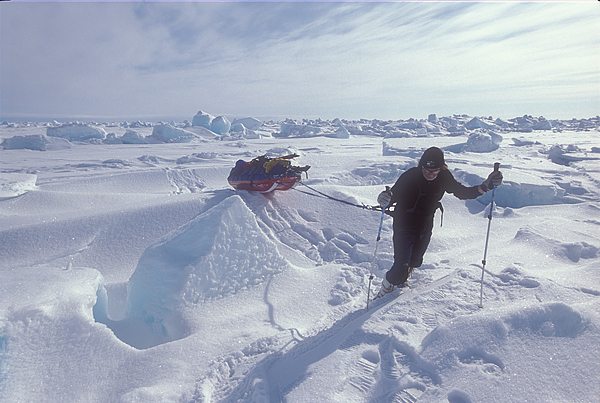
I long believed that sledding isn’t at all technical, but several less experienced partners have disagreed. I eventually realized there are tricks I learned unconsciously that can help. One of them: When pulling a sled over a lump of ice, don’t use your legs — you’ll tire them out prematurely. Instead, ‘fall’ forward with your legs straight, using gravity to lift the sled up the hill. Then, at the apex, resume hauling normally. With practice, you can catch your balance without a hitch, even if you’re leaning quite far forward with a heavy sled.
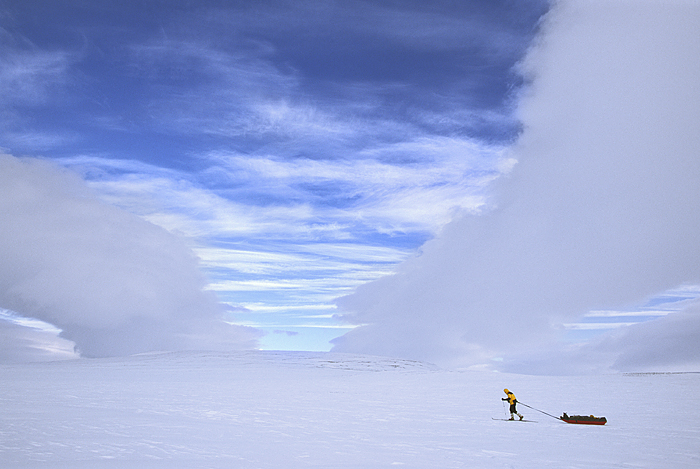
Another technique: Many novice sledders use their poles as delicate feelers. Instead, they should serve as third and fourth legs, driving you forward. At the end of a long expedition, the triceps and upper back muscles should be as well-developed as the legs.
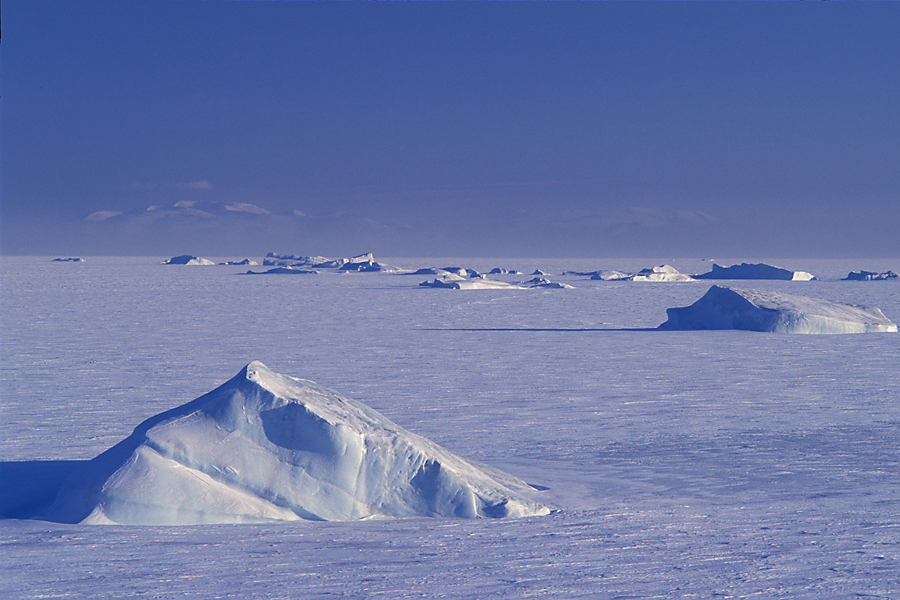
Contrary to how we usually think of them, icebergs spend most of their year frozen into the sea ice.
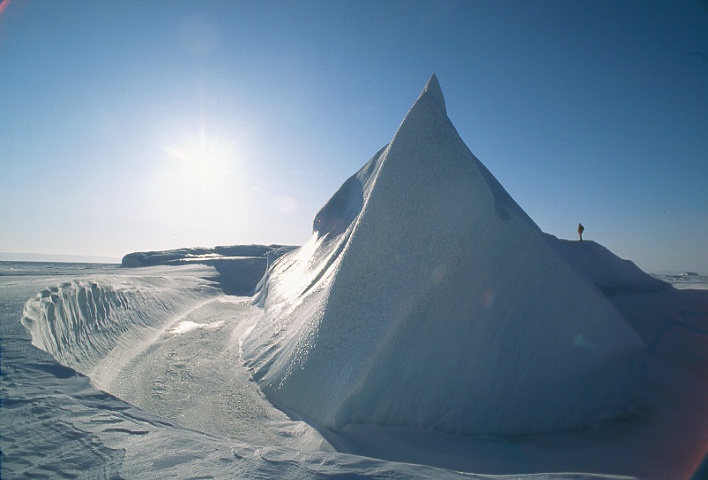
The tides create little moats around icebergs, with thinner ice that draws seals. This prompts polar bears to investigate them, so icebergs are not great camp spots, despite how photogenic they are and how quick and convenient it is to chip iceberg ice for melting water.
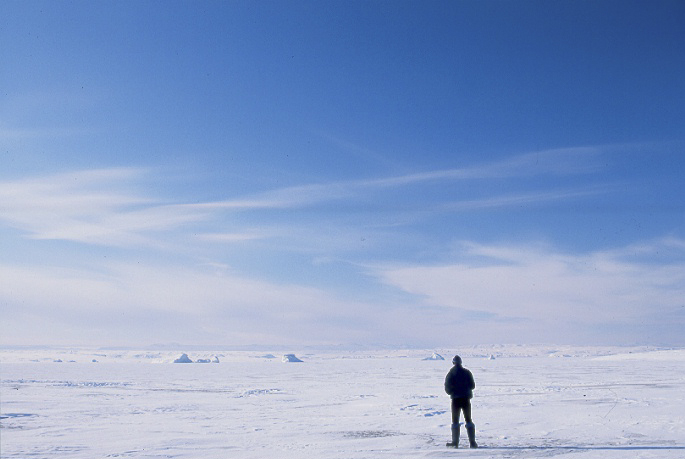
Another advantage of sea ice: The best weather of the year is when all water is locked in ice and there is little moisture available to form clouds and bad weather. Once the sea opens up, the weather becomes much cloudier and more unstable.
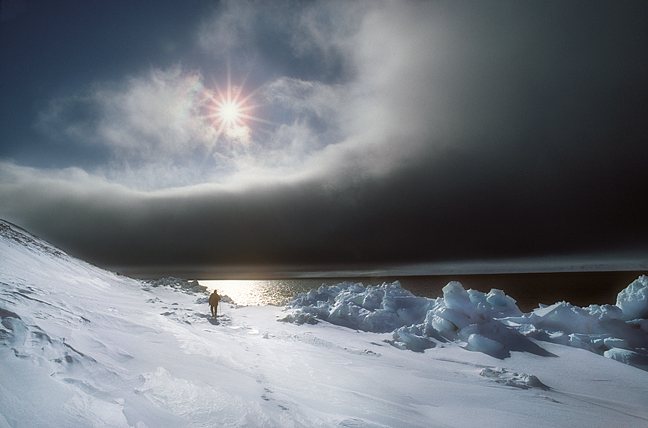
An example of how even local moisture generates clouds occurred at this small polynya, or area of permanently open water. The dark water reflecting on the underside of the low clouds is what explorers called a water sky. Visible from a great distance, it alerted travelers to the presence of open water.
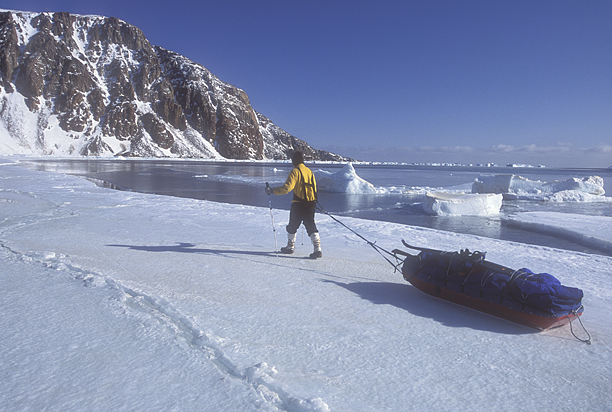
Unless you travel very early in the season or are attempting the North Pole, it is rare to run into bad sea ice. The sea tends to be either secure ice or wide open, as above. The exception is around strong currents, which sometimes tear ice away from the well-anchored landfast ice. New ice then reforms in cold weather. This new, reforming sea ice is very spooky. It’s greyish, but that’s not the spooky part. Unlike thin freshwater ice, it flexes under your skis like a water bed as you cross it. Your ski tips even create little bow waves. It’s very disconcerting. The rule of thumb is, before venturing across such ice, hit it firmly three times with the tip of your ski pole. If the pole doesn’t break through, the ice should hold you. Keep testing periodically as you ski across.
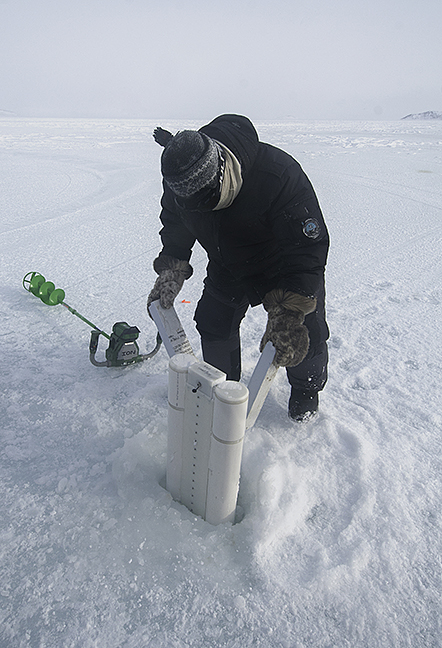
As predictable patterns of sea ice change with the warming climate, an Arctic program called SmartBuoy is installing satellite devices in sea ice. The device, whose readings are accessible through an app, monitors the thickness of ice near well-traveled areas and helps Inuit hunters stay safe.
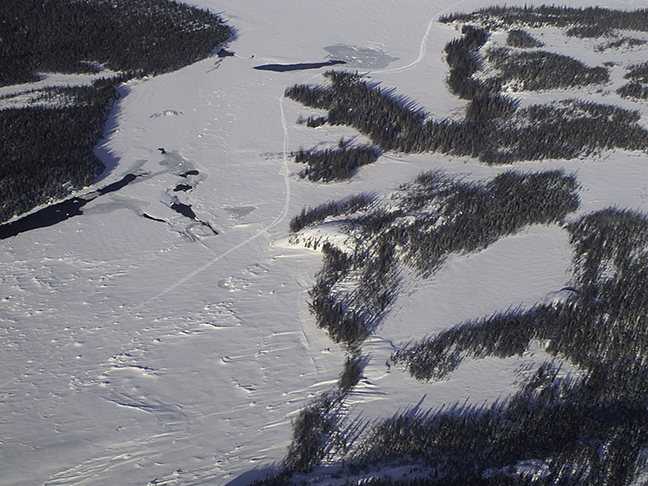
The Labrador coast from the air shows patches of open water, grey areas of new ice, and a snowmobile track that wanders prudently around those suspect areas. Labrador differs from more northern Arctic regions because it’s not as cold, and current through narrow channels — rattles, in local parlance — do create some open water.
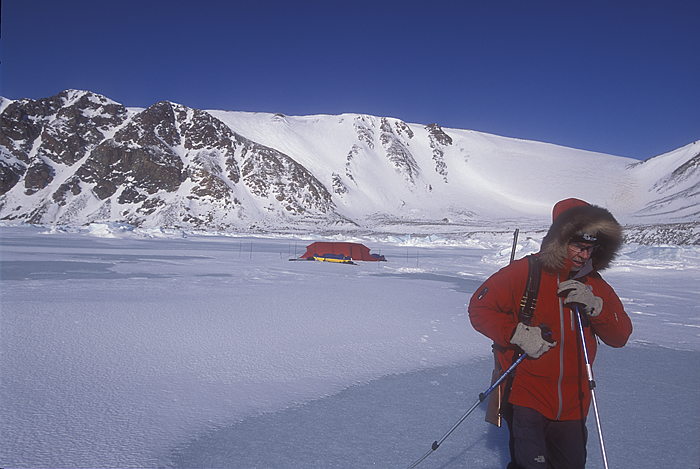
Camping on the sea ice is common and safe, but don’t set your tent right beside the rough intertidal area, which can leak water as it rises up and down with the tides.
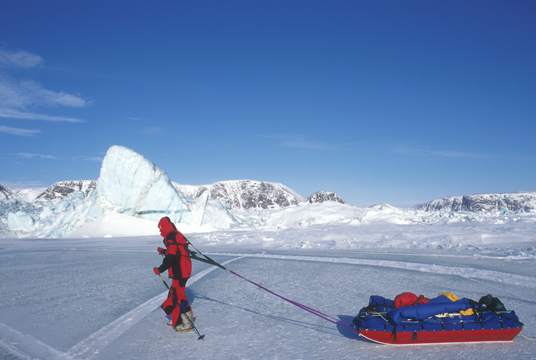
Even sea ice can be blown totally free of snow, so lightweight traction spikes are a useful addition to the kit.
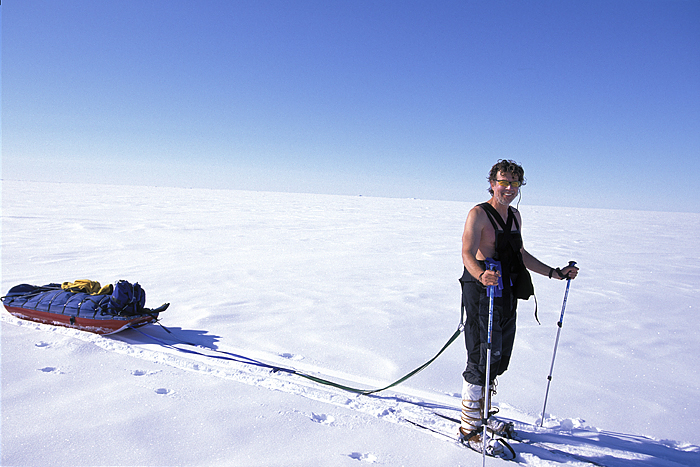
A beautiful May day on High Arctic sea ice. When tight maneuvering around ice blocks is not necessary, a long pulling strap means that you lose less energy in the upward vector while hauling the sled. The horizontal effort dominates. Too long a trace doesn’t look good in photos, however, so I usually remove the extension when taking pictures.
In spring and early summer, distant mirages form over the sea ice. Icebergs flip upside-down and hover in the air. These mirages are caused by cooler air near the surface and warmer air above — the opposite of the more familiar heat mirages of water on pavement or sand.
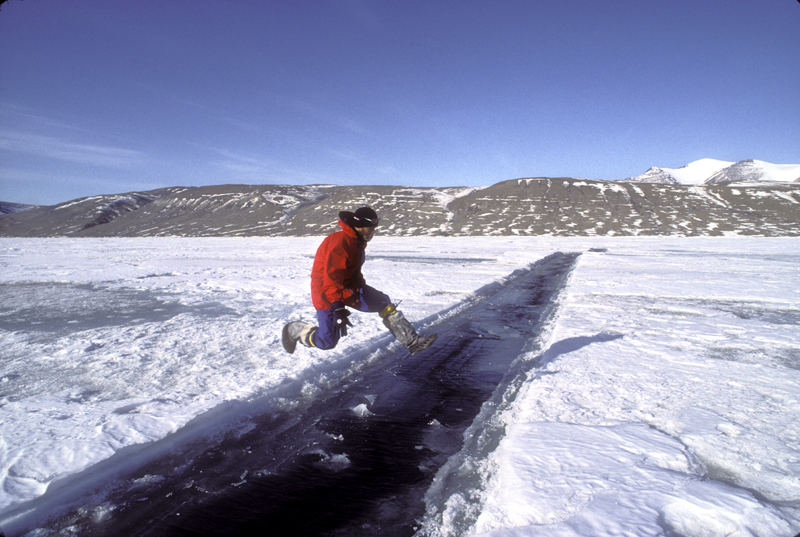
In late spring, leads of open water begin to form. At first, they’re narrow enough to hop or leap across, but eventually they become too wide.
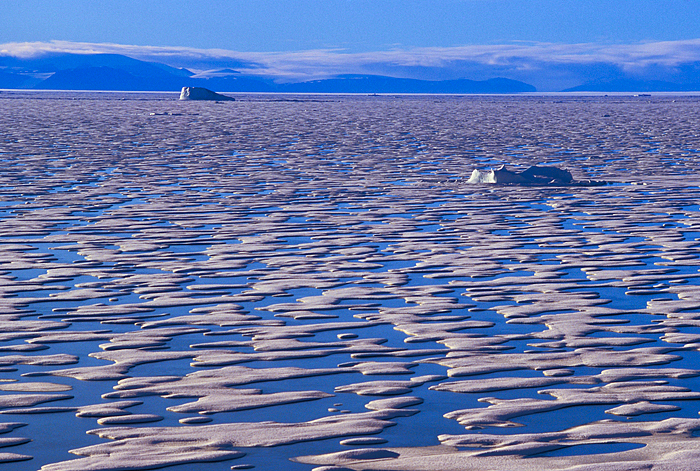
By early summer, meltwater pools form on the sea ice. You can slosh through the watery bits — they’re about shin deep and firm sea ice still lies underneath — but for sledders, it’s bumpy progress.
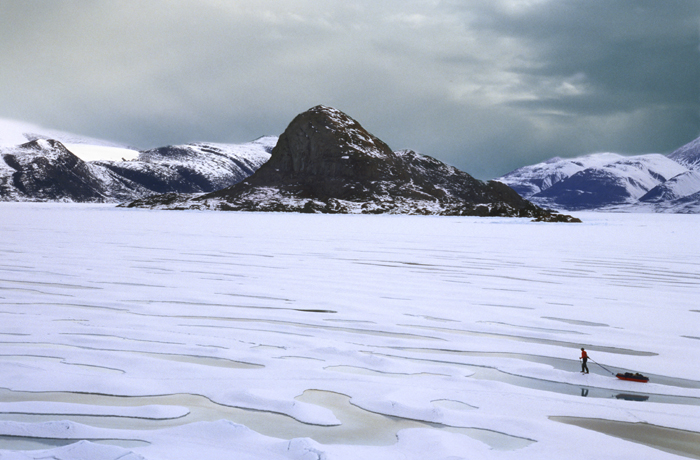
Whenever possible, it’s easier to follow the causeways of ice than to transverse them.
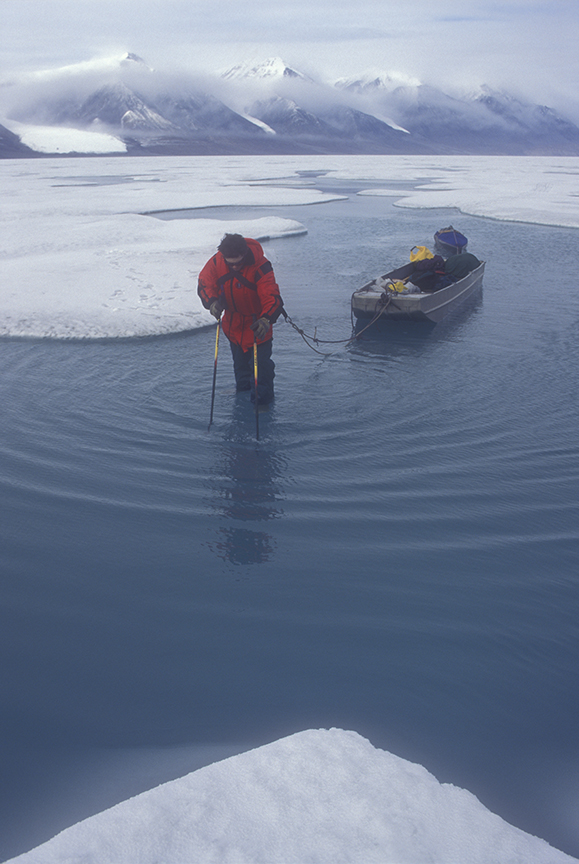
With waterproof footwear, you can walk through meltwater pools. To avoid a soaker, however, watch out for old seal breathing holes.
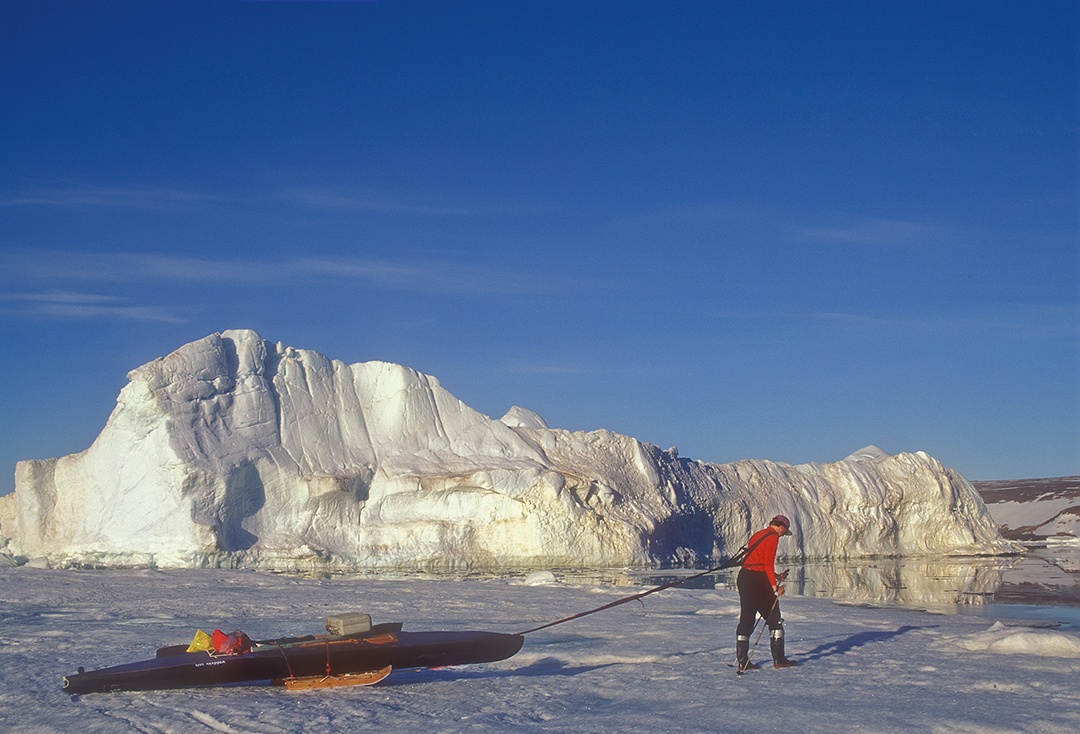
As summer advances, the meltwater drains through holes, and the ice briefly becomes dry again. But by now, the leads are often too wide to jump across, so pulling a kayak on a sled allows you to be amphibious. With a hard-shell kayak, you don’t need a sled, but I use a more delicate folding Klepper for easier transportation up north. The sled fits on the aft deck during the paddling sections.
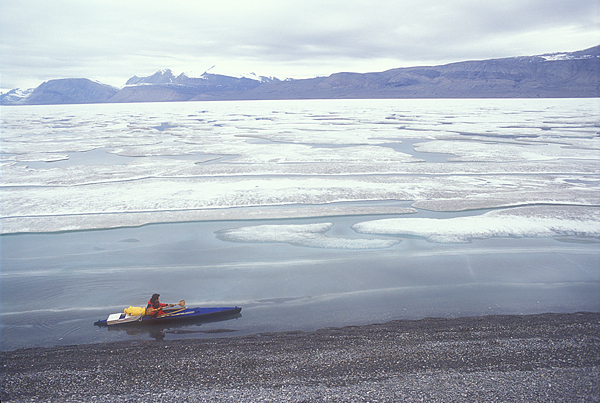
Sometimes, to avoid the bump, bump, of hauling a kayak over half-melted sea ice, you can paddle the shore lead, especially at high tide. As with ice foot travel, however, this means you must slavishly follow every contour of the coast.
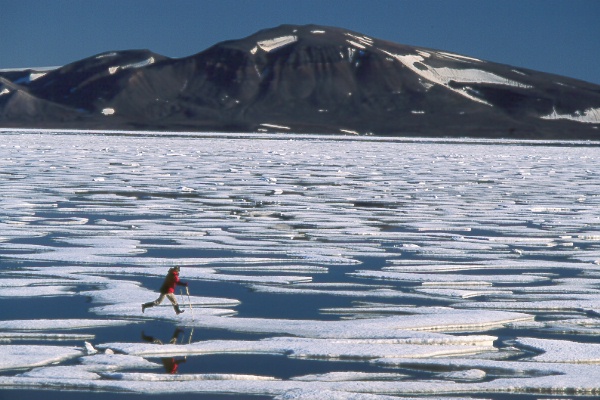
Finally, the sea ice breaks up, and the pieces become free-floating. That is now open ocean between the pieces, rather than just flooded ice. The rafts can be a meter thick and are pretty stable. It’s like jumping from one floating dock to another.
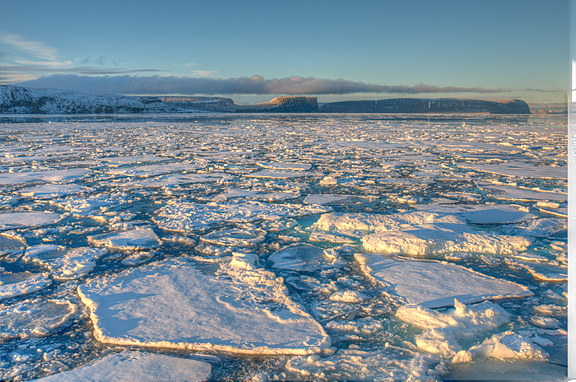
In fall, the sea ice begins to form again. The pieces are not thick enough to walk on, and the porridge ice is too thick to paddle through. Not a good season for ocean travel.