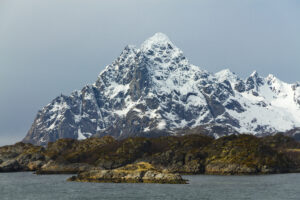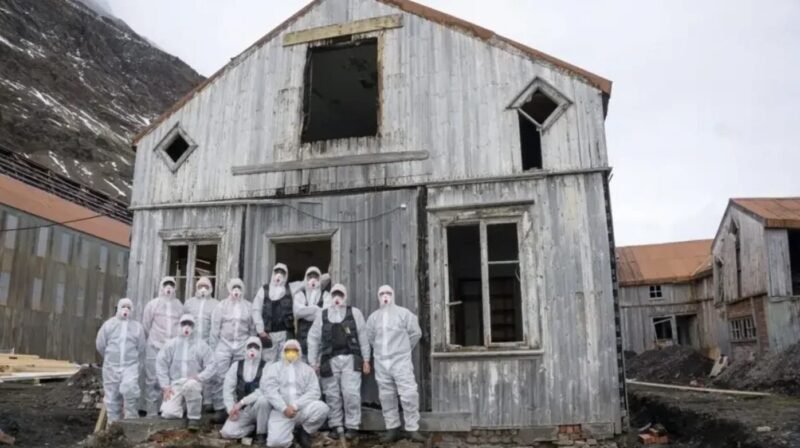
On an island in the South Atlantic, a restoration project is underway to rescue a crumbling piece of exploration history. The wooden house on South Georgia Island, where Sir Ernest Shackleton organized the rescue of his crew, is being brought back from the brink of collapse.
More than a century after Shackleton’s arrival in 1916, the building — known rather grandiosely as The Stromness Manager’s Villa — had fallen into severe disrepair. Built in 1906 by Norwegian carpenters, the whaling station at Stromness has stood abandoned since the 1960s, battered by wind, snow, and salt air. Richard Hall, who is leading the restoration, first visited the site in 2022 to carry out a feasibility survey. It revealed that the hut’s timbers were rotting, and the structure was on the verge of collapse.
The South Georgia Heritage Trust (SGHT) raised more than £3 million to conserve the building for future generations. The specialized team of heritage builders and carpenters from Norway and the UK arrived in Antarctica in October. Over the last few months, they have been working 12-hour days whenever the weather allows.
“If we did not do something soon, the building would collapse,” commented Hall.

The house at Stromness. Photo: SGHT
Heritage carpentry
So far, a large part of the restoration has been raising the building on jacks to remove crumbling brick foundations and rotten timbers. Wherever possible, heritage carpenters are matching the original features.
Working in South Georgia is not easy. All supplies, tools, and personnel must travel by boat from the Falkland Islands. Each evening, workmen return to their “floating hotel.”
The SGHT doesn’t only want to preserve the building, they also want to make the structure’s story accessible to the public, even if the site itself — full of asbestos and dangerous crumbling buildings — is not. Digital specialists will create a high-resolution 3D digital twin of the house, using drone imagery and advanced scanning. This means everyone will be able to explore a replica of the house where Shackleton recuperated and planned the rescue of his crew.
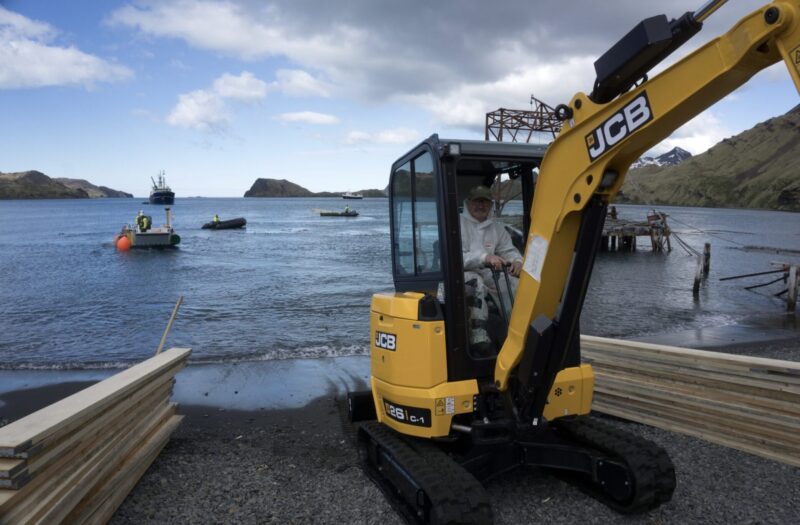
Unloading materials. Photo: SGHT
An important reminder
For Shackleton, the house was the first safe bed, hot meal, and bath after months stranded in Antarctica. In 1915, Shackleton’s ship Endurance sank, stranding his crew on drifting ice floes. In 1916, when those floes started to break up, Shackleton and a small party were able to make the 1,300km ocean crossing in a tiny lifeboat, across the treacherous Southern Ocean to South Georgia Island.
Here, three men stayed with the boat while Shackleton, Frank Worsley, and Tom Crean trekked over the island’s rugged peaks for three days — still a challenge for the modern mountaineers who’ve duplicated it — until they reached the whaling station at Stromness. It was their first contact with other people in 18 months.
According to accounts from the time, no one recognized the three disheveled men. They knocked on the door, and famously, the whaling manager opened it and said, “Who the hell are you?” Shackleton allegedly replied: “My name is Shackleton.”
The restorers are racing to complete their work during the island’s summer months. They hope to finish by February.