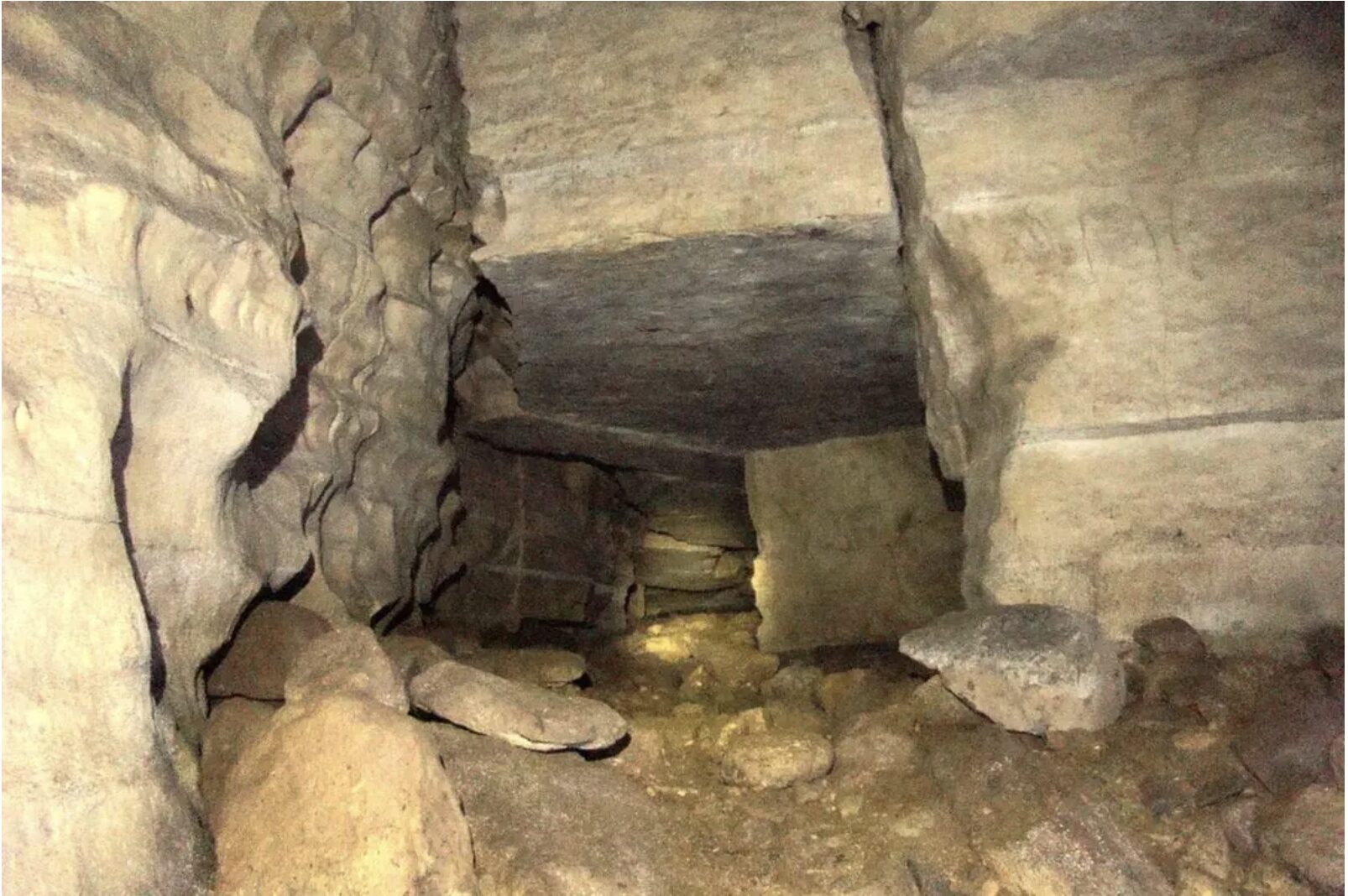
Cuevas de los Tayos translates to “Cave of the Oilbirds.” However, this cave isn’t famous for bird-watching; it supposedly contains a golden library that harbors hidden knowledge and challenges everything we know about human history.
Father Crespi and the library
In the 1920s, the Vatican sent Carlo Crespi Croci to the remote town of Cuenca in Ecuador to spread the Catholic faith. The locals quickly took to Father Crespi, who fed the poor and opened schools, a cinema, and several orphanages. As well as the community in Cuenca, Father Crespi cared for the Shuar people, who lived in the rainforest outside town.
Father Crespi was interested in anthropology. Whenever he had free time, he studied the local cultures. To thank Father Crespi for his work, the Shuar people began bringing him gifts, including artifacts such as thin golden plates with intricate markings and hieroglyphs. He soon built an impressive collection.
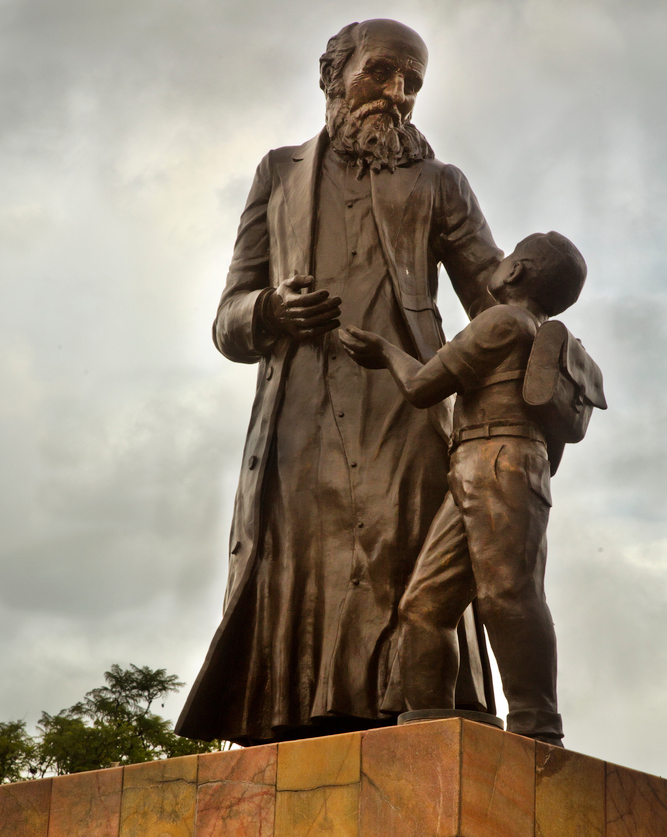
Statue of Father Crespi in Cuenca, Ecuador. Photo: Shutterstock
This seemingly endless supply of objects allegedly came from a cave deep in the jungle. The cave featured a massive vertical shaft, deep chambers, and tunnels housing a treasure hoard.
Father Crespi established a museum to display the objects, attracting visitors from near and far. The proceeds went to the poor. Many of the artifacts were obvious fakes, and Father Crespi was aware of this. He purchased them anyway, so that the museum would continue drawing visitors and making money for the poor. His museum included everything from mummies and skulls to armor and tools. Yet, the centerpiece was the “library” of metal plates.
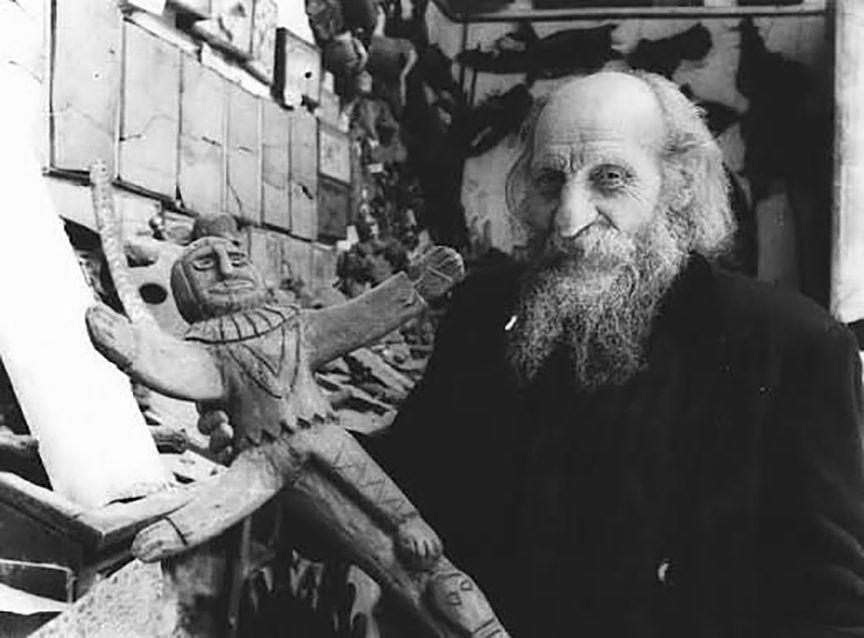
Father Crespi. Photo: Unknown
According to Father Crespi, some of the artifacts were as old as the biblical Flood, with plates depicting Egyptian, Assyrian, and Mesopotamian deities and technologies that only emerged thousands of years later.
However, in the 1960s and 70s, the museum was gutted by fire, suffered frequent thefts, and ran into financial problems. This led to its closure, and the objects were sold to private collectors.
The cave
The Shuar’s cave, Cuevas de los Tayos, does exist. Each year, the Shuar make a seasonal descent into the cave to capture the oilbirds that nest there. The cave has a plunging 70m vertical shaft, which eventually branches into a network of chambers.
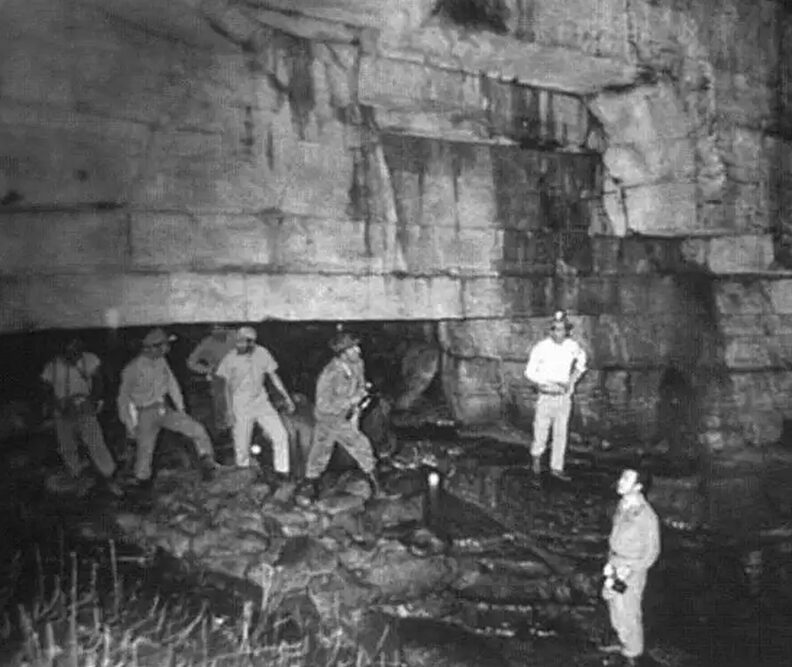
Old photo from an expedition to the cave. Photo: Ecuador Eco Adventure
Hungarian explorer Janos Moricz organized the first large foreign exploration of the cave. Moricz lived with the Shuar people for a couple of months in the late 1960s while traveling through South America. Here’s where the story, unfortunately, starts to involve a lot of conflicting hearsay from conspiracy theorists. Moricz heard stories of a cave filled with treasure and set out to find it. He claimed to have found it in the jungle and described a room filled with golden plates, books covered in symbols, and golden skeletal remains.
Moricz was fascinated by the occult, with some sources speculating he was connected to the Thule Society and the Nazi occult organization Ahnenerbe. His primary focus was to demonstrate that his ancestors (the ancient Hungarians) had reached South America via an ancient land bridge.
Moricz claimed that the golden library contained etchings associated with ancient Hungarian groups, thus proving his theory. He went to the Ecuadorian government to request funding and expeditionary resources, but was ignored.
Enter Erich Von Daniken
By 1969, with his bestselling weirdie book Chariots of the Gods, Erich Von Daniken had become famous for his outlandish theories about ancient cultures interacting with beings from other worlds. Moricz and Von Daniken met, and the latter claimed that Moricz took him into the cave. He described golden books and artifacts, which he naturally believed originated from otherworldly visitors in ancient times.
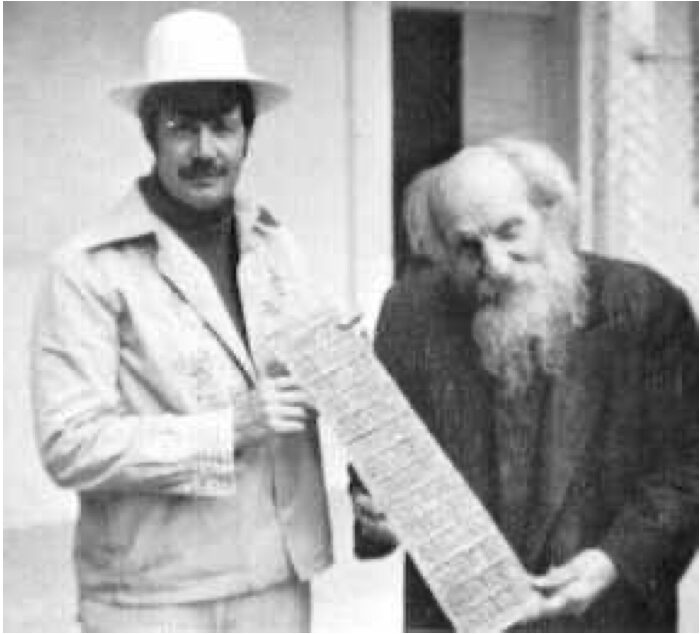
Father Crespi, right, with a tablet. Photo: Unknown
After publishing another book, The Gold of the Gods, Von Daniken fell out with Morciz, who claimed they hadn’t visited the cave together and that Von Daniken had simply recounted a conversation about the cave. This did not look good for either party. However, the book and argument did put Cuevas de los Tayos on the radar of other explorers.
Scottish archaeologist Stan Hall led an expedition to the cave in 1976, with the help of the British and Ecuadorian military, and American astronaut Neil Armstrong. They claimed to find evidence of man-made features like doors, but no golden books. However, in an article by writer Dario Brooks for the BBC, geologist Theofilos Toulkeridis explained that what Hall thought were man-made carvings in the rock were actually the result of natural processes.
But that did not deter Hall. He met a gentleman named Petronio Jaramillo, who claimed to have seen the golden library as a child with a Shuar friend. Jaramillo described the library:
Each metal sheet is about 40 x 20 centimeters, and there are about 50 leaves in each book, stamped to form a bas-relief on one side. There are tinges of green in the metal. The sizes of the books vary and, I estimate, from lifting some of them, that they average between 20 and 40 kilograms each. The seven books I took down from a shelf were each too heavy for me to lift back up again.
He described the script as “similar to modern shorthand” and said it included symbols and shapes. Hall wrote a book, Tayos Gold, recounting this conversation.
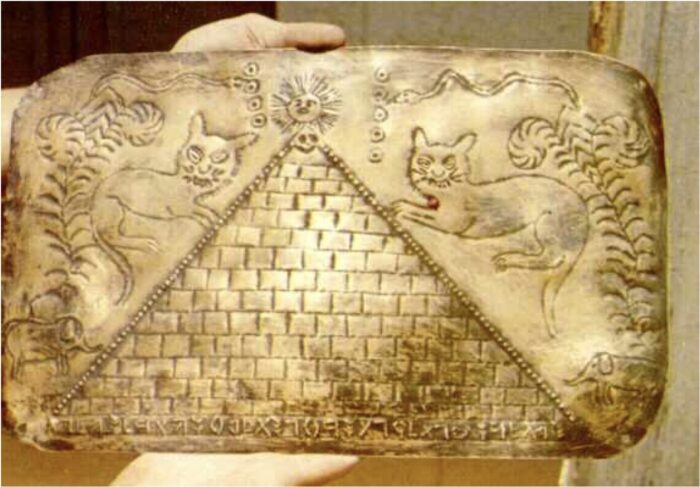
A fake artifact from Father Crespi’s collection. Photo: Unknown
Theories
American explorer and mystery enthusiast Richard Wingate allegedly saw Father Crespi’s collection in the 1970s before it was sold off:
In a dusty, cramped shed on the side porch of the Church of Maria Auxiliadora in Cuenca, Ecuador, lies the most valuable archaeological treasure on earth.
More than one million dollars’ worth of dazzling gold is cached here, and much silver, yet the hard money value of this forgotten hoard is not its principal worth. There are ancient artifacts identified as Assyrian, Egyptian, Chinese, and African, so perfect in workmanship and beauty that any museum director would regard them as first-class acquisitions.
Since this treasure is the strangest collection of ancient archaeological objects in existence, its value lies in the historical questions it poses and demands answers to.
Yet, if the collection was this important, why wasn’t it publicized or snapped up by a major museum? Why haven’t there been more surveys and large-scale searches of the cave and surrounding areas? The details don’t add up.
Conclusion
Cuevas de los Tayos is not easily accessible to the public. Though some believe the Shuar have hidden the library’s remaining contents — and the genuine gold bits in Father Crespi’s original collection could well have come from some ancient Amazonian culture — it is much more likely that most of the legend is a hoax.