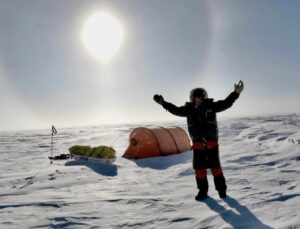
Very few people will ever ski to the South Pole, especially the full 1,000km route. Yet over 150 people have skied to the Pole in the last 10 years.
The two most common long-distance routes are the Hercules Inlet and Messner Start routes, which are around 1,130km and 911km, respectively. As with every adventure on the White Continent, one outfitter, Antarctic Logistics and Expeditions (ALE), supports them all.
“Between 2016 and 2025, we have had 165 skiers on all routes to the South Pole,” Steve Jones, ALE’s Expeditions Manager, told ExplorersWeb. “Of these, 123 were on the Hercules Inlet and Messner Start routes.
Ups and downs
While some adventure pursuits have surged over the past decade, Antarctic trekking has been more up-and-down.
Before the COVID pandemic, 55 people successfully skied the Hercules Inlet or Messner Start routes between 2016 and 2019, 76% of them men. Operations ceased entirely in 2020, as many things did, when ALE remained closed for the season. As a result, no skiers reached the South Pole in 2020.
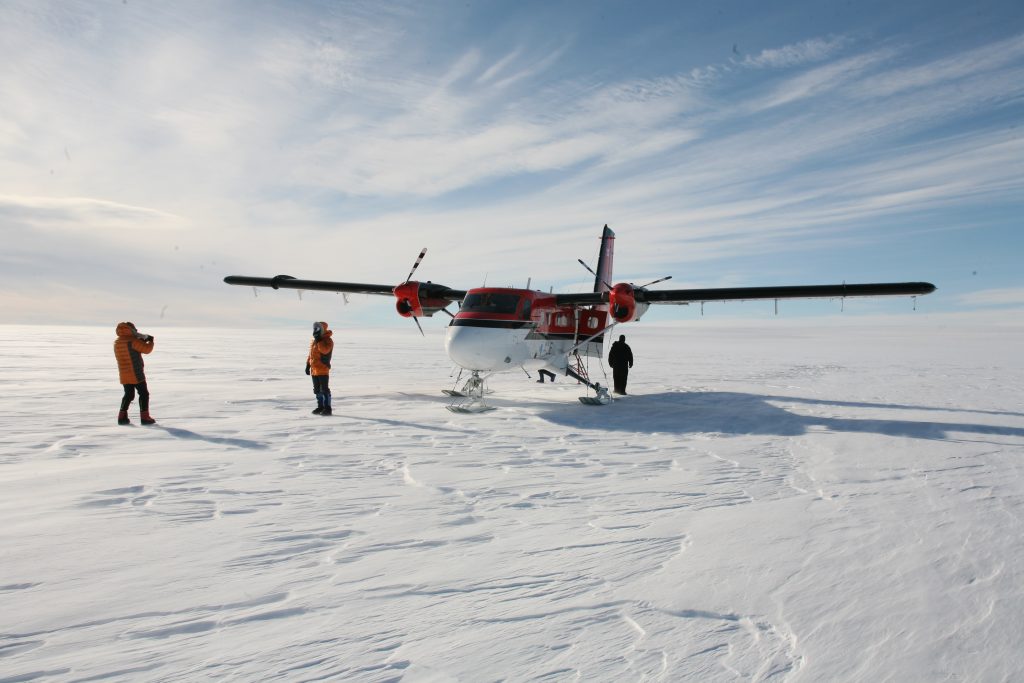
Expedition start at Hercules Inlet. Photo: Steve Jones
“In 2021, there was a very small season as we tried to return to operating,” said Steve Jones.
That year, five people set out, and three completed their journey. Numbers rebounded sharply in 2022, with 34 successful skiers — driven in part by a large UK-based medical research expedition, which fielded a team of 11.
That surge proved short-lived. Eleven skiers reached the Pole in 2023, 13 in 2024, and 5 in 2025. A further 20 skiers began expeditions between 2023 and 2025 but did not complete them.
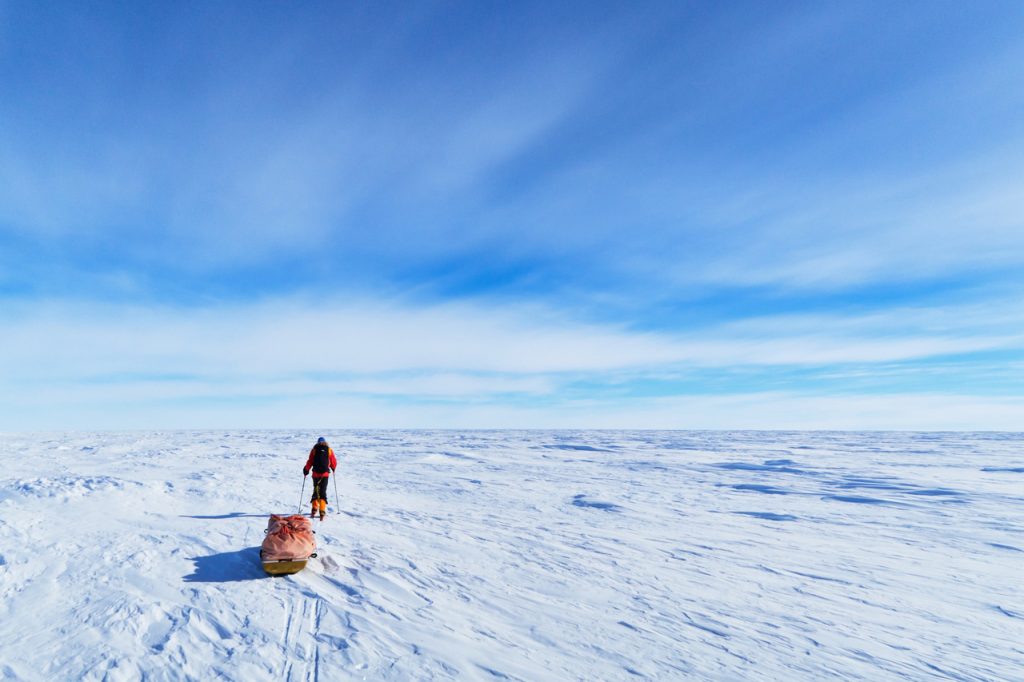
Crossing the polar plateau. Photo: Carl Alvey/ALE
More women
This year, Monet Izabeth of the United States and Andrea Dorantes of Mexico both completed solo, unsupported journeys along the Hercules Inlet route, finishing in 57 and 55 days, respectively. In recent seasons, Caroline Cote and Preet Chandi have also skied the route in pursuit of the women’s speed record. Other women, such as Amelia Rudd and Cat Burford, also pursued adventure in Antarctica. Anecdotally, at least, it appears that more women are attempting the trek to the South Pole.
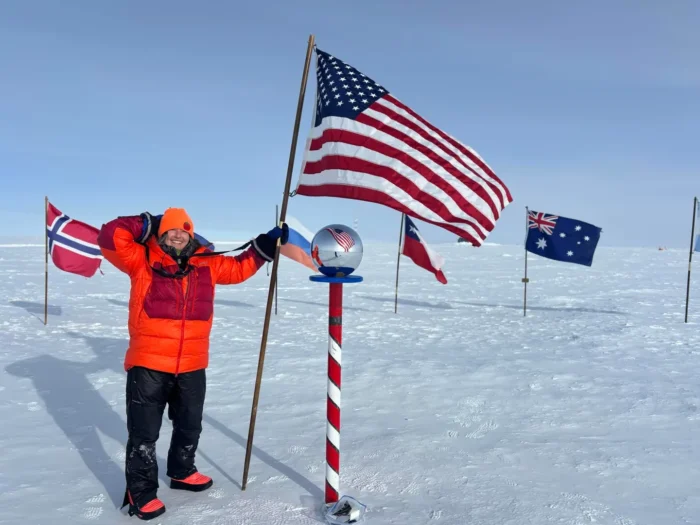
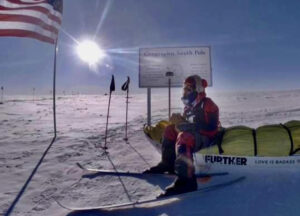
Monet Izabeth at the ceremonial South Pole. Photo: Sara Jenner
The longer-term data tell a different story, however. Female participation has fluctuated from year to year over the past decade, and men continue to dominate overall. Between 2016 and 2025, 74% of successful skiers on the Hercules Inlet and Messner routes were men, suggesting that gender parity in South Pole expeditions remains some way off.
The picture appears more encouraging when considering country representation, with skiers from 28 different nations participating over the past decade — Australia, Canada, China, Croatia, Czechia, Denmark, Estonia, Finland, France, Hungary, India, Ireland, Italy, Japan, Mexico, the Netherlands, New Zealand, Norway, Poland, Portugal, Slovakia, South Korea, Spain, Sweden, Switzerland, Turkey, the UK, and the U.S. However, UK skiers dominate, accounting for 40% of all skiers, while Australians and Americans are the next most commonly represented.
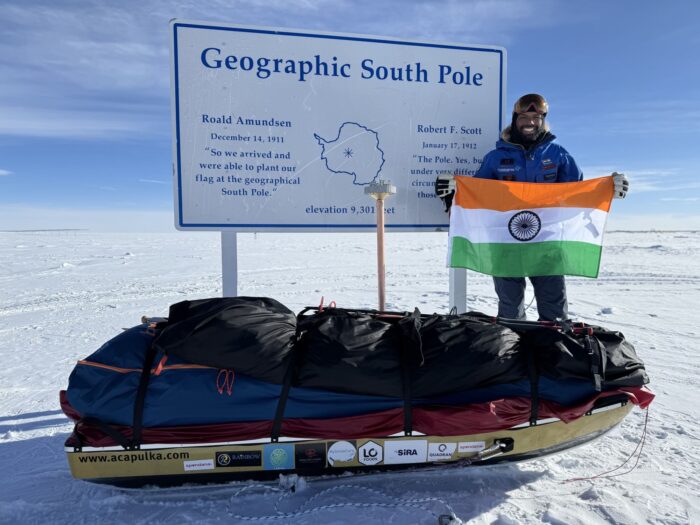
Last year, Satish Gogineni became the first Indian to ski solo and unsupported to the South Pole. Photo: Satish Gogineni
Although participation in these expeditions appears to be expanding geographically, representation remains heavily concentrated among higher-income nations. Only four of the countries represented — China, India, Mexico, and Turkey — are classified by the World Bank as lower- or upper-middle-income economies.
This pattern is unsurprising given the substantial financial barriers to entry. A ski expedition via the Hercules Inlet or Messner Start routes can cost up to $100,000. Consequently, the apparent diversity in participation does not necessarily reflect broad global accessibility, but instead highlights how these expeditions continue to be shaped by unequal access to resources.
A large proportion of soloists
Reflecting on recent changes in expedition patterns, Steve Jones notes a shift in skiers’ ambitions. Fewer join guided expeditions as their first Antarctic experience. “We are seeing more and more people asking about solo expeditions, usually unsupported solos as their first Antarctica expedition,” said Steve Jones.
ALE hasn’t guided a Hercules Inlet to South Pole ski, previously an annual event, since 2021.
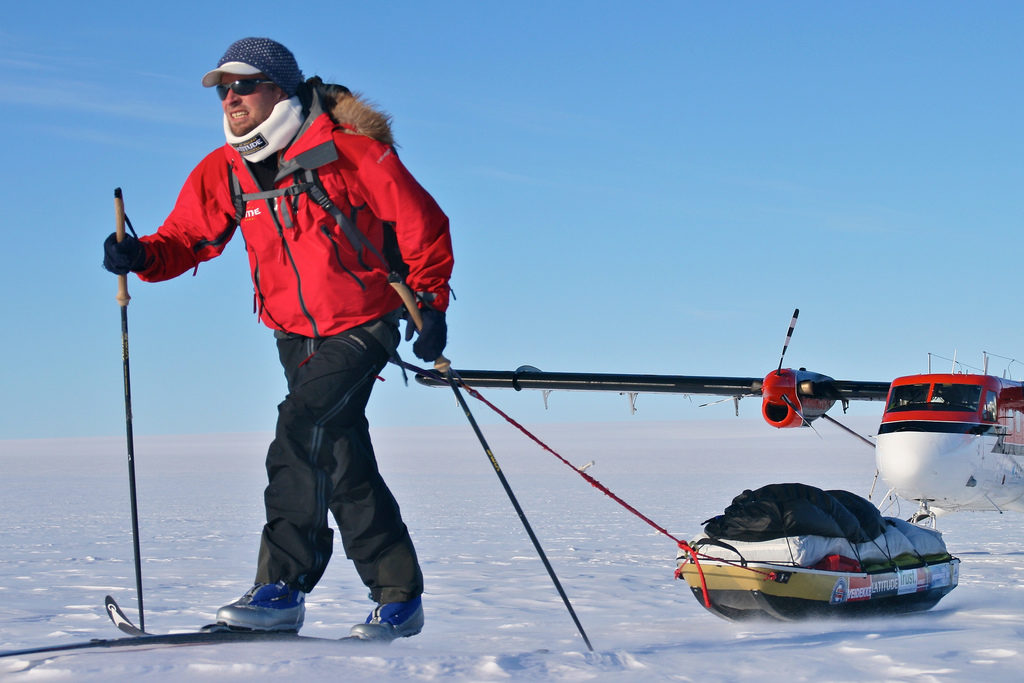
Christian Eide at the start of his Hercules Inlet speed record journey in 2010-11 Photo: ALE
Between 2016 and 2025, solo skiers accounted for more than a third of all participants on the Hercules Inlet and Messner routes (37%), while guided clients represented 31% of skiers. The remaining expedition members comprised guides, camera operators, leaders, and deputy leaders, participants in larger teams, and equal pairs.
While participation varies year to year, sustained interest in these routes, particularly among solo trekkers, shows that the appeal of hauling a sled on Antarctica’s polar plateau endures. Even now that the routes are well-mapped, understood, supported, and frequently traveled, the challenge continues to draw people south.