Our view of space is under threat from the rapidly growing cloud of satellites circling the planet. Streaks of reflected light from satellites are ruining space telescope images all over the world.
The problem stems from the explosion of satellite megaconstellations being launched into orbit.
“Until now, most light pollution came from cities and vehicles,” says Alejandro Borlaff of NASA. “[Now] telecommunication satellite constellations is rapidly affecting astronomical observatories worldwide.”
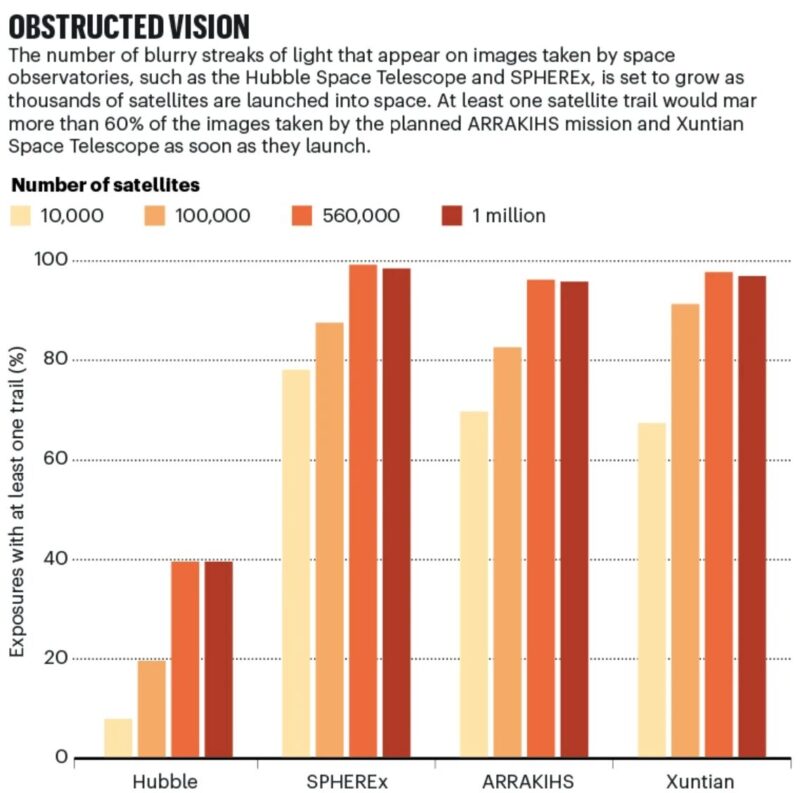
Graph detailing the projected impact of a growing number of satellites. Image: Nature
It’s bound to get worse. Companies such as SpaceX, OneWeb, Amazon, and others have plans to launch hundreds of thousands of small satellites into low orbit over the next decade. Currently, more than 15,000 satellites orbit the Earth, up from 2,000 just a few years ago. But that number could balloon to more than half a million by the late 2030s.
These satellites are already a problem. Long-exposure images at twilight or dawn is the ideal way to capture faint cosmic objects. But bright satellite trails now routinely mar the field of view, affecting astronomers’ ability to collect data.
Space telescopes also affected
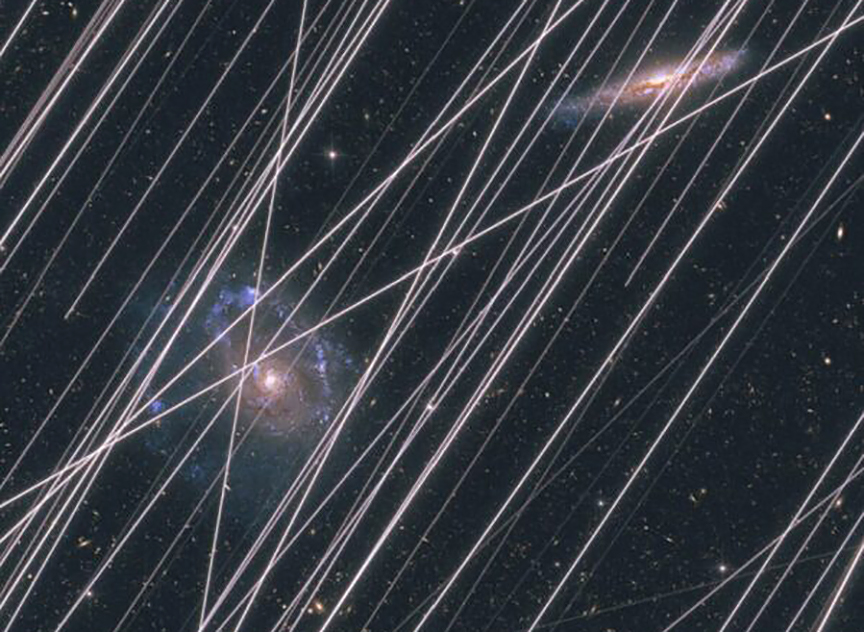
The problem isn’t limited to telescopes on Earth. Even telescopes in space, including the Hubble Space Telescope, are not immune to this form of light pollution. Up to 33 percent of Hubble’s images could be contaminated with streaks by the mid-2030s if these satellite megaconstellations expand as planned. Others could see more than 95 percent of their exposures affected.
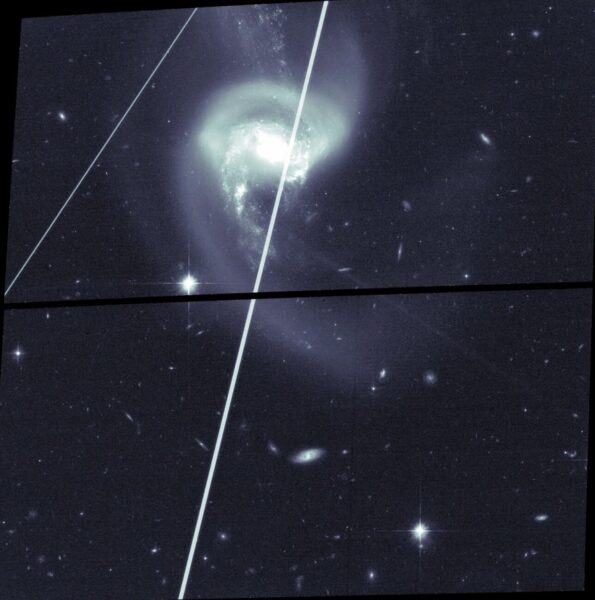
A contaminated Hubble space telescope exposure simulation. Image: NASA
As a satellite crosses a telescope’s field of view, the reflected sunlight creates a bright line or “photobomb” across the image.
“As telescopes stare at the Universe attempting to unveil distant galaxies, planets, and asteroids, satellites sometimes cross in front of the cameras, leaving bright traces of light that erase the dim signal that we receive from the cosmos,” said Borlaff.
Last year, the International Astronomical Union Centre for the Protection of the Dark and Quiet Sky issued a series of recommendations for satellite companies to help protect our view of space. Their proposals include making the satellites less reflective and adjusting orbits to minimize the times when they cross busy observation zones.