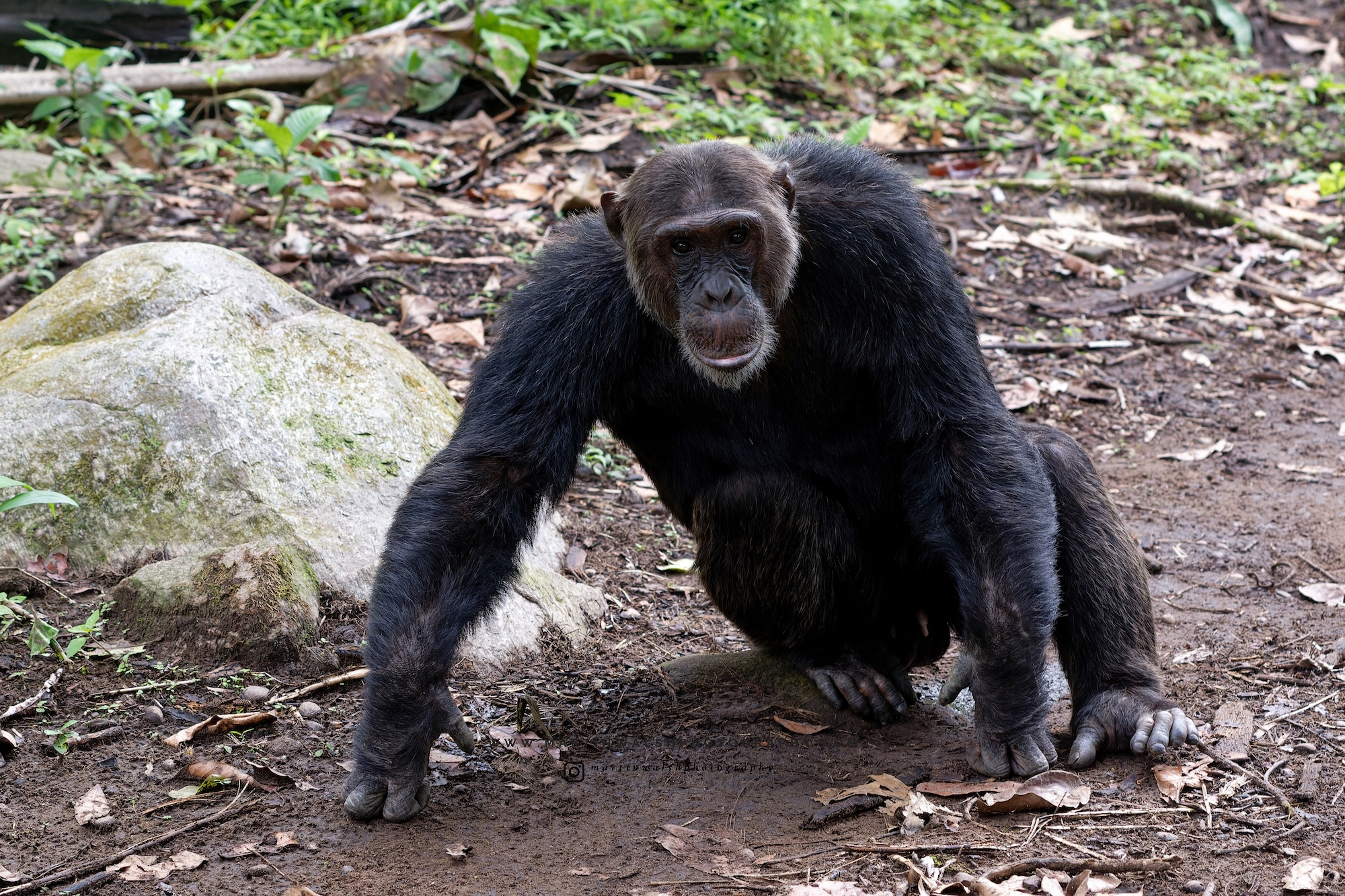
The Mahale Mountains in western Tanzania is the least visited and most spectacular place to see wild chimpanzees. A ripple of jungle-covered peaks jutting out into Lake Tanganyika, it doesn’t get the crowds of national parks further north, such as Gombe, where Jane Goodall first documented chimpanzees using tools. Nyungwe in Rwanda and several locations in Uganda are also more crowded than the Mahale Mountains.
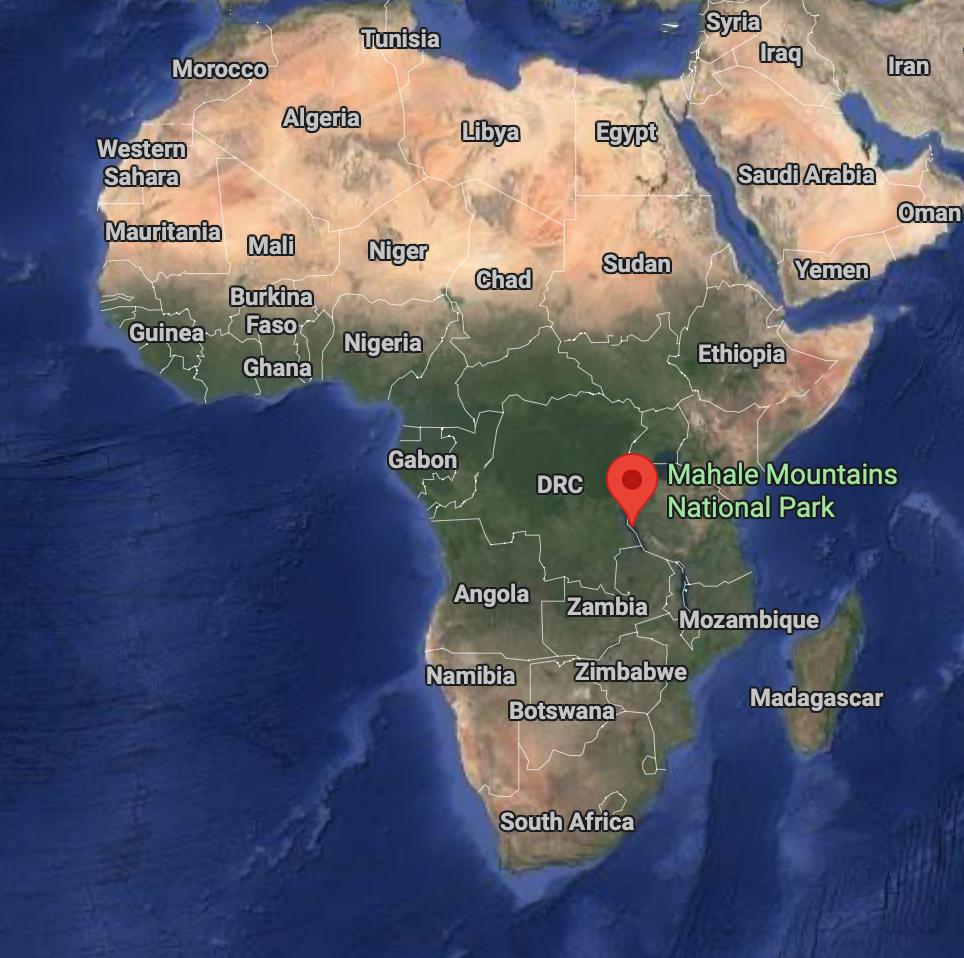
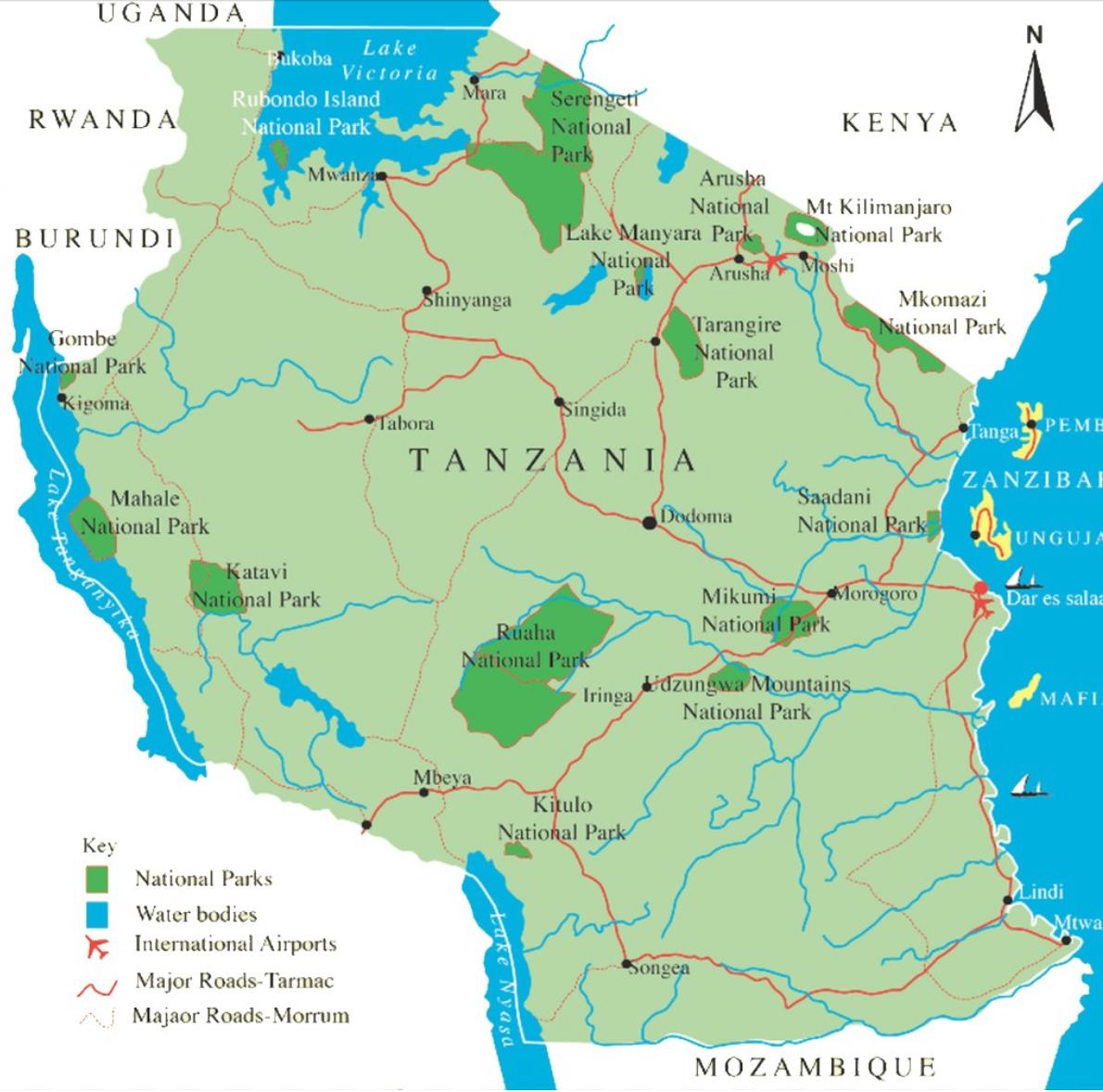
Mahale lies south of Gombe, on the western edge of the country.
Overland from Lake Victoria
A friend and I planned to head to Mahale after some time on Lake Victoria. We hired an old safari vehicle and a driver, Richard, and headed south. Day one involved 12 hours in the Jeep, including an extended period at a rural gas station while Richard and some local handymen tried to fix a fuel leak.
We eventually got moving again after three hours. We sped past Burundi and over 100,000 people sheltering in refugee camps along the border and arrived in Kigoma, a city on the shore of Lake Tanganyika, well after dark.
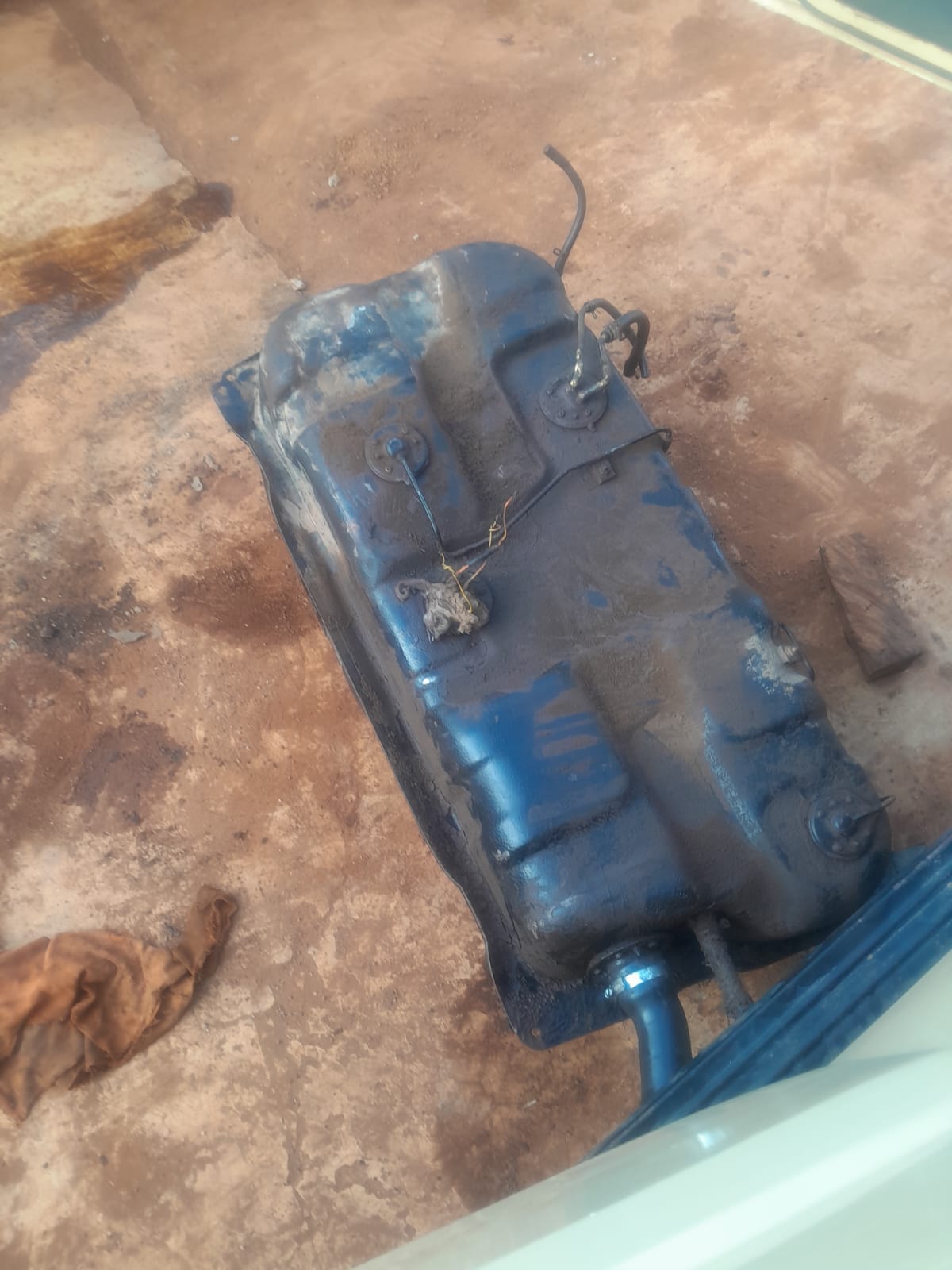
Our cranky fuel tank. Photo: Martin Walsh
Kigoma is the gateway to nearby Gombe National Park, home to the best-studied wild chimpanzees in the world, but we sought a wilder experience. The next morning, we hopped back in the Jeep for another long drive. Originally, we had debated driving ourselves, but the state of the “road” heading south the next day reassured me that we’d made the right decision by hiring Richard. The rainy season had not yet fully arrived, but the mud track was already an adventure. Despite a couple of close calls, we didn’t get stuck. We made it — well-shaken but in one piece — to the Mahale National Park headquarters by late afternoon.
A patchy clearing served as an airstrip, apparently for wealthy tourists who fly in to stay at one of the two tiny luxury lodges on the edge of the park. We wouldn’t be at either of these; we’d rest our heads at a much more affordable ranger camp.
There are no roads inside the park, so the next stage of the journey is by boat. We loaded our little craft with supplies for a few nights (and a chef from a local village), and immediately lost all 30 of our eggs to marauding kinda baboons. Nevertheless, we set off down the lake to our camp.
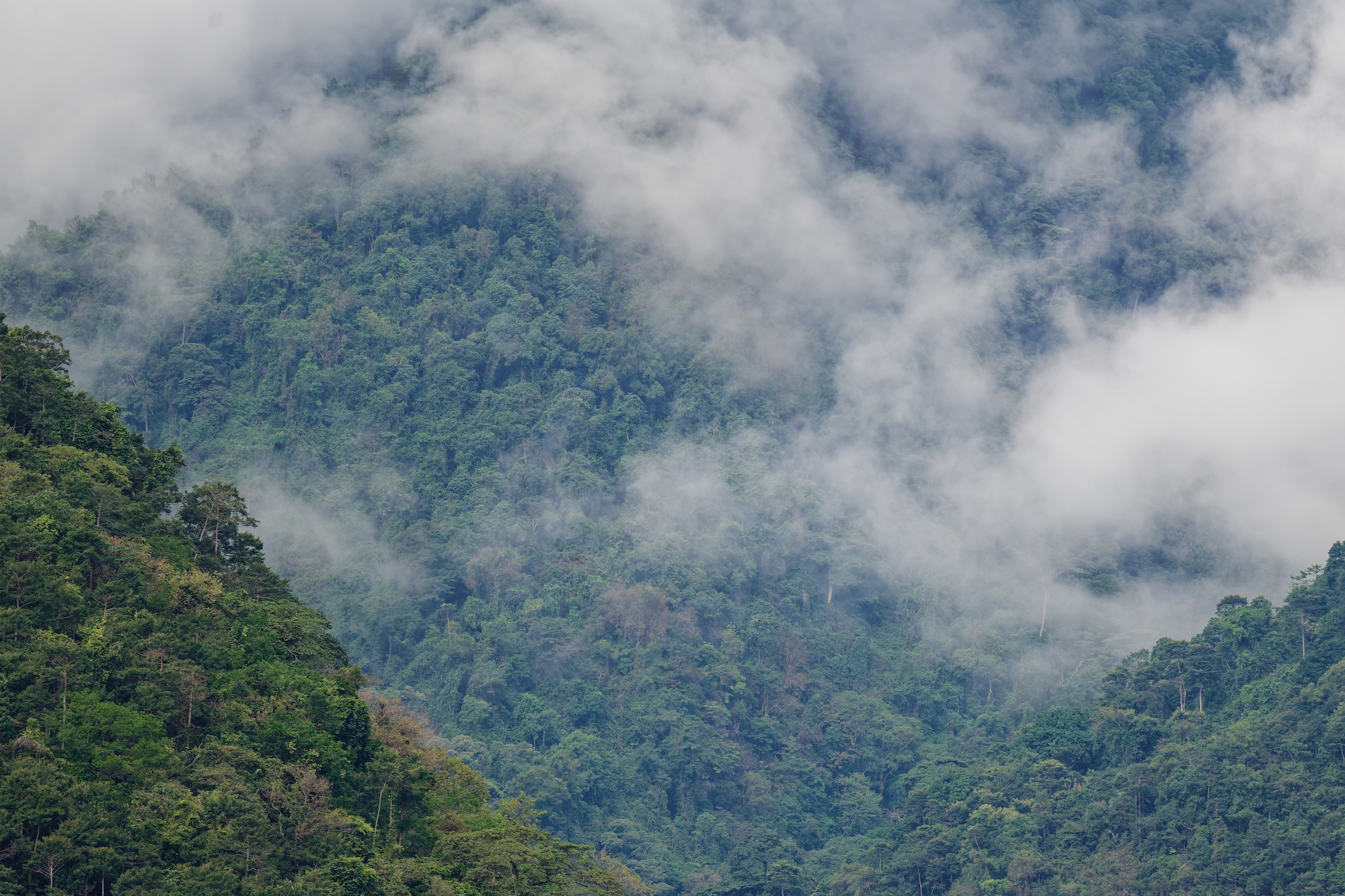
The Mahale Mountains. Photo: Martin Walsh
Base camp in the Mahale Mountains
Camp was simple but comfortable, with solar power during the day, assuming the weather cooperated. In the canopy, red-tailed monkeys scampered around, an occasional meal for the chimpanzees. It paid to remain observant around camp, both to see hard-to-observe wildlife like the diminutive blue duiker (Africa’s second smallest antelope) and to avoid unintentionally close encounters with the forest’s more dangerous inhabitants, mostly snakes.
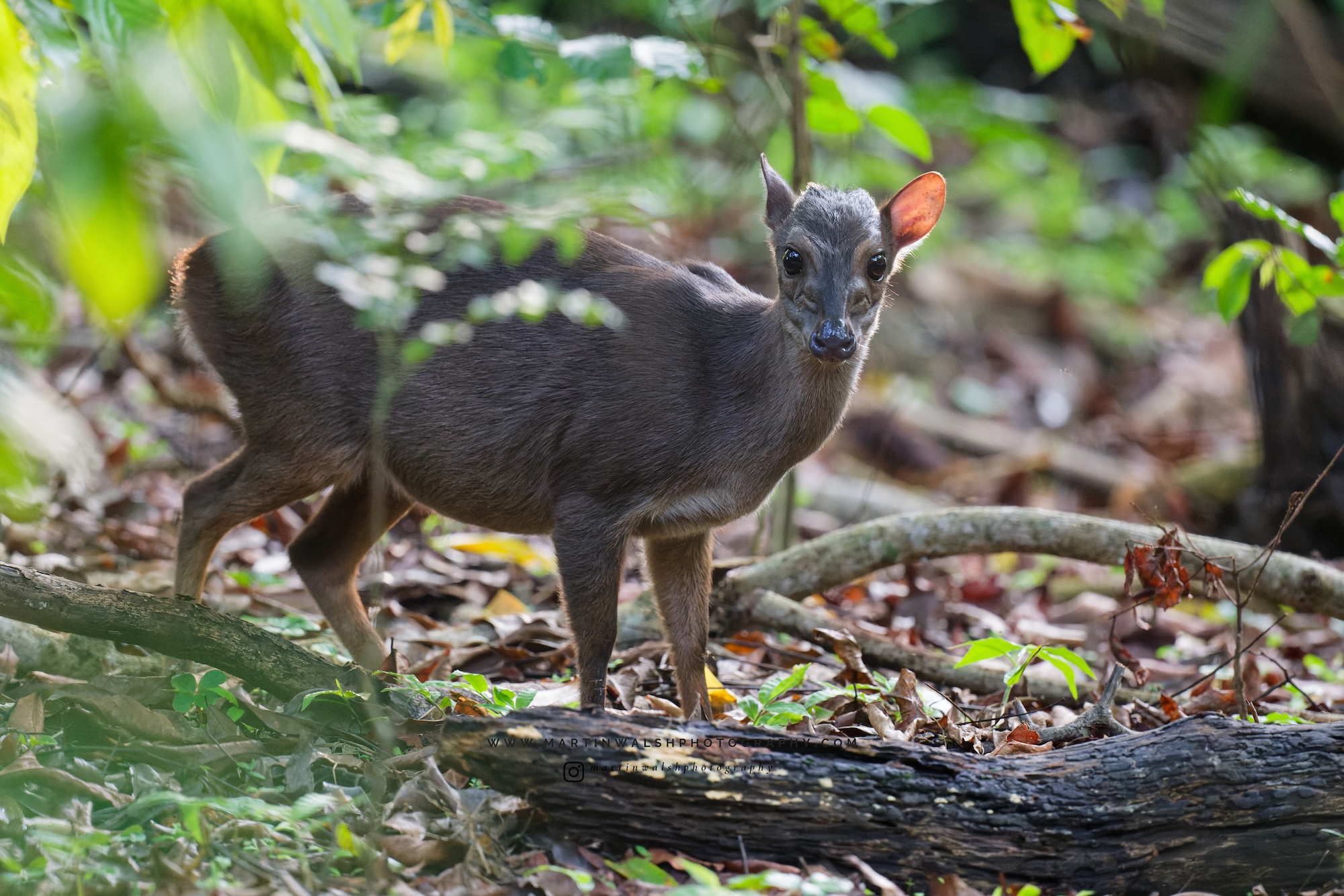
A blue duiker. Photo: Martin Walsh
That first morning, we entered the camp’s main building to make coffee and found a headlamp lying on the ground, turned on. It looked like something out of a horror film. I picked up the headlamp and turned it off. While I made coffee, our chef rushed in and pointed out that under the table — where the headlamp had providentially pointed, and right next to my legs — was a large, venomous snake.
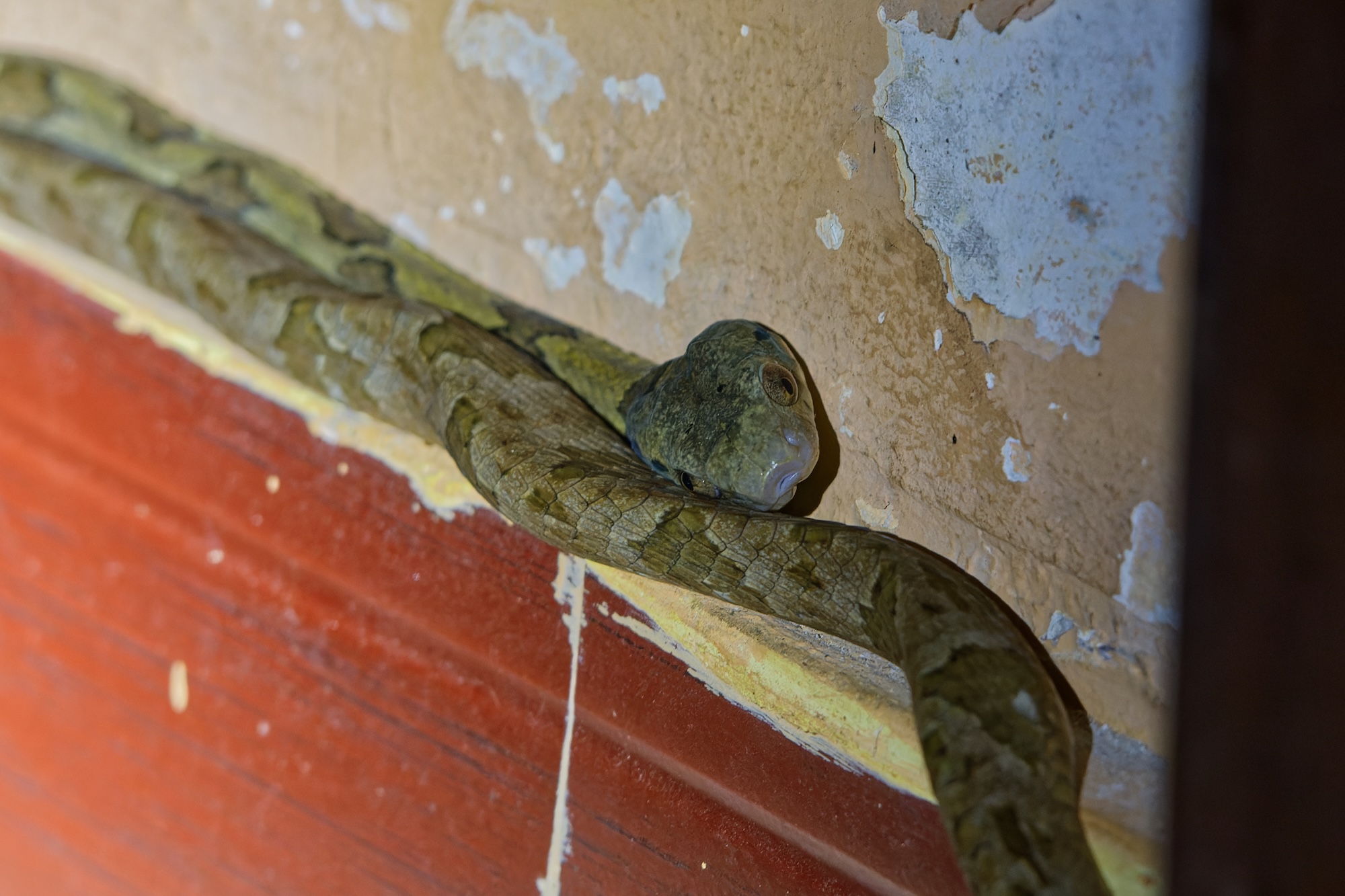
One of the four Toxicodryas species, a rear-fanged venomous tree snake. Photo: Martin Walsh
Wild chimpanzees: Group M
Seeing wild chimpanzees is almost impossible unless a group has become used to human presence. Habituation can take years, with researchers following a group every day. There is only one habituated group in Mahale, though this hasn’t always been the case. In the 1960s, Japanese researchers and Tanzanian rangers habituated two groups, M and K. However, sometime in the late 1970s, researchers believe that the males from group M killed the males from group K and then merged the groups, “kidnapping” the females.
On our first morning, two spotters headed into the jungle to look for chimps while we waited at camp. Sometimes, the entire group may be found close by in an easily accessible area, but not today. After an hour, the spotters reported they had only found a few scattered females, all moving quickly and in the canopy.
So instead, we set off and spent a couple of hours bushwhacking up and down dense jungle slopes. We’d climb up one hill, only to hear on the radio that the female we were following had headed down the other side. By the time we’d reach the next location, she had moved again.
Eventually, we caught up with a female and an infant. When we found them, they were in a small tree, but they came down soon after. The mother completely ignored us, but the baby was curious, its huge, round eyes tracked us as we followed them through the forest.
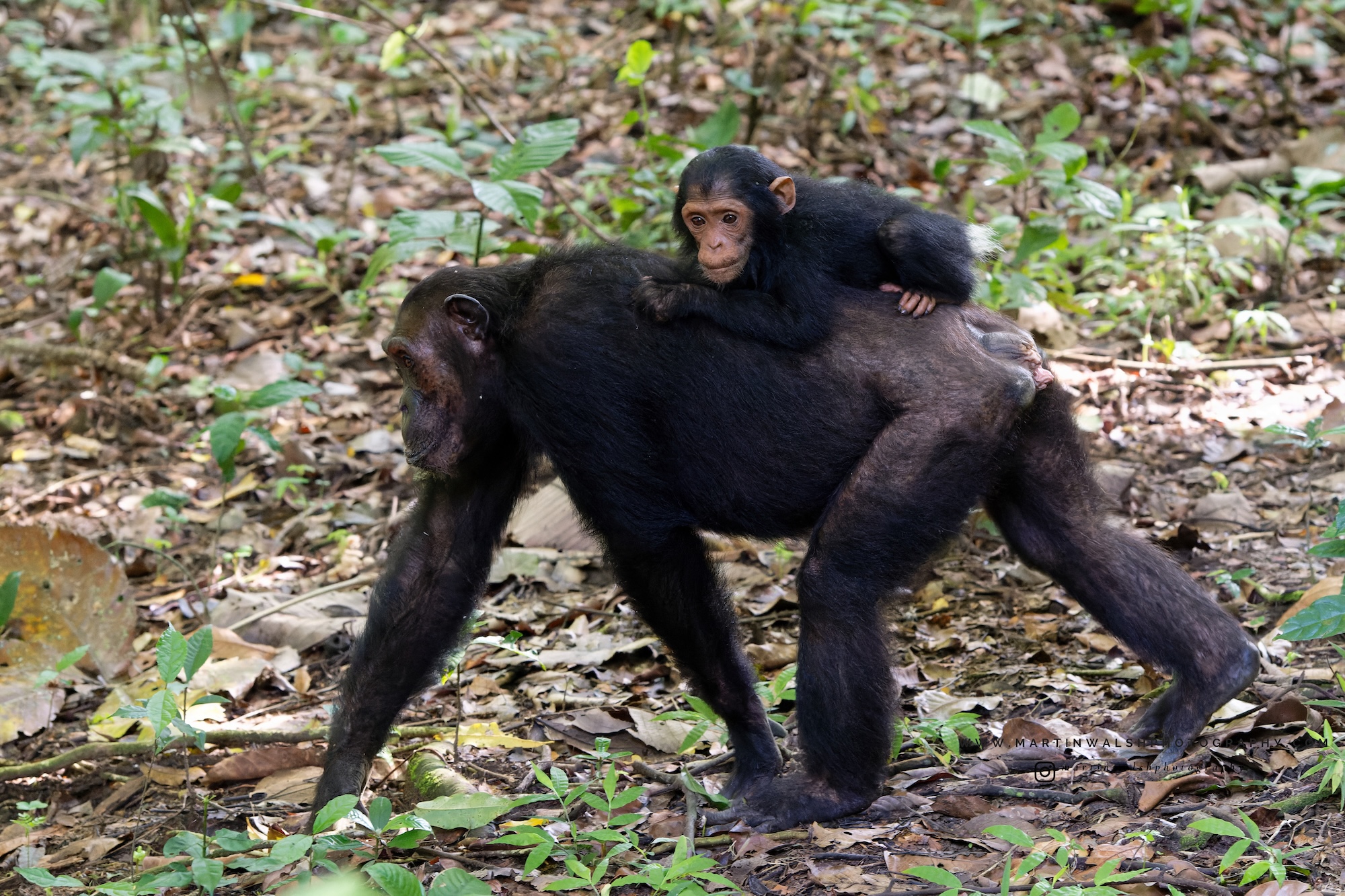
The first female and baby we found. Photo: Martin Walsh
We were allowed only a limited time with the chimpanzees, which minimizes disturbance but mainly aims to avoid spreading diseases to the group. Chimpanzees share 98% of their DNA with humans and can easily pick up a virus, which could be fatal. Wearing face masks, we kept our distance.
Perhaps because they are so similar to us, watching chimpanzees is a surreal, mesmerizing experience. Their facial expressions can be eerily human. I’ve been lucky enough to spend a lot of time around wildlife, but this was up there with any wildlife experience anywhere in the world.
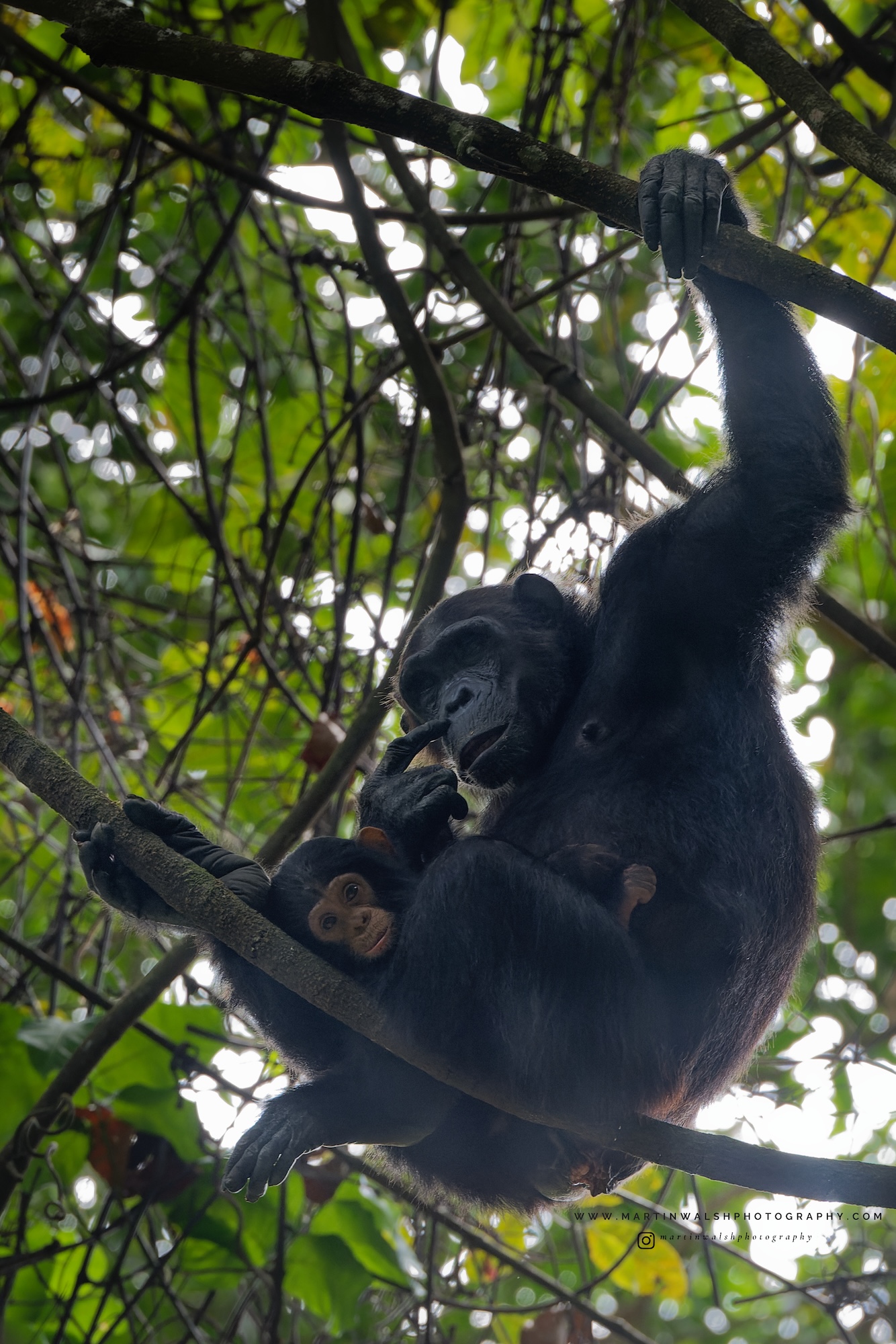
A second female chimpanzee with a baby. Photo: Martin Walsh
Teddy, the alpha male
The next day, we awoke to rain, bad news for spotting chimps. The spotters found most of the group quite quickly, but reaching them would be dangerous. The chimps were over a mountain stream that was now a torrent; we would have to wait.
After a couple of hours, it looked like we’d be out of luck. The rain had stopped, but the group remained inaccessible, the stream still impassable. Just before lunch, our fortunes turned: some of group M had come to us.
In the last six months, in a new (and perhaps concerning) behavior, the chimps had taken to occasionally turning up at the ranger camp to lick the walls of one of the buildings. Researchers think they are getting salt, and possibly some other minerals, from the wall. From my own observations, they are also ingesting a decent amount of old paint.
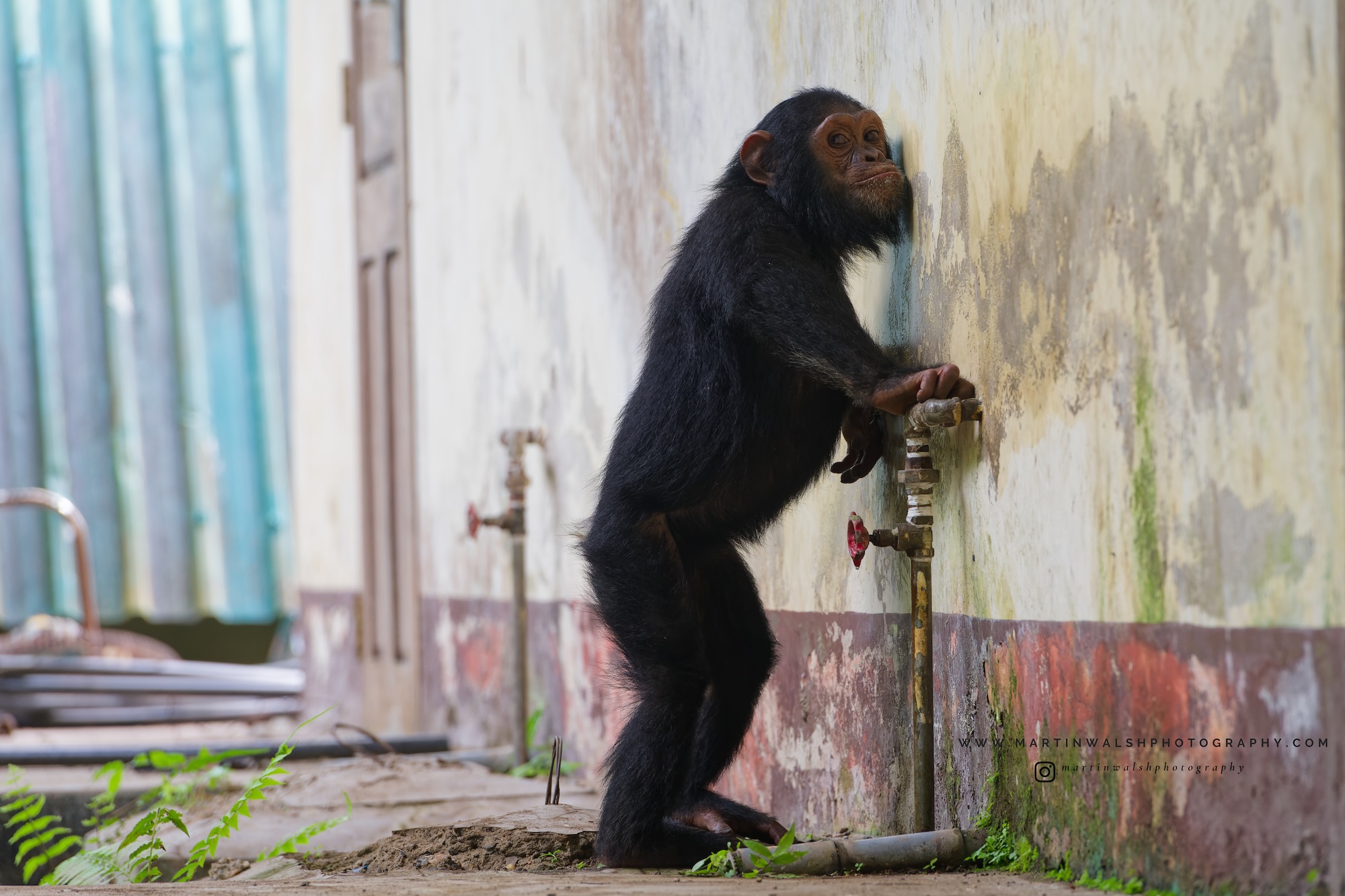
A young chimpanzee licks the wall for salt and minerals. The grey patches to the chimpanzee’s right show where chimpanzees from Group M have removed the paint over the last few months. Photo: Martin Walsh
We found three adults behind the building: two females, one with a baby, and a male. The male was Teddy, group M’s alpha. After a good licking session, they moved off, back into the forest, periodically stopping to groom each other. Teddy was impressive, a bundle of muscle and sinew, perfectly capable of killing us if he chose. Thankfully, he seemed content to strut around.
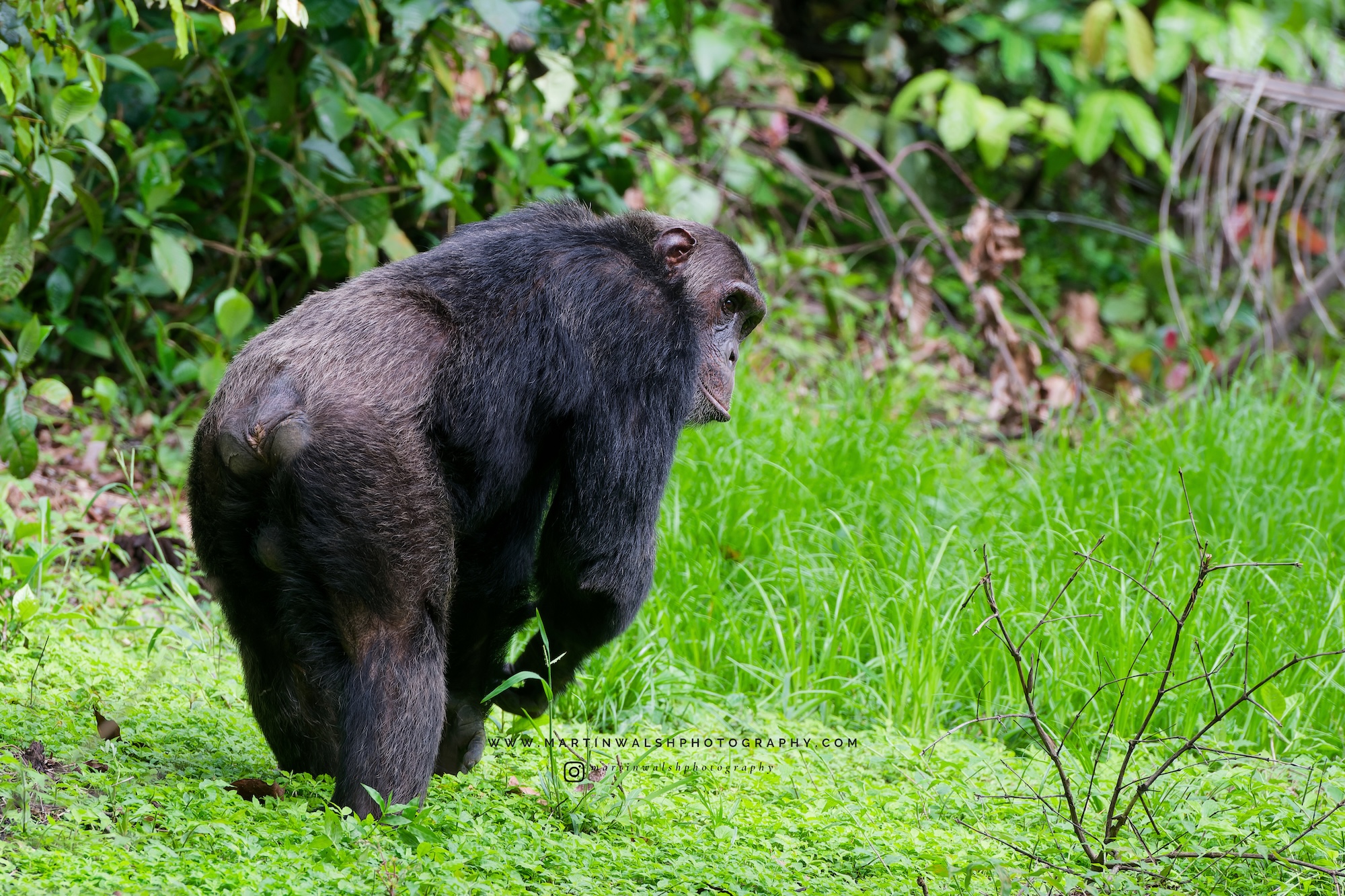
Teddy, the alpha male chimpanzee. Photo: Martin Walsh
Too soon, we were out of time with Teddy and his females, and out of time in Mahale. We traipsed the short distance back to camp, and I spent the remainder of the afternoon watching sunbirds feast on flowers and guinea fowl scratch around in the thickets.
On our last night, we shared a bottle of surprisingly good Tanzanian wine with Richard on the beach and watched the sun set over the Congo. Behind us, somewhere on the slopes, the chimpanzees were building their nests for the night.