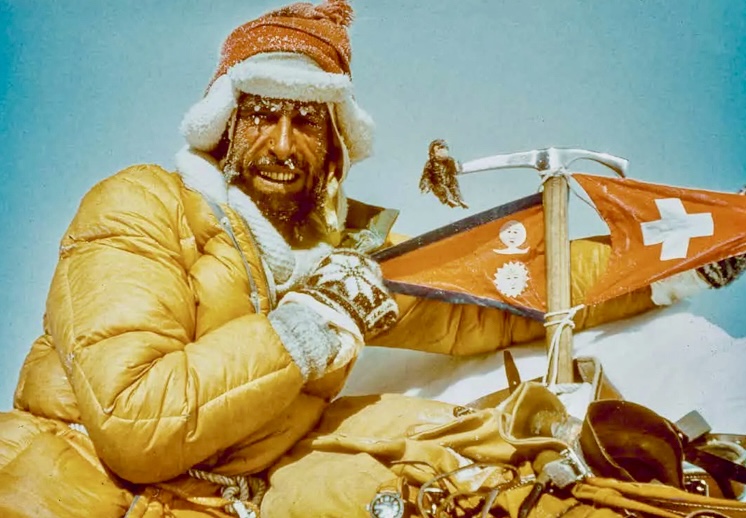
Today is the 70th anniversary of the first ascent of 8,516m Lhotse, the world’s fourth-highest mountain.
Lhotse lies in the Mahalangur Himal section of the Himalaya, on the border between Nepal’s Solokhumbu District and China’s Tibet Autonomous Region. Located immediately south of Everest, together with Nuptse to the west, the three mountains form a dramatic horseshoe-shaped arc around the Everest massif.
On its most frequented route, climbers share the same route through the Western Cwm and up the steep, 1,125m-high icy wall of the Lhotse Face until Camp 3. From there, Everest turns left (to the north) toward the South Col, while Lhotse continues straight up the final couloir. Lhotse feels like Everest’s little brother, even though it lies three kilometers south of the world’s highest point.
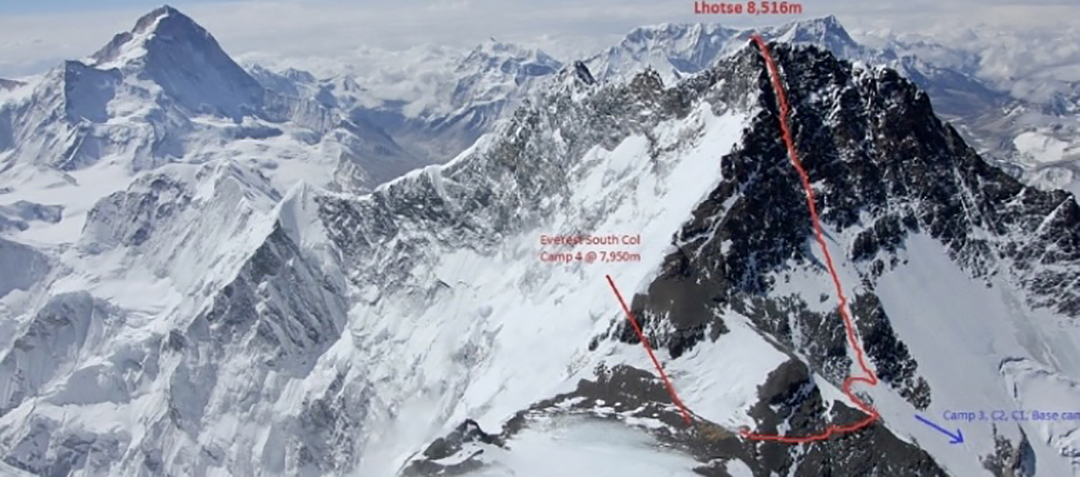
The route from Camp 3 to the main summit of Lhotse. Photo: Animal de Ruta
Its name comes directly from Tibetan: Lho means south, and Tse means peak. So, it literally means South Peak. Early British surveyors called it E1 (Everest 1), because they first identified it as a subsidiary peak of Everest, but it is considered an independent mountain.
In Tibet, Lhotse’s climbing history is rich and exciting, and it has one of the scariest mountain faces in the world: the legendary South Face of Lhotse. It also has a few subsidiary summits, such as Lhotse Middle and Lhotse Shar, whose ascents have been real gems in mountaineering history.
The first attempt
In the autumn of 1955, the U.S.-Austrian-Swiss International Himalayan Expedition led by Norman Dyhrenfurth made the first attempt on Lhotse. The team included Fred Beckey, George Irving Bell, Richard Earl McGowan, Erwin Schneider, Ernst Senn, Bruno Spirig, and Arthur Spoehel. There were also 12 hired workers above Base Camp, including Pasang Phutar, Pemba, and Chowang Sherpas.
”When leaving Mount Everest in December of 1952, I hardly dared hope that some day I would be able to return to Solo Khumbu,” recalled Dyhrenfurth in his report in the American Alpine Journal. “My original plan was to visit that area in the fall of 1954 for some ’minor’ ascents, but primarily to produce documentary films.”
But finally, toward the end of January 1955, Dyhrenfurth received permission to attempt Lhotse. As time was too tight to organize a spring attempt, he postponed it until autumn of the same year. The team used the earlier months productively in the Khumbu, focusing on mapping, filming, and climbing smaller peaks while waiting out the monsoon rains from bases like Dingboche and Lobuje.
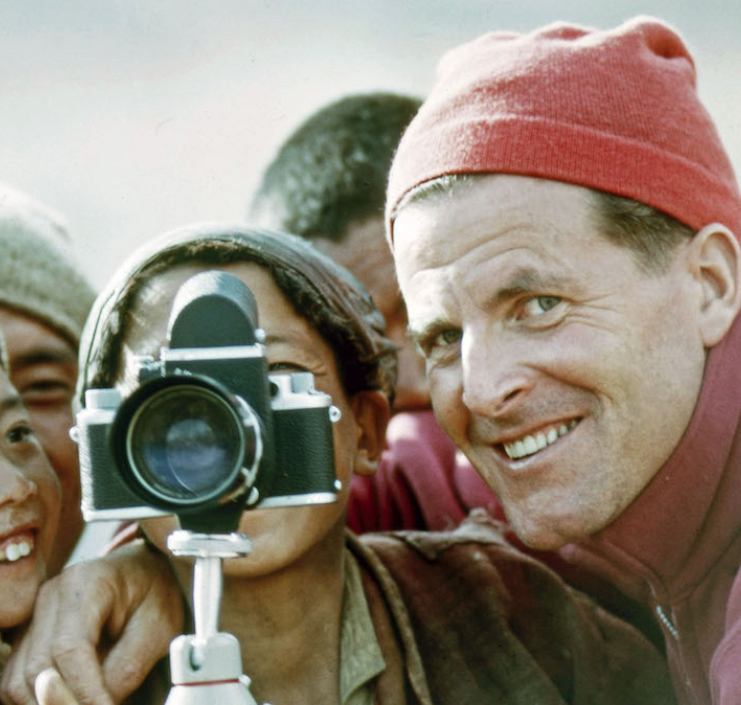
Norman Dyhrenfurth. Photo: American Alpine Journal
Through the Icefall
By late August, the group had established Base Camp. The party chose the Western Cwm and up the western flank of Lhotse, commonly known as the Lhotse Face (today’s standard route on the mountain). They climbed with supplemental oxygen.
In early September, they tackled the Khumbu Icefall with wooden bridges and aluminum ladders. The route proved demanding yet quicker, allowing them to reach the Western Cwm and set Advance Base Camp (Camp 2) by mid-September. Eventually, late arrivals, including Beckey, Bell, and others, joined, and camps pushed higher onto the Lhotse Glacier amid deep snow and avalanche threats.
Senn and Spoehel established Camp 5 at about 7,680m on October 15. Senn battled alone through knee-deep powder and breakable crust up the Lhotse Face after storms scattered oxygen supplies. He reached 8,100m near the Great Couloir before his oxygen failed, forcing him to retreat. “We had reached the limits of human endurance,” Dyhrenfurth later reflected.
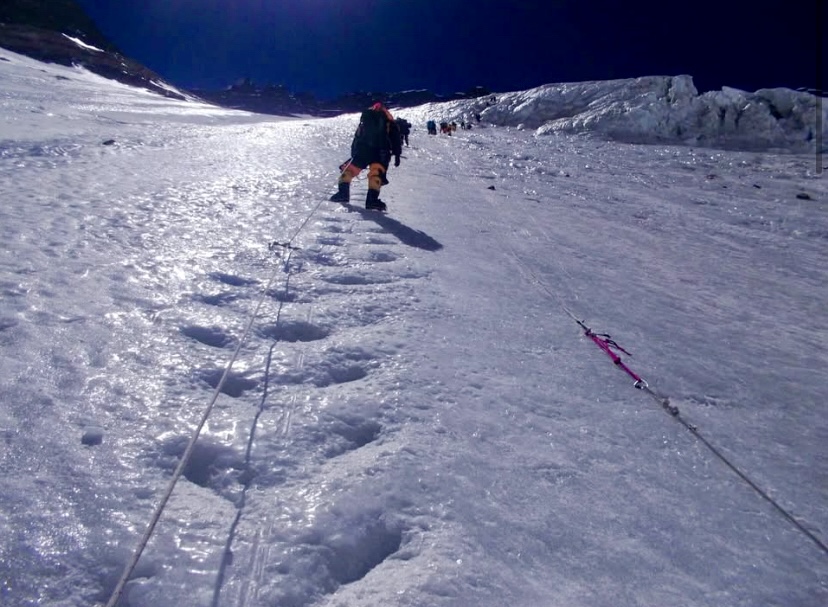
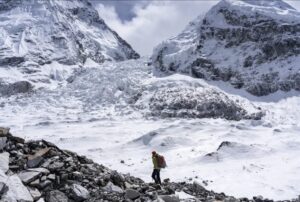
A climber ascends the Lhotse Face. Photo: Aditya Gupta/The Himalayan Club Facebook
Stormy retreat
Strong winds destroyed their tents and buried their gear, exhausting the climbers. Spirig suffered snowblindness, and the descent became a desperate roped evacuation through hurricane-force winds, with one Sherpa nearly lost in a slide. By late October, the team abandoned the face and returned to Base Camp on the 27th.
The expedition succeeded in its scientific and exploratory goals while testing men and equipment. They made several smaller ascents, but the post-monsoon conditions proved to be too much, and Lhotse remained unclimbed.
The 1956 Swiss expedition
The Swiss Foundation for Alpine Research had already sent two expeditions to Everest in 1952. After Edmund Hillary’s and Tenzing Norgay’s 1953 success, the foundation decided to keep working in the area. They obtained permission from Nepal and organized a team of 10 climbers led by Albert Eggler.
The team included Wolfgang Diehl, Ernst Reiss, Hans Grimm, Fritz Luchsinger, Juerg Marmet (who served as oxygen expert), Ernst Schmied, Adolf Reist, and Hans-Rudolf von Gunten, plus Dr. Eduard Leuthold and glaciologist Fritz Mueller. Twenty-eight Sherpas and sirdar Pasang Dawa Sherpa joined them in Nepal.
The first party left Switzerland at the end of January 1956. They met their Sherpas in Jaynagar at the beginning of March and started the long approach march with about 350 porters.
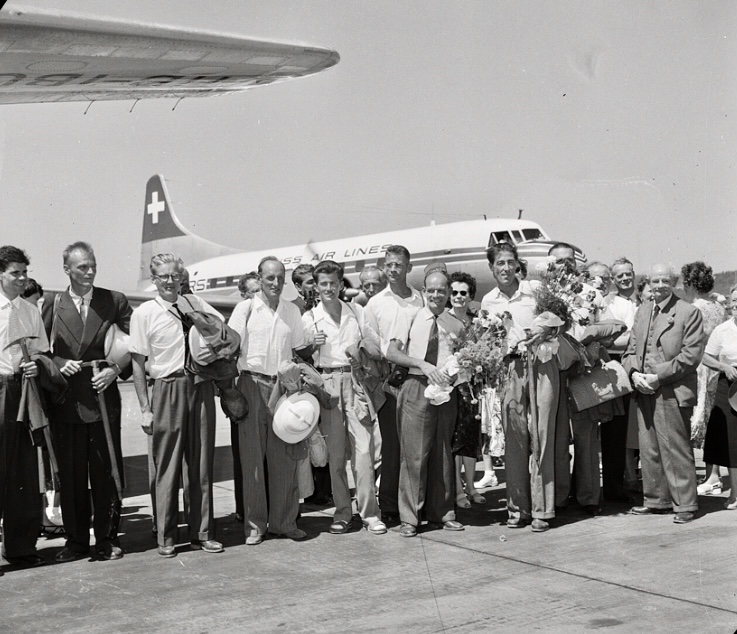
The 1956 Himalaya Expedition led by Albert Eggler. Photo: Wikipedia
The caravan traveled through Okhaldunga, crossed rivers by dugout canoe, and passed Namche Bazaar and Thyangboche. Luchsinger developed appendicitis and stayed at the monastery to recover under the doctor’s care before rejoining the team.
The rest reached Base Camp on a lateral moraine of the Khumbu Glacier at 5,460m by early April. They kept around 35 of the best Sherpas and set up a scientific station there for glaciology and meteorology research.
The ascent
The team worked a route through the Khumbu Icefall using ladders made from duralumin and wood, and fixed ropes. They established Camp 1 at 5,790m, Camp 2 at 6,150m, and Camp 3 (Advanced Base) at about 6,400m in the Western Cwm.
From there, they moved onto the Lhotse Face. They established Camp 4 at 6,955m on the first terrace, and from this camp upward, they used supplemental oxygen. The climbers cut hundreds of steps and fixed more than 300m of rope in the steep and icy face. At 7,500m, they reached Camp 5. Camp 6 was placed higher, near 7,925m, close to the Geneva Spur above the Yellow Band.
The Swiss party’s route was essentially the same line explored by the 1955 expedition. The Swiss team built on that earlier reconnaissance but made minor practical adjustments due to changes in the Icefall and snow conditions. They placed their higher camps a bit differently and put in more fixed ropes and steps to make the steep sections safer for repeated carries.
In mid-May, the weather turned bad with heavy snow and strong winds, forcing a temporary evacuation of the upper camps. Once the weather improved, they reoccupied them.
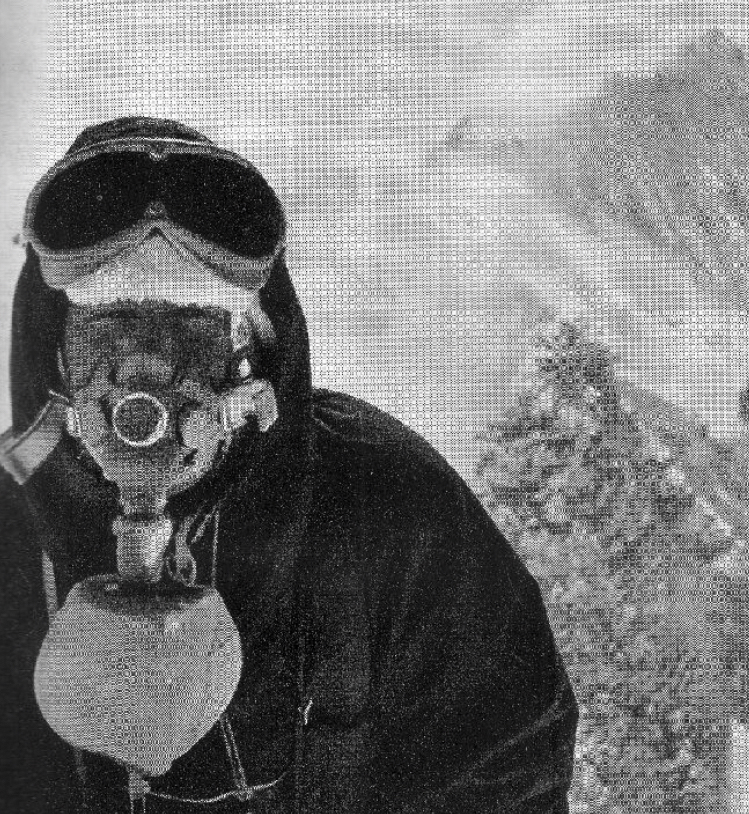
Fritz Luchsinger on the summit of Lhotse. In the background, the ridge that leads to Nuptse. Photo: The Himalayan Journal
Summit at last
On May 18, 1956, Reiss and Luchsinger left Camp 6 around 9 am. They crossed the face and reached the foot of the steep snow couloir that leads directly to the summit. Luchsinger’s oxygen device froze, and they spent about an hour repairing it with cold hands.
The couloir was hard snow at 50° to 60°. A reddish rock band crossed it. The two men climbed this section using pitons for belays and keeping their hands pressed against the narrow sides of the couloir for balance.
After the rock band, they continued for one more rope length. Finally, at 2:50 pm, Reiss and Luchsinger reached the summit of Lhotse. It was the first ascent of the mountain.
The summit was a sharp, corniced ridge with little room. They stood on a small hacked-out platform, touched the highest point, and took some photos. Their oxygen ran low during the descent, and they used the masks mainly for wind protection. They returned to Camp 6 around 6 pm, dug out drifted snow, and spent a cold night there. The next morning, the duo descended safely to Camp 5.
Oxygen use
A key factor in the expedition’s success was the careful and effective use of supplemental oxygen. Jurg Marmet, the oxygen expert, had helped improve the equipment based on lessons from the 1952 Swiss attempts. The team started using oxygen from 7,000m, both while climbing and for sleeping at the higher camps. Eggler noted that even a short whiff of oxygen helped when climbers felt exhausted or very cold.
This made the hard work on the Lhotse Face and the final summit push possible without total exhaustion. The system was not perfect, but the lighter, better-designed sets gave the climbers a clear advantage at extreme altitude.
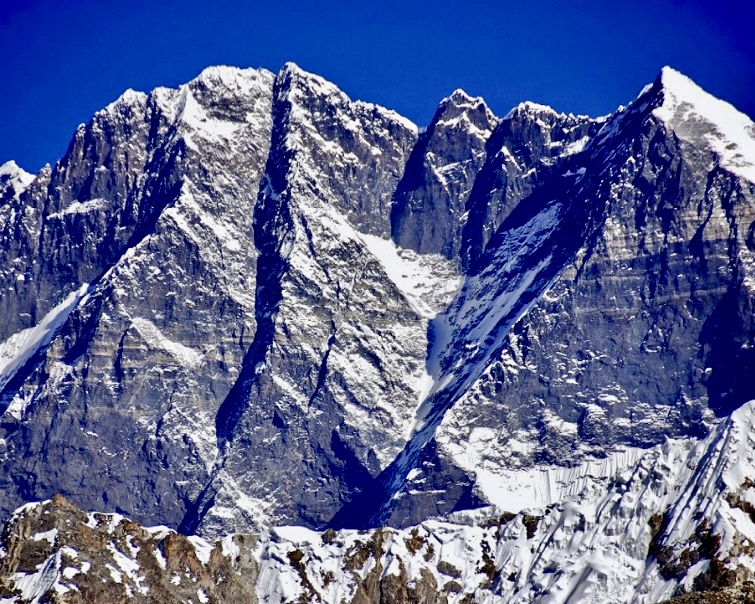
Everest and the gigantic South Face of Lhotse Main, Lhotse Middle, and Lhotse Shar from the upper Hongu Valley. Photo: Mountains of Travel
Second overall ascent of Everest
After the Lhotse climb, the team turned their attention to Everest. They moved supplies to the South Col and set up a bivouac at 8,400m. On May 23, Marmet and Schmied reached the summit of Everest — just the second ascent of the mountain. The following day, Reist and von Gunten made the third ascent.
The expedition also conducted valuable scientific research in glaciology and meteorology. They returned safely, having succeeded in pre-monsoon conditions where the 1955 post-monsoon attempt had been stopped by strong winds and cold. The success of the 1956 Swiss expedition was due to careful planning, effective oxygen use, strong Sherpa support, and the earlier reconnaissance.
Exhausted but elated
When the exhausted but elated team returned to Base Camp on May 29, 1956, they were warmly greeted and heartily congratulated by their local Sherpa friends and the people of Namche Bazaar and Khumjung. The villagers celebrated with generous quantities of chang and arak drinks. That same day, the team also received congratulatory messages via the BBC from Sir Edmund Hillary and Tenzing Norgay, along with Sir John Hunt.
Reflecting on the entire experience, expedition leader Eggler later wrote in The Himalayan Journal:
“We shall always remember the beauty of the journeys, the crossings of the rivers, our stay at the monastery, the surmounting of the Icefall and of the Lhotse Face, and above all, the days when three of our ropes gained the victory for which we had striven so long.”
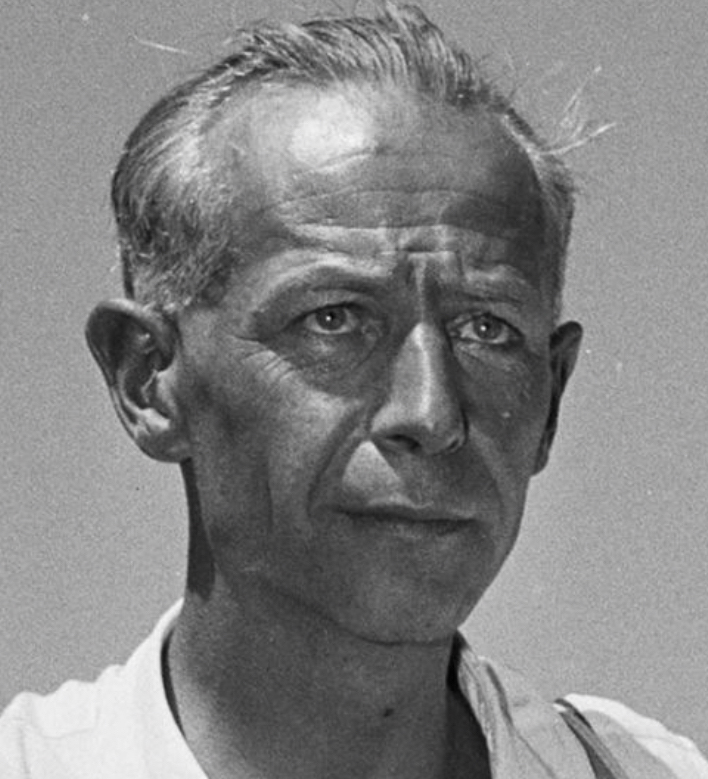
Albert Eggler. Photo: Wikipedia
An outstanding career
Albert Eggler’s success on the mountain launched a remarkable post-expedition career. He became the Central President of the Swiss Alpine Club (1964–1967), President of the UIAA (1968–1972), and later, President of the Swiss Foundation for Alpine Research (1987–1993). Until his death in 1998, Eggler remained a towering figure in Swiss mountaineering.
From its first ascent until the end of 2025, Lhotse has been summited by 1,473 climbers. Fewer than 200 of those went without bottled oxygen. This likewise remains a huge difference on Everest: Since its first ascent through the end of 2025, 13,752 people have summited the highest mountain in the world, but only 234 did so without supplemental oxygen, according to The Himalayan Database.
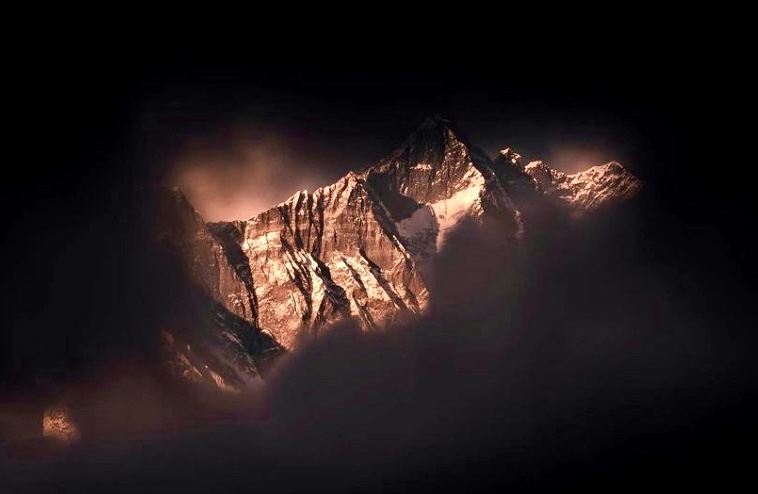
Lhotse. Photo: Tom Weager