The discovery that the oldest octopus fossil was not an octopus at all has uprooted the octopus’s family tree.
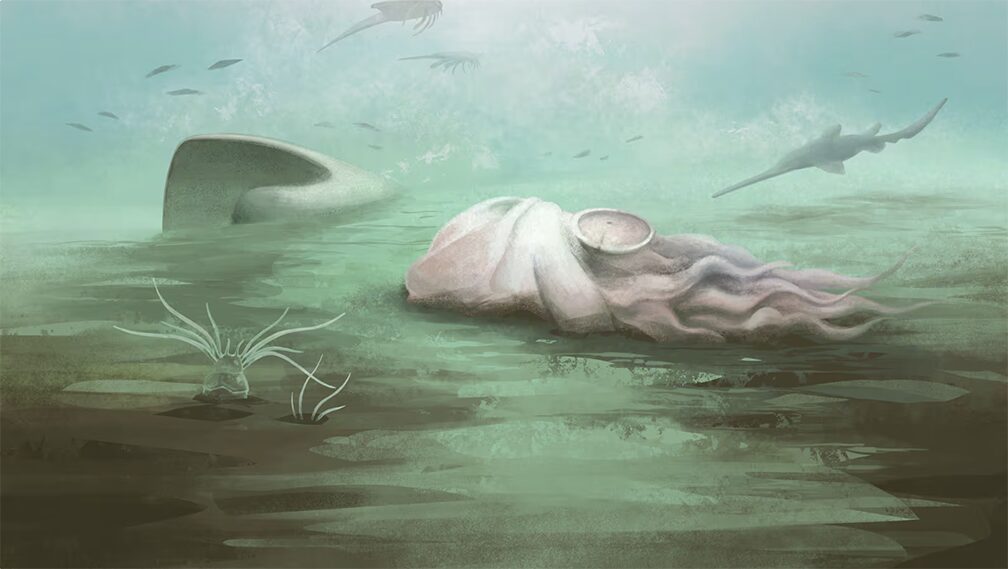
The 300-million-year-old Pohlsepia mazonensis, found in 2000 near Chicago, Illinois, and lauded as the original octopus, turns out to have been an early nautilus instead, according to a study published Wednesday in the journal Proceedings of the Royal Society B.
Nautiluses and octopuses are both cephalopods, but the nautilus has a hard external shell and the octopus does not. Among other differences, nautiluses can have up to 90 tentacles without suckers. Octopuses, of course, have eight arms with suction cups.
The famous fossil had long puzzled paleontologists because it was so much older than the next-oldest-known octopus, at 90 million years old.
Using a new technique employing the world’s most powerful X-rays, researchers were able to peer beneath the surface of the rock in which the fossil was embedded. It revealed subtle details to the creature’s true identity — 11 or more rows of tiny teeth, more than any octopus had. It revealed that the celebrated octopus ancestor was instead a decomposed, squished nautilus relative.
“[This is] the most difficult fossil that I’ve ever worked on,” lead author Thomas Clements of the University of Reading, England told Ars Technica. “[It’s also] the most fun fossil I’ve ever worked on.”
So while the fossil no longer makes the Guinness Book of World Records as the oldest octopus, what is now known as Paleocadmus pohli does qualify as the world’s oldest nautiloid.