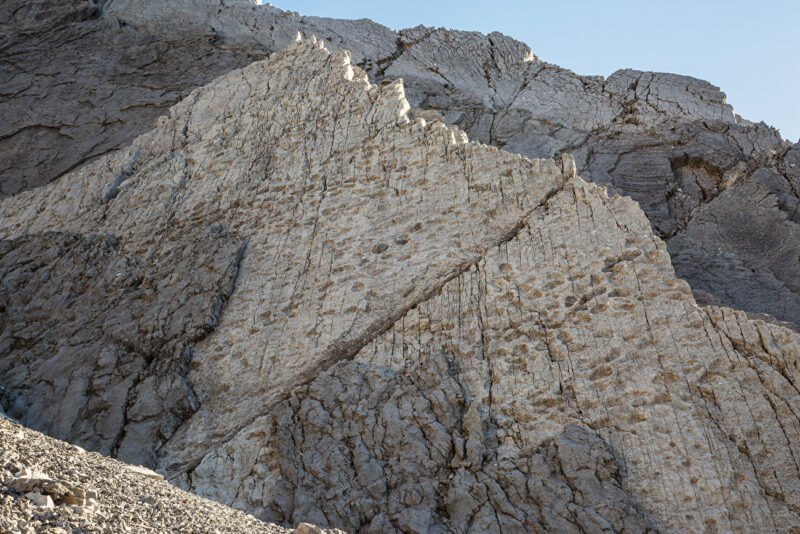
Wildlife photographer Elio Della Derrera has discovered thousands of dinosaur tracks in northern Italy’s Stelvio National Park. He was setting up his cameras to shoot deer and vultures when he spotted the tracks on a near-vertical wall of rock. The biggest surprise was the quantity. An estimated 20,000 prints stretched across five kilometers of steep rock.
“This is one of the largest and oldest footprint sites in Italy, and among the most spectacular I’ve seen in 35 years,” said Cristiano Dal Sasso, a palaeontologist at Milan’s Natural History Museum. Several research teams are now investigating the remarkable trove of 210-million-year-old prints.
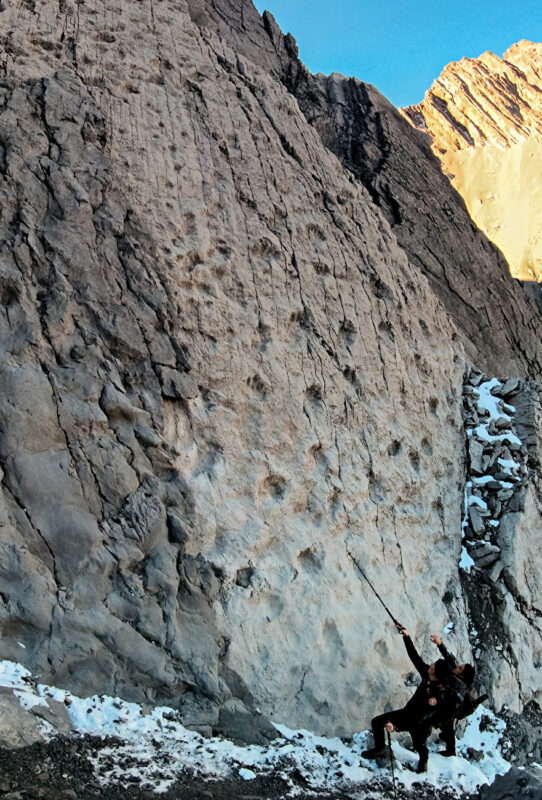
Photo: Elio Della Ferrera
This is one of the richest paleontological sites ever found from the Triassic period. The prints are up to 40 centimeters wide, and many show clear toe and claw marks. Scientists believe the tracks belong to herds of large bipedal herbivores, likely prosauropods — long-necked dinosaurs that could grow to over 10 meters long and weighed several tonnes.
Herds of mid-size dinosaurs
The number of footprints and their alignment across the rock give “clear evidence of herds moving in synchronized groups, and there are also traces of more complex behaviors, such as groups of animals gathered in a circle, possibly for defence,” according to Dal Sasso.
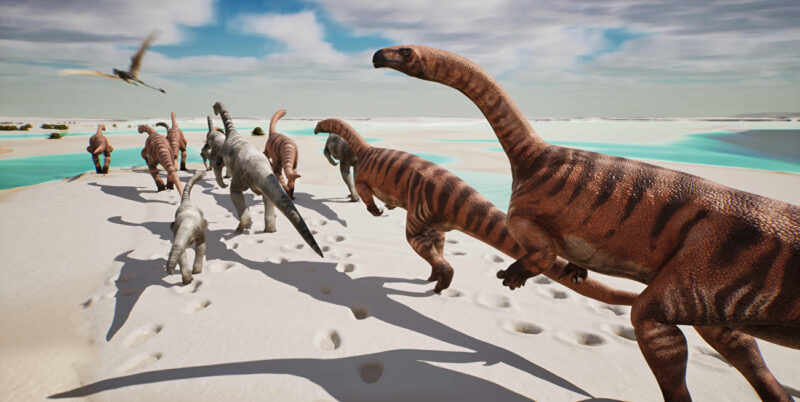
Artist’s impression of a herd of prosauropods. Image: Fabio Manucci
During the Triassic period, what is now a vertical wall of rock would have been a warm lagoon or tidal plain that the dinosaurs could cross. Their prints in the soft sediment have since turned into rock and now lie more than 2,000m above sea level. This shift will have occurred during the formation of the Alps as the African tectonic plate moved north, colliding with the Eurasian plate.
The prints are difficult to access, except by climbers. Due to this, researchers will use drones and remote sensing technologies to study them in depth. “The real research will begin [in 2026],” said Dal Sasso.
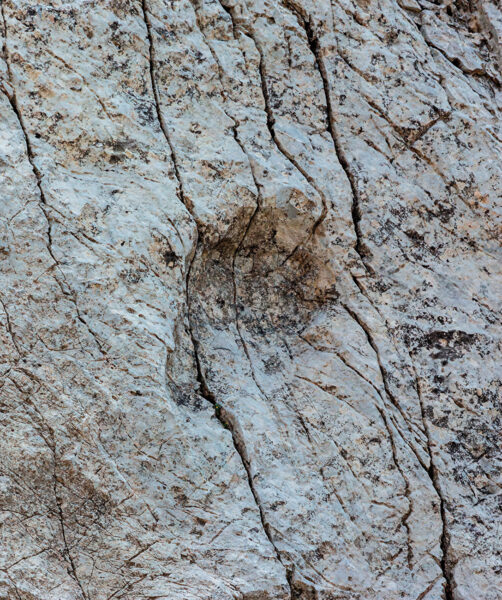
Photo: Elio Della Ferrera
Mingled with the excitement about the prints, some have also expressed concerns. They are located near the Swiss border, fairly close to Bormio, the alpine skiing site for the upcoming Winter Olympics. Experts are warning that, although the awkward setting makes public access challenging, the fragile site must still be carefully protected.