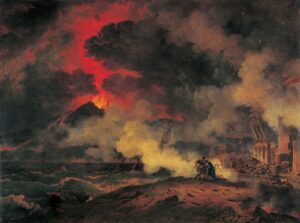
When Mount Vesuvius erupted in 79 CE, the people of Pompeii died in one of history’s most infamous natural disasters. For over 250 years, archaeologists have been studying their remains for clues about how they lived and what happened during the eruption. Now, new research has added another strange detail about that final day. Several victims were wearing thick woolen clothing.
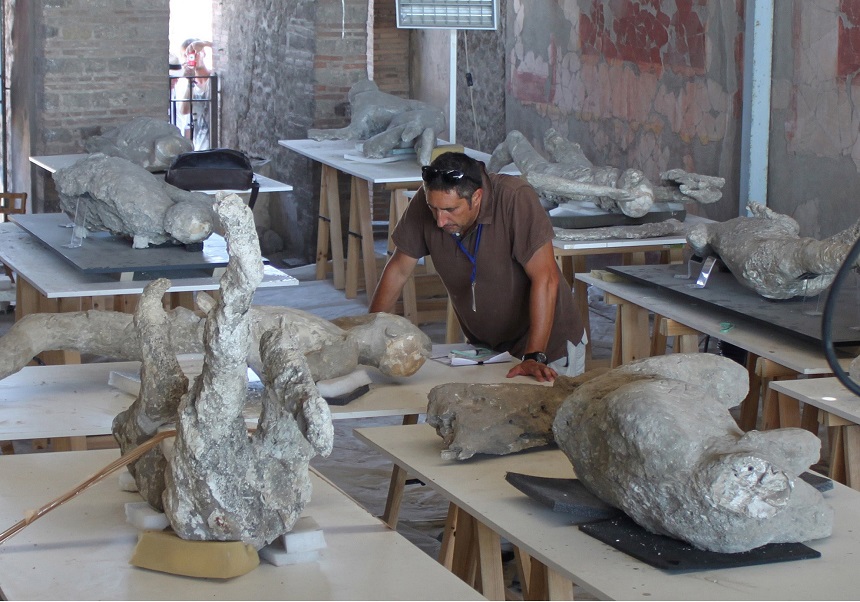
Researchers from the University of Valencia have re-examined 14 of Pompeii’s famous plaster casts. The casts were made in the 19th century by pouring plaster into the voids left behind when bodies decomposed within hardened volcanic ash. Some of these casts not only show us the haunting shapes of the deceased, but they also show impressions of their clothing.
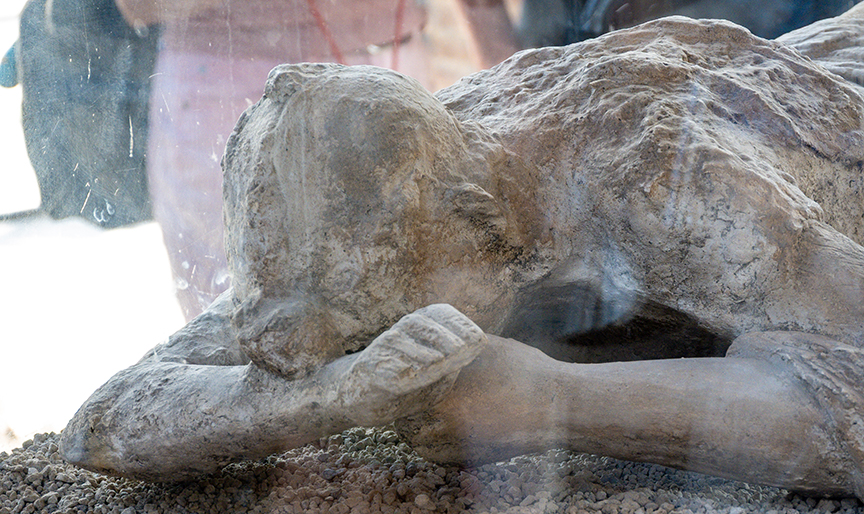
Plaster cast of a Pompeii victim. Photo: Shutterstock
“From our study of the casts, we can reveal how these people were dressed on a specific day in history,” explained Llorenc Alapont of the research team. “We also see the type of cloth that they were dressed in, and the lattice of threads, which in this case is thick. Most of the victims wore two items: a tunic and a cloak, both made of wool.”
At least four of the 14 casts within the study are wearing these thick woolen clothes. It would have been an unusual choice during the height of summer in southern Italy. Historians have long accepted that Vesuvius erupted on Aug. 24, 79 CE.
Eyewitness says eruption happened in summer
This is based on a letter written by Pliny the Younger, a Roman author and lawyer, who watched the eruption unfold from the other side of the Bay of Naples as a teenager. It is our only eyewitness account of the event. His descriptions of the eruption, written decades later, have been central to our knowledge of the disaster.
Some think the discovery of woolen clothing suggests it must have been an unusually cold August. Others suggest that the date we associate with the eruption is simply wrong.
Archaeologists have been questioning the August date for years because of what else has been found at the sites. Autumn fruits, chestnuts, fermented wine, and the remains of hearths in homes all point to cooler weather. Charcoal graffiti, which researchers think was likely only a week old at the time of the eruption, mentions October 17. If correct, this would mean the disaster took place in late October.
Photo: Shutterstock
Still a debate
Not everyone is convinced the clothes point to an autumn eruption. Wool was the most common material used for clothing in ancient Rome. It was cheap, durable, and widely available, making it the default fabric regardless of the season. Linen existed, but it was more expensive and less common. It is possible that even in hot weather, people wore wool simply because it was the only fabric they owned.
Another possibility is that the victims donned whatever was at hand during the eruption to protect themselves.
“We don’t know if this clothing was worn as protection from the gases and heat generated by the volcanic eruption,” Alapont says.
The eruption of Vesuvius was not a momentary blast. It continued for two days, destroying Pompeii in the initial 24 hours. People might have pulled on cloaks and tunics in a desperate attempt to shield themselves.
Whether the woolen cloaks reflect the season, social norms at the time, or a last-ditch attempt at protection may never be fully known. The research shows how seemingly minor details can make us question events that have been studied for centuries, and understand how the people of Pompeii may have responded as the disaster unfolded.