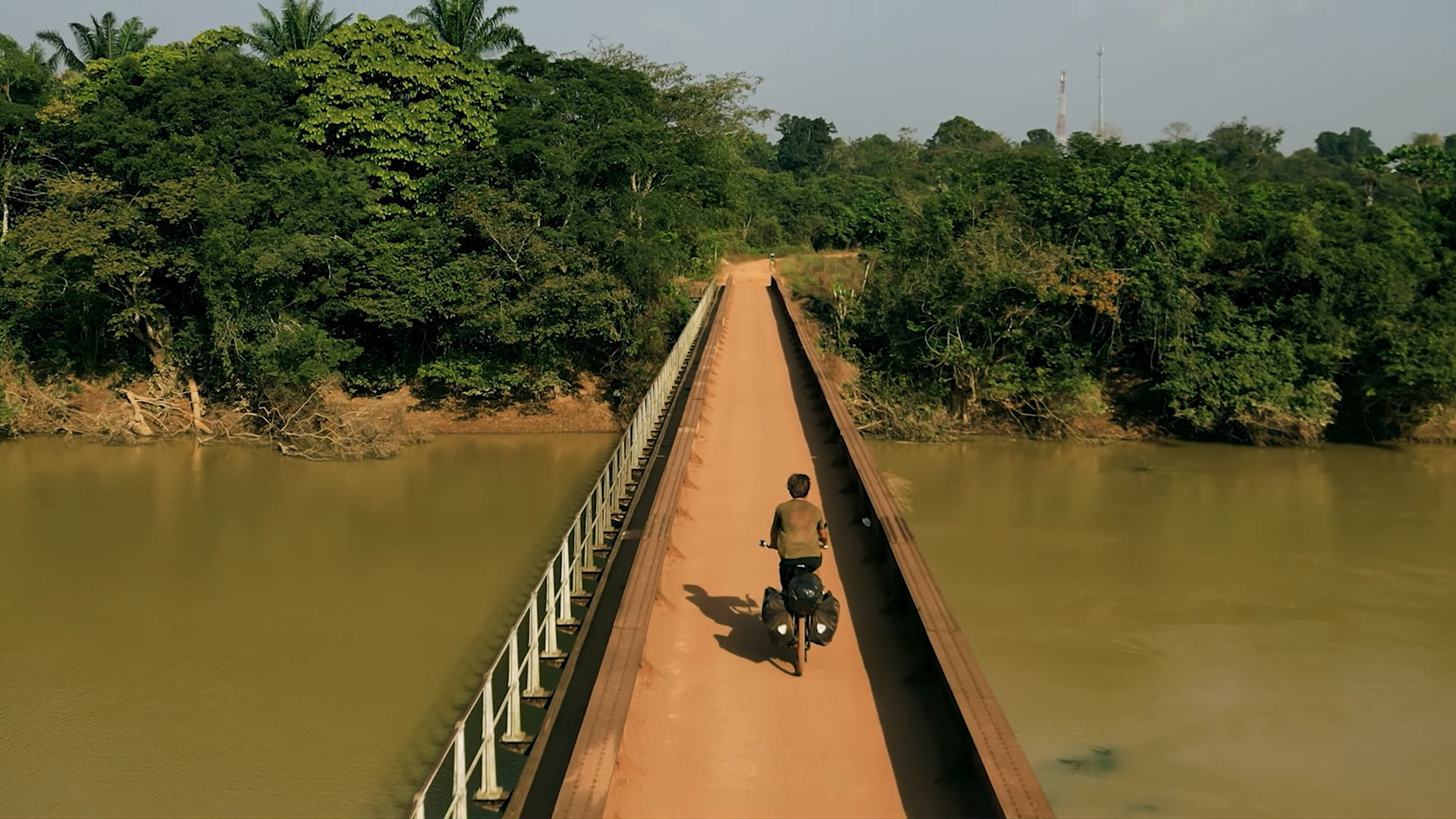
Alone Across Gola documents Jude Kriwald’s bicycle journey across West Africa. At 20, Kriwald completed an ambitious bicycle journey from England to India. Kriwald describes the 13-month adventure as the best thing he ever did.
After he returned, however, mundane life seemed to get its claws in him. For over a decade, Jude was haunted by the open-road life he wished he was living. Attempting to recapture a sense of discovery, Kriwald picked a region he knew next to nothing about, plotting a route from Senegal to Liberia.
But it’s not easy to meet an internal need through external action. This challenge is, in my opinion, the sticking point of the entire human experience. That’s all to say, two months into his journey, Kriwald admits to the camera that he isn’t happy. Something, some ephemeral sense of adventure and connection, is missing.
“That’s probably why I made up this…crazy challenge,” he says. This is where we’re truly introduced to our setting: the Gola rainforest.
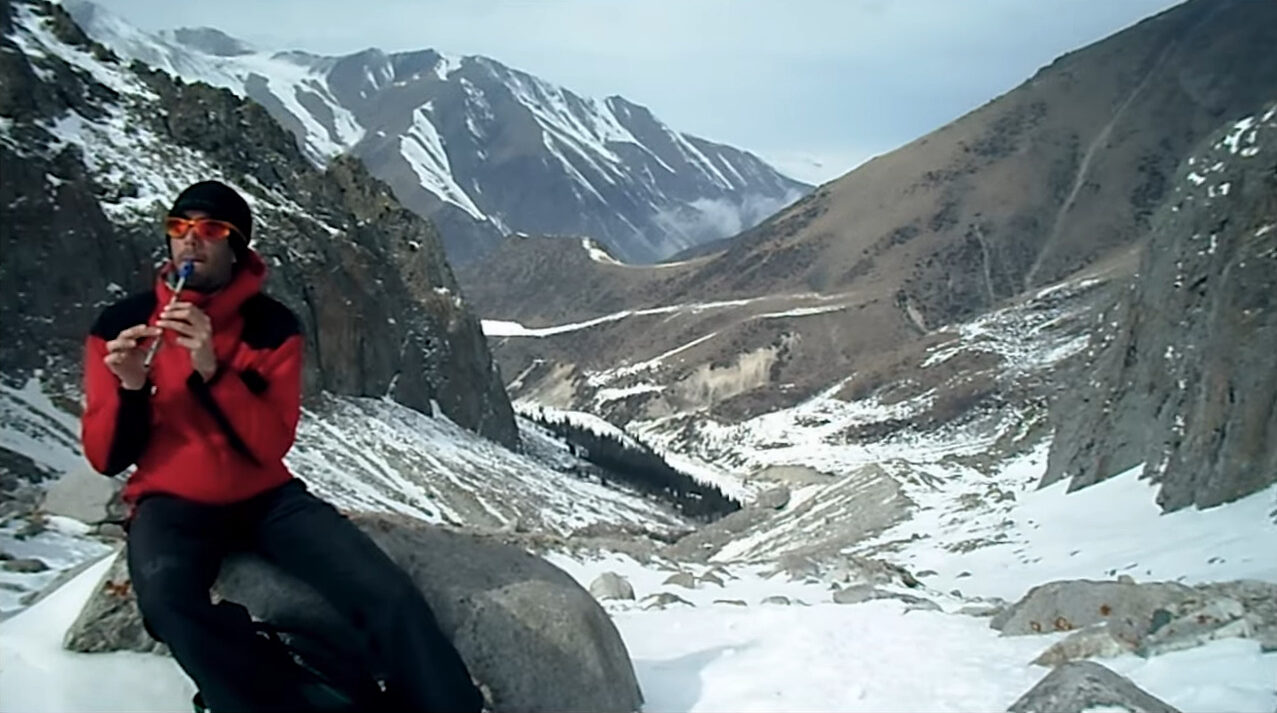
A younger Kriwald on his England-to-India adventure. Photo: Screenshot
The gap in the road
Looking at the map, an explosion of green covers the border between Sierra Leone and Liberia. This is Kriwald’s new quest: make his way through the Gola alone without a paved road, electricity, or phone signal.
Or, well, not alone. That’s what the villagers recommend, in the last settlement before entering the Gola. It won’t be possible to bring his bike and bags through the next section without help. Reluctantly, Kriwald agrees to hire two local guides to help him to the next village, through the roughest section.
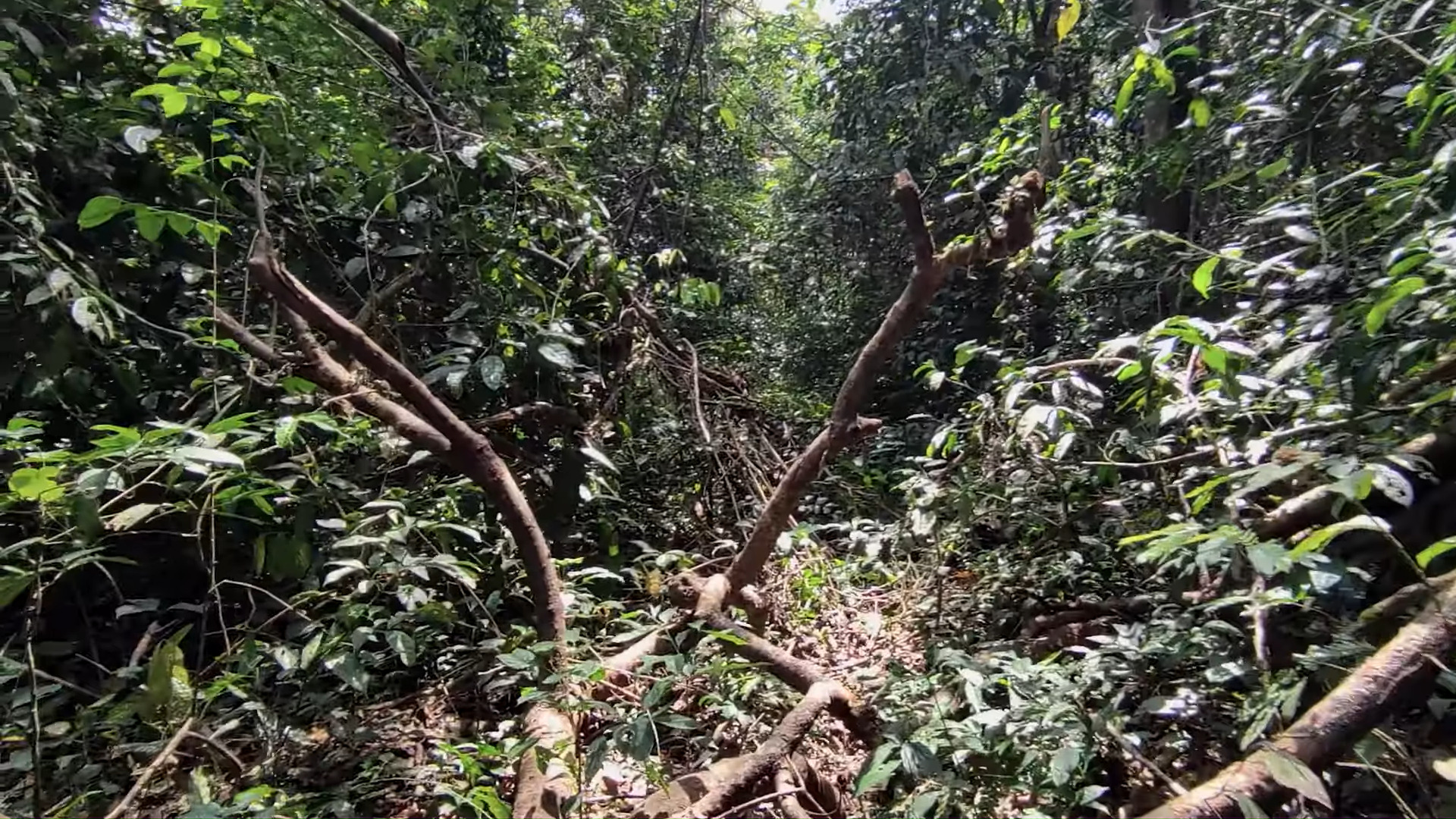
The thick undergrowth and fallen trees encroach upon a narrow track. Photo: Screenshot
Entering the Gola, Kriwald’s camera captures the sheer denseness of foliage, and the way one of his guides, who is carrying the bike with Kriwald’s money, can disappear only a short way ahead. He doesn’t disappear from the bike’s GoPro, however, which records him removing money from the bag.
This is a moment where things may very well have gone south in a dramatic way if the people involved had acted differently. Kriwald, pretending he’s seen nothing, innocently remarks that he’s “lost some money.” He gestures to the folds sticking out of the guide’s pocket and attempts to frame the theft as a misunderstanding about payment, clarifying that the man should return it and that Kriwald will pay him when they reach the next village.
The guide is, apparently, equally willing to prevent things from becoming ugly. He puts the cash back, and they reach the village of Fayama. Reflecting on the incident, Kriwald seems to realize that from his own position of relative privilege, he “couldn’t be mad” at his guide.
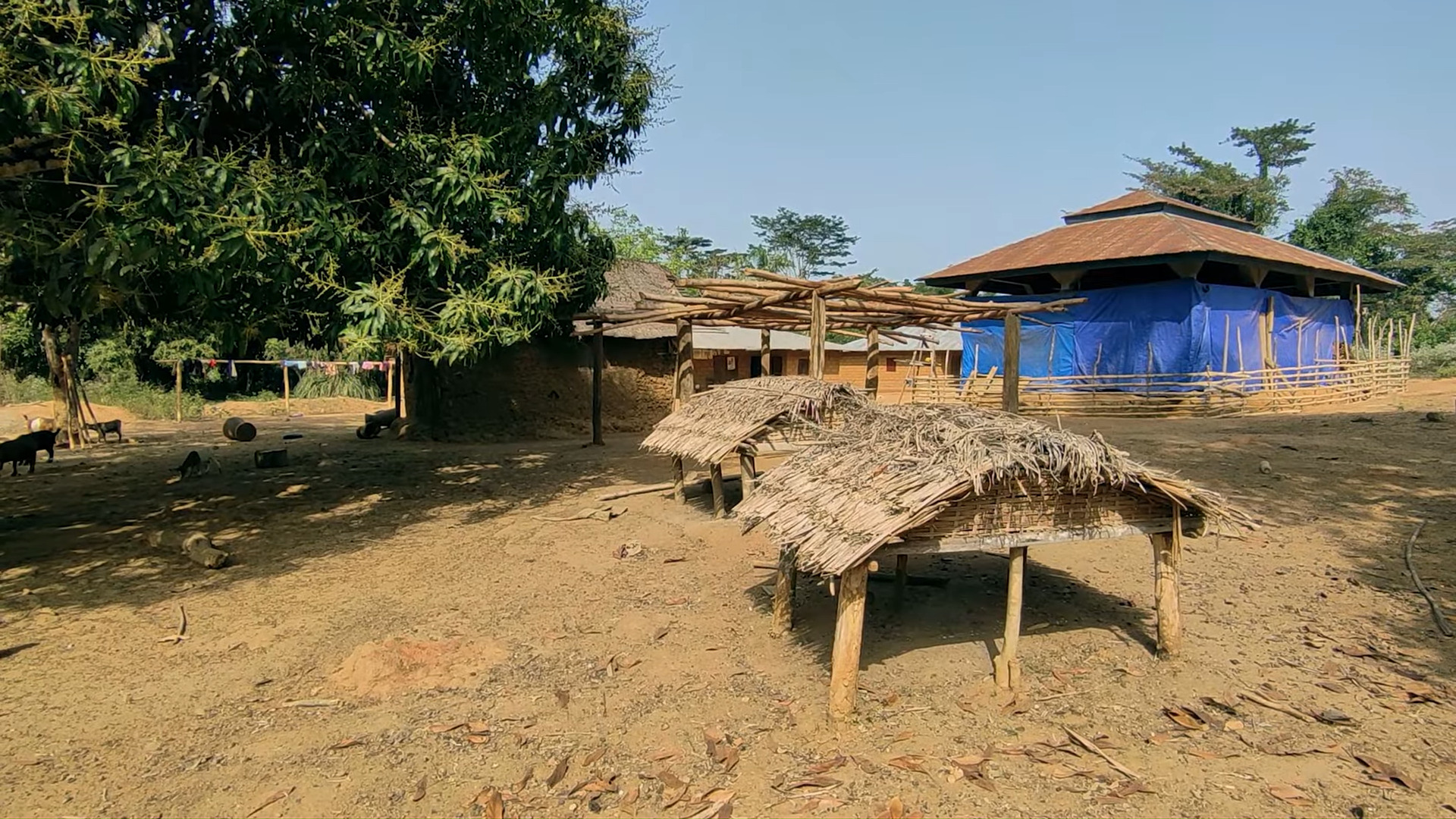
The village of Fayama. Photo: Screenshot
Alone in the Gola
Once he is traveling solo again, things get harder physically and logistically. His maps are decades out of date, and the road he expected to find is long-abandoned and half reclaimed by foliage. Cycling is impossible, the heat is intense, he’s low on food, and fallen trees and collapsed bridges are frequent obstacles.
But in the jungle alone, or being welcomed warmly by the rainforest’s most isolated communities, he seems to finally find his ephemeral adventure.”This is what I came here for.”
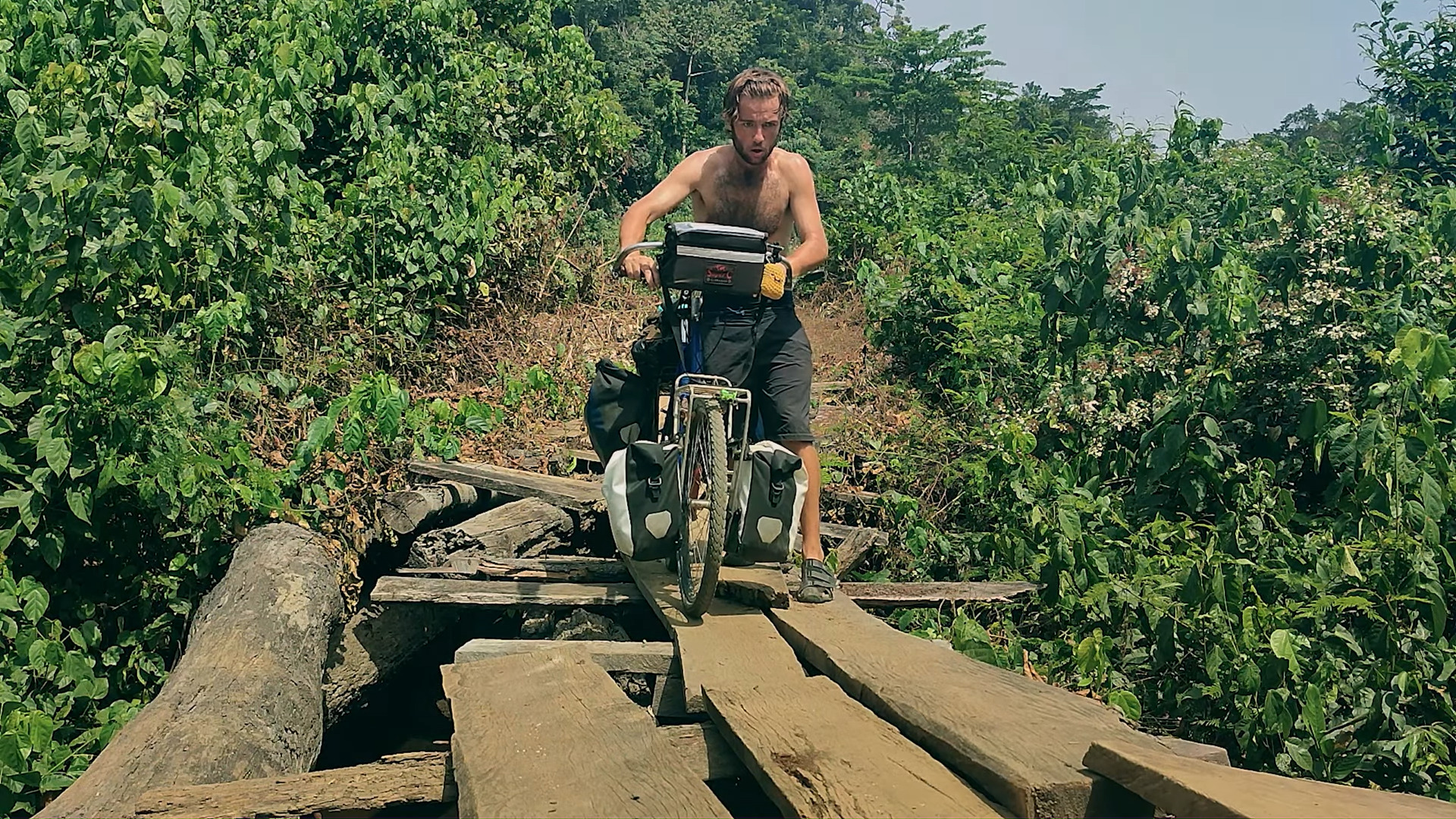
Kriwald carefully navigates an old wooden bridge. Photo: Screenshot
Nearly two weeks after entering the Gola, Kriwald reaches the coast. By the time he stands in the shallows of the Atlantic, blood, sweat, and dirt washing away, internal need and external action have finally coincided.