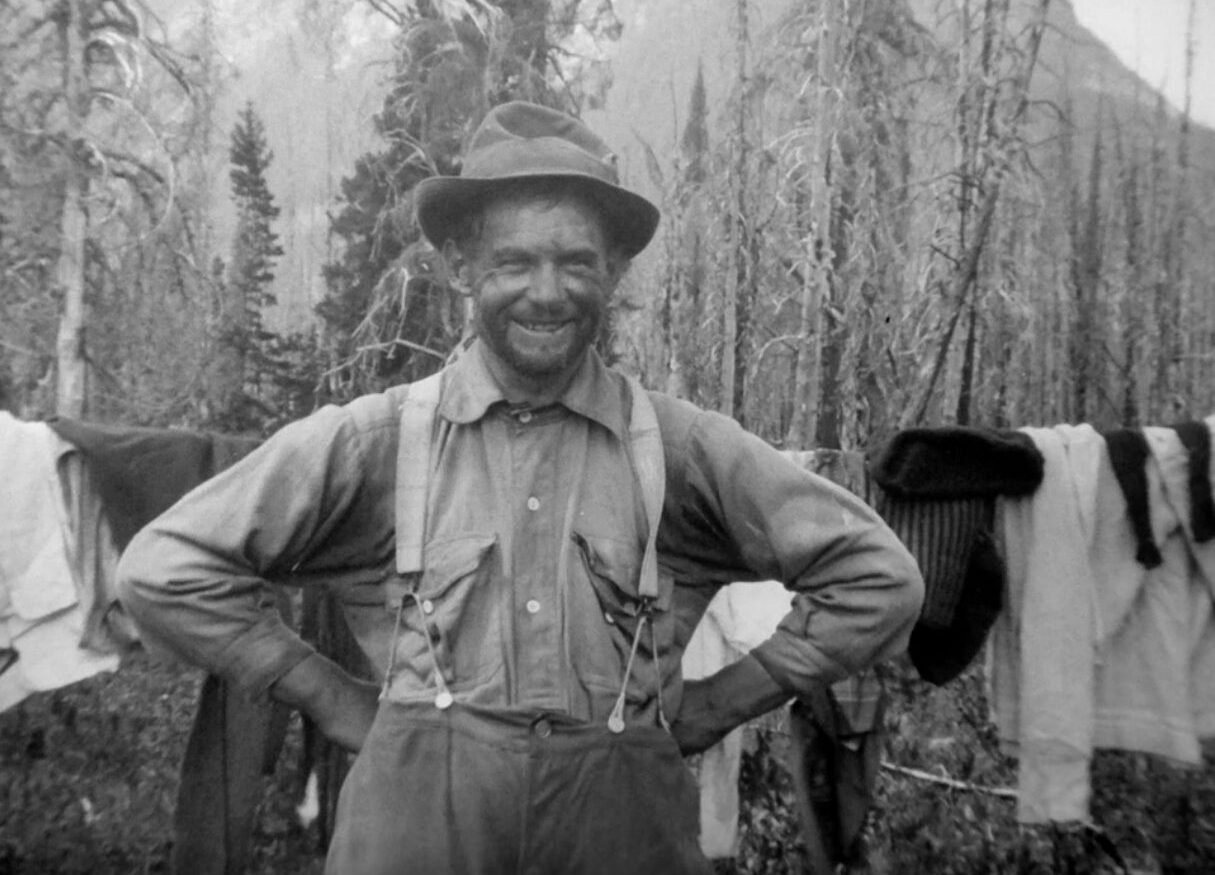
Great Days in the Rockies is a short film produced by Canada’s National Film Board in 1983. Archival footage and photographs tell the story and display the work of Byron Harmon, who pioneered the art of nature photography in the early 20th-century Canadian Rockies.
Onscreen, we see the sweeping expanses of the Rockies in black and white while the narrator introduces us to Harmon, an itinerant photographer. His wanderings led him to Banff, a small town in Alberta. Nowadays, Banff is a cultural hub for mountaineers and outdoor adventurers, hosting the annual Banff Centre Mountain Film and Book Festival. At the turn of the 20th century, it was a relative backwater buried in pristine wilderness.
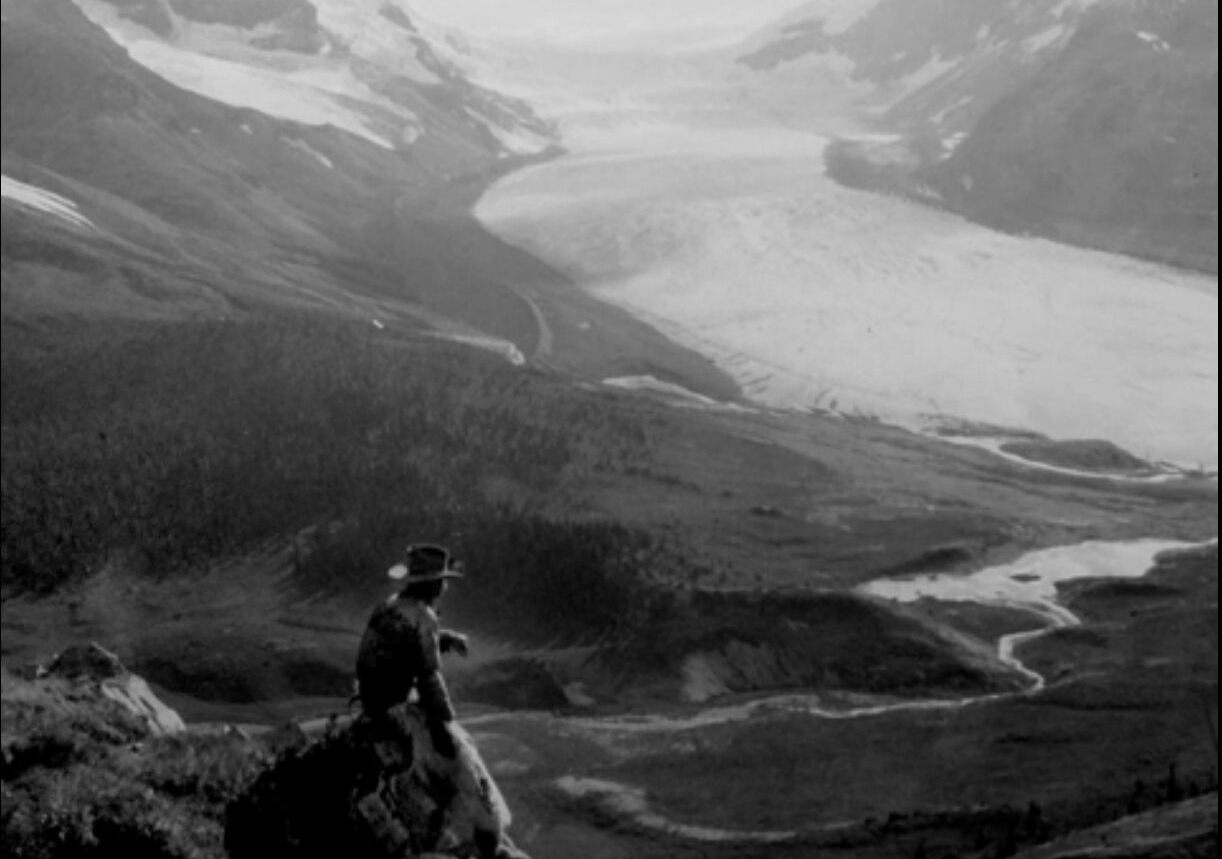
Photo: Screenshot
Documenting — and making — Banff
Through the lens of Harmon’s camera, we see Banff become a destination resort town. But Harmon isn’t simply documenting the transformation; he’s helping cause it. The photographs and videos he takes of the Canadian Rockies are putting the region and the town on the map.
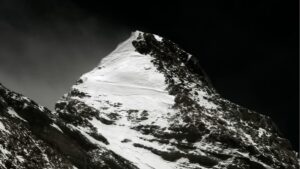
Harmon aims to photograph every major peak from multiple angles. Of course, he films the process itself. His footage shows us heavily laden horse teams fording rivers, and his alpinist friends summiting icy peaks.
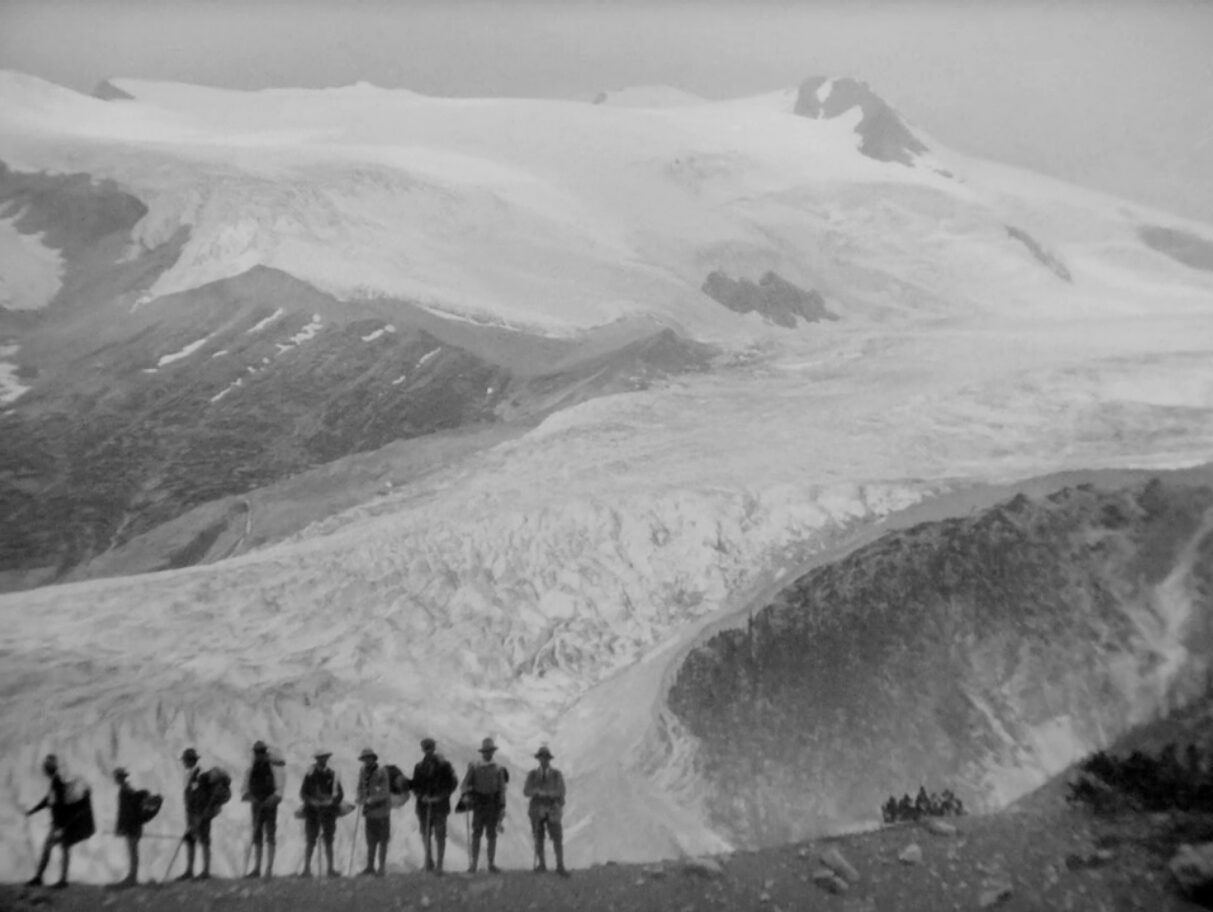
One of Harmon’s photographs from these expeditions. Photo: Screenshot
Back in town, Harmon becomes a local establishment. His store is a restaurant, beauty parlor, curio shop, print shop, and even a pharmacy. Back in those days, anyone could just move to a place and start slinging prescriptions. What a time to be alive!
Even as the town, and his place in it, grow, Harmon “long[s] for his mountains,” and the freedom of the open air. In some ways, he is a victim of his own success; like an electron, the wilderness cannot be observed without being changed. But the film doesn’t linger on what a changing Banff may mean. Instead, it takes us to Mt. Columbia. Harmon, alone on the opposite ridge with his camera, is waiting for the dawn. He wants the perfect light in which to photograph one of his final peaks.
The light, he says, is beyond what he could have hoped. He works the camera with practiced ease, and the collection is complete.