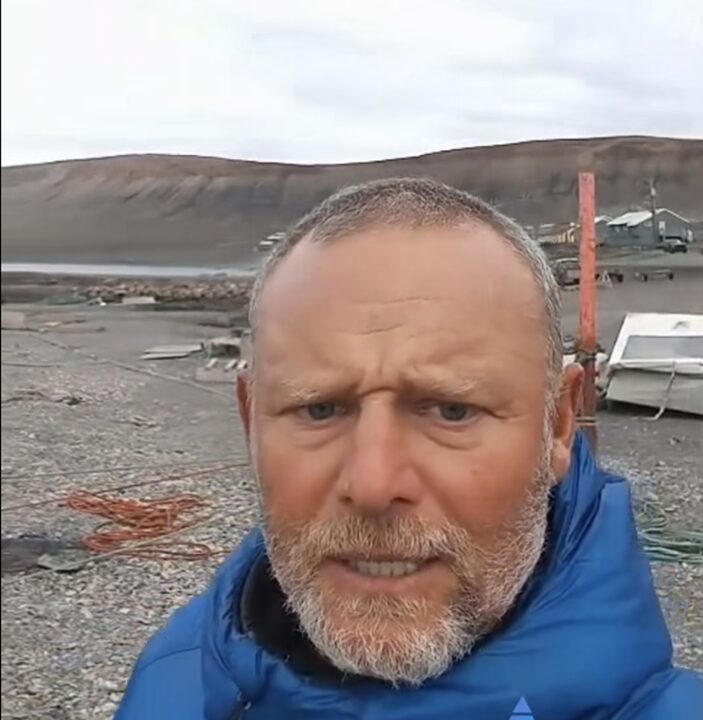
It wasn’t a surprise to hear that stand-up paddleboarder Antonio de la Rosa’s attempt to solo 3,000km of the Northwest Passage ended messily.
After taking refuge in a hunter’s cabin at Cape Crauford on the northwestern end of Baffin Island for several days, the 57-year-old Spanish endurance athlete was rescued and is now in the hamlet of Arctic Bay. He called for help after leaving his board and most of his equipment out on the sea ice overnight while he rested in the cabin. During that time, a violent storm came, broke up the ice, and blew his gear away.
This puzzling act (who leaves their stuff overnight on the ice during breakup season?) wasn’t the first warning sign of an impending disaster. The previous weekend, he had started the 60km crossing of Admiralty Inlet to set himself up for the much longer crossing to Somerset Island.
Twelve kilometers out, the wind shifted to the north, and he decided to eat and possibly let the chop die down before continuing. He was stowing his stove away when an unbalanced movement coinciding with an unexpected wave flipped his board and sent him into the 2˚C water. His drysuit had been unzipped and pulled down around his knees for comfort on that warm day.
Drysuits
Drysuits are a pain in mild weather. They’re hot when you’re paddling, especially since you have to wear, or ought to wear, a couple of layers underneath them. The drysuit alone will not keep you warm for long in ice water. But unless the sea is glassy calm, you zip them up, or almost, on a crossing of any length. You need to be able to complete the seal promptly if the weather worsens.
A soaked de la Rosa managed to paddle the 12km back to shore. The accident happened because of overconfidence, he admitted. 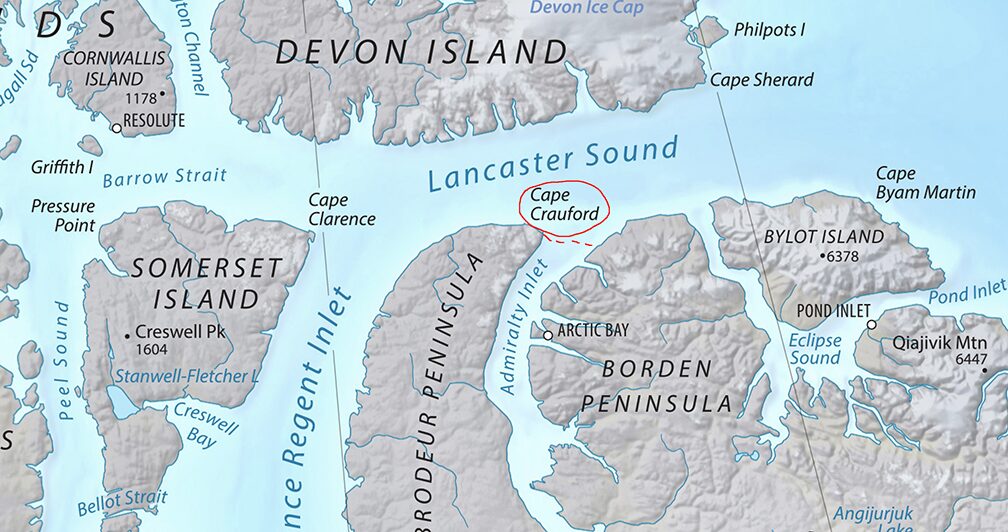
A few days later, he tried again and successfully crossed the 60km of Admiralty Inlet to Cape Crauford. There, in an Inuit hunting cabin (cabins are usually left unlocked in the Arctic for safety reasons), he holed up and inspected his gear. He discovered that his drysuit was damaged and that the keel of his paddleboard needed repair, according to his Facebook post. Seemingly, the damage was not something he felt his repair kit could address.
He planned to paddle south down the Brodeur Peninsula and then recross Admiralty Inlet to the town of Arctic Bay. Although he said he wanted to make repairs there, the lateness of the season, the long detour away from the Northwest Passage, and his post itself foreshadowed that Arctic Bay would be his endpoint: “It is the place that will determine whether this expedition will continue,” he said.
Then, while he was waiting for the wind to die down so he could proceed to Arctic Bay, he left his gear out on the ice and lost it to the storm.
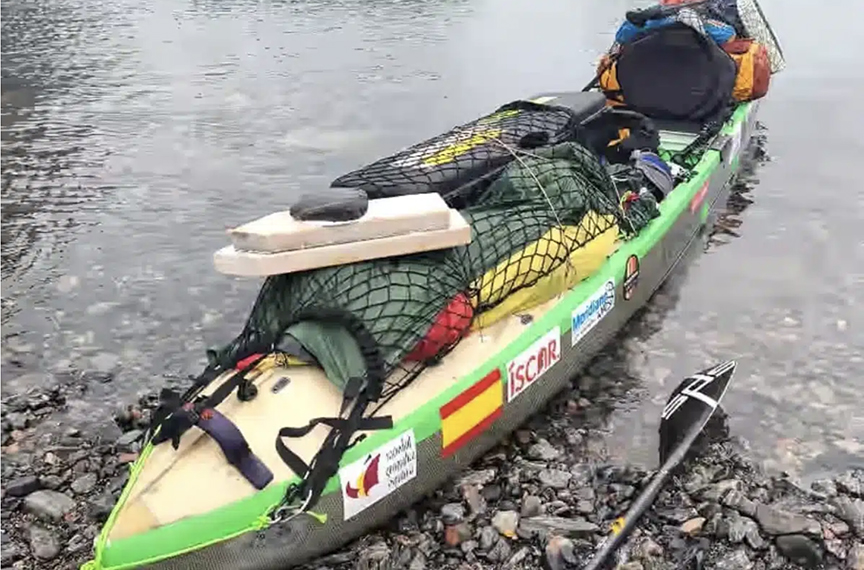
Photo: Antonio de la Rosa
Unrealistic plans
When I started traveling the High Arctic, inexperienced people showed up in Resolute Bay almost every spring with wildly unrealistic plans. One pair of Swedes in their 50s planning a mega-trek somewhere gave up after two brief shakedown trips outside of town when they couldn’t figure out how to prime a camp stove in the cold.
A British bobby wanted to walk the 760km from Ellesmere Island to the North Pole in two weeks. “He was even so generous to give himself an extra two days for bad weather,” a local outfitter told me at the time.
Since then, a lot more is known about polar travel. Would-be expeditioners can learn the basics on guided trips to the real Arctic rather than on their own in a meat locker in London. And Antonio de la Rosa is not a beginner. He’d done some significant crossings as an ocean rower. He skied the 1,200km route from Hercules Inlet to the South Pole.
There were also less sensible projects: In 2016, he set out to SUP 2,200km from Ilulissat, Greenland, to Alert, the Canadian military base on northeastern Ellesmere Island. There was no follow-up article about this expedition, so how far he went before it failed is unclear. For at least the last 1,000km, he’d be going against a strong current. The sea ice there is terrible, even now. When Jon Turk and Erik Boomer took their kayaks around Ellesmere Island in 2011, the stretch south of Alert was by far the most difficult — and they were going with the current.
Unless he first secured permission, which is very difficult to obtain, he wouldn’t have even been allowed in Alert. When I visited that restricted military base, I had clearance from Canada’s Minister of National Defense. Even the airspace near there is restricted, so civilian aircraft wouldn’t have been allowed to land to pick de la Rosa up. To those of us who know that area, de la Rosa’s project was a real headscratcher.
Northwest Passage
So far, the only group to paddle the Northwest Passage in a single season has been the Arctic Cowboys in 2023. They tried to begin in early July, but because of ice conditions, they had to wait a couple of weeks. De la Rosa started even later, and paddleboards are slower than double kayaks, and can’t manage the same sea states.
The Cowboys’ secret was that they could consistently cover long distances on the days they could paddle. Their first four paddling days covered 64km, 56km, 77km, and 71km. As summer gave way to unstable fall weather, and the flexibility of the midnight sun gave way to long nights, they paddled fewer days but kept up the marathon distances. They finished in October, as the Arctic winter was coming on. It seemed unlikely that a paddleboarder could start later, go slower, paddle fewer days because of waves, and still finish.
Nevertheless, the Cowboys covered only 400km on their first try, too. It is not impossible that a wiser de la Rosa shows up next June, drags his paddleboard over the ice like a sled for the first two or three weeks, and continues successfully from there.