A documentary short set in Daphne, Alabama, Jubilee describes a rare natural event that only occurs on Alabama’s Mobile Bay, on the Gulf of Mexico. We’re introduced to some of the people who live along the bay. For them, a Jubilee is part of their vanishing culture.
Watching for the Jubilee
In the bay, a complex combination of weather and tides can cause the water’s oxygen levels to drop suddenly. When this happens, sea life congregates on shore and in the shallows. Shrimp, crab, eels, and flounders practically throw themselves on waiting nets and spears.
For many long-time residents, predicting, preparing, and watching for a Jubilee is an important part of their lives. We soon meet Miss Stephanie, a mentor to many of the younger residents who’ve discovered a love of Jubilee-watching.
When she was young, she says, the Jubilees were more frequent and more intense. We see faded photographs of dozens of flounders hung up, and of masses of crabs emerging from the water.
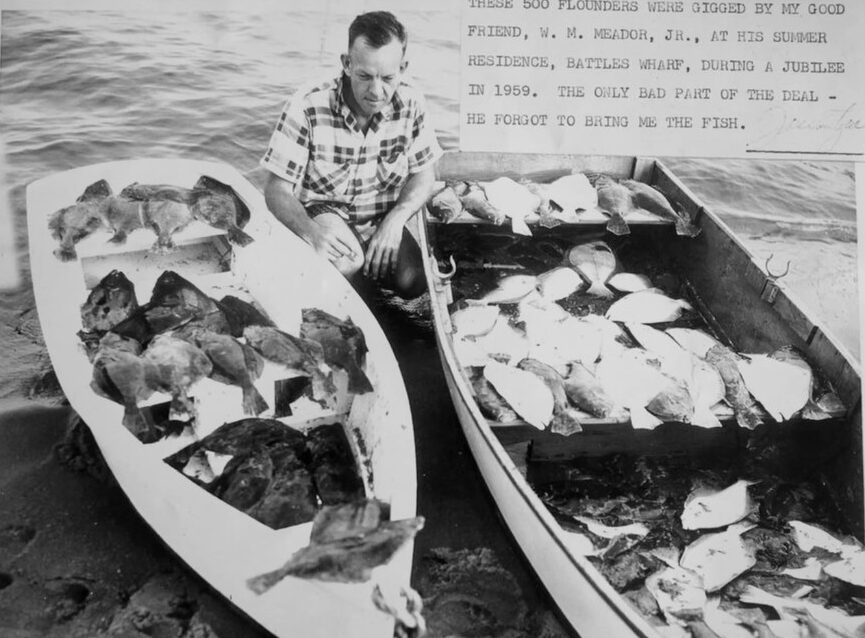
A Jubilee in 1959. Photo: Screenshot
Mildred, her elderly mother, recalls how the entire community was mobilized at the call of “Jubilee.” It was the neighborhood children who patrolled the beach most diligently, eagerly watching for signs.
Some of them still do. We meet Christopher, a young local, and some of his friends. Their summers are spent fishing, swimming, and rising before dawn to check the beach. This is when the Jubilee happens: in summer, just before dawn. But as Christopher explains, they’re hard to predict. The wind, the tide, the temperature, the moon phase, and salinity all have to come together just right.
Beautiful unused piers
Miss Stephanie no longer gets up to check for Jubilees, now that Christopher has taken over. She still takes on the cooking when they bring in their hauls and keeps the door open, waiting for the kids to holler for her. (We even learn that in the old regional debate between Zatarain’s and Old Bay for spicing seafood, she prefers Zatarain’s.)
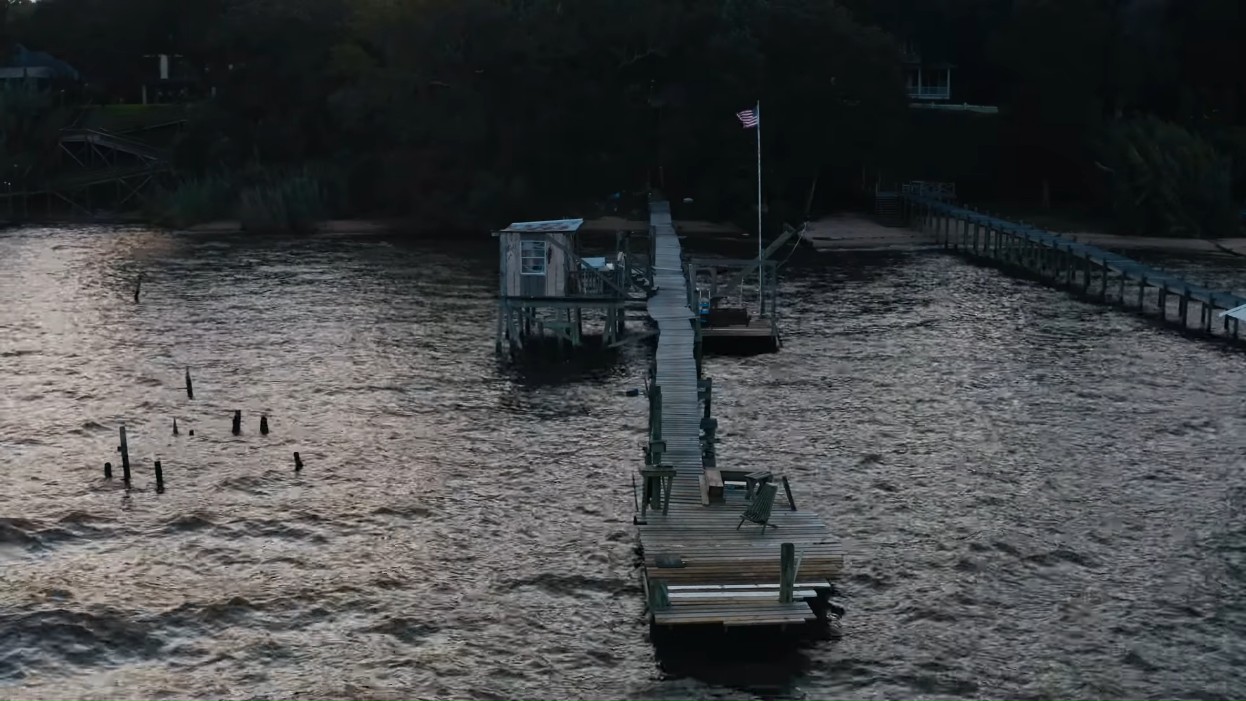
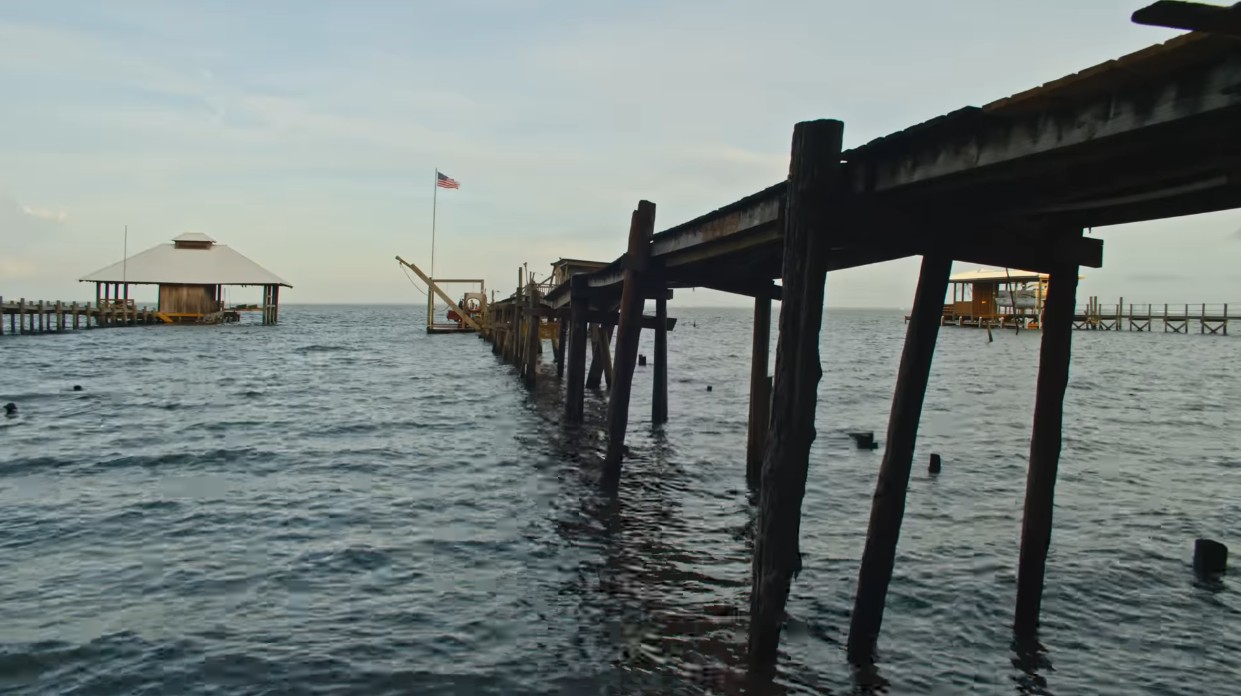
The pier down by Miss Stephanie’s house, in the early morning light. Photo: Screenshot
Christopher says she helped teach him to appreciate just spending time by the bay. A talented musician, he enjoys spending time at the beach, playing the accordion and violin. He doesn’t understand, he tells us, why there are all these beautiful piers going unused. The camera runs along a line of large, pristine beachfront houses and their large, pristine piers, all vacant and lifeless.
“They don’t really enjoy the bay,” Christopher explains. They also build seawalls, which leads to the beaches eroding. “I don’t know why.”
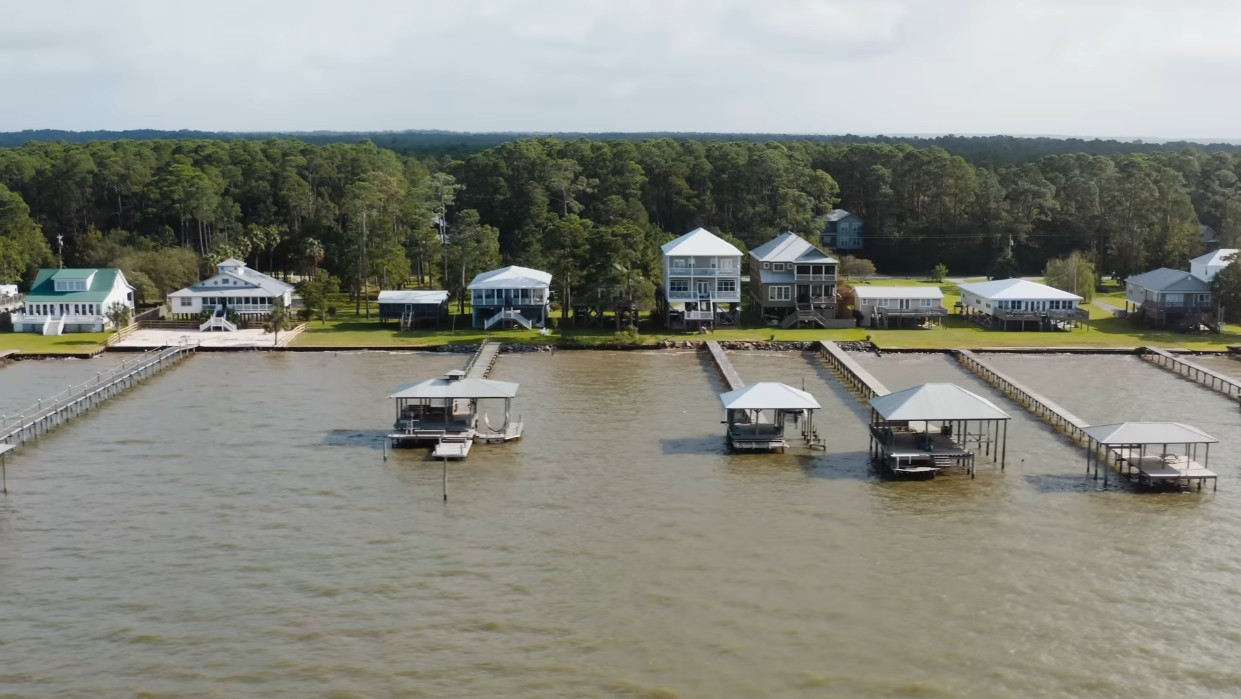
A line of neat, probably very expensive houses with private piers no one ever uses. Grim stuff. Photo: Screenshot
Private beaches and rock walls prevent Christopher and his friends from walking long stretches of the beach to check for Jubilees. The people in those big homes look down, he says, on those who actually use the bay; it’s low class to swim. He swims anyway.
Many of these same people, Christopher tells us, don’t even believe the Jubilees are real, or at least that they still happen. We don’t see one ourselves, only black-and-white pictures of massive hauls. But Christopher and his friends still get up in the middle of the night to check the beaches.