Self-portraits have been around as long as cameras, but the smartphone and social media have made it hard to be anywhere interesting without seeing someone pointing their phone at themselves with a big grin. By 2013, even the word selfie had become so embedded in modern culture that the Oxford Dictionary crowned it Word of the Year.
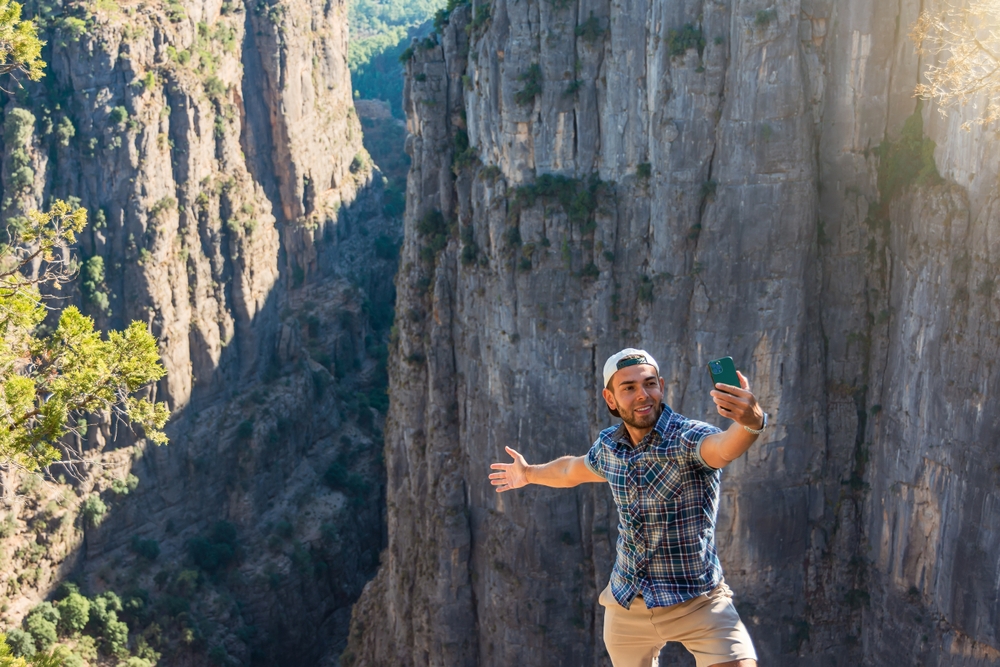
The need to show you were there has followed backpackers, travelers, and adventurers into the mountains and onto cliff edges and riverbanks.
In these places, where consequences of distracted walking are much greater than around the Louvre or the Taj Mahal, turning the camera on oneself can come at a surprisingly steep cost. There have been an estimated 379 selfie-related deaths, according to an analysis published in the Journal of Travel Medicine.
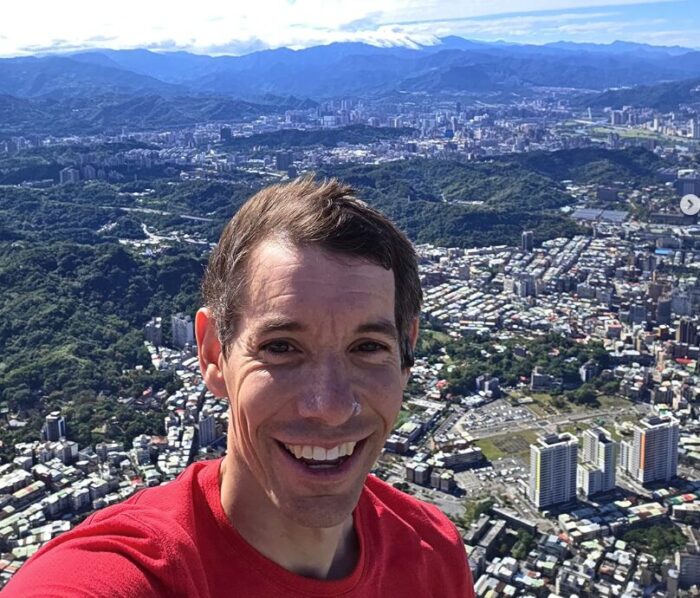
Climber Alex Honnold took the selfie to another level when he captured himself at the top of Taipei 101, after his successful free solo of the Taiwanese skyscraper in January. Photo: Alex Honnold
Young most at risk
The analysis collected data from a range of public and private sources and media reports. In total, it included information on 433 individuals involved in 292 selfie-related incidents between 2008 and 2021.
The data paints a stark demographic picture. The average age of those killed while taking selfies is just 24.4 years old, underscoring how heavily the trend skews toward younger people.
This aligns with the image many of us will have of a young tourist hunting for the perfect Instagram shot, only to topple over a cliff or into a raging river.
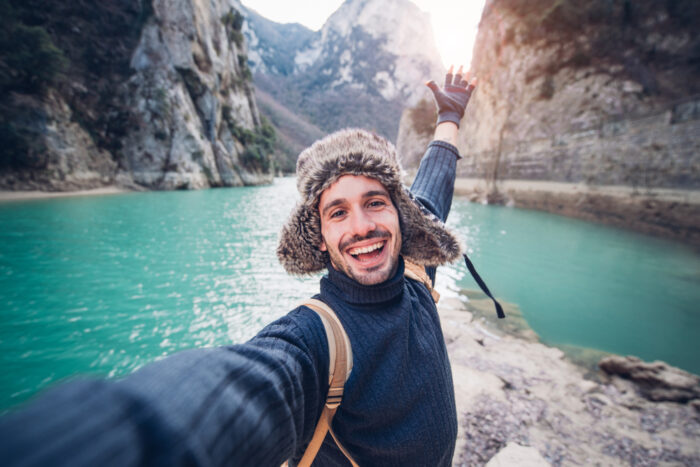
Photo: Shutterstock
There are also notable differences between male and female victims. Women are more likely to die from falls or animal-related incidents, while men are more frequently involved in vehicle-related fatalities.
Falls from height
The leading cause of death in this study is falls from height, responsible for nearly half of all cases at 49.9%, including incidents at waterfalls. Vehicle-related deaths come next, accounting for 28.4%, many involving trains, while drowning makes up a further 13.5%.
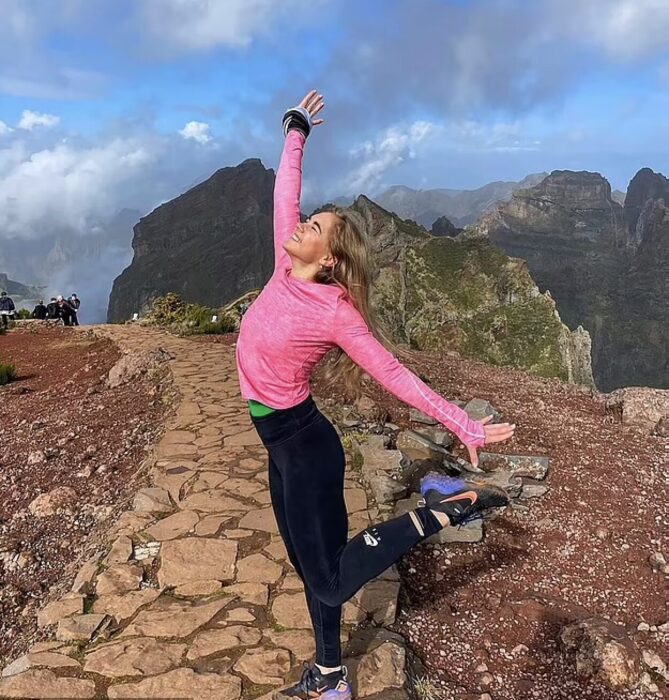
Natalie Stichova poses for her Instagram account on Portugal’s Pico do Areeiro. Photo: Natalie Stichova
In August 2024, a 23-year-old Czech gymnast, Natalie Stichova, died after falling from Tegelberg Mountain in the Bavarian Alps, Germany. She had been hiking above a castle when she moved toward the edge of the mountain, reportedly to take a photograph.
She fell approximately 80m down steep terrain. Emergency services responded and airlifted her to the hospital with critical injuries, where she later died.
A recent near miss
A recent near miss on a mountain trail in China in 2025 shows just how quickly things can unravel. A male tourist, edging along an exposed cliff on Huaying Mountain in southwest China, raised his phone for a selfie when the rock beneath his feet suddenly gave way. In seconds, he disappeared over the edge, plunging around 40m through trees below.
Amazingly, he survived with only minor injuries. The tourist later posted on social media: “The mountain Gods blessed me. I’m so lucky. I fell from a 40m high cliff and rolled down the slope for nearly 15 meters. When the rocks collapsed, I thought I was going to die. It’s so good to be alive.”
Tourists versus locals
When separating travelers from local populations, further patterns emerge in the 2008-2021 dataset. Travelers who die taking selfies tend to be older than locals who also perish and are disproportionately visiting countries such as the United States and Australia.
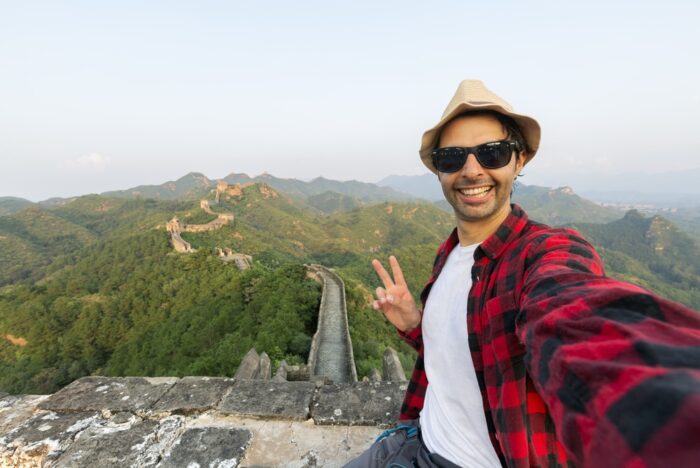
A tourist takes a selfie on the Great Wall of China. Photo: Shutterstock
Falls from height are more common among travelers, whereas vehicle incidents, weapon-related injuries, and electrocutions are less frequent.
India accounts for the highest number of incidents, with 100 cases, or 26.4% of the total. The United States follows with 39 cases (10.3%), and Russia with 33 (8.7%).
What can be done?
Most solutions proposed by researchers are kind of obvious, including better communication, such as clear warning signs, targeted messaging, and where possible, direct contact with guides or park staff at high-risk sites.
Education matters, too. Visitors often underestimate hazards, whether cliffs, water, or wildlife. Explaining what is dangerous and why, and what a safe distance or position looks like, can shift behavior.
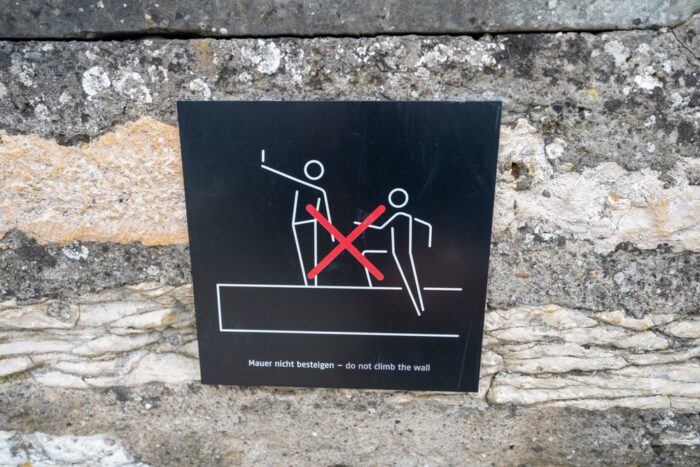
Some hotspots are installing signs to prevent people from climbing on walls to take selfies. Photo: Shutterstock
There is also a growing focus on prevention before people even arrive. Tour operators and destinations are being urged to avoid promoting images that prompted the photographer to ignore danger to get a striking shot.
Going further, some sites are introducing stricter controls: barriers, restricted access, and designated “no selfie zones” at known hotspots. These measures can work, but they come at a cost and limit access for more responsible travelers.