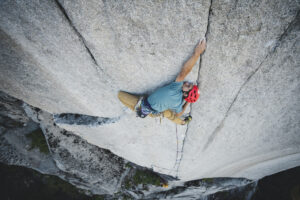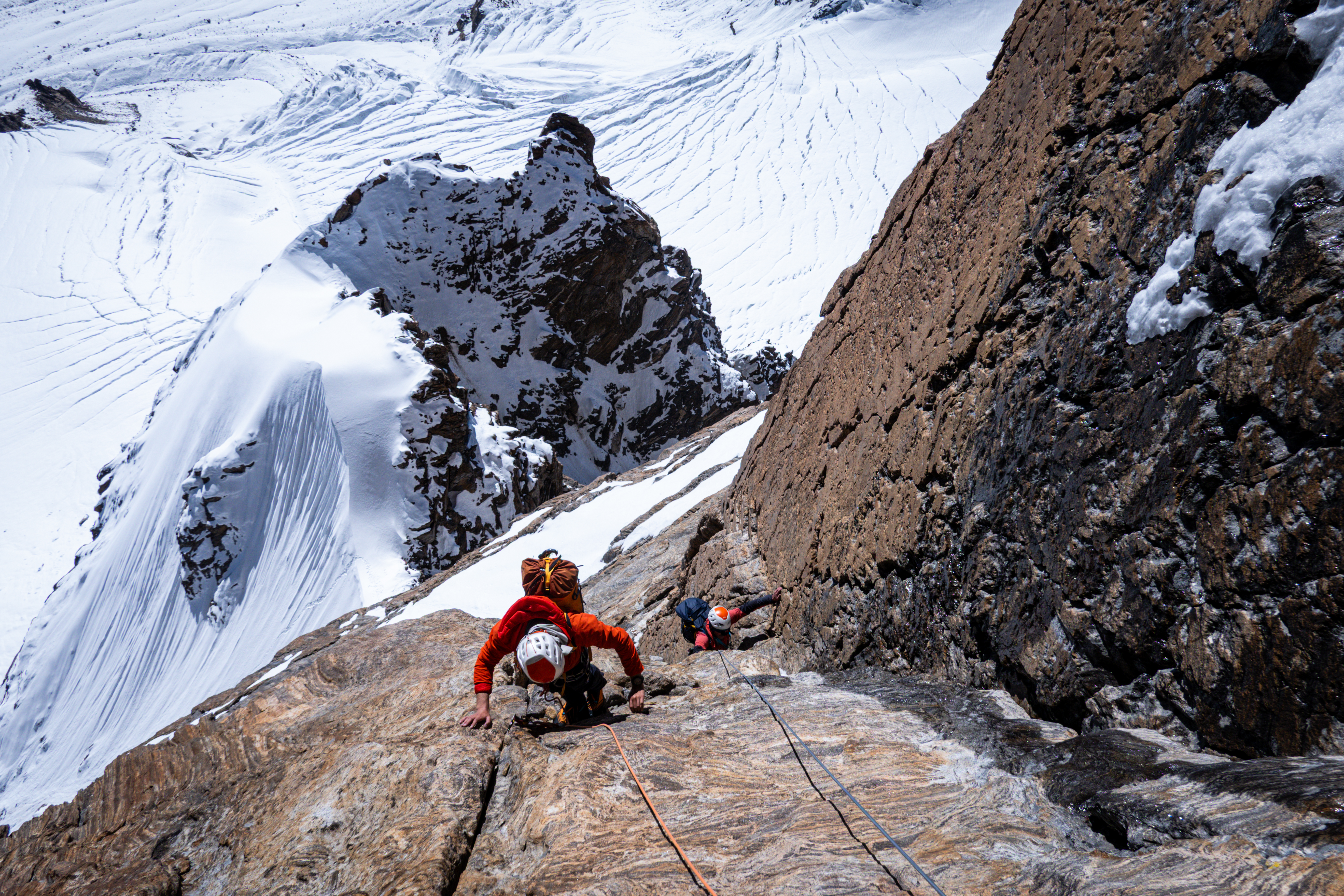
Through funded programs, the mountaineering associations of several countries train teams of young climbers to become alpinists. For their final exam, the Dutch NKBV Expedition Academy recently brought one such a young team from Holland’s flat lands to the 5,000m peaks of the Indian Himalaya.
Alexander Sternfeld, Claartje Meijs, Folke Drost, Jan van der Meulen, Jules de Ruiter, Karlijn de Wit, Laura Oldenburger, Mael Durand, and Joris Timmermans, supported by coaches Bas Visscher, Niek de Jonge, and UIAGM guide Boris Textor, opened seven new routes on rock faces and peaks around the Denyai Valley, a remote corner in Zanskar.
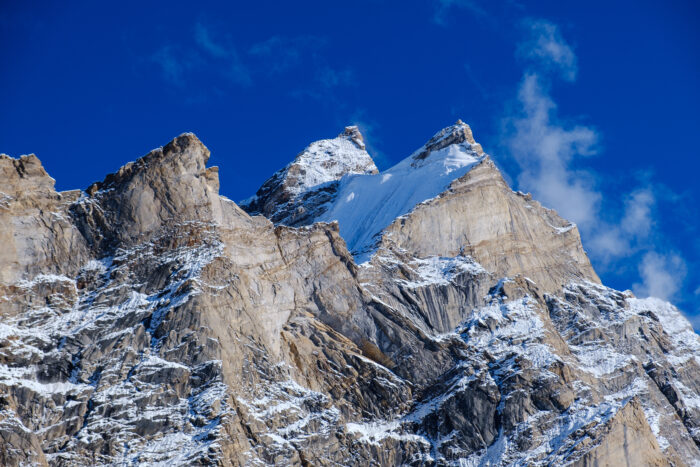
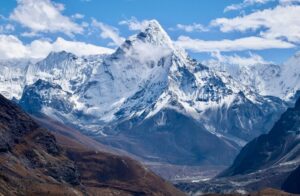
Chortan Rigib East (left) and West (right). Photo: Dutch Expedition Academy
Mixed team building
The team underwent a three-year training program alternating between climbing techniques, psychological support, and team-building.
“Many of the Himalayan expeditions organized back in the 1970s failed due to a lack of communication and internal quarrels among members,” Joris Timmermans said. “The mountaineering association [sought] to prevent this with the current national team of young alpinists.”
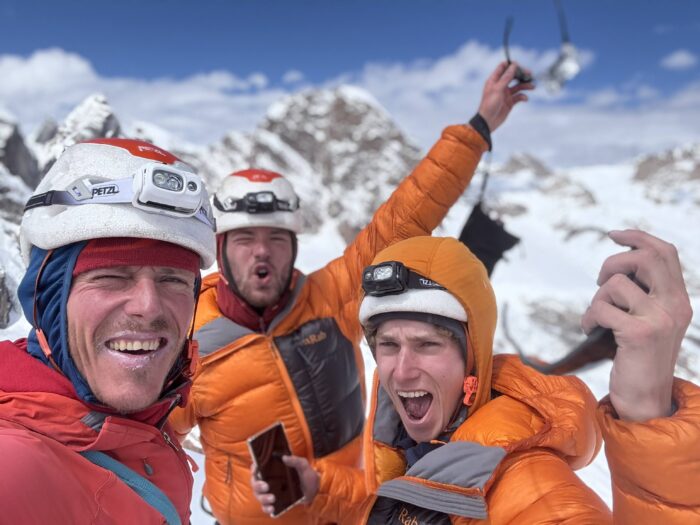
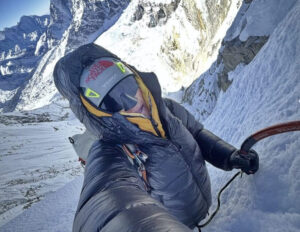
Niek de Jonge, Jules de Ruiter, and Jan van der Meulen celebrate on the summit of Chotzangma West. Photo: Dutch Expedition Academy
“The team’s coaches purposely made mixed-gender teams as the group dynamics and the members’ roles are richer this way,” Timmermans told ExplorersWeb. “The team selection looks for varied personalities and abilities that could work together as a team. Climbing skills are important, of course, but the team combines people who already climb with others not very experienced but show potential.”
At 28, Timmermans was the oldest in the group when he started the program three years ago. The youngest was 22. They also came from different walks of life. Some were students, others had jobs. Some had moved to mountain areas, and others, like Timmermans, lived in a place where the highest hill was 20 meters above sea level.
Zanskar’s final test
The 2023-25 team advanced through several stages, from climbing crags to mountaineering in the Alps. Their trip to Zanskar was a final test. Here, they were tasked with opening new routes independently.
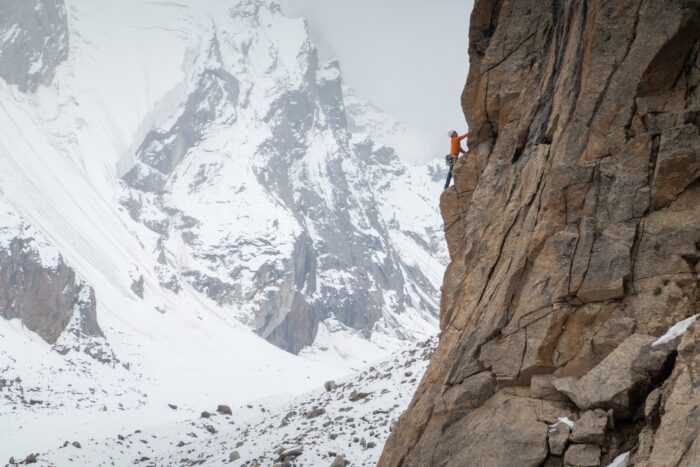
Joris Timmermans above Base Camp, with Chotzangma in the background. Photo: Dutch Expedition Academy
Team building began even before the expedition started, as the conflict between India and Pakistan last spring created uncertainty until the last moment. Finally, they went in September, later than originally planned.
Adjusting goals
The team reached the valley with very little information, except for some pictures and tips from two previous expeditions that had trekked, not climbed, in the area. Mostly, they aimed for 6,135m Khang Chan Chenmo, the highest peak in the valley, and Chongzatma, a massif with several points that had drawn the climbers’ attention. However, conditions at the time of arrival in the valley force the team to postpone for some weeks.
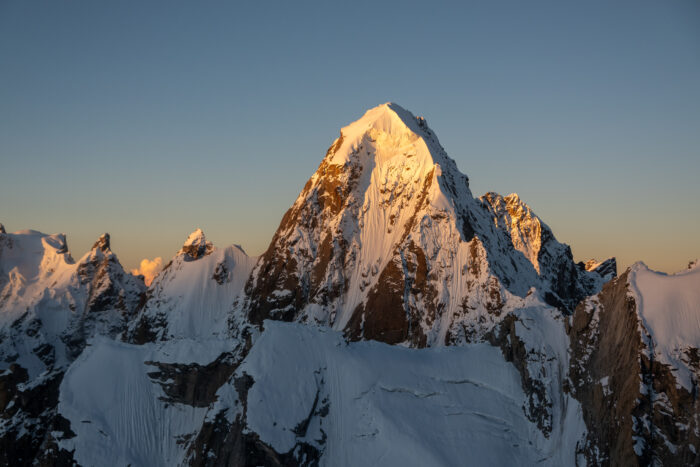
Khang Chan Chenmo. Photo: Dutch Expedition Academy
“After a week of heavy snowfall, we expected to have fully sunny days, as it is the norm in Zanskar,” Timmermans said. “But the weather didn’t stabilize. Evening rains were common, and that left the snow wet and heavy.”
Approaching the peaks was hard and slow — they sank up to their hips — and conditions on the faces were dangerous.
“We started opening short rock routes on faces near base camp, where we found great rock quality,” he said. “Then we had to wait out one or two days of rain, and then have another few hours to climb some more.”
The team opened eight new rock routes and dozens of boulders.
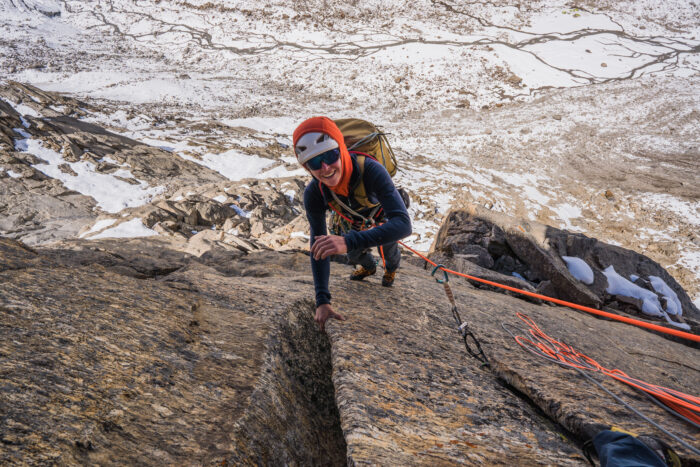
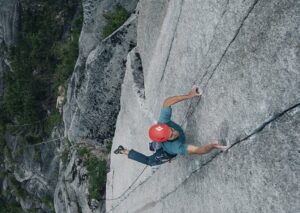
Karlijn de Wit on a rock pillar above base camp. Photo: Dutch Expedition Academy
Conditions eventually improved, with clear days and freezing nights. Those in the team who had acclimatized better switched back to higher peaks and mixed terrain, while others kept focused on rock climbing.
“We also [juggled] the teams to make sure that whatever obstacle we found on a route, there would always be someone ready to tackle it,” he said.
Alpine climbs
Folke Drost and Jan van der Meule plowed for 13 hours to reach the summit of Nochung Ri (5,700m). They graded the climb as PD+, 45°.
That success cheered the others up, and different groups completed several alpine climbs on nearby 5,000’ers, including the central and east point of Chotzangma (5,800m) and the highest peak of the valley: Khang Chan Chenmo (6,135m).
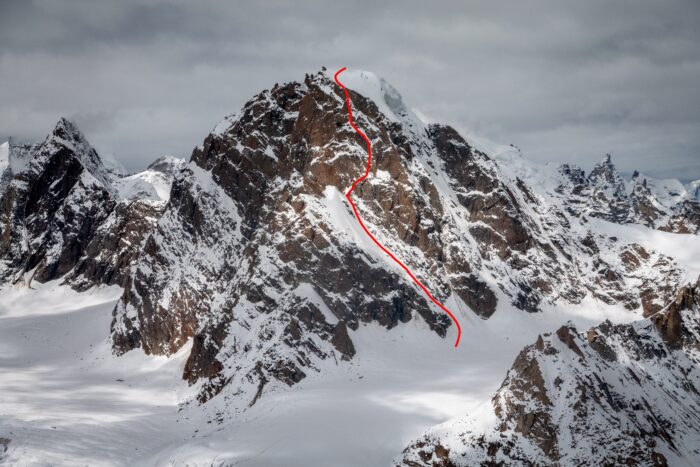
Their route on Khang Chan Chenmo (6,135m). Photo: Dutch Expedition Academy
Here’s a summary of their Zanskar successes:
● Chortan Rigib West (5,752m), AI3, 70°, 600m, Folke Drost, Bas Visscher, Joris Timmermans
● Nochung Ri (5700m), PD+, 45°, Folke Drost, Jan van der Meulen
● Chotzangma-Central and East (5,800m), D, 80°, 500m, Alexander Sternfeld, Mael Durand
● Chotzangma-West variant (5,800m), D+, 75°/M4+, 500m, Jan van der Meulen, Jules de Ruiter, Niek de Jonge
● Khang Chan Chenmo (6,135m), 5b, 50°, 700m, Alexander Sternfeld, Laura Oldenburger, Bas Visscher, Niek de Jonge, Folke Drost, Maël Durand
● Rejam Ri (5,600m), 5b+, 30°, Boris Textor, Karlijn de Wit
Read the complete report on the Dutch Expedition Academy’s social media:
“All the mountains were either previously named by the local population, if visible from their villages, or given a Ladakhi name in consultation with our base camp crew (also local),” the team noted.
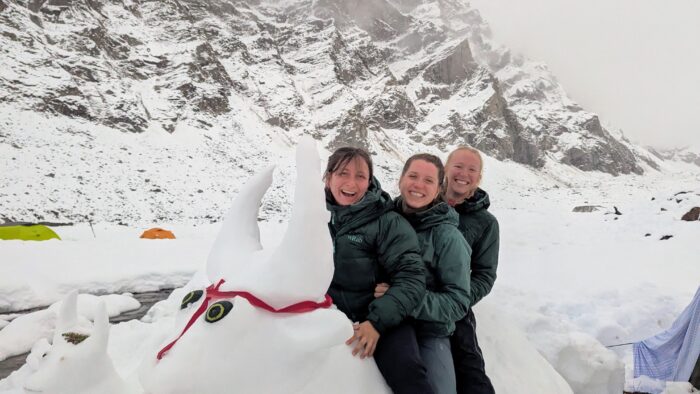
Team members make the most out of snowy days in Base Camp. Photo: Dutch Expedition Academy