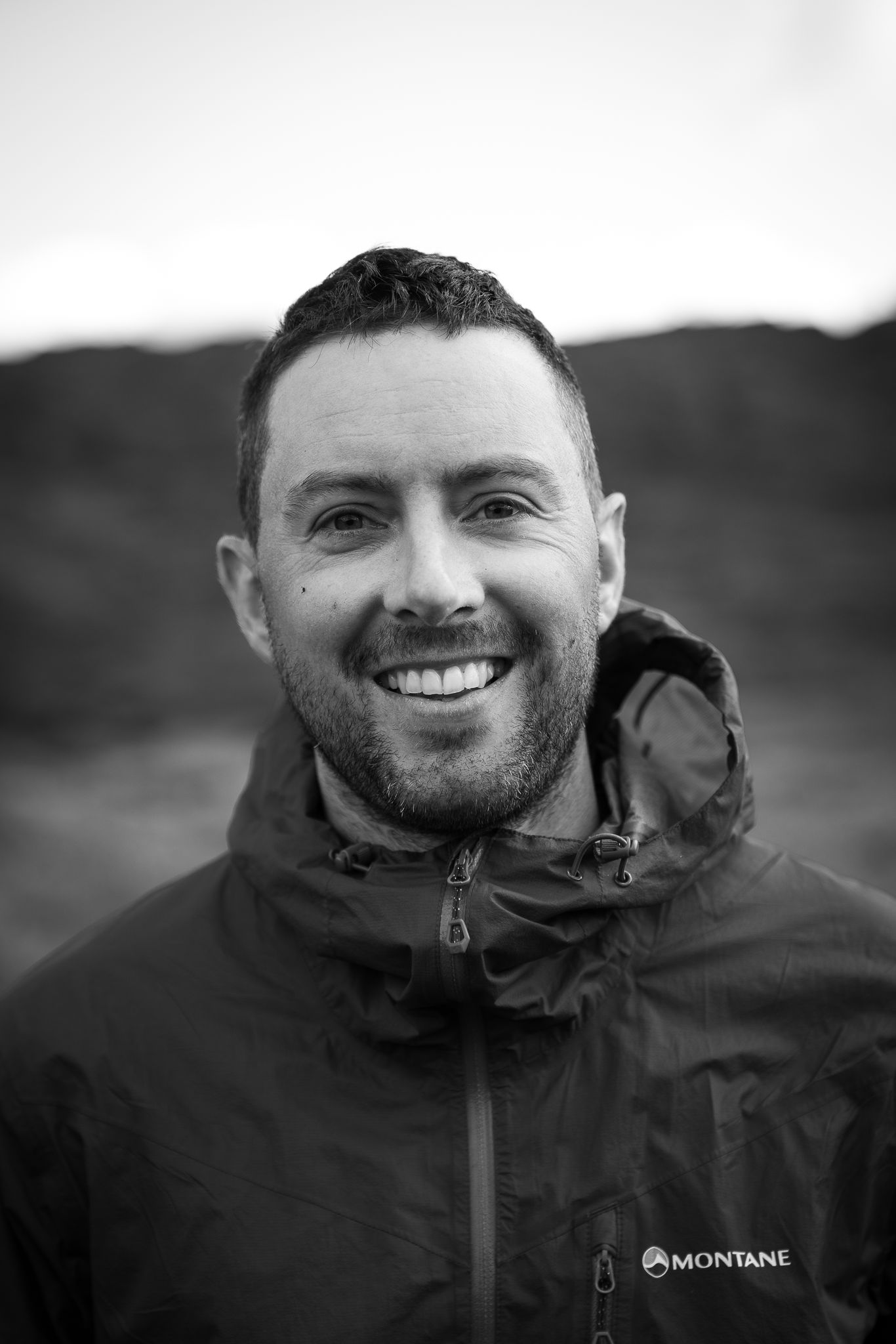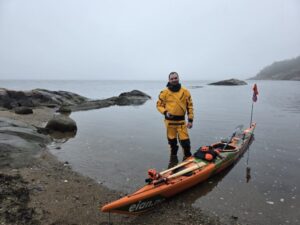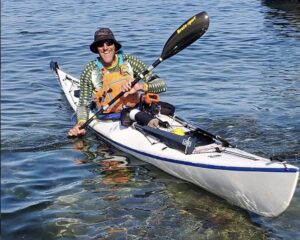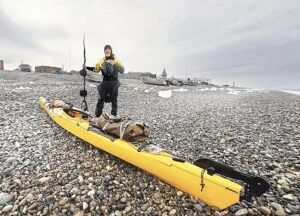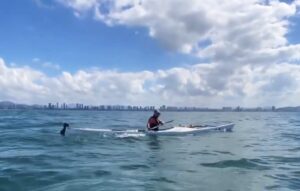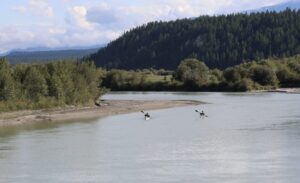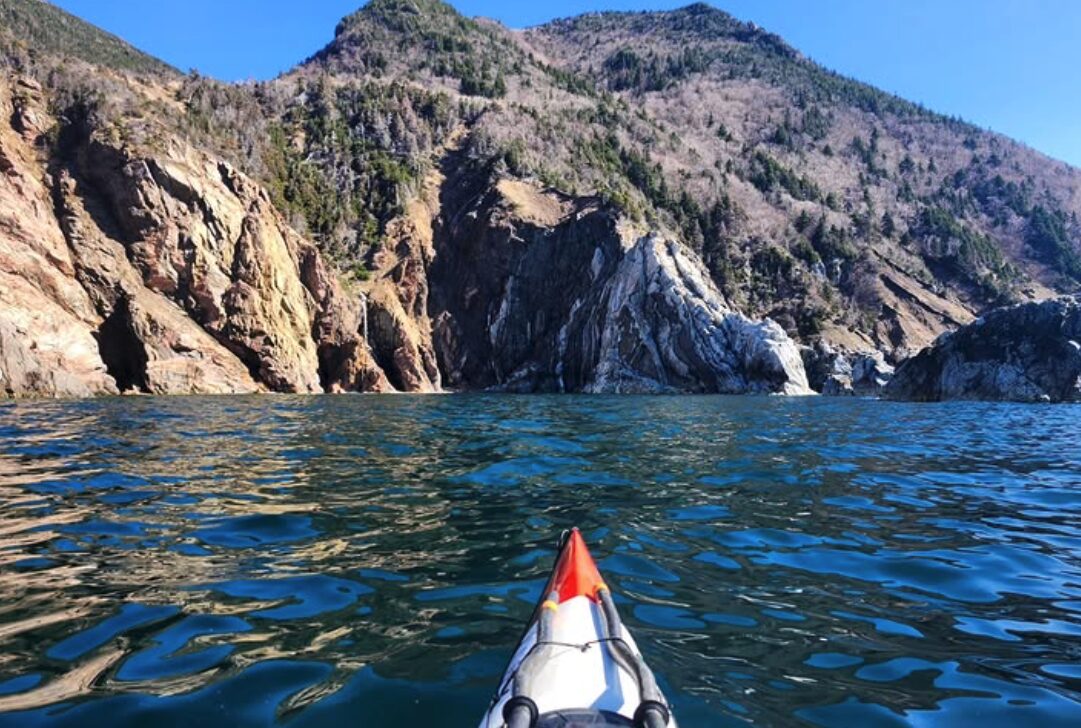
Lukas Dee has completed a 1,750km kayak journey around Nova Scotia, on the east coast of Canada. The 24-year-old Canadian began his 59-day journey on April 10 from his hometown of Lunenburg, on the south shore of the province. Dee averaged 30km per day for the journey and finished back in Lunenburg on June 7.
“The trip took me a total of 59 days, with 37 of those in the boat, 21 days on land waiting for weather windows, and one day cycling across the strip of land that connects Nova Scotia to New Brunswick,” explained Dee. If you don’t count the three weeks he waited on land for good paddling weather, he averaged 47km per day.
Dee has been sea kayaking for eight years and has worked as a kayaking guide for the past nine seasons. In addition, the Nova Scotian has whitewater paddling experience. However, before this two-month journey, Dee had only completed a three-day overnight kayak trip.
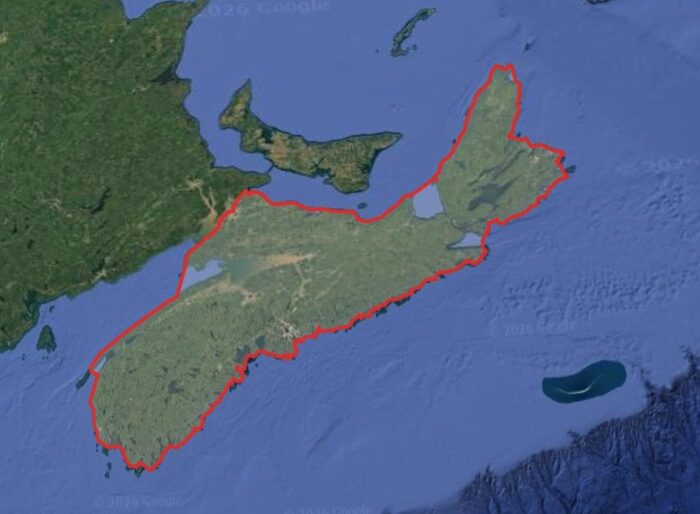
Dee’s route, including a short section of overland travel on the northwestern side of the province. Photo: Lukas Dee
There is no official registry for the route, so the total number of completions is unclear. In 2017, Ed Martin circumnavigated Nova Scotia by kayak in 47 days along a shorter 1,400km line, while in 1980 Scott Cunningham and Paul Potter completed a longer 2,500km coastal journey over three months.
Inspired by home
Dee completed the expedition on his 24th birthday, which also happened to be his hometown’s birthday. The journey was a chance to get to know his own province better.
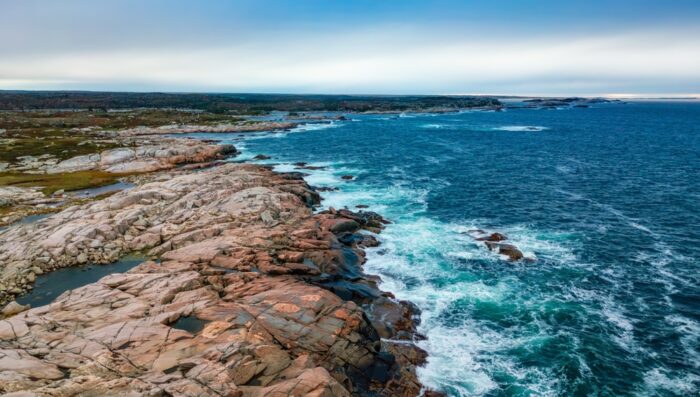
The eastern shoreline of Nova Scotia is exposed to the Atlantic. Photo: Shutterstock
“I thought that not only would it be a dream come true, but also a unique way to see and interact with the province and the communities along the coastline,” he added.
Dee started out intending to be unsupported, except for two planned food drops. “In the end, I didn’t need those food drops, as in many places I landed, I was offered meals and a place to stay at people’s homes. I had prepared food for 60 days and ended up only needing 15 days’ worth,” explained Dee.
“My boat could carry 20 days of food at a time. I did most of my trip solo, with a few friends joining me for a day or two along the way. I had friends on the water with me for seven days of the trip,” he added.
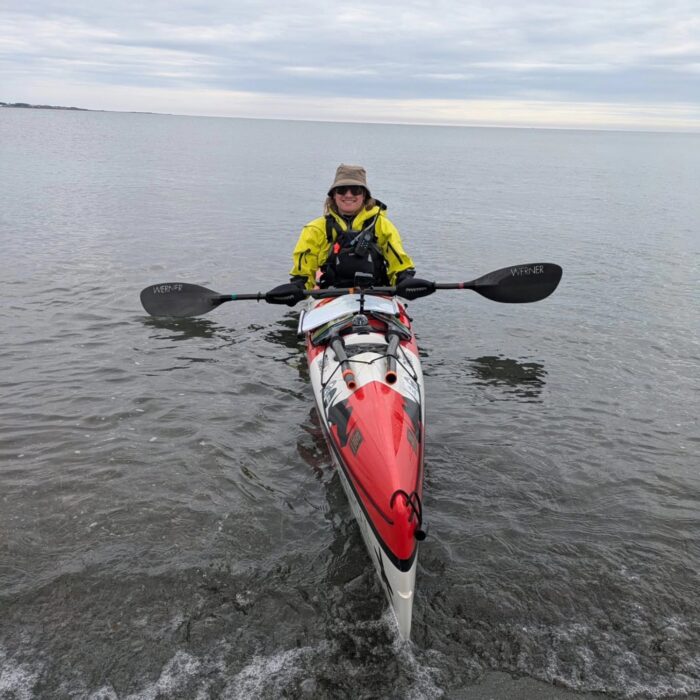
Photo: Lukas Dee
Crossing the land bridge
For the crossing of the Chignecto Isthmus, the narrow land bridge linking Nova Scotia and New Brunswick, the journey took an unconventional turn. A friend arrived with a tandem bicycle and trailer, and together they covered the 30km span, towing the kayak.
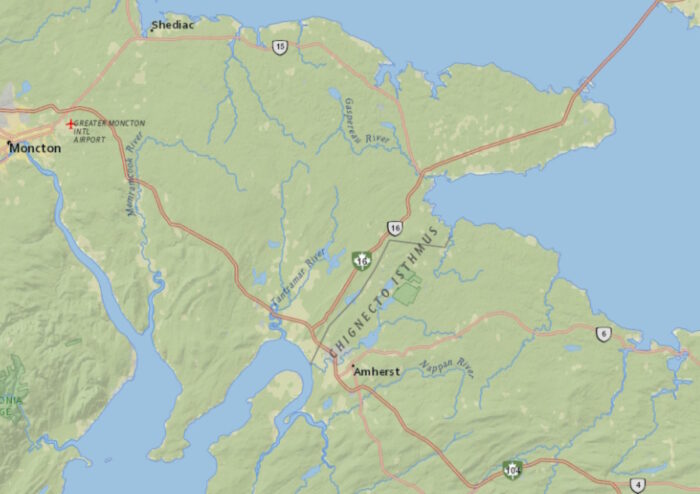
The land crossing of the Chignecto Isthmus between the provinces of New Brunswick, left, and Nova Scotia, right. Map: cpawsnb.org
“I also did multiple major crossings, and did my biggest crossing in a sea kayak to date: 32km from Port Hood in Cape Breton, back to the mainland of Nova Scotia at Cape George,” said the Canadian.
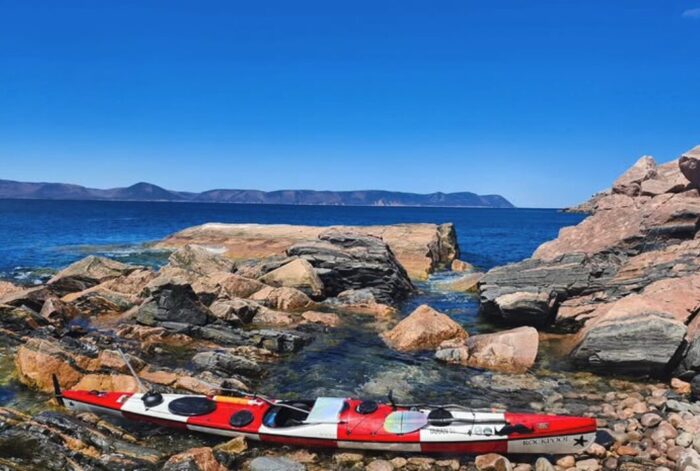
Photo: Lukas Dee
“Crossing the Bay of Fundy from Cape Chignecto to the North Mountain was also a massive challenge. It was foggy, so I had to rely solely on my compass while paddling,” explained Dee.
“Any break you take puts you off your course, as you are still being pushed along by the current, so looking at a GPS isn’t always the easiest. It is hard to understand how powerful the tides are until you’re in it, and it intimidated me every day I was on the Bay of Fundy.”
Battling the wind
Weather and wind proved to be the main challenges. While Nova Scotia typically sees a prevailing southwest wind that would favor much of the route, spring conditions were far less predictable, forcing extended delays.
Dee spent more than a third of the journey ashore waiting for suitable weather windows, disrupting any sense of rhythm until the final two weeks, when conditions improved. He balanced the need for patience and sound decision-making with the drive to maintain progress.
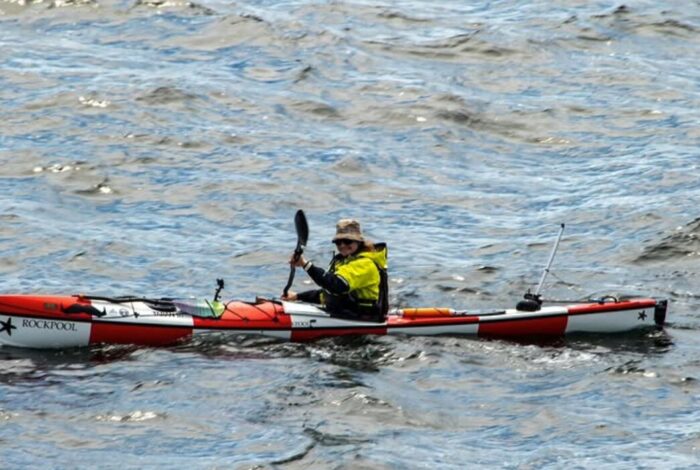
Photo: Lukas Dee
“For the first two weeks, I also struggled to stay warm when not paddling. It was cold, and I was burning a lot of energy. I generally couldn’t take breaks for longer than 10 minutes without getting cold and struggling to use my hands, as they became numb quickly. I had pogies on while paddling.”
Remote and exposed
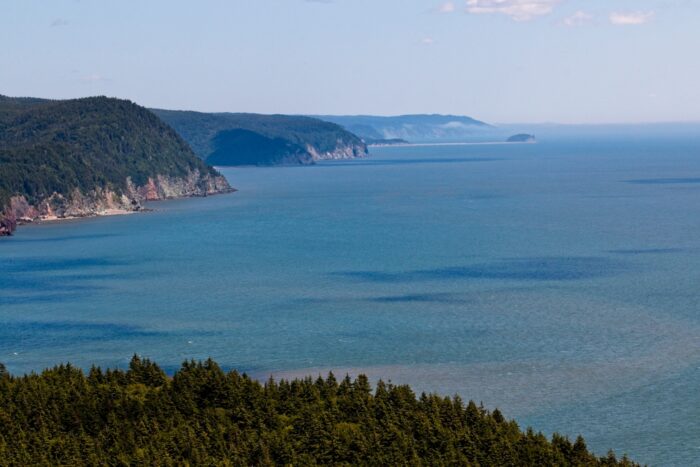
The Bay of Fundy. Photo: Shutterstock
“The Bay of Fundy was another highlight. It has the biggest tides in the world [up to 16m] and was super intimidating to cross. But when done right, it was also a huge help, as the tidal currents would push me along in the direction I wanted to go,” said Dee.