Members of a 500km expedition along the Hudson River sampled water at two high-elevation lakes in the Adirondacks. Their findings indicate that humans introduce microplastics into the environment through more than just water and air pollution. Modern clothing and gear also shed microplastics.
In 2024, an outdoor company and a youth wilderness company joined forces to lead eight high schoolers on this trek along the Hudson River. Starting in the Adirondack Mountains, they hiked, rafted, and kayaked to the New York Harbor, relying only on human power.
The students came from New York and California. All were juniors or seniors, and all were male for unspecified “practical considerations,” although two had never hiked a mountain before. On the flip side, three were Eagle Scouts and two came from the Adirondacks.
The expedition took 18 days, some of which lasted 20 hours. They stayed in a combination of campsites and hotels. Challenges included canoe portaging and dealing with storms.
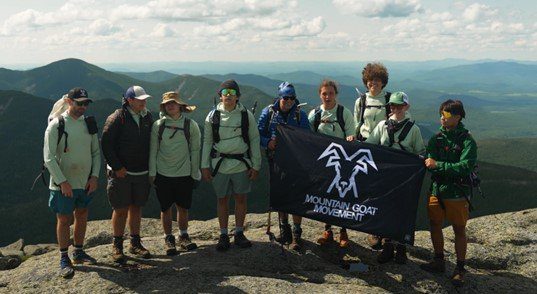
The high schoolers and one of their guides on the expedition. Photo: Tim Keyes/Joe Dadey/Greg Morrissey/John Barnhardt
Surprising measurements
Along the way, the group took water samples to measure microplastics in two lakes. They expected Lake Tear, at the top of the watershed, to have the purest water they would encounter.
Moss Pond, only 13m lower than Lake Tear in elevation but further down the watershed, experiences similar airflow to Lake Tear. In contrast to Lake Tear, though, no trail leads to its shores.
Contrary to their expectations, the team found a 26-times higher concentration of microplastics in Lake Tear than in Moss Pond. This suggests that in the upper watershed, more microplastics arrive in the water carried on hikers’ garments than floating in the air.
The team’s findings agree with surveys that found increased amounts of microplastics on trails. Most of the plastic was microfibers from clothing.
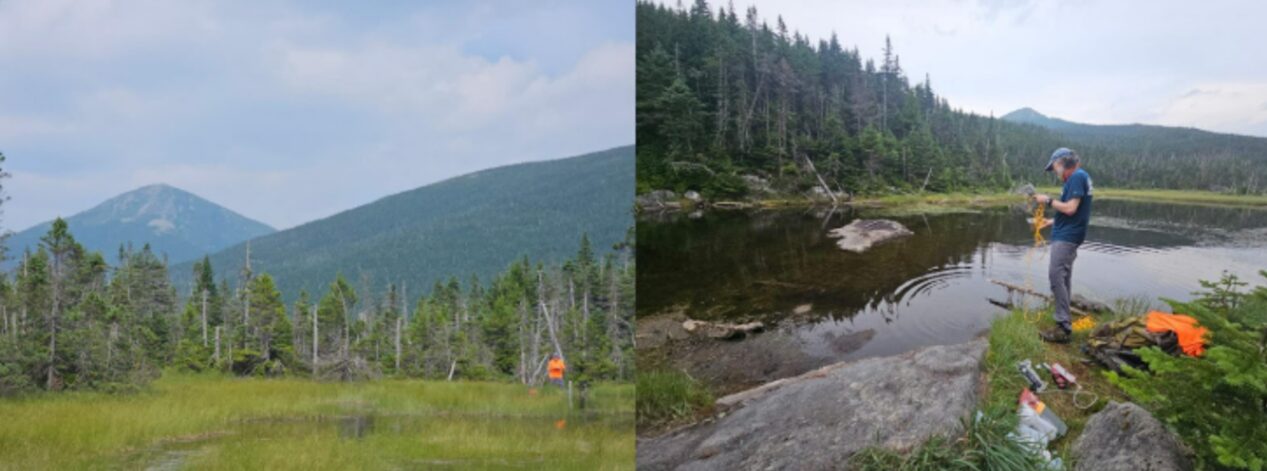
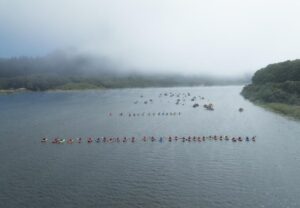
The team samples water at Moss Pond, left, and Lake Tear. Photo: Joe Dadey
What you can do
Many biochemists, environmental scientists, and public health specialists have devoted their careers to understanding the impact of microplastics on the world around us. They have uncovered effects ranging from respiratory illnesses in children to disrupted food chains in ecosystems worldwide.
While individuals may lack the power to effect wide-scale change in society’s reliance on plastic, the Hudson River experiments show there are some ecosystems where we can have an impact.
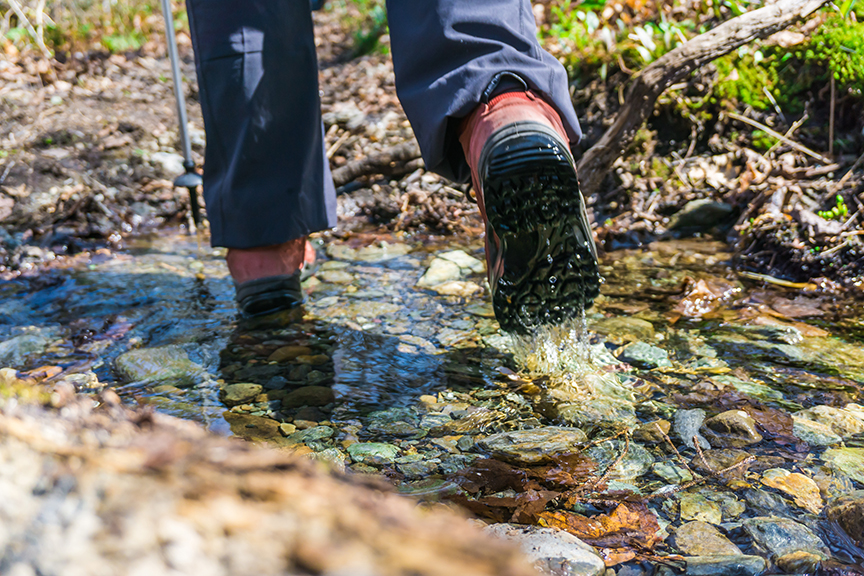
Currently, most gear companies no longer sell natural rubber soles. And natural fiber clothes are often more difficult to find than their synthetic counterparts. But hard rubber soles shed fewer microplastics than soft ones. Additionally, natural fibers like cotton and linen don’t release any microfibers.
Here, customers have more power for change than in most other areas of pollution.