A joint effort by Sherpas from several teams has found a path through the seracs and crevasses of the Khumbu Icefall. They have fixed the route and have now reached Camp 2. The question is whether it might be too late for some climbers, especially those climbing without supplementary oxygen.
Reached Camp 2
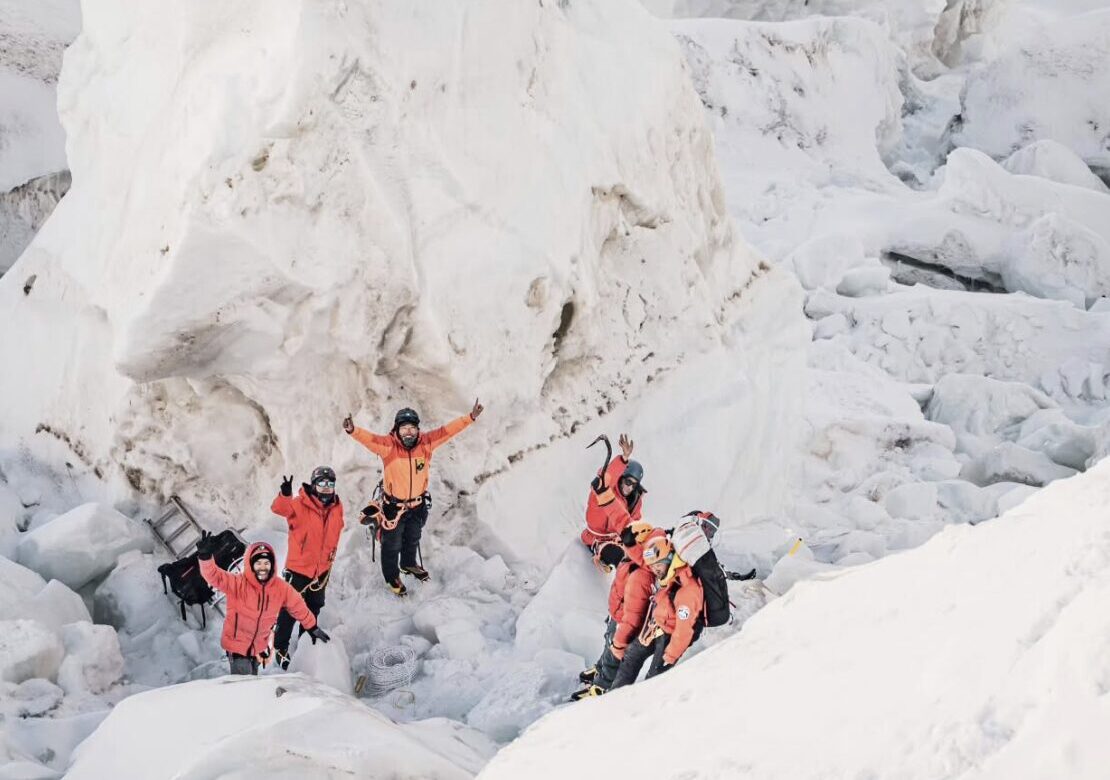
The Icefall Doctors, the specialized Sherpa team assigned each year to this section, led the way in coordination with other Sherpas. These include a second team assigned by the Expedition Operators Association of Nepal (EOAN), as well as guides from Seven Summit Treks, 8K Expeditions, Pioneer Adventure, 14 Peaks Expeditions, and TAG Nepal. Two days ago, another independent group of Sherpas hinted that an alternative route was a realistic option.
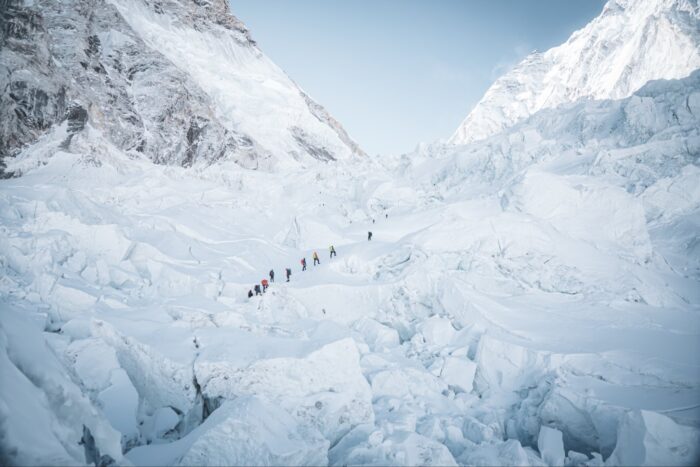
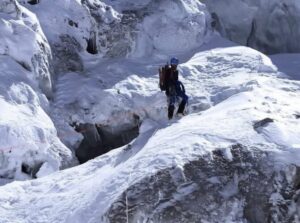
Sherpas in the upper part of the Khumbu Icefall. Photo: Seven Summit Treks
“The Icefall Doctors have been working on a couple of alternative routes around the main section,” Ryan Waters of U.S.-based Mountain Professionals told ExplorersWeb. “By 9 am Nepal time, they had reached Camp 1 and were requesting additional rope [carried by drones] to finish fixing.” The latest report says the rope fixers reached Camp 2 today.
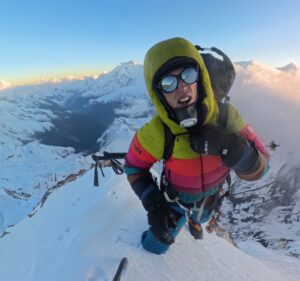
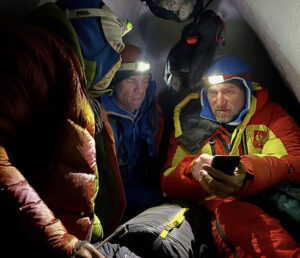
Manish Maharjan has shared some images of the serac and the Icefall Doctors at work on social media:
Action plan
“The route has been fully established with ladders, ropes, and anchors through the Icefall,” Seven Summit Treks reported. “With this critical section now secured, rotations to Camp 1 will begin shortly.”
Pemba Sherpa of 8K Expeditions told ExplorersWeb that the plan is now to fix the rest of the route to the summit as quickly as possible. They will then fix Lhotse. “This is good news for everyone,” said Pemba.
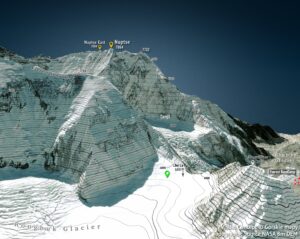
This alternative route was the safest option to the summit of Everest until a dangerous sera at the top of the Icefall falls naturally.
“The exact condition of the hanging serac in the Khumbu Icefall near the Western Cwm will be known only after the team returns to Base Camp,” EOAN’s field coordinator Lakpa Sherpa told The Tourism Times. The situation will need constant monitoring to ensure that when the serac falls, it does not affect the new route.
We will have further details once the Icefall Doctors and the joint Sherpa group return to Base Camp later today.
Too late?
According to the latest update from Nepal’s Department of Tourism, 425 foreign climbers have permits to climb Everest. Adding local guides, assistants, porters, and personnel supplying and maintaining the higher camps, over 1,000 people could be moving up and down the fixed ropes shortly.
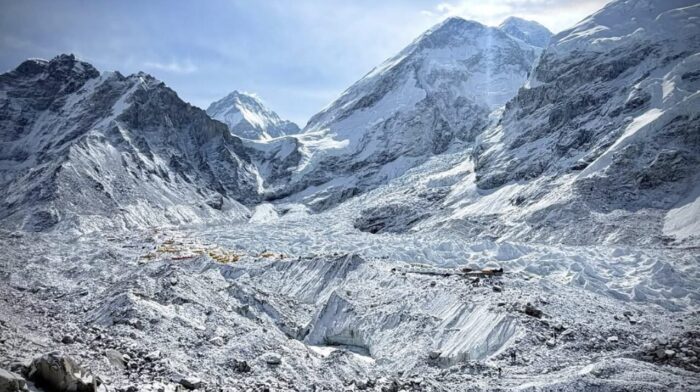
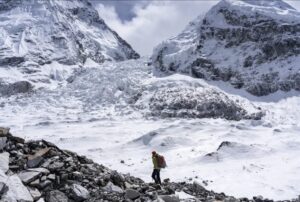
Everest Base Camp near Gorak Shep. Photo: Climbing The 7 Summits
Since the boom of commercial expeditions, the route to Camp 1 on Everest has never been opened so late. Teams will barely have any time for one rotation before their summit push.
Most teams handled the delay by acclimatizing on nearby peaks, but the timing remains tight. Those on supplementary oxygen will need plenty of bottles available, and it would not be surprising to see people start on oxygen at a lower altitude than usual. Those planning a no-oxygen ascent may have little chance of success. We will report further when they update their plans.
Drones and helicopters
It remains unclear whether, in addition to cargo drones, the outfitters are using helicopters to supply to Camp 1. Local media reported earlier this week that Nepalese authorities had allowed this as an emergency measure, given the delay, but there is no confirmation on whether helicopter shuttles are ongoing. The Nepal press says the issue “has been discussed,” but the authorities have not responded to our queries at the time of posting this story.