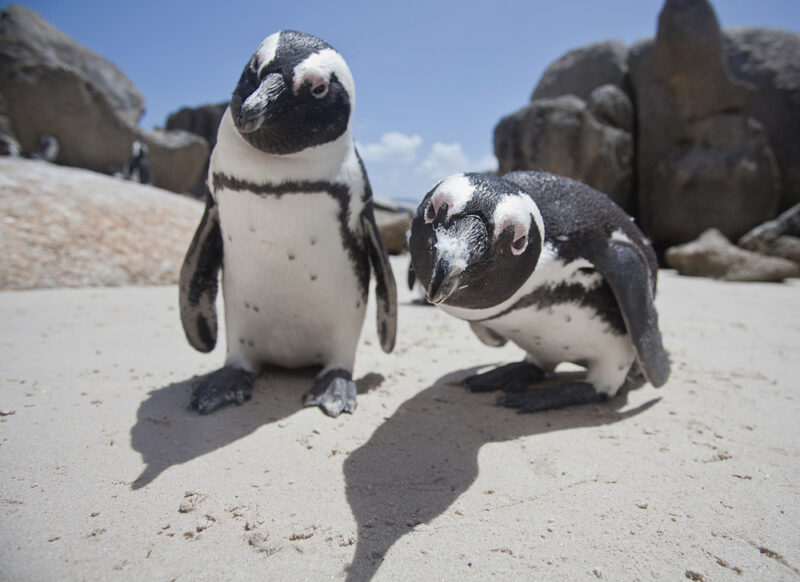
Over 60,000 African penguins have starved to death along the coast of South Africa, after their food supply collapsed.
Between 2004 and 2011, around 62,000 breeding penguins vanished from Dassen Island and Robben Island, two of the most important breeding grounds for African penguins, according to a new study. A staggering 95% of the birds that bred in 2004 were gone just eight years later.
At the root of the problem was the collapse of sardine numbers. The little fish make up a huge portion of the penguins’ diet. A deadly combination of environmental stress and human activity has wrecked the sardine populations, which have been at one-quarter of capacity for most years since 2004. Rising ocean temperatures and the changing salinity disrupted their spawning zones.
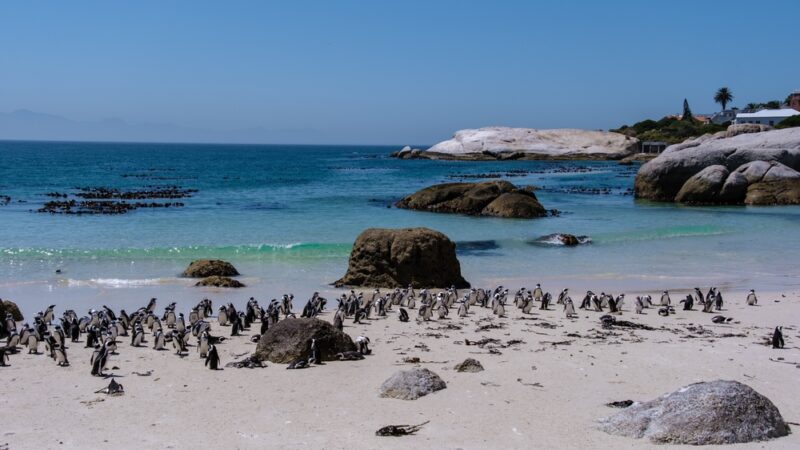
Boulders Beach, Cape Town. Photo: Shutterstock
Commercial fishing practices remained intense even as sardine numbers dropped. The double whammy of reduced breeding success for sardines and consistent fishing efforts devastated the population.
As if that wasn’t dire enough, the timing of the penguins’ annual molt worsened the situation. Every year, the penguins shed and regrow their feathers. The process takes around three weeks, and for the duration, they have to stay on land. This means they can’t hunt and need to live off their fat reserves.
Food scarcity before or after the molt makes it almost impossible for them to survive. The penguins are often underfed when the molt begins, and those that make it back into the water find too few sardines to survive.
The consequences extend beyond the two colonies on Dassen Island and Robben Island. Over the last 30 years, the global population of this once robust seabird has fallen by nearly 80%. They are now critically endangered. If current trends continue, the species could be extinct within a decade.