Each January 1, scientists and staff at the Amundsen-Scott South Pole Station gather outside on the ice. This is not to celebrate the New Year, but for another long-standing tradition that has been going on for almost 70 years. They are there to move the marker for the Geographic South Pole.
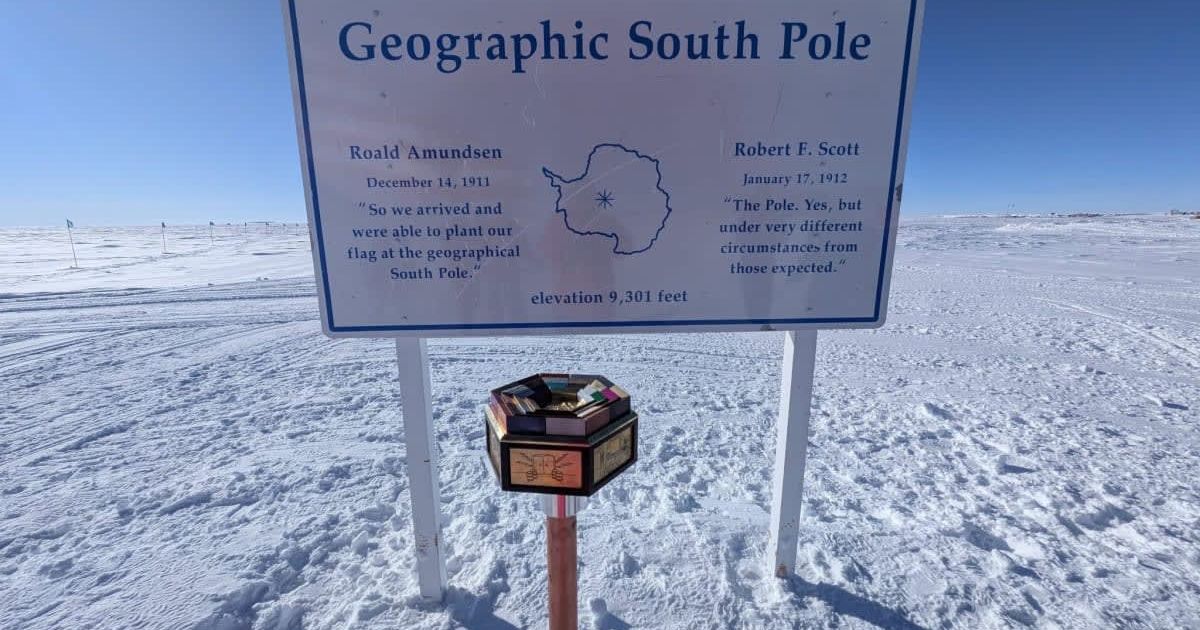
The South Pole is the Earth’s southernmost point, located at 90° S in the center of Antarctica. It’s where the Earth’s rotational axis intersects the planet’s surface. This fixed point is marked by a metal stake in the ice. But even though the Pole itself is fixed, the stake that represents it is constantly moving with the ice sheet underneath.
Slowly but constantly, this ice flows outward from the South Pole toward the Weddell Sea, like a river of molasses. It drifts at a rate of about 10 meters a year, so without resetting the South Pole marker periodically, it too would gradually drift away from the station.

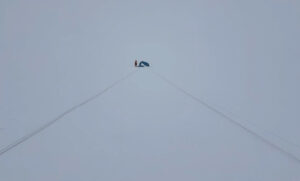
Station staff gather to place the 2026 Geographic Pole marker. Photo: The Antarctican Society/Sven Lindstrom
Bagpipes and a stuffed penguin
The responsibility for this yearly task falls to the scientists and support crew of the U.S. Amundsen-Scott South Pole Station. Each year, they calculate the precise new spot where the marker should go. Then they all head out for official ceremony. This year, bagpipes and a stuffed penguin joined the festivities.
They remove the old pole and install a newly designed one in its place. Each old marker is preserved inside the station, creating a record of the South Pole’s drift over time.
This tradition started in 1959, and each ceremonial pole is different. Each year, it is designed by the “winter overs” at the station. Once approved by the National Science Foundation, it is made onsite and put into position the following summer, on January 1.