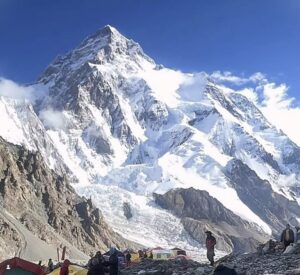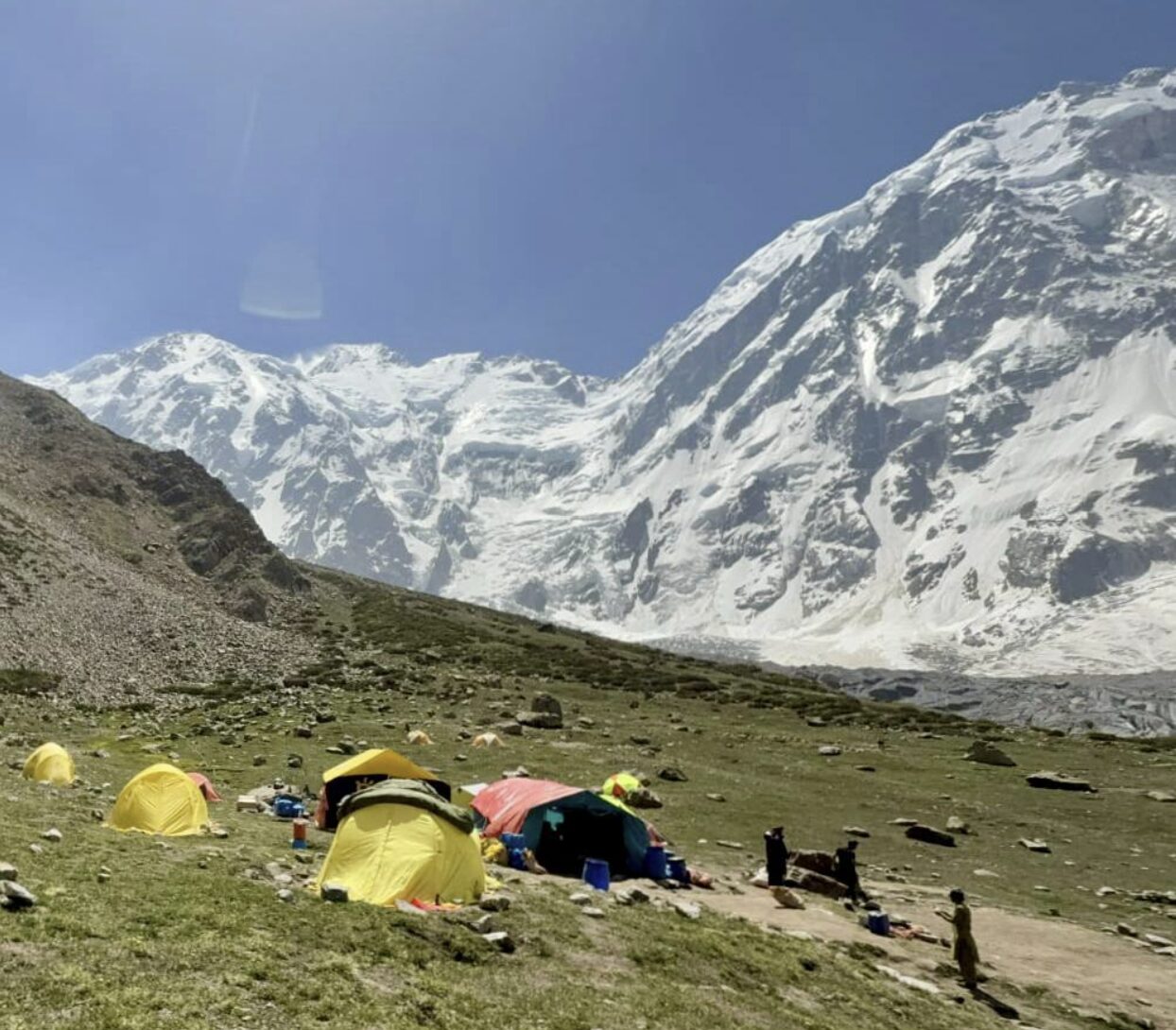
Climbing fees in Pakistan have not increased in 2026, which makes the permit for K2 more than four times cheaper than Everest. Pakistan also offers a wide range of 6,000m peaks, some of them unclimbed, at the price of a trekking permit. Sometimes, as with six peaks near Nanga Parbat, they’re even free.
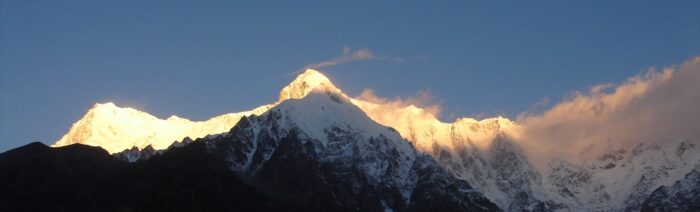
Chongra Peak on the left, and the ridge leading to the summit of Nanga Parbat. Photo: Wikipedia
Prices revised in 2025
Climbing fees in Pakistan have confused some visitors over the last two years, as permits for K2 and the country’s other four 8,000’ers were updated to establish individual permits. Previously, climbing permits were sold collectively to seven-member groups.
The prices originally planned for 2025 nearly tripled the previous fee, drawing protests from local outfitters, who feared many clients would stop coming. After a long debate, authorities agreed to cut the planned hike significantly for peaks above 6,500m and for the lower trekking peaks.
In the end, the climbing permit fee for K2 remained at $3,500 per person, modest compared to Everest’s $15,000 from the Nepal side in 2026. Everest permits on the Tibetan side are not public but are similar or slightly higher, depending on the size of the team.
The other four 8,000m peaks in Pakistan are all $2,500 per person during the summer season. In Nepal, the permit fee for 8,000’ers other than Everest is $3,000 in the spring and $1,500 in the fall.
Ali Porik of Jasmine Tours in Pakistan has confirmed that climbing fees will not change for 2026.
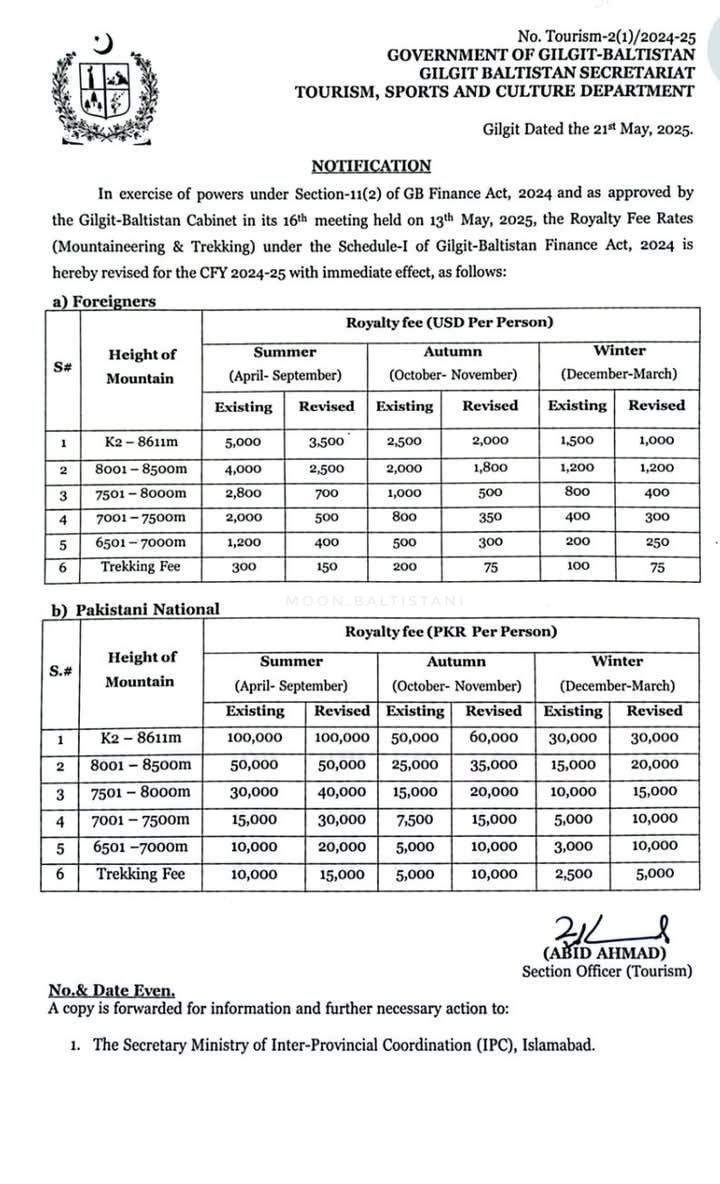
The 2025 climbing fees in Pakistan will not change in 2026. Document shared by Gilgit-Baltistan Authorities
Unclimbed 6,000’ers
Obviously, the permit fee is only a fraction of the budget for a climbing expedition to the Karakoram or Himalaya. Logistics costs mount up especially on the 8,000’ers, and even more so on comfortably equipped commercial expeditions.
However, a low climbing permit may make a big difference for smaller, self-sufficient teams heading to lesser mountains. In that sense, the list contains some interesting information.
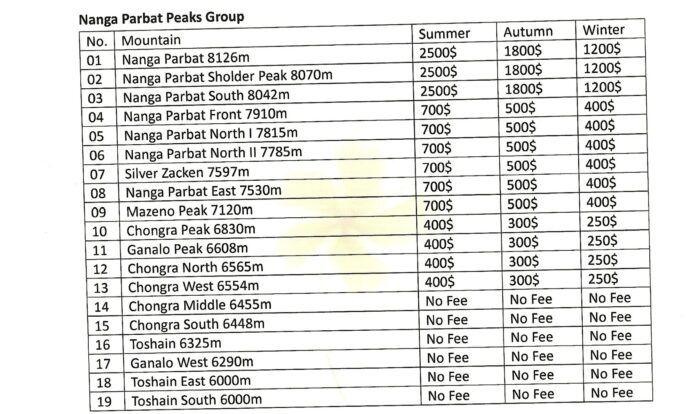
Climbing fees for peaks in the Nanga Parbat region. Photo: Jasmine Tours
The list notes that six 6,000’ers near Nanga Parbat feature no climbing fees at all. Among them are the three points of Toshain Peak (also known as Sarwali, Dabba, and Toshe Ri), located on the edge of the Rupal/Toshain Glaciers in the Rupal valley. The area belongs to the Pakistan-administered Azad Kashmir. According to Wikipedia, it is a technically difficult peak, still unclimbed.
Also on the list are Chongra and Ganalo Peaks, both subsidiary summits of Nanga Parbat.
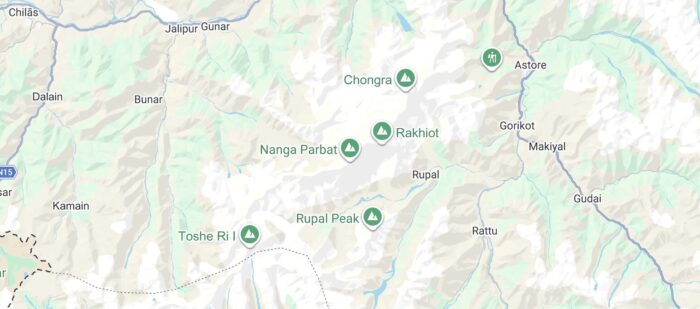
Location of Nanga Parbat, Chongra peaks and Toshe Ri (Toshain). Google Maps
Around K2
The Central Karakoram not only hosts the country’s giants — K2, Broad Peak, and the Gasherbrum massif — but also several peaks between 5,700m and 6,400m, listed as only requiring a trekking permit. Fees for 7,000m peaks are $500, and $600 for the higher 6,000’ers.
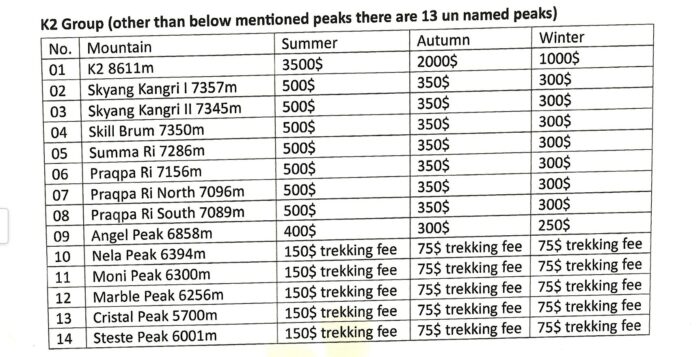
List of peaks open to climbing in K2 area. List provided by Jasmine Tours
Fall opportunities
The lists show that climbing fees drop in the fall on all peaks. This is a very rare option for 8,000ers, where all the outfitters try to optimize logistics by climbing at the same time. Nanga Parbat is typically climbed in June, while virtually all climbing on the Karakoram 8,000’ers takes place during July or the first days of August.
However, late summer and fall may also offer good slots for smaller groups of alpinists to do faster, alpine-style climbs. Last year, Gaetan Navarrete and Julien Priour of France bagged the first ascent of 6,458m Kurdopin Shar in the Shimshal Valley. Teams that had attempted the peak in previous summers had to retreat due to high avalanche risk, but the French found better conditions when they went in mid-October.
James Price of the UK and George Ponsonby of Ireland bagged another remarkable first ascent in Pakistan’s Karakoram between October 13 and October 21, 2025, when they summited 6,000m+ Aikache Chhok.
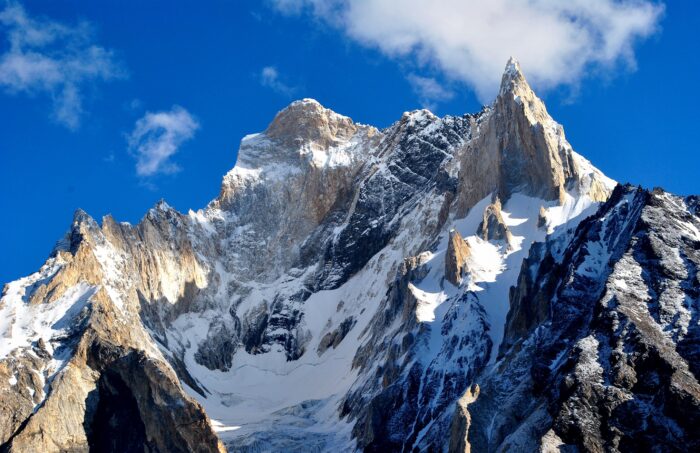
The south side of Crystal and Marble Peaks, seen from Concordia. Photo: Wikipedia