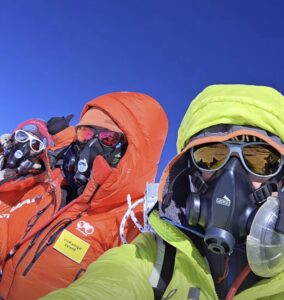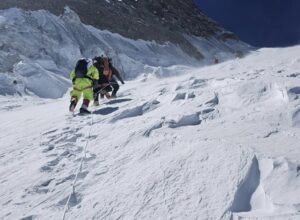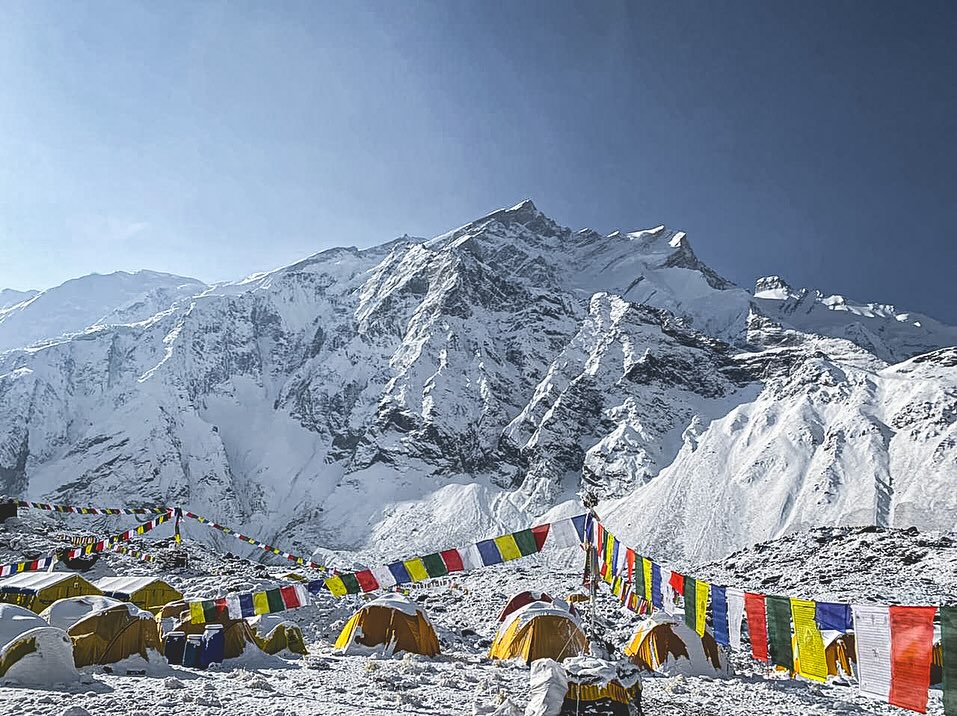
Once known as the most dangerous mountain in the Himalaya, Annapurna is again the first 8,000m peak that commercial teams will climb in spring.
“Most climbers will arrive in Kathmandu on March 18, and I will arrive in Base Camp after acclimatizing, around March 22,” Charles Page of Quebec told ExplorersWeb from Kathmandu yesterday. Page is a member of the season’s largest team, outfitted by Seven Summit Treks and led by Chhang Dawa Sherpa.
Acclimatization is key
8K Expeditions will begin their work on Annapurna on March 22, breaking trail and fixing ropes. It estimates that the climb will take 35 days, but most clients can make it in three or four weeks if they arrive in Base Camp well acclimatized and they hit a timely weather window.
In an increasingly common trend, outfitters encourage their clients to use their acclimatization to climb a second peak immediately afterward. Bigger outfitters also offer expeditions to Dhaulagiri, Makalu, and Kangchenjunga, in addition to Everest and Lhotse.
Acclimatization is key. As Page told ExplorersWeb, he is flying to Lukla today and will immediately trek toward Mera Peak (6,476m) in the company of two well-known climbers: Israfil Ashurli of Azerbaijan and Valery Babanov of Russia.
“We plan to spend two nights near the summit of Mera and then fly to Annapurna Base Camp by March 22,” said Page.
Babanov
After a career of daring ascents and new routes, Babanov has devoted the last few years to climbing the 8,000’ers in a more relaxed way. Still, the veteran climber, guide, and two-time Piolet d’Or winner is far from out of shape. He attempted Everest without supplementary oxygen in 2024. Last year, he finally summited the mountain, although he did use O2 at some point. He then attempted Cholatse.
On Annapurna, he tried a new route on the West Face in 2009, with Victor Afanasiev. In the end, they had to call off their attempt because of too much snow on the mountain.
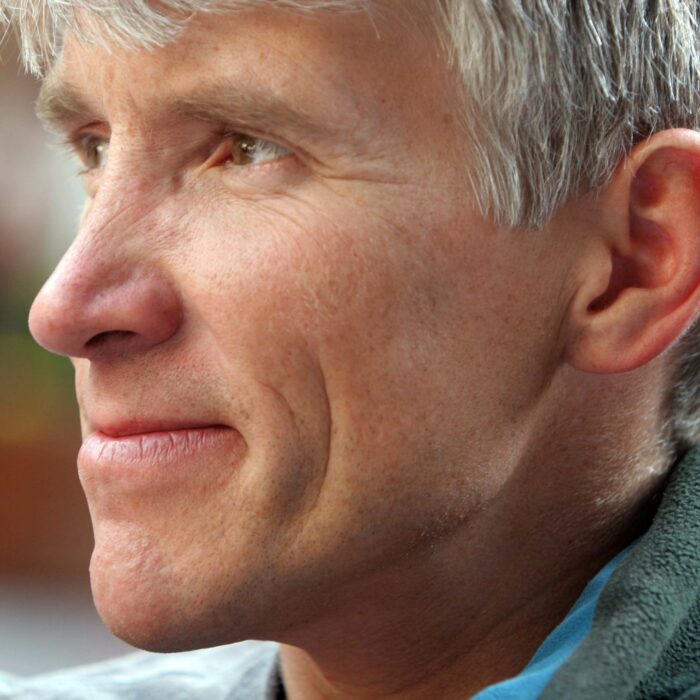
Valery Babanov. Photo: Valery Babanov/Facebook
Charles Page climbed Everest and Lhotse in 2024, Makalu and K2 last year. He plans to add Annapurna and Kangchenjunga to his list this spring.
Israfil Ashurli has summited eight 8,000’ers, some without supplementary oxygen. He became a well-regarded climber, especially in Pakistan, after he gave up his summit chance on Nanga Parbat in 2023 to help other climbers in distress.
Stefi Troguet of Andorra (K2 without oxygen) will also be on Annapurna this spring.
A different experience
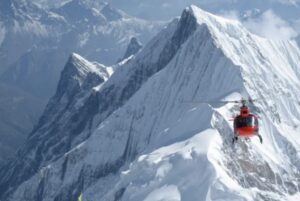
The intensive use of supplementary oxygen and helicopters to supply the four camps and to airlift climbers in case of sickness, accident — even if they simply want to avoid the most hazardous section of the mountain on the way down — has changed the game on Annapurna. What used to take months can now be wrapped up in three or four weeks.
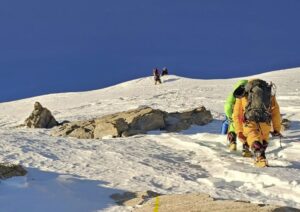
These new logistics have vastly increased the summit rate and dropped the peak’s top position on the Most Dangerous list. (Nanga Parbat, the original Killer Mountain, is now number one again.) Still, objective hazards are very present on the mountain, especially between Camp 2 and Camp 3, where the normal route traverses the bottom of a couloir that funnels avalanches from seracs that fall from the upper sections. In addition, because of several crevassed areas, fixed ropes line the route along its entire length.

The avalanche between Camp 2 and Camp 3 on Annapurna this morning. Photo: Screenshot from a video by Roman Romancini
With previous acclimatization on a 6,000’er and the use of bottled oxygen, an average climber can be ready for a summit push almost immediately. However, most will do at least one rotation to Camp 2 before heading to the top. They also need to wait for the Sherpa team to fix the ropes. In the last few years, they have fixed the upper sections right ahead of the clients on their summit push.