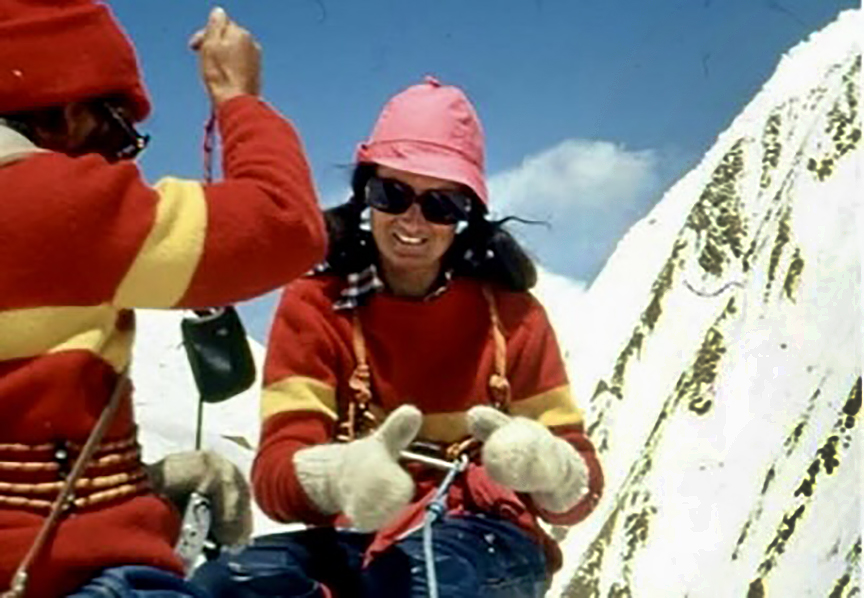
The death zone of Everest, above 8,000m, holds the remains of several climbers who didn’t return. Some of the bodies serve as silent ”landmarks” for those who pass by. A fatal 1979 incident on Everest involved Hannelore Schmatz and Ray Genet. Both bodies are gone now, but one of them was a grisly landmark for several years.
Today, we revisit their last expedition, a successful summit push that ended in tragedy.
Everest, autumn 1979
In the pre-commercial era, few teams attempted Everest each year. In 1979, there were only six. Of these, three took place in the autumn: The Japanese Alpine Club, led by Atsuo Saito, attempted the North Side but gave up at 6,800m after an avalanche killed three Chinese assistants. Doug Scott led the British West Ridge Everest Expedition, but they didn’t succeed, either.
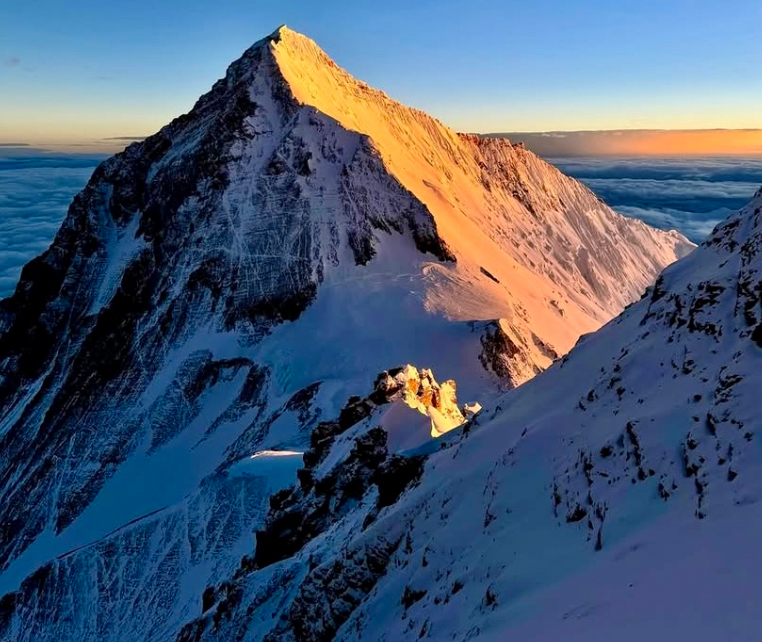
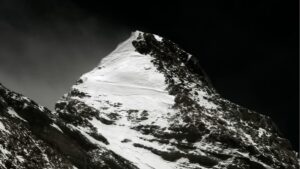
Everest from Lhotse. Photo: Kadyr Saydilkan
The third group that autumn was an international team led by German mountaineer Gerhard Schmatz. It included climbers from New Zealand, Switzerland, and the U.S. They chose the standard South Col-Southeast Ridge route.
Hannelore Schmatz, the leader’s wife, was one of the climbers. She had summited Tirich Mir in 1974 and had attempted Manaslu and Lhotse. Ray Genet, the American, was a legend in Alaska for his many successful climbs of McKinley, including the first winter ascent in 1967.
The expedition was small and fast. They had no tent on the Southeast Ridge itself. They cached oxygen at lower camps. All summiters used supplemental oxygen from the South Col onward.
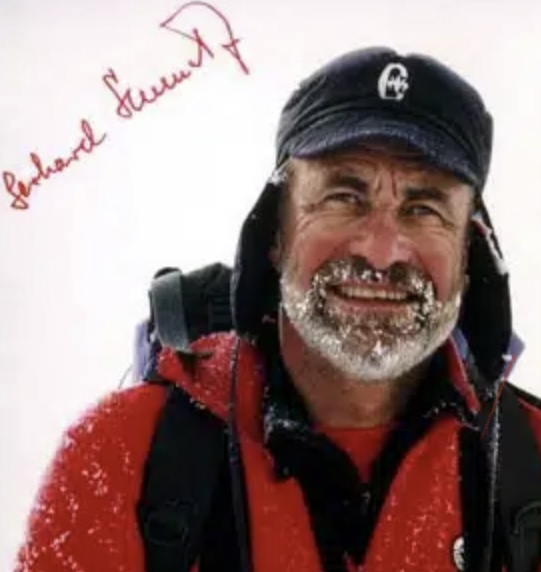
Gerhard Schmatz. Photo: Tranquilkilimanjaro
The first and second push
On October 1, Gerhard Schmatz, Hermann Warth, Hans von Kaenel, Pertemba Sherpa, and Lhakpa Gyalu Sherpa left the South Col at 5:45 am. They summited at around 2 pm in cloudy but manageable soft-snow conditions. After about an hour on top, they returned to the South Col by 7 pm, after dark. Gerhard Schmatz, who was 50 years old in 1979, was the oldest Everest summiter at the time.
That same day, the remaining team members and three Sherpas moved from Camp 3 to the South Col for a second summit attempt.
The eight climbers left the South Col at 5 am on October 2. They climbed on three ropes. Tilman Fischbach and Ang Phurba Sherpa were on the first rope; Nick Banks, Guenther Kaempfe, and Ray Genet on the second; and Ang Jangbu Sherpa, Hannelore Schmatz, and Sungdare Sherpa on the third.
Shortly after departure, a tiring Genet unroped, despite objections from the others, and fell behind. The parties stayed relatively close together and reached the summit around 1 pm. Hannelore Schmatz became the fourth woman, including the first German woman, to summit Everest. The group spent only a short time on top before starting down.
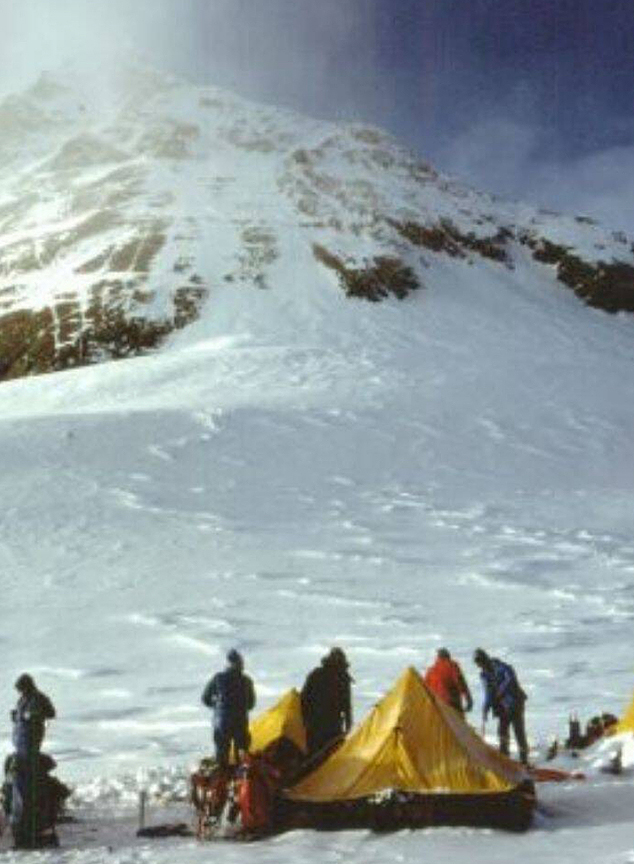
Camp at the South Col. Photo: Gerhard Schmatz
Worsening weather
Unstable weather moved in. Snow fell at first, then it cleared, but a strong wind picked up. Temperatures dropped sharply. By about 5 pm, the leading parties reached the site of the former ridge camp at 8,350m–8,400m. From there, they could see and hear the last group descending the steep section below the South Summit.
At the base of that section, Genet’s oxygen supply ran out. He refused to continue and insisted on bivouacking for the night. They dug a poor snow cave in the soft, deep snow. Ang Jangbu Sherpa continued down to the old ridge camp to collect cached oxygen. He later went alone to the South Col, arriving around 9:30 pm.
Genet, Hannelore Schmatz, and Sungdare Sherpa remained at 8,400m–8,500m. Some later accounts suggested that a lack of oxygen may have affected Genet’s judgment. He had extensive experience on lower Alaskan peaks but was now over 2,000m higher than even McKinley. The second party had no stove or fuel for melting snow. During the night, as a strong wind blew, a frostbitten, exhausted Genet died of exposure.
On the morning of October 3, Sungdare Sherpa descended a short way to the ridge camp and brought additional oxygen up to Hannelore Schmatz. The two then started down, leaving Genet’s body at the bivouac site. They were visible from the South Col as they moved toward the ridge camp.
Early that morning, six Sherpas had left Camp 3 with oxygen and supplies for a rescue attempt. One of them, Nawang Tenzing, reached the South Col at 8:30 am, and together with Fischbach, began climbing up. By then, only one person could be seen descending. Hannelore had sat down at about 8,350m, saying she could go no farther. Finally, she too died of exposure, exhaustion, and frostbite, thereby becoming the first woman to die on Everest. According to Sungdare, her last words were a request for water.
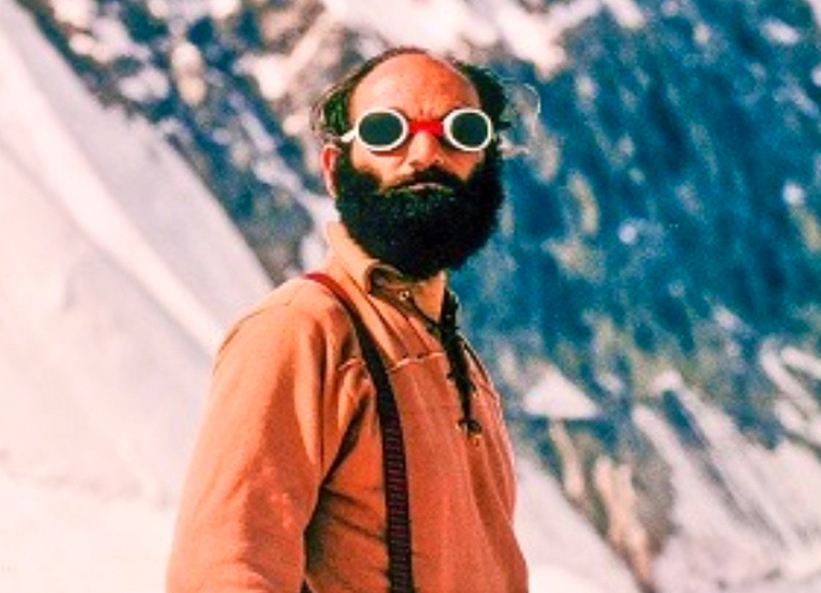
Ray Genet. Photo: The High Expedition
Sungdare continued down alone. When the rescue party met him, they helped him to the South Col and then to the lower camps. He was snowblind and had severe frostbite to both feet. Earlier in the expedition, Sungdare had suffered a heart attack while descending from Camp 3 to Camp 2 and had been unconscious.
Warth and von Kaenel made a later attempt on October 4 to reach the bodies, but bad weather and high winds stopped them.
Aftermath
Genet’s body remained at the bivouac site, where it was soon covered by snow, disappearing from view. Schmatz’s body froze in a seated position, leaning against her backpack with her eyes open. For over two decades, from the early 1980s until the late 2000s, climbers on the South Col route regularly passed it, and her frozen figure served as one of those gruesome landmarks.
In 1984, a Nepalese police expedition tried to recover Schmatz’s remains. On October 24, inspector Yogendra Bahadur Thapa and guide Ang Dorjee fell to their deaths from 8,400m during the effort. Hannelore’s body remained up there until strong high-altitude winds eventually dislodged it and carried it over the edge, reportedly down the Kangshung Face. By the late 2000s, it was no longer on the route.
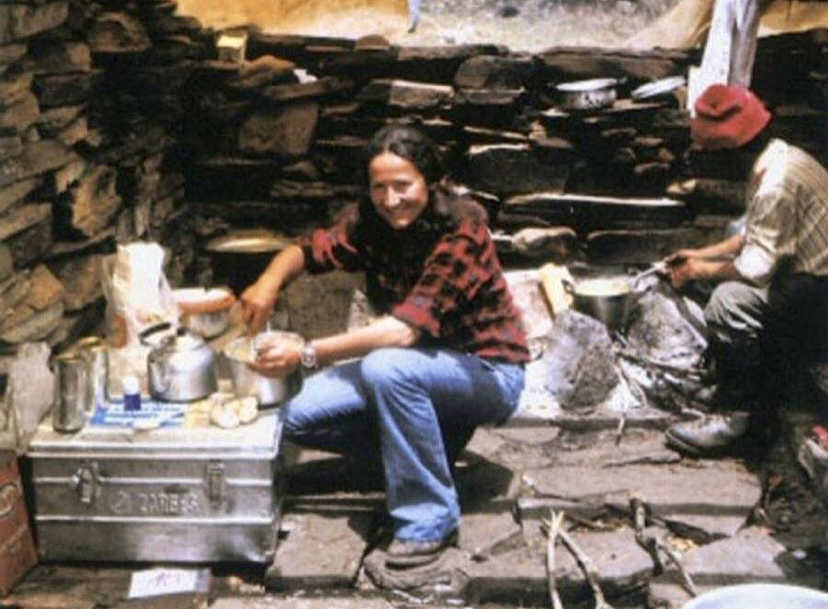
Hannelore Schmatz. Photo: Gerhard Schmatz/Andrej Buzik