This short documentary follows a team of scientists and explorers on an expedition to an inaccessible forest atop a mountain.
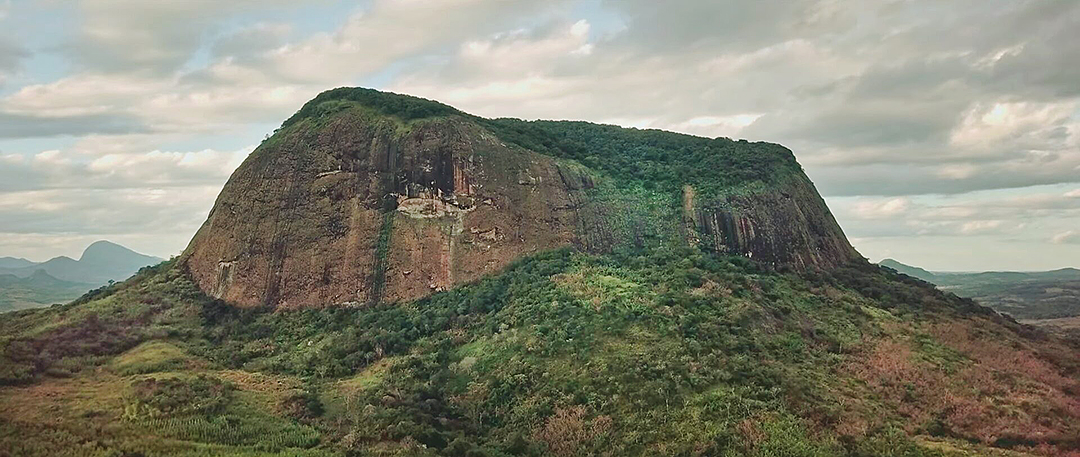
It sounds like something out of an old pulp adventure book, an invention of Edgar Rice Burroughs or Jules Verne. But the untouched forest, protected on all sides by towering red cliffs, really sits atop Mount Lico, in northern Mozambique.
Dr. Julian Bayliss, the expedition leader, first noticed the lost forest on satellite imagery as a dark, dense patch of green amid a sea of cultivated and settled land. As an ecologist, Bayliss immediately realized how valuable it would be for researchers to study a place like this.
Most ecosystems are simultaneously experiencing the effects of climate change and direct human interference. A preserved sample like Mount Lico will show them what climate change alone is doing to forests. But getting there won’t be easy.
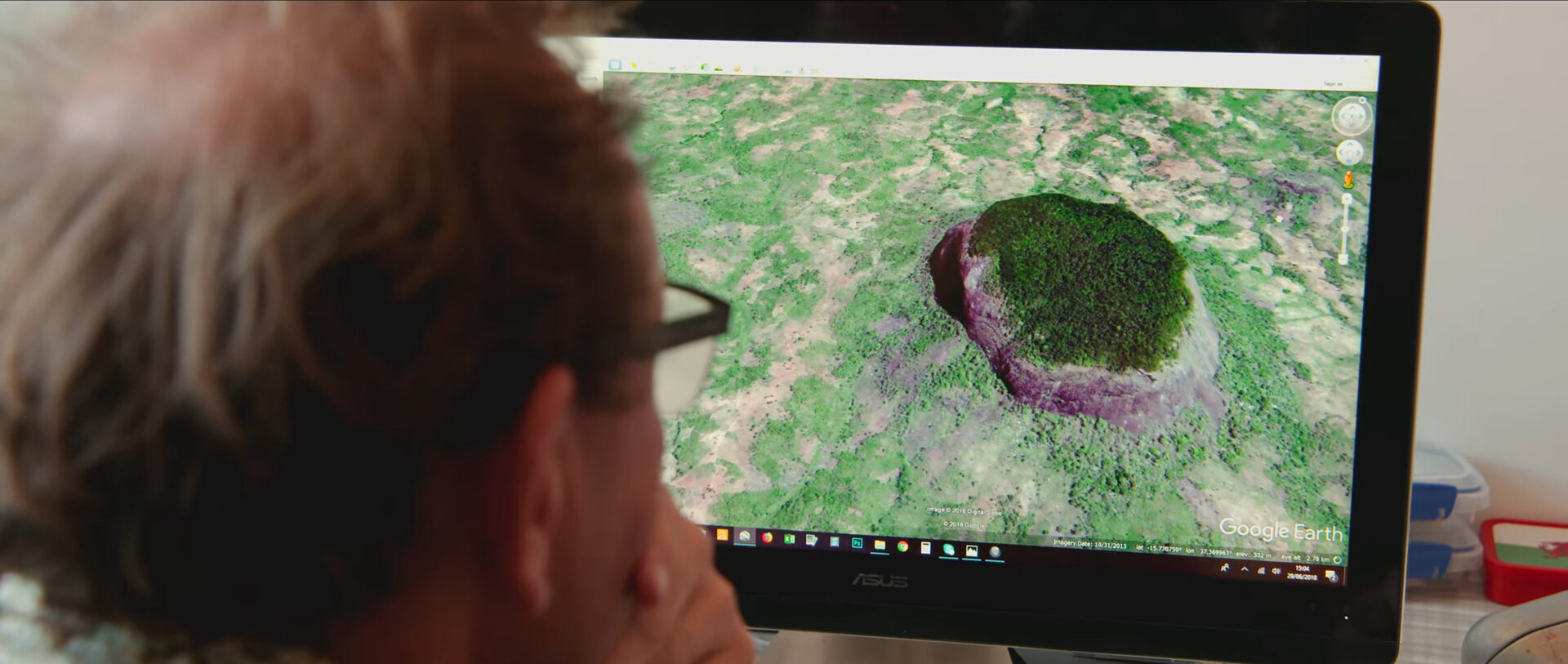
Dr. Bayliss realized that the dark green circle on the satellite was virgin forest. Photo: Screenshot
Untouched but not unchanged
To reach that basin full of rainforest, Bayliss and his fellow researchers need to ascend 500 meters of smooth granite. That’s why the team includes UK free climbers Jules Lines and Mike Robinson, who spend days finding and rigging the best route up the rock face.
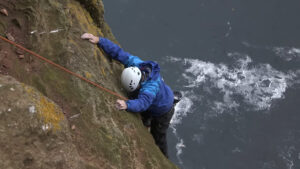
Some of the scientists, including Bayliss, are nervous about the 125m climb. We watch as, one by one, they struggle up the cliff.
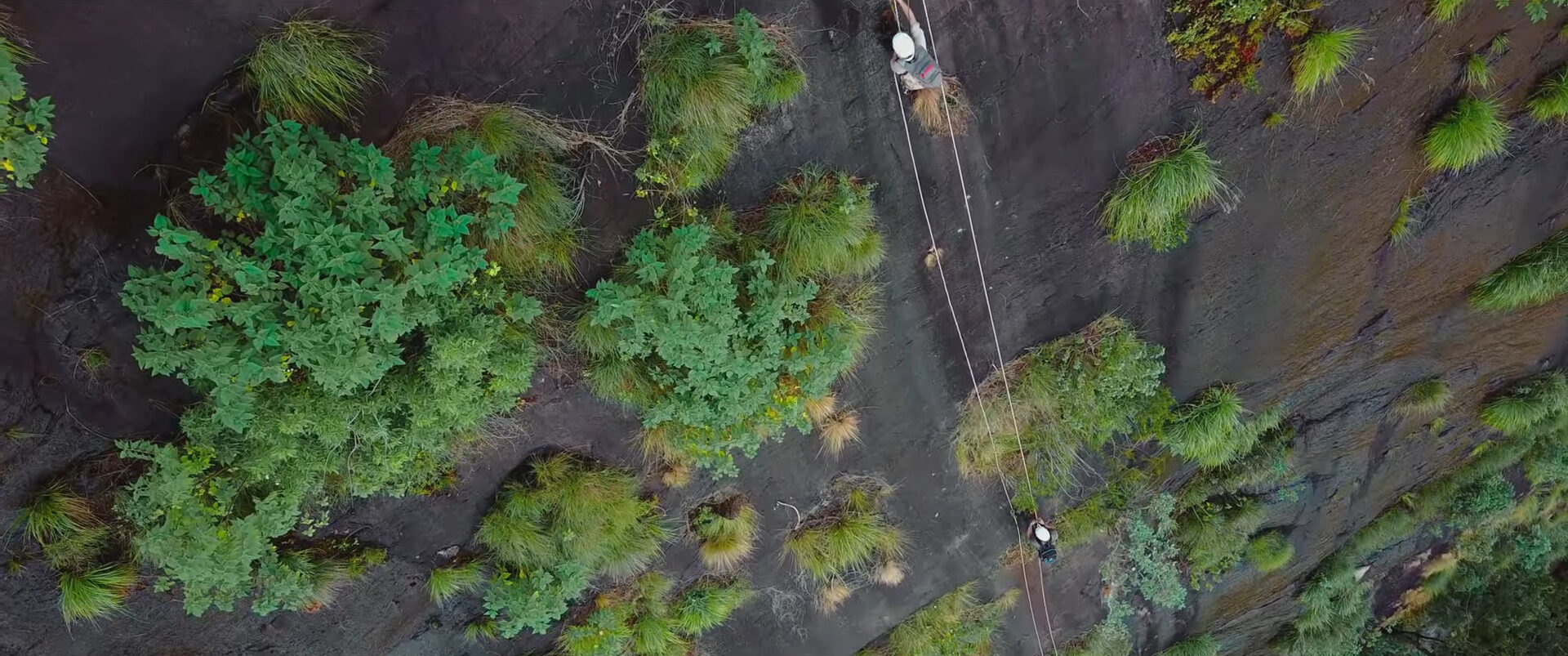
Climbers send the scientists up one at a time. Photo: Screenshot
At the top, Bayliss and the camera luxuriate in the lush greenery and busy wildlife of the hidden forest. But logistical concerns intrude. The team set out to find a water source, establish camp, and rig equipment. They have a busy program taking soil cores, measuring carbon, and cataloging new species.
We meet Dr. Gabriela Bittencourt, who is making small traps out of buckets, hoping to catch previously unknown shrews. Nearby, Bayliss puts out a hanging net to catch butterflies. The film takes us through the whirlwind of activity that scientific expeditions like this represent. Throughout the forested basin, researchers are filming ants, trapping small animals, examining leaves, and sampling soil. They even find antelope droppings and wonder how on earth antelopes could possibly have gotten up the cliff.
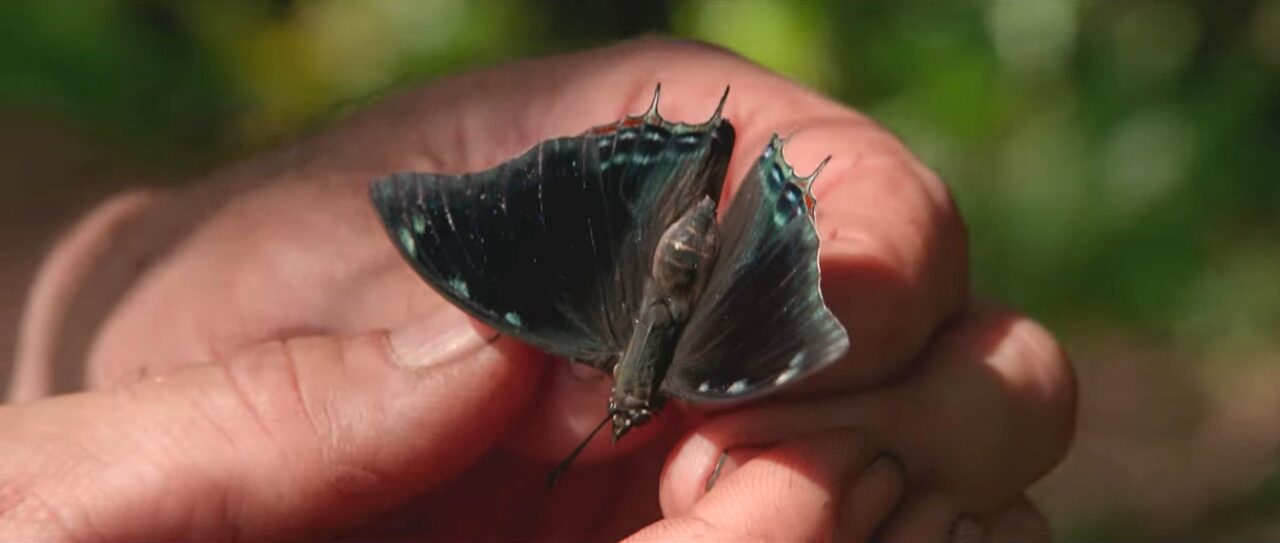
Bayliss examines what may be a new species of butterfly. Photo: Screenshot
For Bayliss, the lost forest is also an opportunity to reflect on what they’re working for. He worries that sites like this one won’t be there for his young daughter when she’s older.
“What is being lost is disgraceful. It’s actually disgusting,” he says. But he believes that his team’s work in the lost forest of Mount Lico will provide crucial insights into how climate change is affecting the planet. “I have to believe that it’s not too late.”