This short documentary follows two ecologists as they film Scotland’s last great wild forest.
Native to the Scottish Highlands, the Scots pine re-emerged in Britain after the end of the last ice age. Deep, dark, ancient forests once covered much of the land. But today, as ecologist James Rainey explains, they are scattered in tiny, threatened pockets of land.
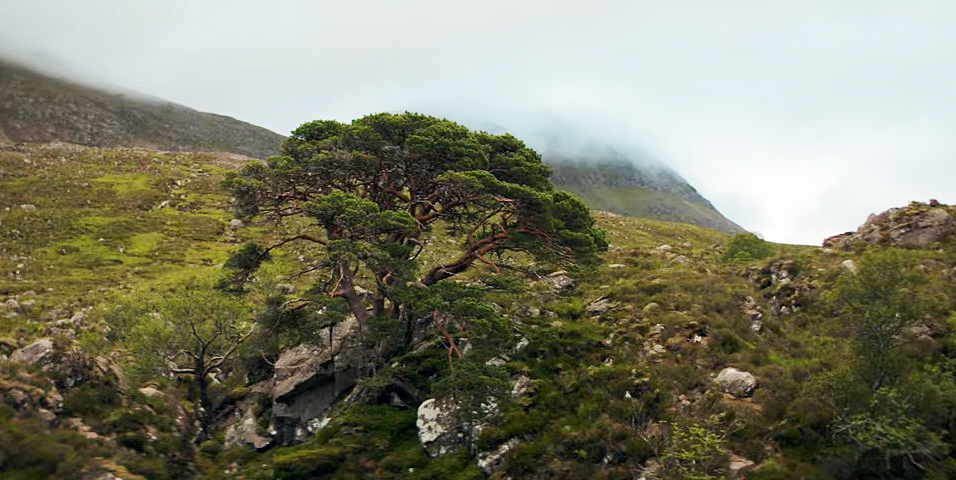
Photo: Screenshot
To protect the last survivors, researchers need to know where they are. This is what leads to Rainey, hunched over his laptop, clicking through old maps. Place names and tree symbols hint at unlisted pockets of woodland. Once he and fellow ecologist Jane Sayers, both of Trees for Life, find a likely spot, they go to check it out in person.

Conifer symbols and certain Gaelic place names hint at the presence of Scots pines. Photo: Screenshot
Where have the wild pines gone?
The spot they’re going to, Rainey says, is in one of the biggest areas of decline. Accounts from the 16th century describe a dense forest, but today it’s very different. When the pines go, the rest of the ecosystem follows, leaving most of Scotland’s species clustered into smaller and smaller patches of holdout.
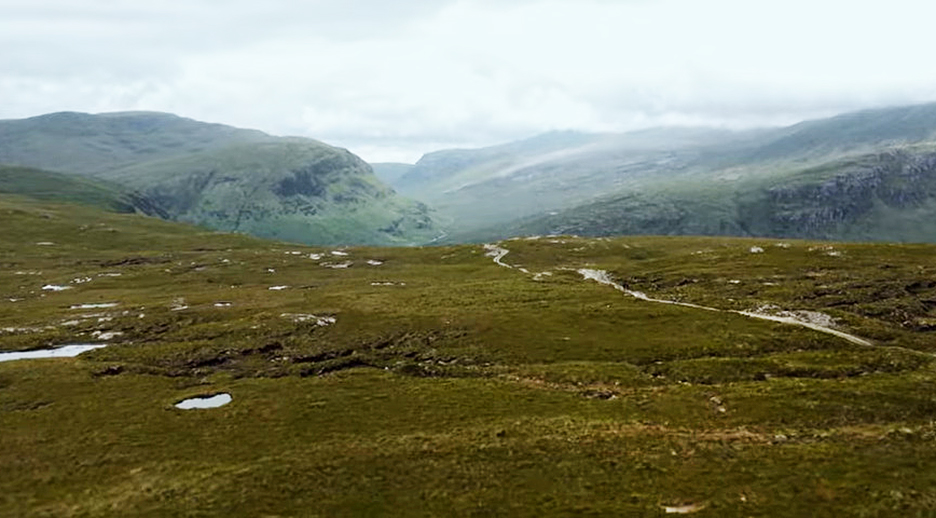
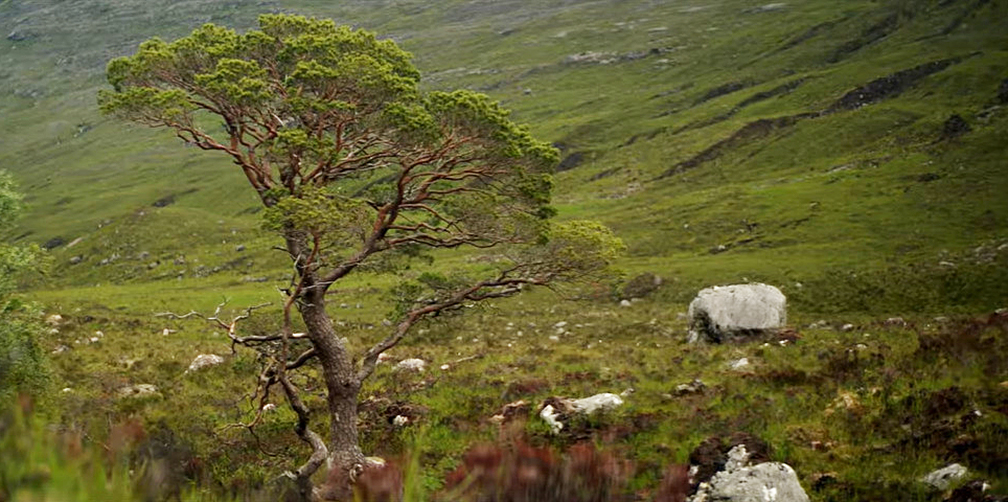
If you didn’t know what was missing, you’d hardly realize how the ecosystem is dying away in the Scottish Highlands. Photo: Screenshot
As they approach the location, finding a living pine is looking less and less likely. The lonely, windswept hills are dramatic and beautiful, but covered only in grass and stone. Then, Sayers spots a darker patch, just to the right of a rocky crag. It’s a single, twisted wild pine.
They take measurements of the old tree, and near the roots, find several small, stunted seedlings. Cradling a rather pitiful little sprouting, Rainey estimates that it could be six years old. But it should be much larger by now.
Then there are the stumps, the dry footprints of felled pines. Only because it was stuck halfway into the ravine has our living pine escaped the overgrazing which killed its fellows.
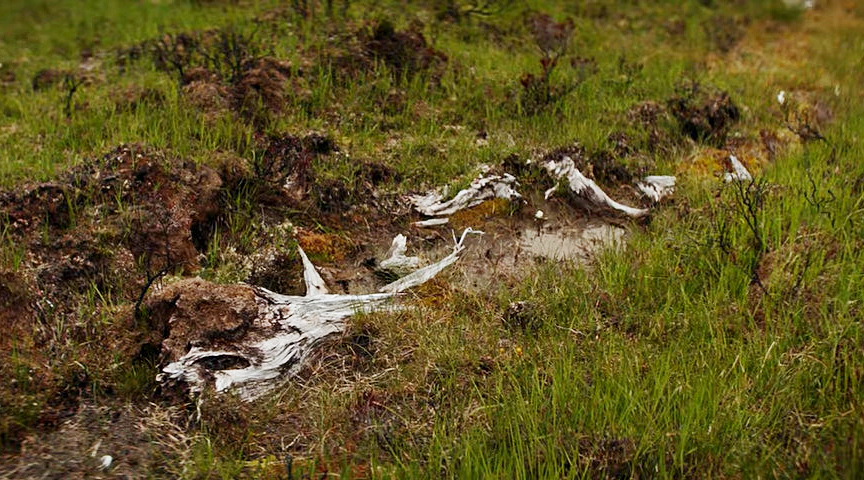
Eerie strings play as we see the bleached stumps of pines. It’s difficult not to think of them, protruding white from the dirt, as bones. Photo: Screenshot
But Rainey is still hopeful. Amid the remains of dead trees, there are more survivors, like our lone pine, than first appearances suggest. “You can see the potential for these areas to recover.”