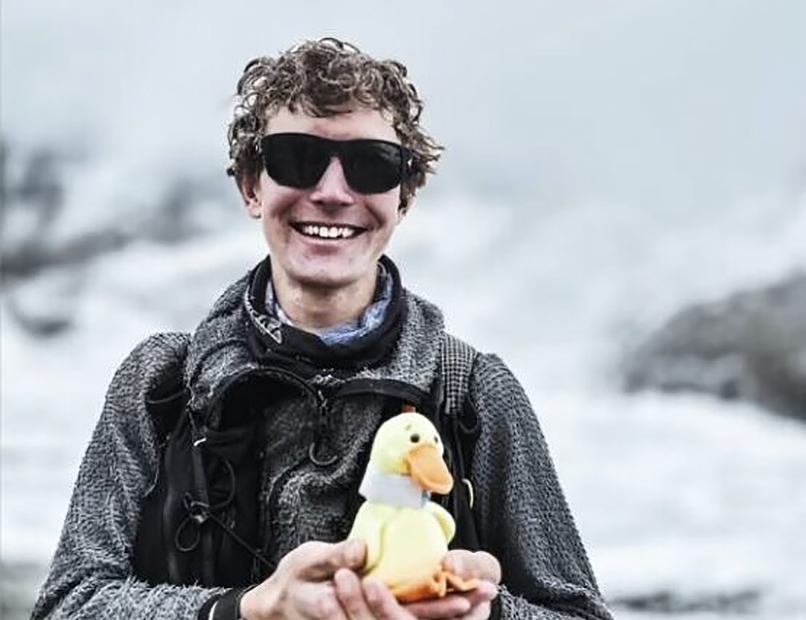
Tyler Andrews of the U.S. is back in Base Camp after summiting Everest in a record 9 hours and 55 minutes, using supplemental oxygen after Camp 2. He beat by a full hour the previous record set by Lakpa Gelu Sherpa back in 2003. Barely awake, Andrews still had enough strength left to answer a few questions from ExplorersWeb.
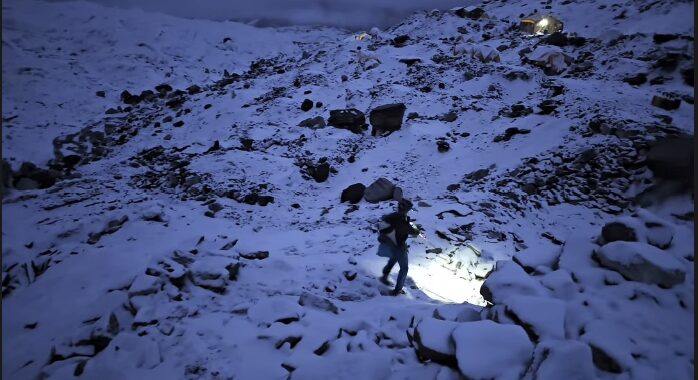
Tyler Andrews left from Everest Base Camp at 7:11 pm yesterday. Photo: Tyler Andrews’ team
Left it all out there
After attempting the fastest ascent of Everest without oxygen five times previously, we wondered whether an O2-assisted success might leave a slightly bitter aftertaste.
“No, it doesn’t take anything away from me,” the runner said. “They are different marks, but I can’t tell that one is harder than the other from an athletic perspective. I have always been motivated by pushing my own limits as an athlete, and going to the summit in 9h55 (and back in 16h32) is one of the hardest things I’ve ever done. Climbing without gas is maybe a different kind of hard, but I know that I left everything out there.”
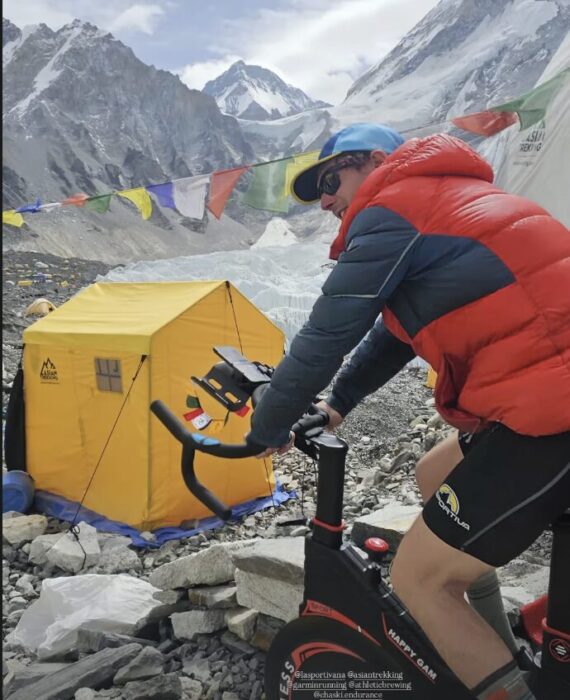
Tyler Andrews trains on a bike at Everest Base Camp hours before the final run. Photo: Tyler Andrews
Ok with FKT guidelines
Fastest Known Time (FKT) categories include a “supported” style that allows a climber to use external support. Oxygen, ropes, Sherpa help on the route, and supplies are all acceptable. However, in high-altitude mountaineering, and on Everest in particular, the climbing community often views records skeptically because mountain conditions change so much year by year and even day by day. Oxygen-assisted climbs may be especially problematic because of the advances in technology and logistics over the years.
Andrews used oxygen beginning at Camp 2 at a rate of 4 liters/minute. This is standard maximum flow, although some operators have systems capable of up to 8l/min.
“If you’re going to use gas, why not use the maximum flow rate?” Andrews wondered.
Everything is complicated on Everest
We asked Andrews why he ultimately decided to go with O2, and whether, after the experience, he considers a no-O2 FKT doable.
“I do think it’s possible, but there are so many factors outside your control on the South Side of Everest that it just seems like a huge gamble every time,” Andrews said, adding:
That’s definitely part of what pushed me to try the gas record this time. I have tried this FKT five times without O2 and, honestly, every time I was way fitter than I needed to be. It was other things that shut me down each time. So honestly, that just isn’t that exciting to me. I’m not interested in trying 10 years in a row with the hope that everything breaks the right way one of those times.
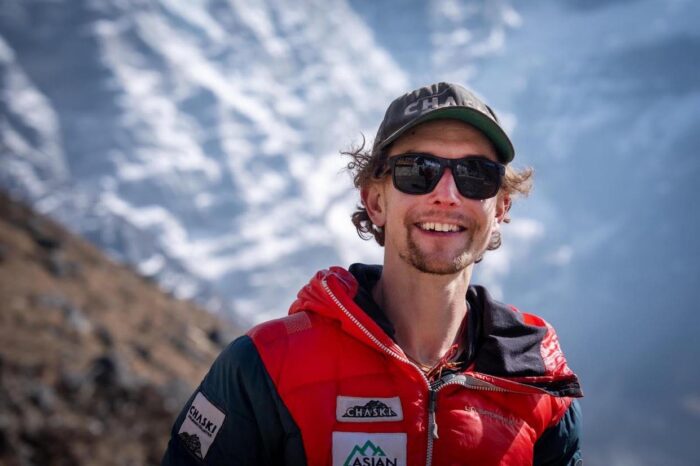
Tyler Andrews. Photo: Tyler Andrews
Won’t return to South Side
“Pursuing an Everest [record] was not originally my idea,” he admitted, not mentioning whose idea it was. “However, it has very much become a personal project, so the thing that matters to me is whether I feel like I gave the best effort possible, and I sure did.”
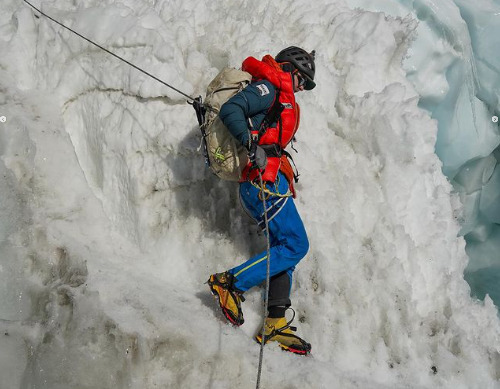
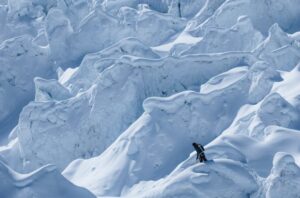
Tyler Andrews last year at the Khumbu Icefall. Photo: Chris Fisher
Andrews says he has no intention of returning to try a no-O2 FKT.
“I am done with the South Side,” he said.
In fact, Andrews never meant to try his FKT from the South Side this year. He had planned to go to the North Side, but China has kept that route closed to climbers this season.
“The South Side is just too complicated, dangerous, and crowded for me to make any more speed attempts here,” he said.