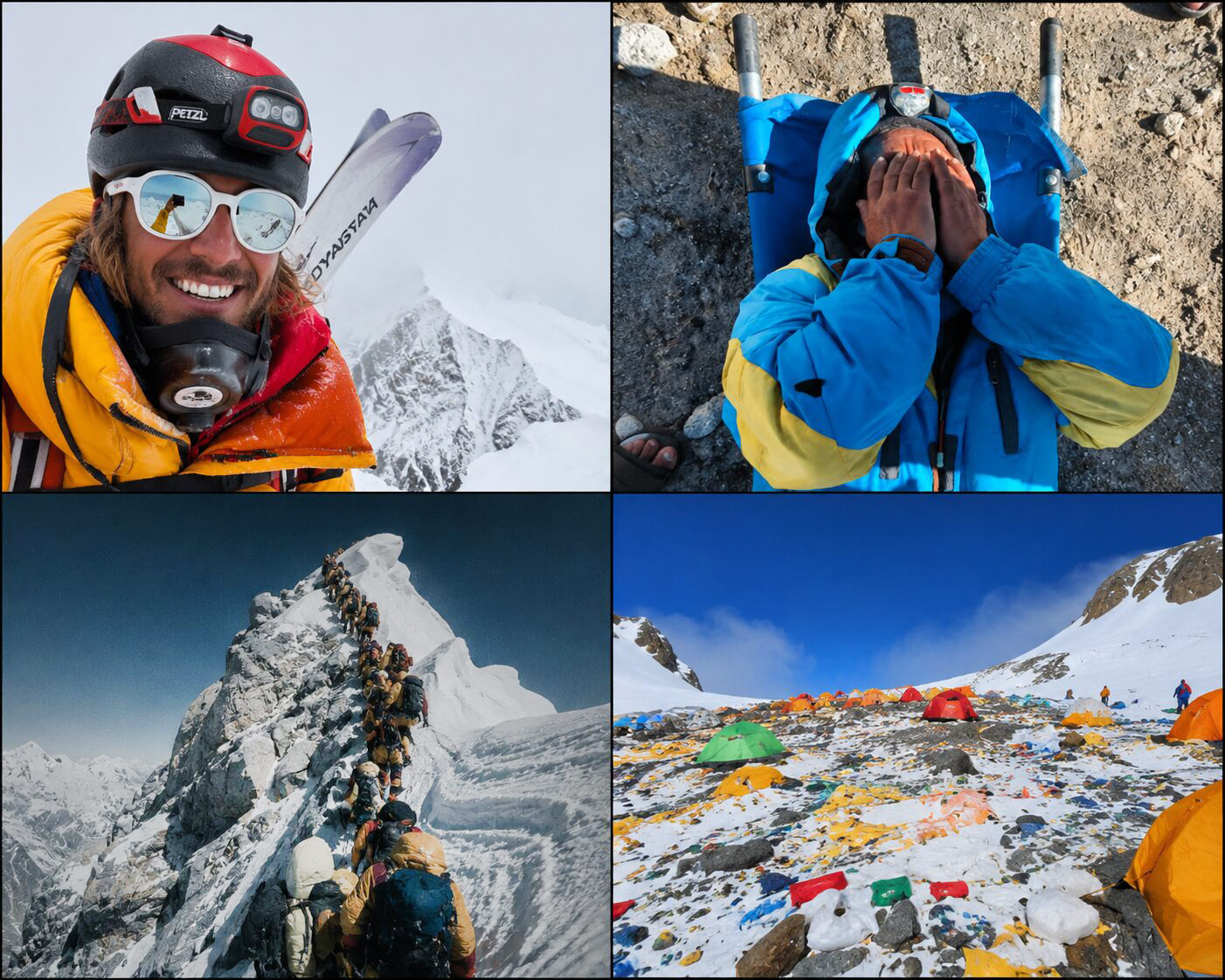
The 2026 Everest climbing season closed with the highest number of permits and summits in one season. That should make it the most successful season ever, at least for the commercial climbing industry. However, the delays and uncertainty about the route, the long queues, the trash polluting Camp 4, and most of all, the appalling finale with a Sherpa left abandoned on the mountain and surviving only by force of will, have prompted the Sherpas themselves to say that enough is enough.
Record numbers
The Himalayan Database and Nepal’s Department of Tourism sets the preliminary summit tally at 1,008 to 1,010 — an all-time record, and especially impressive, considering that the North Side remained closed and the long delay in fixing the Khumbu Icefall. The 492 permits granted to foreigners (the other summiters were Sherpa guides) and the revenue of almost $7.2 million were both unprecedented.
The Everest business keeps swelling. Logistics continue to improve, and there is a growing demand for accommodation outside Base Camp, air transport, and upgrades on every aspect of the climb, including Base Camp comfort.
But while the business thrives, the Sherpas are demanding de-escalation. Prestigious Sherpa guides have denounced overcrowding, the excess trash, the inexperienced climbers (and guides), and the fragility of the glacial environment. They are asking for limits and rules to make Everest a safer, more habitable place.
The crowds
Kami Rita Sherpa broke his own record of 32 Everest summits, the highest number ever. He accumulated these over decades of guiding on the mountain. For that same reason, more than a dozen other guides have notched from 14 to 30 summits. (Pasang Dawa Sherpa is the one with 30.)
Returning as a hero to Kathmandu, Kami Rita has called on authorities to limit the number of climbers.

Press photographers flock around Kami Rita Sherpa as he arrived back in Kathmandu after his 32nd Everest summit. Photo: Kami Rita Sherpa/Facebook
“It was very crowded this year compared to last year,” Kami Rita said. “There is a need for authorities to control this number.” So far, Nepal authorities have not stated their intention to do any such thing.
Several close calls
Miles Sherpa added: “There were also several accidents and close calls…Some climbers slipped while changing ropes, and others showed signs of severe fatigue and altitude-related stress, while Sherpas and guides worked continuously to maintain safety, assist climbers through bottlenecks, and keep movement organized despite the overcrowding.”
Images of these crowds have once again gone viral, sparking universal criticism. However, the clients themselves rarely mention the long lines as a problem. As long as Sherpas stock seemingly endless supplies of oxygen along the route — especially at Camp 4 (7,900m) on the South Col — the long waits are accepted and even welcomed by the slower climbers.
Leave no man behind
An American team had climbers in Camp 2 waiting to be airlifted out (an increasingly common bailout to avoid trekking to Base Camp through the dangerous Khumbu Icefall). Preliminary reports suggested the Icefall closed on May 29, but it remained open two more days. The Americans eventually flew out.
But the biggest shock came on June 1, when news spread that a Sherpa climber, Hillary Dawa, had been left behind above Camp 3. No search or rescue operation took place; he was simply given up for dead. It was a screw-up of epic proportions.
Seven days after he was last seen, a group of people picking garbage in Base Camp spotted a ghost-like figure dragging himself down the glacier. It was Hillary Dawa. Incredibly, he had managed to descend alone. Hopefully, he will tell about his epic descent after he recovers.
The outcome brought joy and admiration at Dawa’s survival skills, but how was he abandoned on the mountain in the first place? We are continuing to gather details, and Nepal’s Department of Tourism is also formally investigating.
A blunt assessment
The Everest Chronicle summarized it bluntly:
Dawa’s survival…exposed an Everest economy where a man nearly died because no one would fund a helicopter, while a handful of Sherpas prosper as oligarchs, and the poorest are treated as expendable labor.
If there is a lesson here, it is that no one should be left for dead without a search. Many have called for a formal rescue service on Everest — a longstanding request.
Hillary Dawa’s case is not the only instance of good fortune amid heartlessness. Mingma Tenzi Sherpa, a partner at Elite Exped, described in a recent post how he and his client found a seriously ill climber shortly after the climber had summited Everest. They helped him down to Camp 4, and when they asked the sick person’s company to take care of him, the company refused. This person, identified as Ajaypal Singh, is alive only because Tenzi and his team put him in one of their tents and helped him through the night. Read it here:
Real rules needed
1. At least a 6,500m summit before Everest, including mountains outside Nepal, such as Aconcagua.
2. Every Sherpa must have real guiding qualifications and high-altitude experience before guiding a client, especially 1:1.
3. Every client and Sherpa must go through medical checks at Base Camp and Camp 2 before being allowed to climb further. [These medical checks] must come from the permit money.
4. There must be a ranger or rescue team based at Camp 2 to carry out rescues, control numbers, and control garbage. This team should NOT be associated with any expedition company.
Urgent need for change
Lukas Furtenbach of Furtenbach Adventures shares Gelje’s call for more stringent rules.
“The incredible survival story of Hillary Dawa Sherpa made one thing painfully clear: Everest needs change,” Furtenbach says.
The Austrian expedition leader says that everyone on Everest needs previous experience at altitude, but there is no need for it to be a 7,000m peak in Nepal, as the country will insist on as of 2027.
” A climber who has safely climbed a serious 6,500m peak anywhere in the world — whether in Nepal, Pakistan, South America, or elsewhere — may be far better prepared than someone who simply checked a bureaucratic box on a commercial 7,000m peak,” Furtenbach points out.
He agrees on the need for mandatory training for Sherpas, subject to strict standards. And he adds something more: a minimum of supplementary oxygen per person. In the last days of this season, several climbers were reportedly wandering around Camp 4, looking to buy oxygen.
Finally, Furtenbach adheres to our own call: No one can be left behind, protocols on the matter must be formalized, and significantly, not only staff, but clients are responsible for team members in trouble.
Casualties
The need for experienced clients and skilled guides becomes obvious, considering this year’s deaths and rescues on the mountain. Two of the 270 climbers who summited on May 20 died shortly after starting their descent. They perished not from accidents but from sickness.
It’s unclear whether they would still be alive if they had turned around earlier, either on their own or forced to by their guides, who would be following a formal protocol.
Others were just lucky to be rescued in time. The number of rescues is unaccounted for (both victims and outfitters usually remain quiet about it), but it is nevertheless significant. Here is an example by Dandu Sherpa of Pioneer Adventures:
Finally, safety for local workers, especially the less experienced ones, should be a priority. A 20-year-old Sherpa died in a fall while carrying loads up the Lhotse Face.
Trash
Vinayak Malla, a well-known local guide with IFMGA accreditation, has denounced the state of Camp 4 at the South Col. While waste is well managed in Base Camp and the situation at Camp 2 has improved remarkably, the South Col of Everest is a pitiful sight.
At nearly 8,000m, it is the last camp before the summit. Crews are often too tired or in a hurry to get down from the top to properly retrieve everything from the camp. Buying new tents and equipment is much cheaper than hiring the crew to clean up the place and leave no trace.
“What should be one of the most extraordinary places on the planet has increasingly become a symbol of Everest’s growing commercialization,” Malla said. “Abandoned tents, empty oxygen cylinders, torn gear, and other waste litter the South Col, leaving a lasting mark on the world’s highest mountain.”
Climate change
Mingma G has made some brutally honest comments this season, including about the state of Camp 4.
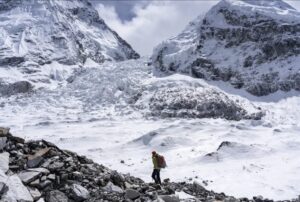
He has also spoken about the impact of rising temperatures on the route, with water flowing at 7,000m on Camp 3 (“scary,” he describes it) and the impact on the Khumbu Icefall. The melting ice creates hazardous, unstable conditions, but also, according to Mingma, an easier crossing.
“The Khumbu Icefall is the most dangerous part of the route, but it will soon become the safest due to rapid ice melting,” he said.
The reason is that the ice is retreating from the glacier, exposing rocky sections, which are easier and safer to cross. “In just 20–30 minutes, we reach the crampon point without climbing any sections of ice. This year, some of our Sherpas reached Camp 1 in 2 to 2.5 hours,” he recalled.
Mingma minimizes the significance of the recent speed record (on oxygen) set by American Tyler Andrews, compared to the previous fastest time set by Lakpa Gelu Sherpa in 2003.
“Back then, big blocks of ice [and] ladders everywhere…made the Icefall very difficult,” Mingma G noted.
Speed on oxygen?
Alpinist David Goettler, who climbed Everest without either oxygen or Sherpa support in 2022 after two previous attempts (one of them with Kilian Jornet), said in an interview with NZZ magazine that counting an oxygen-assisted speed record on Everest was “like awarding as the winner of the Tour de France someone who has used an electric bike.”
Record system failing
The historical record of summits is also the least meaningful, due to the growing support of well-off clients, the lack of detail about questionable methods, and the lack of proof for some claims. For example, there have been reports of several no-O2 climbs on Everest, Lhotse, and other peaks by those with little experience and rather limited acclimatization.
The increasing use of helicopters from Camp 2 to Base Camp by climbers healthy enough to walk down is one of the most embarrassing open secrets on Everest. Check the video below by Tenzi Sherpa. While cooking for his client at Camp 3, he saw a helicopter landing at the bottom of the Lhotse Face, above Camp 2.
Such practices, while kept secret and with the rest of those on the mountain agreeing to look the other way, have cast a shadow on all climbs. It harms, most of all, those who really went up and down without using bottled gas. By this, we mean not just no oxygen during the climb, but none in the tents at night or short O2 showers at breaks. A no-O2 climb means completing the entire route up and down without using a molecule of canned oxygen.
In almost all cases, cheaters will receive their summit accreditation, so the motivation to play by the rules is lower than ever. As for national, age, and gender records, they’re just numbers among a thousand summits, no matter how outfitters try to sell a particular feat as historic.
Delayed start
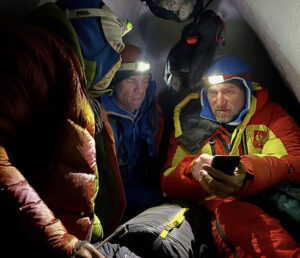
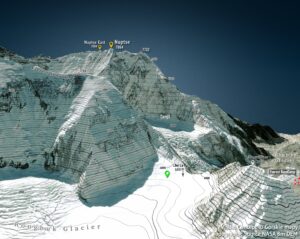
A small group of Sherpas, accompanied by Polish climber Bartek Ziemski, disagreed. They went up to check for themselves, and within a day, they found an alternative route. At the head of these trailblazers was Mingma G Sherpa of Imagine Nepal. He later denounced the passive attitude of others, which prompted his team and a few volunteers to take action. He said:
I am very thankful to these six brave climbers who made the 2026 Everest season possible, and everyone who climbed Everest, Lhotse, and Nuptse should be thankful to them, and they should be rewarded.
Why? Many climbers wrote that we would be responsible if an accident happened, that we were overconfident, that we would kill other climbers, and so on — and we faced all that. If something had happened, then we would have been responsible, because you never know what could happen in the Icefall. We took the risk for everyone and opened the safest route, yet we were on a knife edge for the entire climbing season.
Mingma G has said that he will not summit Everest in the future. In previous conversations, the veteran mountain guide said he is having health issues after years of exposure to high altitude. He also broke his skull during a rescue of avalanche victims on Shisha Pangma in 2023. This year, however, he reached his 7th Everest summit at the head of his team.
The skier
Ironically, the highlight of the Everest season was done by an outsider who, as he told ExplorersWeb after returning to Base Camp, hated the place.
““Everest is not interesting, it’s not sexy anymore,” Ziemski said.
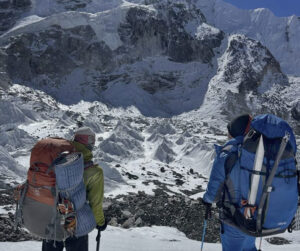
While everybody was waiting in Base Camp because of the unstable serac overlooking the Khumbu Icefall, Ziemski went up and down several times, exploring the safest lines for his ski descent. He acclimatized while carrying his own gear, without a Sherpa or oxygen.
Once ready, he climbed Lhotse before anyone else, with no ropes on the upper sections, and skied all the way down to Base Camp, including the Khumbu Icefall.
“There is no way to feel alone on the Everest massif,” he noted afterward. “You see the lines of headlamps all through the night.”
Seven days later, he went for Everest. He was lucky or smart enough to reach the top on the only day of the first summit week without crowds at the summit. He then skied a direct line down the Lhotse Face toward Camp 2, thereby avoiding the hundreds of climbers heading to Camp 4 that day. Nevertheless, he saw them from afar and was genuinely shocked.
Ziemski just wanted to try a cool ski route on a big mountain. He never considered that he had done the purest ski descent of Everest so far, and provided — along with Hilary Dawa’s inspiring survival — the best moments of a season as forgettable as it was financially successful.