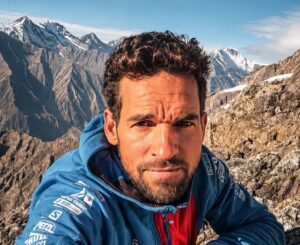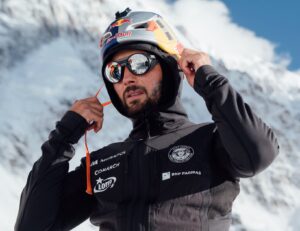
Many have climbed Nanga Parbat since Hermann Buhl’s first ascent in 1953, but documented ski descents remain rare. This summer, Polish extreme skier Andrzej Bargiel carried out the first continuous ski descent from the summit, without supplemental oxygen.
On July 1, 1990, Hans Kammerlander and Diego Wellig achieved the first ski descent of Nanga Parbat via the Kinshofer route of the Diamir Face. Operating strictly without supplemental oxygen or high-altitude Sherpa support, the duo executed a two-week lightweight expedition.
After topping out, they began their ski descent from the upper North Summit ridge. Despite severe challenges with steep terrain and rock bands (which forced them to temporarily remove their skis to rappel or downclimb technical bottlenecks), they successfully skied most of the route down to Base Camp. This descent is widely recognized as the first on the mountain, though it was not fully continuous from the summit.
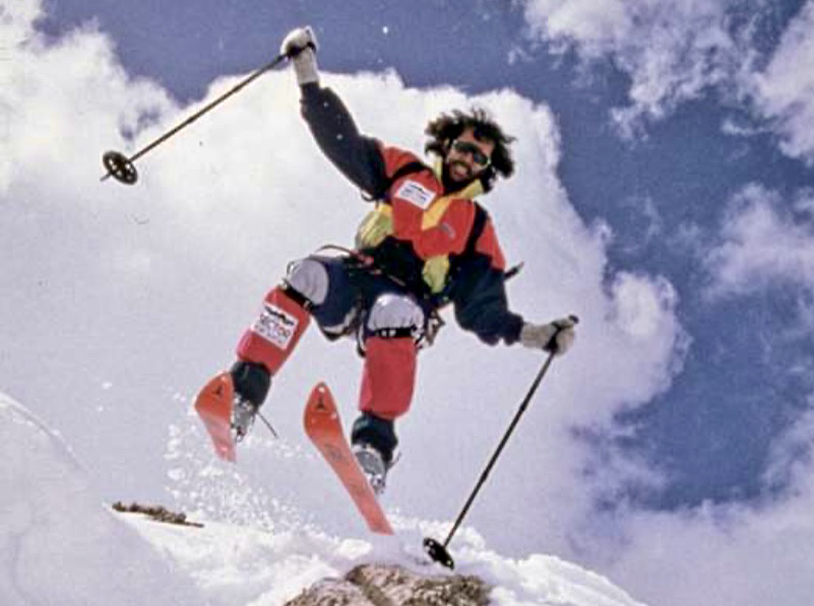
Hans Kammerlander during one of his ski descents. Photo: kammerlander.com
Luis Stitzinger’s notable solo descent
In 2008, German ski mountaineer and guide Luis Stitzinger did a significant ski descent of the central Diamir Face. After an unsuccessful attempt on the long Mazeno Ridge with Josef Lunger, Stitzinger rested and then made a solo push. He clipped into his skis at about 7,850m and descended the central Diamir flank. The route included a steep variation (later called the Stitzinger Variant) on the central flank to completely bypass the technical, icy bottlenecks of the standard Kinshofer route.
Stitzinger completed a rapid round-trip from Base Camp in about 24.5 hours. He was known for climbing and skiing without supplemental oxygen or personal Sherpa support on his personal projects. (He only used oxygen when guiding clients on Everest.) His 2008 descent was solo for the final push and skiing portion; he relied on his own route-finding and skills.
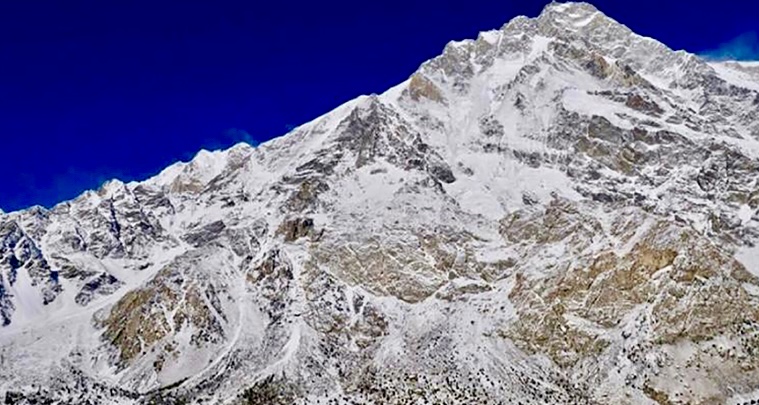
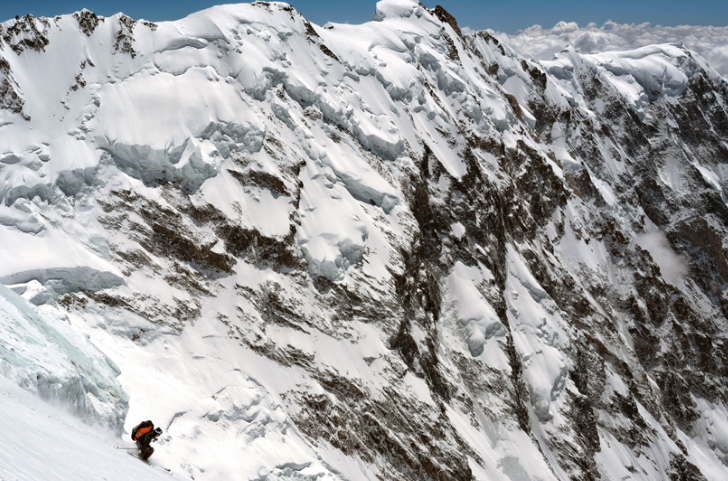
The Rupal Face of Nanga Parbat. Photo: Simone Moro
Partial descent of the Kinshofer Route
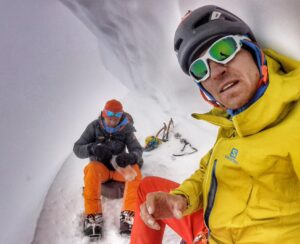
French ski partners Tiphaine Duperier and Boris Langenstein made a notable attempt on the Kinshofer Route in the summer of 2019. During the summit push, Duperier was forced to stop at 7,800m due to a perforated eardrum, which affected her balance. Langenstein pushed on alone, leaving his skis just 10m below the summit ridge at 8,080m to negotiate the final unskiable rock steps to the absolute summit. He stepped back into his skis at 8,080m and skied down to reunite with Duperier, making it the highest and most complete ski descent on the mountain at the time.
To bypass the technical Kinshofer Wall lower down, they used the Stitzinger Variant, though they had to hold onto fixed ropes for a 100m section of thin ice below Camp 3. The pair operated in a lightweight style without supplemental oxygen.
Just two days after the French descent, Italian skier Cala Cimenti and Russian skier Vitaly Lazo also skied down from the same 8,080m high point. Like the French team, they held onto fixed ropes on the icy section below Camp 3, but additionally had to downclimb the fixed ropes on the steep Kinshofer Wall.
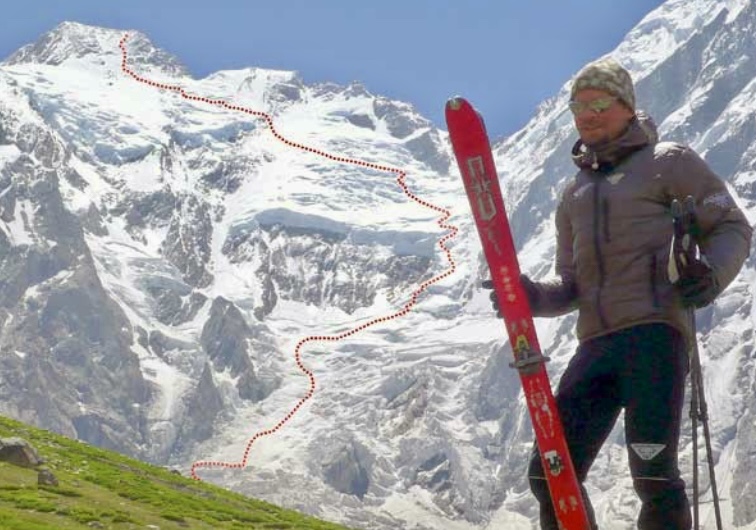
Luis Stitzinger and his line marked in red on Nanga Parbat. Photo: Luis Stotzinger via Barrabes
First ski descent of the Rupal Face
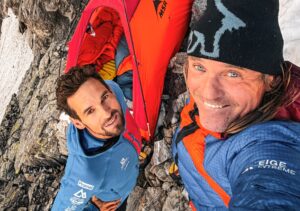
Last summer, Duperier and Langenstein, joined by German alpinist David Goettler, achieved the first ski descent of the massive Rupal Face via the Schell Route. They climbed in alpine style, with only two high camps and minimal gear. The trio successfully summited Nanga Parbat, then Goettler paraglided down from 7,700m. Meanwhile, Duperier and Langenstein skied and climbed down from the summit area that evening to their bivy at 7,625m.
Over the next three days, the two skiers completed the 4,600m Rupal Face descent, skiing the upper and middle sections continuously from around 7,625m to 7,400m and walking only the entirely snowless, rocky sections near Base Camp.
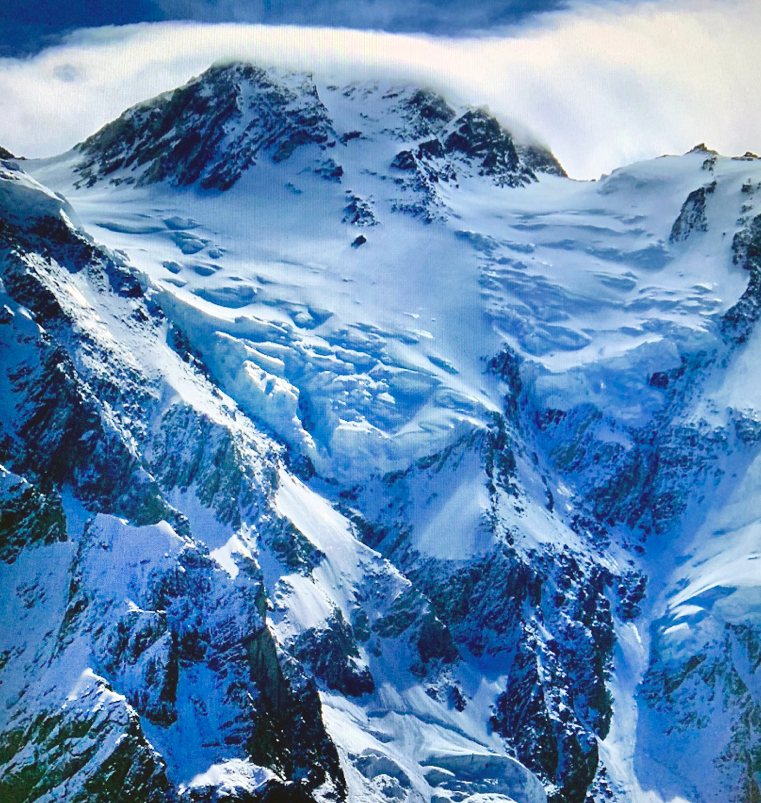
The central part of the Diamir Face. Photo: Sebastian Alvaro
First continuous descent
Recently, on June 30, Andrzej Bargiel completed the first continuous ski descent from the summit of Nanga Parbat. The Polish mountaineer skied over 3,700 vertical meters via the Messner Route on the Diamir side. He continued to below Camp 1 (approx. 4,400m), where continuous skiable snow ended. He navigated a serac barrier that had previously blocked continuous lines. Drones operated by his film crew assisted in assessing conditions and filming the descent.
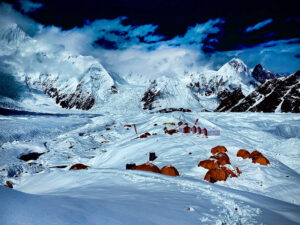
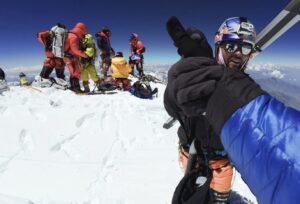
Bargiel climbed without supplemental oxygen, starting the summit push from Camp 3 (6,850m) without a Camp 4. He summited with Janusz Golab and the Sherpa rope fixers. The team included additional support, such as a film crew and high-altitude personnel, consistent with sponsored expeditions, but Bargiel’s personal ascent and ski were oxygen-free.
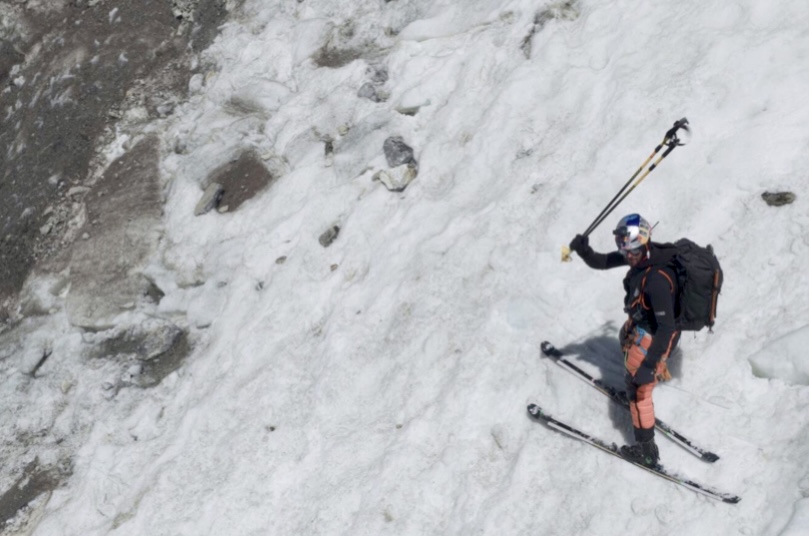
Andrzej Bargiel at the end of the snow-covered terrain on Nanga Parbat, where his ski descent ended. Photo: Bartek Pawlikowski
Style and continuity
Early efforts were pioneering but often started slightly below the summit or required unskied sections due to terrain and snow conditions. Later attempts prioritized more complete lines, emphasizing a “pure” or continuous descent, (as we previously analyzed in our review of Everest ski descent history). The debate continues over the pursuit of unbroken lines in pure alpine style versus practical realities at extreme altitude.
Most notable descents were completed without supplemental oxygen, reflecting a preference for “fair means” among ski mountaineers. Reliance on fixed ropes or pre-established routes varied: present in some Diamir Face efforts due to other expeditions, but minimized in the 2025 alpine-style Rupal Face ascent. Sherpa support has ranged from none (early solo or small-team efforts) to route-fixing and summit companionship in more recent supported expeditions.
Future ski efforts on Nanga Parbat could focus on even purer continuous lines or new faces/routes, always balancing ambition with the realities of snow cover, seracs, and objective hazards.
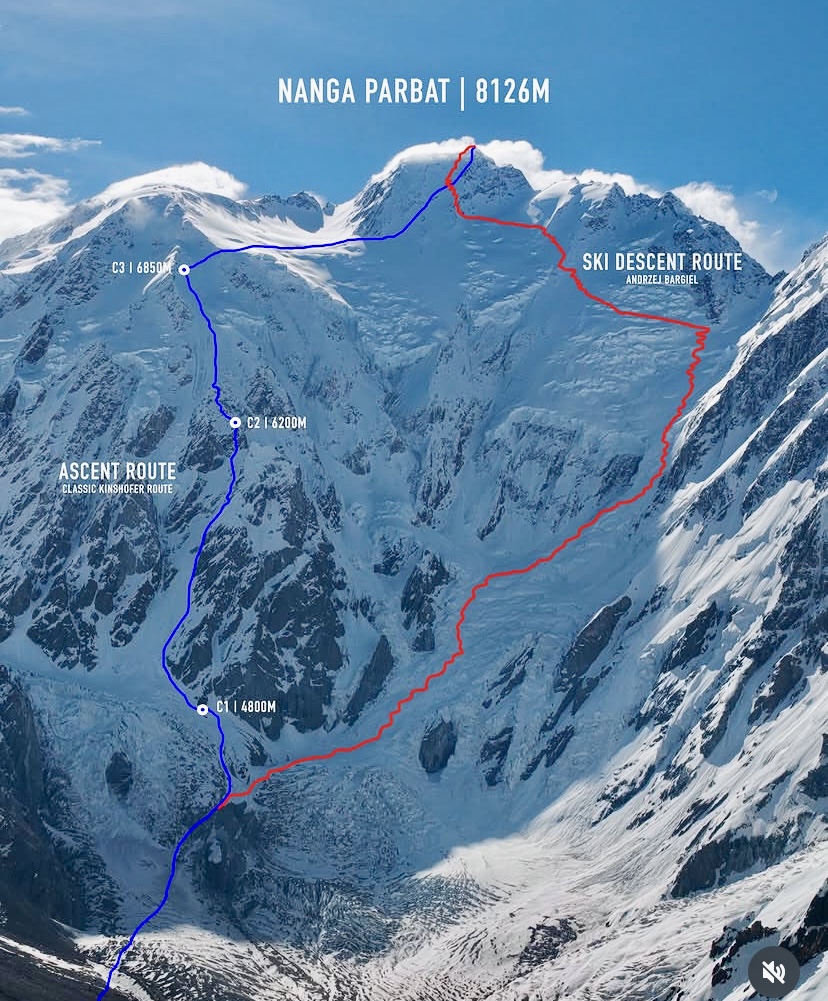
Andrzej Bargiel’s ascent route (marked in blue), and ski descent route (marked in red) in 2026. Descent time: 3h15min. Vertical drop: 3,726m. Photo: Andrzej Bargiel/Instagram