When a search team looked for their friends and colleagues on Broad Peak, they could not find the body of Pakistani guide Sohail Sakhi.
Then, by pure coincidence last week — when the world had moved on — some local villagers found Sakhi’s body. On Sunday, the men of Hunza spontaneously lined the road to Aliabad to escort the funeral car, surrounded by the peaks of the Hunza Valley.
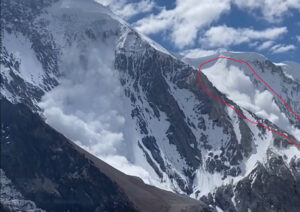
Sakhi was killed with nine other climbers in an avalanche on July 30. The brutal slide swept everyone hundreds of meters. No one on the summit push could avoid it. According to people involved in the rescue, the state of the bodies showed there had been absolutely no hope of survival.
Local staff found two bodies and parts of a third the day after the avalanche, not far from Advanced Base Camp. A Nepalese team led by Mingma G of Imagine Nepal and Pakistani Sirbaz Khan located and retrieved six more bodies, at significant risk to their own lives. Another body, located above an extremely avalanche-prone area, proved unreachable for the time being. Sakhi’s body was nowhere to be found, probably buried in the snow.
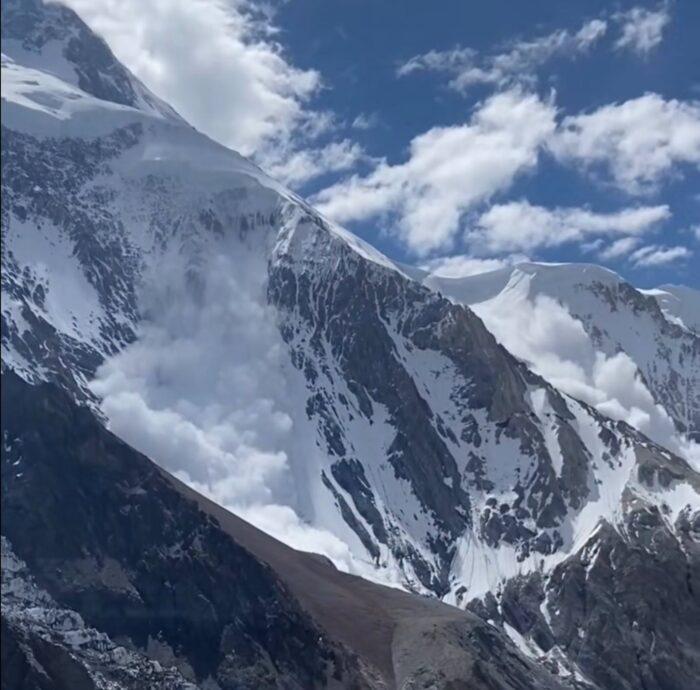
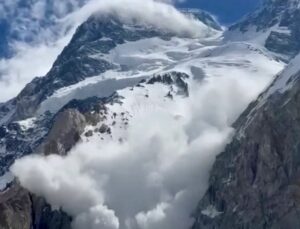
Frame of a video showing the avalanche that swept 10 climbers to their deaths on Broad Peak on April 30, 2026. Photo: Gorskie Mapy
A local discovery
Sirbaz Khan and Abid Baig, both professional climbers from Hunza, planned to return to the mountain in September to search for Sakhi’s remains. They hoped conditions would be better and that melting snow might reveal his location. But on August 12, locals found Sakhi first.
They were not rescuers deployed by any official institution, nor a group assigned by Sakhi’s family. They were unequipped and inexperienced, and while they were described as volunteers and hailed as heroes in local media, many social media commenters wondered why authorities had not assigned a professional team to the task. In fact, the three young villagers were not on a human-recovery mission.
A chance find
Muhammad Nadeem, Muhammad Bashir, and Ali Abuzar were not rescuers but neighbors from the small village of Tissar, in Shighar (between Skardu and Askole, at the beginning of the trek to the Baltoro). They were looking for abandoned gear that they could use or sell.
Searching for gear is a common practice in the Karakoram. While commercial climbers spend hundreds of thousands on their adventures, the local villages in the barren mountain areas of northern Pakistan are mostly subsistence economies. When life is hard, some meters of rope, an abandoned ice axe, or warm mountain clothes are extremely valuable to the community.
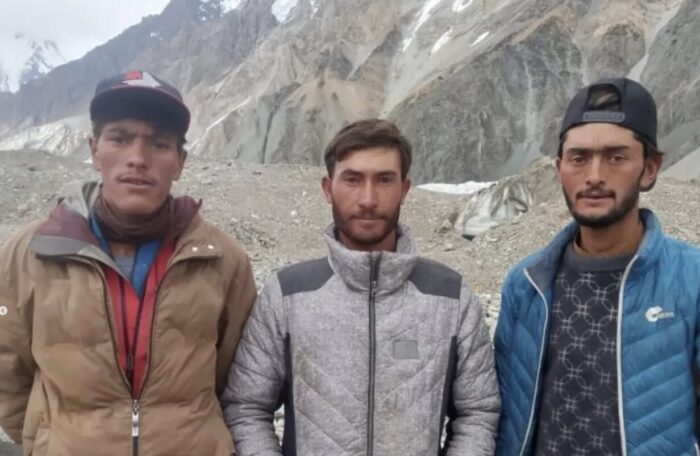
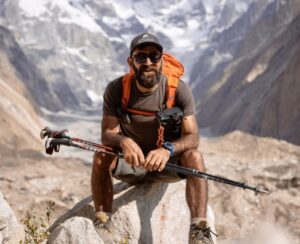
Left to right: Abuzar, Nadeem, and Bashir, the local villagers who found and recovered the remains of Sohail Sakhi. Photo: Alpine Club of Pakistan
Nadeem, Bashir, and Abuzar were searching near Advanced Base Camp, probably in an area at the base of the avalanche debris. They had no trackers, so it is not possible to determine their exact location. The friends wore running shoes and had no safety gear. They had a shovel and a single pair of gloves that they shared.
The three men spotted a boot sticking out from the snow, and soon discovered the body behind. They could have just ignored the somber sight and kept looking elsewhere, but they didn’t. Instead, they dug for about three hours to remove Sakhi from the hardened snow. Eventually they called for support, and others in the area ran to help. Between them, they managed to carry the body to Base Camp, where it was identified as Sakhi and airlifted to Skardu one day later.
A remarkable man
Sakhi was unusual. Born in Hunza, he grew up surrounded by mountains, but he was also a post-graduate with a PhD in physics. He eventually left physics behind to devote himself completely to mountaineering and guiding.
“It is not just a job for me, but a way of staying connected to my homeland,” he told ExplorersWeb in an interview that made a strong impression on this writer. He was also a mountain photographer and, last year, founded his own guiding company, Moving Mountains. He advocated to improve conditions for local mountain workers and put effort into mentoring and teaching future climbers.
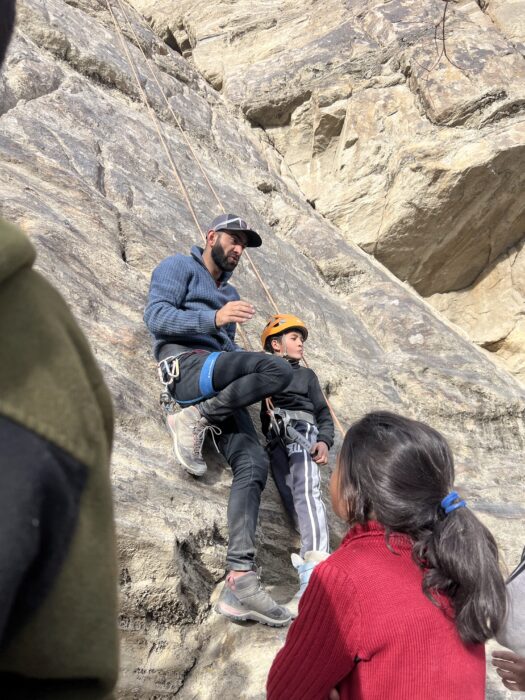
At the local climbing wall in Hunza, teaching boys and girls. Photo: Sohail Sakhi
He was also a purist and, except when guiding, he was convinced that even the highest mountains should be climbed without supplementary oxygen. “I do it to push my limits in the mountains and connect in a spiritual way that I believe is only possible like this,” he explained.
Everyone he met seemed to like him.
“As a strong and ethical mountaineer, he was a role model for many young people and a champion of equal pay for Pakistani mountain guides,” 14×8,000’er summiter Ralf Dujmovits of Germany wrote. “By consciously choosing not to use supplementary oxygen, he became, alongside Sirbaz Khan, an ambassador for fair high-altitude mountaineering in Pakistan.”
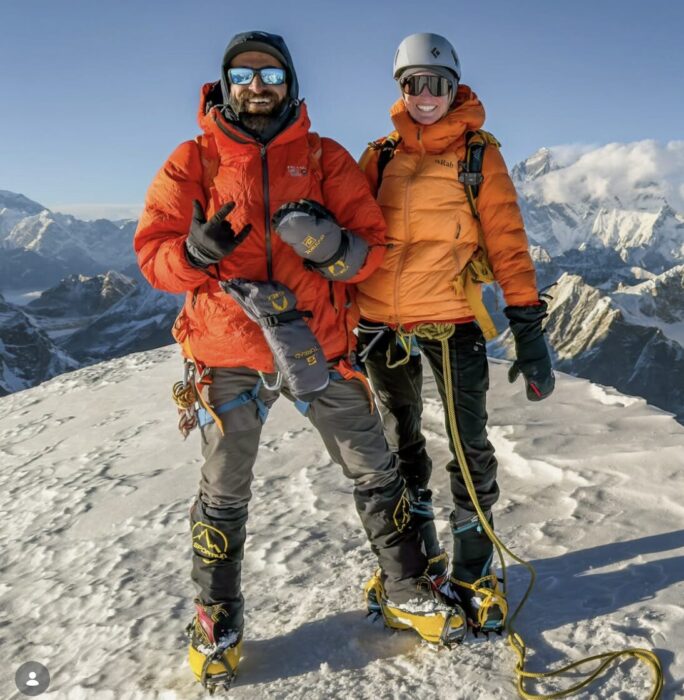
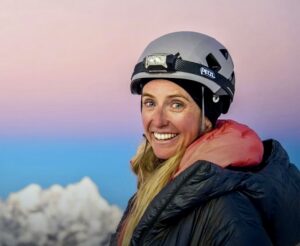
Sohail Sakhi and Mallory Geis. Photo: Moving Mountains
Last year, Sakhi guided American Mallory Geis on a Nepal 6,000’er. She decided to climb with him again for her first 8,000’er, on Broad Peak. Geis was also one of the avalanche victims.
Local farewell
The final rites for Sohail Sakhi were held in Aliabad, in his native Hunza Valley. There was a huge turnout, with people parading with their motorbikes in tribute.
This final send-off, deeply rooted in Sakhi’s people, his mountains, and his country, felt just right for a mountaineer with a message to leave to future generations.