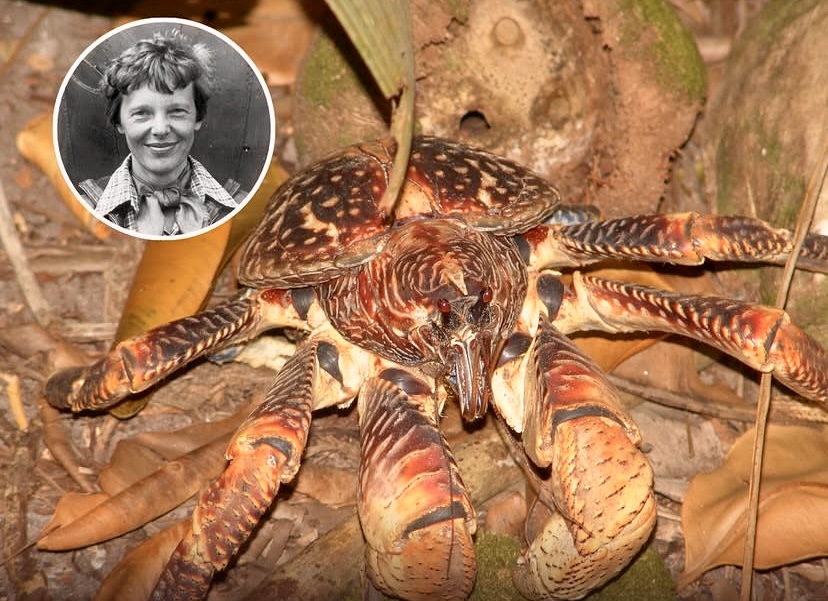
Researchers hunting for the wreckage of Amelia Earhart’s plane have followed new clues to a remote Pacific atoll, inhabited by giant coconut crabs so large and active at night that the team sleeps aboard its ship for safety.
In 1932, the American aviation pioneer became the first woman to fly solo across the Atlantic. Five years later, she and navigator Fred Noonan disappeared while attempting to circumnavigate the globe. After leaving Papua New Guinea on July 2, they failed to reach Howland Island, their planned refueling stop. The official account is that navigation and communication problems caused their Lockheed Electra to run out of fuel and crash into the ocean. The disappearance has produced decades of speculation about what happened.
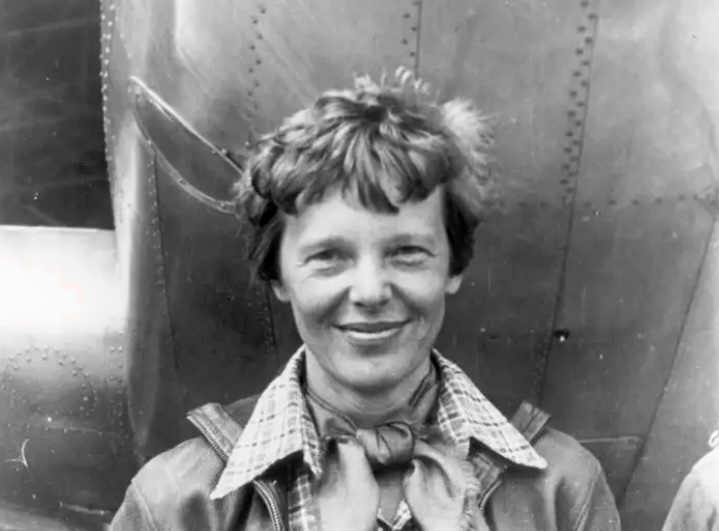
Amelia Earhart beside her Lockheed Model 10-E Electra. 1937. Photo: National Portrait Gallery
The Taraia Object
One long-standing hypothesis, advanced mainly by the International Group for Historic Aircraft Recovery, is that the pair reached Nikumaroro (then known as Gardner Island), about 350 nautical miles southeast of Howland, landed on the reef, and later died as castaways.
A 17-person team from the Archaeological Legacy Institute and Purdue University arrived at the uninhabited atoll — part of Kiribati — this week after a 1,500km voyage on their vessel, according to the BBC and Purdue University updates. They are investigating the Taraia Object, an elongated shape in a lagoon first identified in satellite imagery in 2020 and visible in aerial photos dating to 1938.
Some researchers view it as a possible remnant of Earhart’s plane. Others consider it more likely a fallen tree or other debris. This marks the first authorized visit to the island in seven years, and the first to the Taraia Peninsula in more than 15 years.
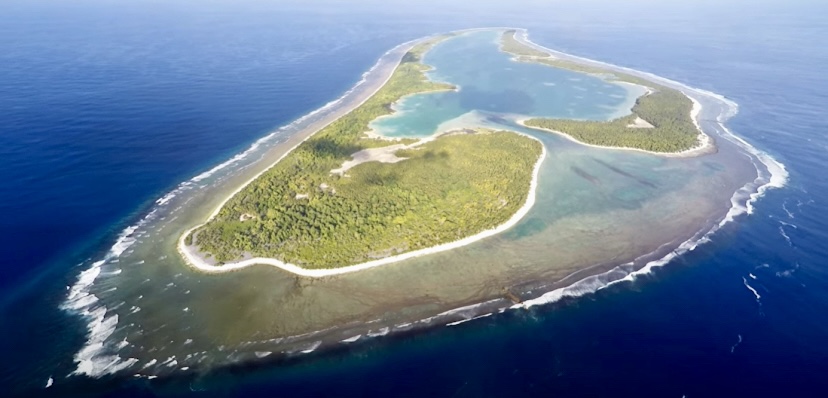
The uninhabited Nikumaroro Island in the Pacific Ocean. Photo: Wikipedia
The work, which should take about five days, includes clearing vegetation, scanning for metal, and using dredging equipment to examine the object, which lies only about three meters from shore in as little as 1.5m of water, depending on the tides. Conditions have already limited boat access on some days, though organizers expect an update on the object’s identity within about 48 hours, according to Purdue.
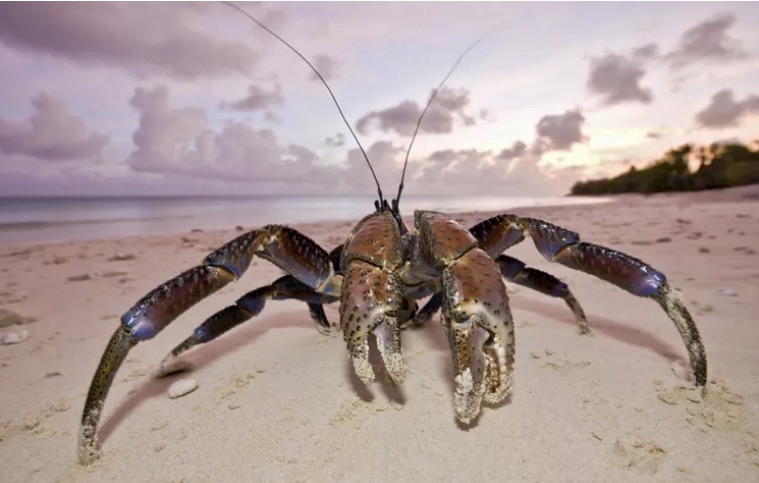
The coconut crab has the strongest pinch of any crustacean. Photo: Reinhard Dirscherl via treehugger.com
Giant crabs
The island’s coconut crabs, also called robber crabs, are the world’s largest land-dwelling invertebrates, with a leg span of up to one meter and a body weight of more than four kilos. They can lift objects weighing about 28kg, crack open coconuts, climb trees, and emerge at night to capture live prey such as rats and seabirds, as well as carrion. Expedition communications stated that the crabs’ size and overnight activity make staying on the island impractical, so the crew returns to the ship each night.
The same animals appear in theories about what might have happened if Earhart died on Nikumaroro. In 1940, British colonists recovered 13 bones near the remains of a fire. The bones were later lost, though some re-analyses of the recorded measurements have suggested consistency with a woman of Earhart’s stature.
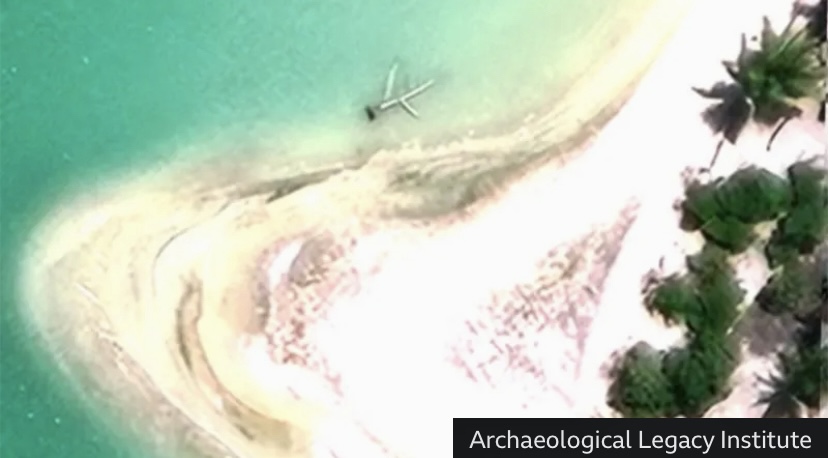
The Taraia Object on a satellite image. Photo: Rick Pettigrew/Archaeological Legacy Institute
In 2018, the International Group of Historical Aircraft Recovery placed pig carcasses on a similar island and found that coconut crabs (along with smaller hermit crabs) stripped most of the flesh and dragged bones to burrows in less than two weeks. The crabs are not known to hunt humans aggressively. The primary risk is a powerful defensive pinch from their claws if they are handled or startled.
Survey starts
The survey of the Taraia Object began on Wednesday. The crew established a base camp, cleared overgrown paths, and prepared for their fieldwork.
Previous searches, including one by well-known explorer Robert Ballard, who first located the Titanic, have not produced any aircraft wreckage, and many experts continue to regard an ocean crash near Howland as the most likely outcome. The current team reports encountering some crabs during initial setup but described them as posing no threat to operations at that stage.
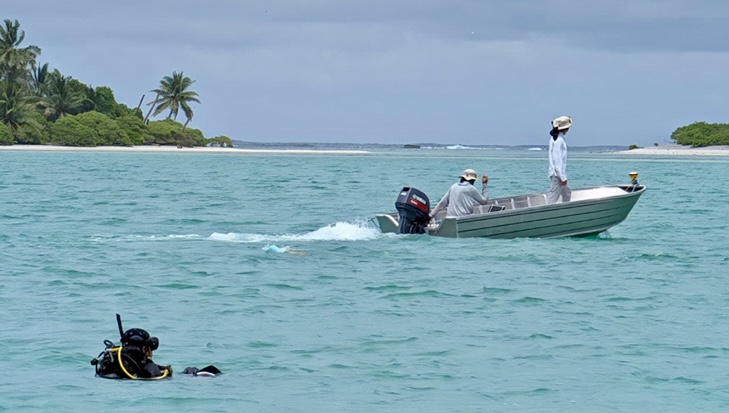
The Taraia Object’s survey has begun. Photo: Purdue.edu