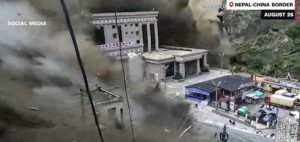
The catastrophic flood in Nepal’s Langtang has also hit the mountaineering industry. Staff members are missing, and several guides are helping search for survivors.
The official death toll passed 1,000 today, and about 4,000 are still missing. Chances of survival are slim but not non-existent. Dozens of workers may have sought refuge in the tunnels of hydroelectric plants. Reaching the blocked or inundated tunnels is difficult, but Nepal has some of the most skilled rescuers in the world, trained on the Himalayan giants.
Langtang
The flood occurred near the scenic Langtang Valley (also severely hit by the 2015 earthquake), close to one of the main border passes into Tibet.
Canadian climber and photographer Pat Morrow recalls that Heinrich Harrer described the border pass of Kyirong (Gyirong in modern usage) in his classic Seven Years in Tibet.
“The name Kyirong means Village of Happiness, and Harrer thought it deserved the name,” Morrow wrote. Harrer said he would choose that place above all others to spend the last years of his life, although he eventually did so at home in Austria.
Because of its beauty and mystique, many foreign victims of the flood were trekkers and pilgrims on their way to sacred Mount Kailash in Tibet.
“We know the river valley where the flash flood occurred well, as it’s one of the main crossings into Tibet,” Climbing the Seven Summits reported. The company is in shock after learning that three members of their Everest Base Camp staff are missing and presumed lost.
“They were fathers, sons, brothers, friends, and deeply valued members of our CTSS family,” the company wrote. “If you’ve spent time with us in the Himalaya, then their faces are likely familiar to you.”
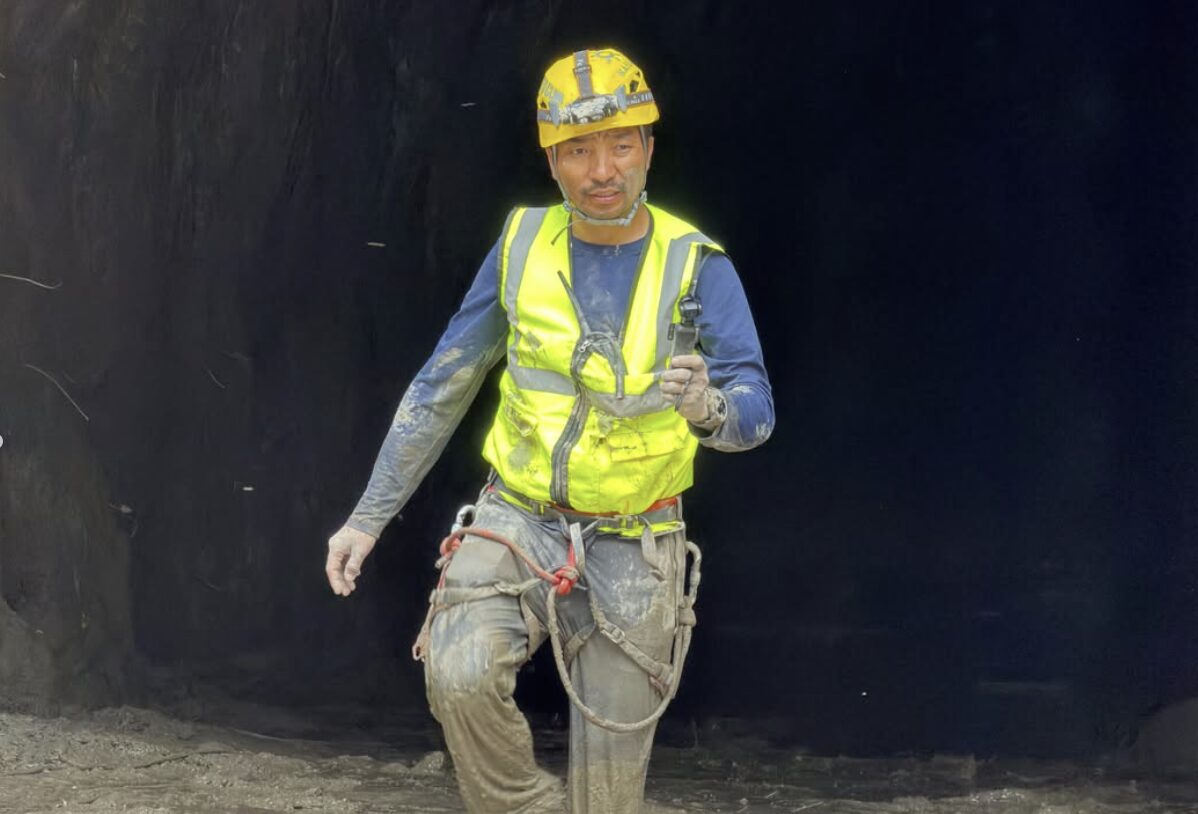
CTSS also confirmed that many of their guides are currently helping in rescue operations. The Nepal Mountaineering Guide Association is coordinating helicopter pilots and guides, who are using their specialized skills to reach difficult areas to look for survivors, including those trapped in hydro tunnels.
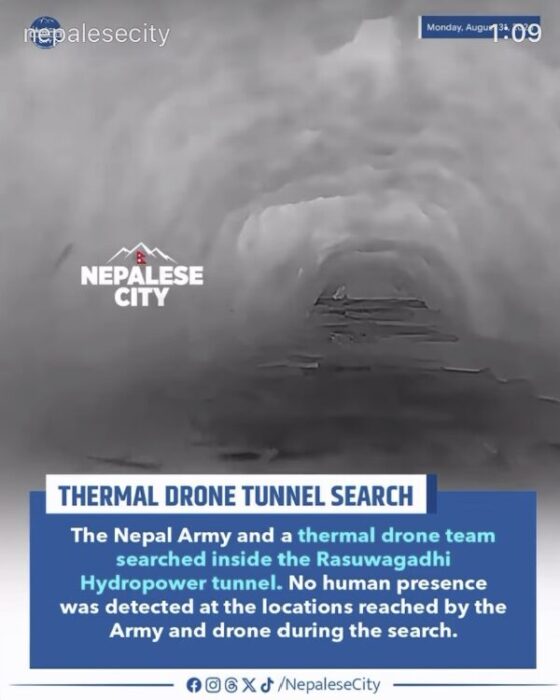
Several people could still be alive and trapped in hydroelectric tunnels, where rescue efforts are now concentrated. Photo: Nepalese City
Everest guides helping
A statement from Seven Summit Treks explains why Sherpas are the best for the task:
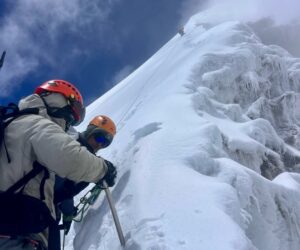
Mountaineers undergo years of rigorous training in rope work, navigation, and moving people to safety under difficult and unpredictable conditions: This preparation, both physical and mental, allows them to operate effectively in complex and high-risk environments. In the face of this disaster, many applied those same skills to search, locate, and support rescue efforts.
One of those involved is aspiring IFMGA mountain guide Jenjen Lama, who is having a traumatic summer. He was the first to raise the alarm when an avalanche took the lives of 10 people on Broad Peak last month. He witnessed the slide from the neighboring K2, where he was guiding. Now back in Nepal, Lama volunteered to help with flood rescue.
“We were assigned by Chilime Hydropower to search for six people trapped in the tunnel,” he told SST. “Using a fixed-line system with anchors, we progressed about 120 meters, but found no signs of life. Looking ahead, we saw the tunnel was completely blocked by mud and debris, so we had to turn back.”
Volunteers
“Other fellow guides were dispatched to the Trishuli A tunnel and were able to carry out a successful rescue,” Jenjen noted. Among them were IFMGA guides Ashish Gurung, Dorjee Sherpa, Pemba Wangchu Sherpa, Man Raj Gurung, Chiring Sherpa, Sajan Ghale, and aspiring guides Sabin Thakuri, Lukme Tamang, Kusang Sherpa, Bikram Karki, Chhiring Sherpa, and Gesman Tamang, among others.
All these names may be familiar to ExplorersWeb readers from their work guiding clients on 8,000m peaks. Many have delayed their work on peaks such as Manaslu, Himlung, and Ama Dablam, with clients arriving within the next few days.
Helicopters have also proven to be an essential tool in trying to save lives. Captain Priya Adhikari, the first female helicopter rescue pilot in Nepal, has flown around 100 rescue missions in a week, CNN reported.