This year has been brutal in the high ranges. In July, an avalanche on Broad Peak killed 10. Weeks later, glacial floodwaters on the Nepal–Tibet border left more than 1,400 dead and thousands missing. And just yesterday, an avalanche in Himlung’s Base Camp likely killed all 16 staff members.
Even before that, the fall season ended prematurely on Manaslu. Heavy snow, an avalanche in Camp 3 that killed two, and a big storm emptied Base Camp, despite a record number of permits.
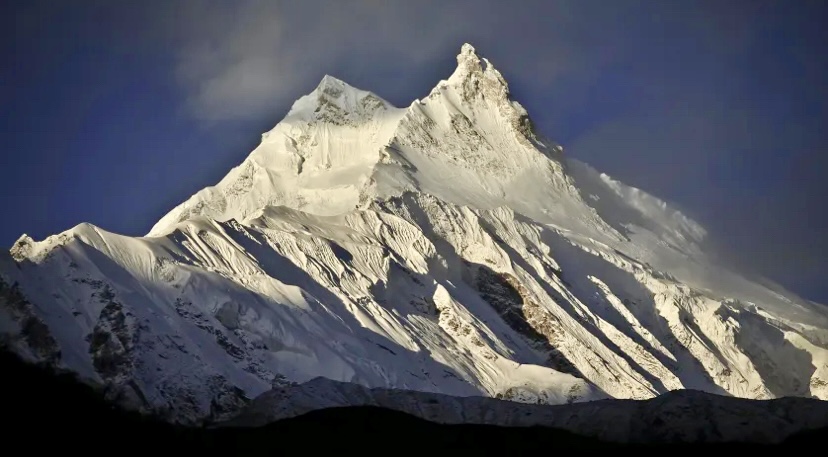
Manaslu (8,163m) has always had a fierce reputation. Two of its worst days came exactly 40 years apart, in 1972 and 2012. In those years, avalanches hit the same weak point: mid-mountain camps under ice and loaded slopes. Today, we revisit those tragedies.
Spring 1972
In 1972, only two expeditions were attempting Manaslu, both in the spring. A South Korean team was returning to the Northeast Face after a tragic first attempt the year before. The other expedition was Austrian, aiming at the more technical South Face.
The Koreans were led by Kim Jung-Sup, the eldest of three brothers on the mountain. He was a busy businessman who joined at the last minute for his family’s sake. His younger brother, Kim Ho-Sup, was the climbing leader. A third brother, Kim Yae-Sup, was also on the team. So was a brother-in-law. It was a family affair.
There were 12 members in all, plus 10 high-altitude Sherpas and additional porters. They left Kathmandu in late February 1972.
The mission that brought the family back to the Northeast Face was to recover another brother. Kim Ki-Sup had died the previous spring at about 7,600m. During a windy summit attempt, he fell into a crevasse and died, according to the American Alpine Journal. Kim Ho-Sup had vowed to summit this time and bring the body of his brother home.
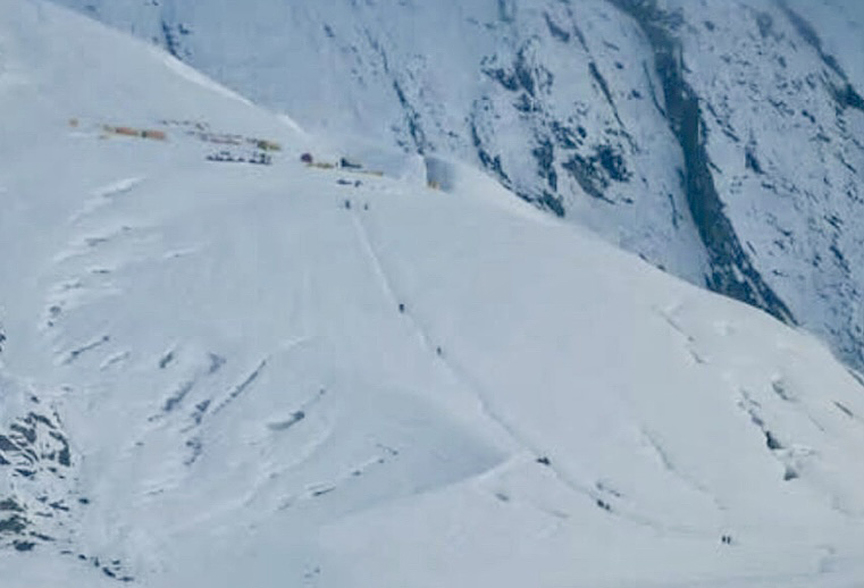
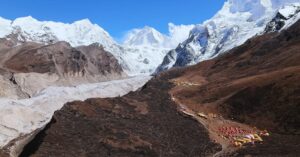
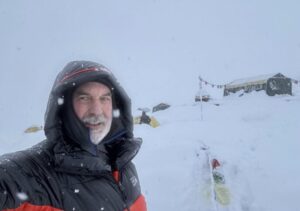
Climbers retreat from Manaslu due to dangerous conditions, September 2026. Photo: Sanu Sherpa/Summit Force
Planning the ascent
The 1972 party carried a sled to lower Kim Ki-Sup’s body down the mountain. They planned to use the same climbing route as the year before. Kim Ho-Sup told Elizabeth Hawley that the east side was technically no trouble, but the previous year they had been “swimming in snow,” with high winds driving powder into their faces.
“Man’s power is nothing against terrible wind,” he said. At least, they already knew where the bad crevasses and icefalls were.
There were fixed ropes up to 7,600m from the earlier attempt. They intended five camps, with the highest pitched 100m or 200m higher than the year before so that the final summit attempt would be easier. They set up Base Camp by March 10, and a first summit party was planned for mid-April.
Camp 3
By early April, they had established Camp 3 at 6,500m. By the night of April 9-10, heavy snow loaded the mountain. Two Sherpas warned Kim Yae-Sup, the youngest of the three brothers, that there was too much snow. They worried about the slopes above.
Kim Yae-Sup woke around midnight to melt water for an early start. At around 3:15 am, he heard a roar. He woke the two men sharing his tent (Park Chang-Hee and Japanese photographer Kazunari Yasuhisa), and they tried to get out. The avalanche struck before they could exit. It carried the three of them 800m down the mountain in three shattering bounces before they stopped. Park told Kim his midsection was crushed and his spine broken. Yasuhisa said his left rib and right shoulder were broken. The ordeal had just begun.
Then a second avalanche swept Kim down another 300m and buried both his companions. Three more slides and gale-force winds followed. Somehow, Kim survived with badly frostbitten feet and fingers. Two Sherpas also survived the destruction of Camp 3.
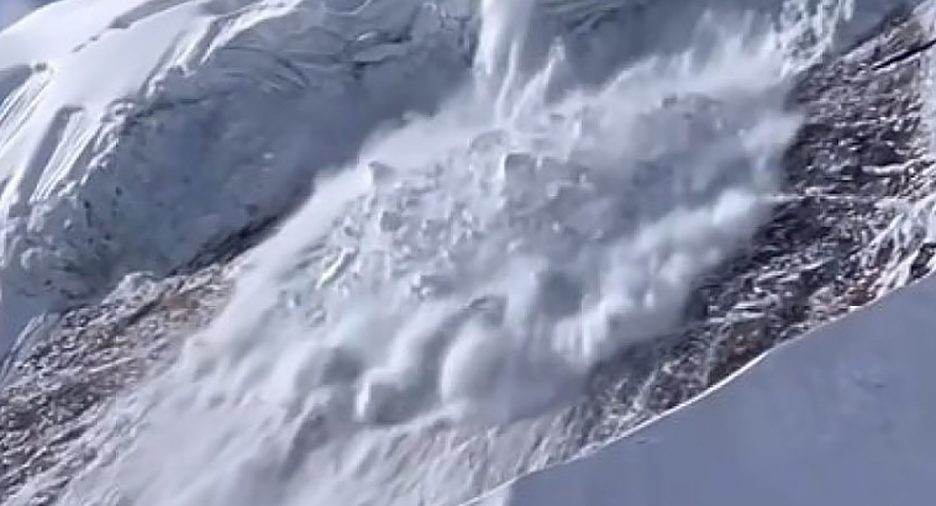
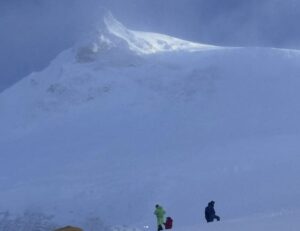
In September 2026, a falling serac triggered an avalanche on Manaslu. Frame from a video. Photo: Phurba Sonam Sherpa
Fifteen dead
The rest of Camp 3 was gone. Among the dead was climbing leader Kim Ho-Sup. In all, 15 died: 4 Koreans, the Japanese photographer, 9 high-altitude Sherpas, and one Sherpa cook.
The names of the Sherpas, later provided by Pemba Tshering Sherpa and published in Rising Nepal, included sirdar Pemba Rinji of Jorsale (also known as Lama Ngawang Chultim), second sirdar Rinji Wangel of Phaplu, Solu, climbing Sherpa Ang Tendi of Thami, 28-year-old Ang Mingma, 37-year-old Angmingma, Andrita, Pasang Nima, Angtendi, Ang Dawa, Phurba Tenzing, Gyalze, and a Sherpa cook named Wangel.
Four surviving Koreans who had not been at Camp 3 remained on the mountain to collect what gear they could. The expedition was over. Kim Yae-Sup was flown out by helicopter with his eldest brother and team reporter Yun Byung-Hae.
The Himalayan Database records this as one of the deadliest single events on any 8,000m peak up to that time.
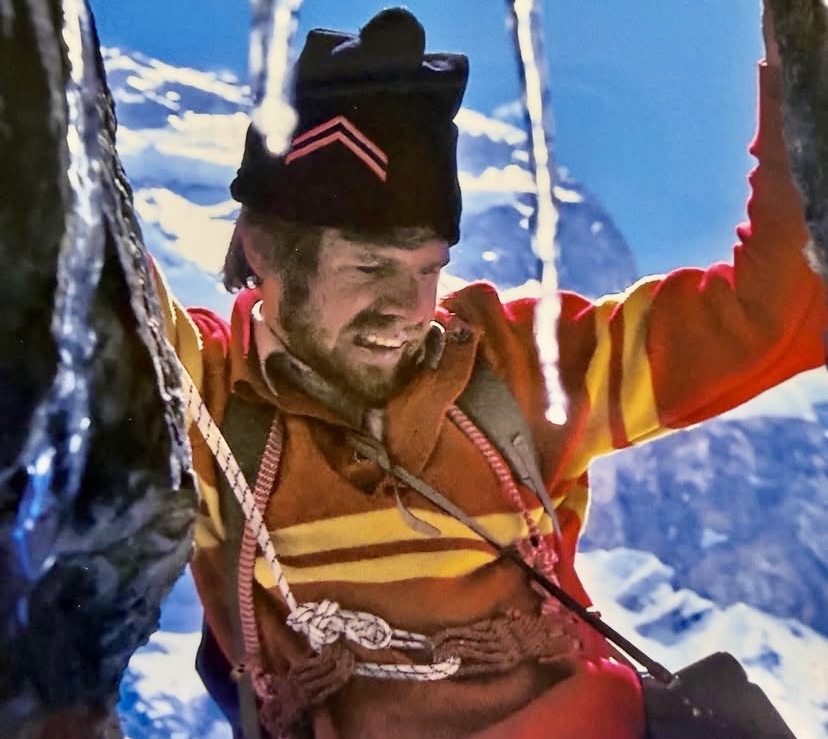
Reinhold Messner on the 1972 Manaslu expedition. Photo: Reinhold Messner/Instagram
The Austrian expedition
While the Koreans were still reeling, the Austrian expedition was establishing itself on the opposite side of the mountain. Wolfgang Nairz led a strong team that included Reinhold Messner, Franz Jaeger, Andi Schlick, and Horst Fankhauser. They carried most of their own loads and had a few Sherpas.
On April 25, Messner and Jaeger left Camp 4 at 7,400m for the summit. Jaeger turned back after a few hours, saying that the long, difficult traverse without oxygen was beyond him that day. Messner continued alone, reached the top around 2 pm, and started down in a rapidly worsening storm. He spent hours searching for the tent in fog and wind, nearly lost, before finding it, but Jaeger was not there.
No help
Fankhauser and Schlick, who had come up from Camp 3, went to look. The storm intensified. They dug a snow cave. Unfortunately, Schlick died of cold and exhaustion during the night. Jaeger was never found. Fankhauser survived the night in the cave. At dawn, he made his way back to the tent. With Messner, he searched the plateau in vain. The fresh snow had buried everything.
Avalanche danger and deep snow prevented others from coming up to help.
Messner later described the South Face as combining the character of a classic ridge route with the scale of the great faces he had already climbed on Nanga Parbat and Annapurna I. After the deaths, the expedition abandoned the mountain. Messner suffered frostbitten fingers, and Fankhauser had frostbitten feet. Fortunately, both later recovered.
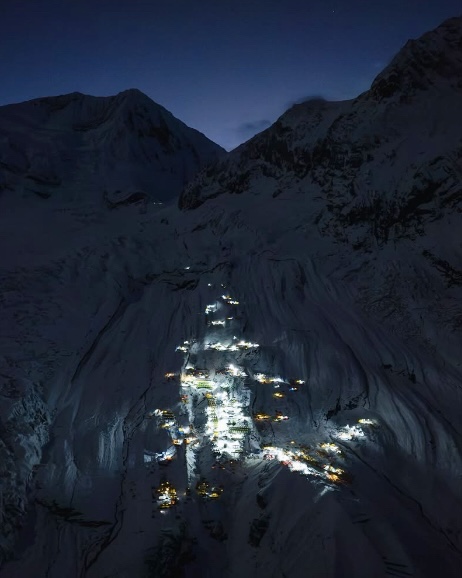
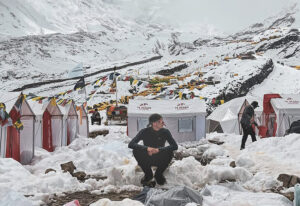
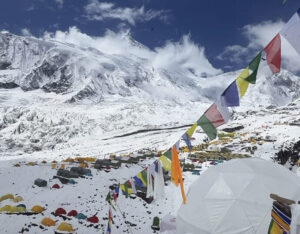
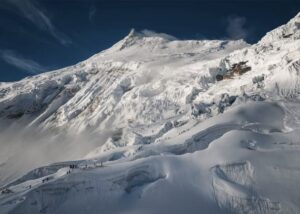
Manaslu Base Camp in the autumn of 2026. Photo: EliteExped/Instagram
Forty years later
In 2012, the scene on Manaslu had changed completely. A total of 67 teams attempted the mountain, 54 of them in the autumn. That year, 129 people reached the summit, 111 of them in the post-monsoon season. But the autumn also proved tragic.
Camp 3 was established in its usual location at 6,700–6,800m, directly below hanging ice on the North Ridge. After waiting out a storm, the teams moved back up. On the night of September 22–23, climbers from half a dozen expeditions were sleeping in their tents at Camp 3, while many Sherpas had been sent down to make room.
On September 23 at 4:30 am, a serac collapsed at about 7,500m. It triggered a large slab avalanche that swept through the camp. It buried or tore apart the tents, carrying them and their occupants hundreds of meters down the slope. The air blast flattened tents at Camp 2 but caused no deaths there. However, the teams at Camp 3 were not that lucky.
A German team had planned a higher Camp 3 but never reached it. Their tents at the normal Camp 3 site were buried. Leader Robert Hochreiter cut his way out of his tent unharmed, but another member, Christian Mittermeyer, was killed. Martin Neubauer suffered a knee injury from ice debris, and Andreas Reiter fractured a vertebra and was helicoptered to Kathmandu. Another member, Ralf Rieske, had frostbitten fingers and bruised ribs.
More dead
A French-led team lost five people. Ludovic Challeat and Thomas Grenier had gone up from Base Camp on September 22 and slept at Camp 3. Others had climbed more slowly. The avalanche killed expedition leader Fabrice Priez, Catherine Ricard, Philippe Bos, Dominique Ouimet, and Challeat. Survivors included Thomas Grenier, Claude Belmas, and Arnaud Manel, who were rescued from Camp 2. Several more climbers were evacuated from Base Camp.
A Spanish team lost Marti Gasull. He and Karma Sherpa were sleeping in a tent that was swept down toward 6,000m. Gasull died, while Karma Sherpa survived uninjured.
An Italian team established Camp 3 at 6,700m on September 22. Alberto Magliano and Dawa Dorje Sherpa shared a tent. Unfortunately, both were buried 1.5m deep and found dead after two hours of probing. Silvio Mondinelli and Christian Gobbi survived. All tents in Camp 2 were destroyed by the blast, but no one was hurt.
A French-American ski team had pitched Camp 3 at 6,800m. Greg Costa and Glen Plake shared one tent, while Remy Lecluse occupied another. Plake was swept 300–400m into a crevasse. He was badly bruised but conscious and finally crawled out. Costa and Lecluse vanished with their tents. Plake descended on oxygen and left the mountain as quickly as possible.
In total, 11 climbers died in the avalanche. Rescue helicopters flew multiple sorties that day. The season continued for some teams after the debris was cleared. The year 2012 produced both a high number of summits and, according to The Himalayan Database, the second-worst death toll in the mountain’s recorded history after 1972.
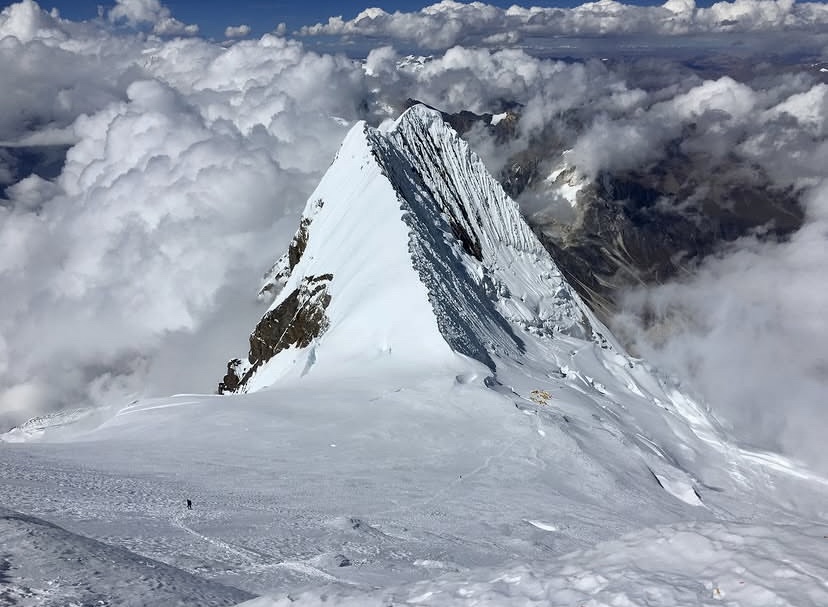
Looking down toward Camp 3 on Manaslu. Photo: Ben Darce/Instagram
Mid-mountain camps
The 1972 Korean camp was at 6,500m on the northeast side. The 2012 Camp 3 was at a similar elevation on what is now the standard route. In 2012, the trigger was ice falling from above onto snow-loaded slopes. In 1972, heavy new snow and repeated avalanches overwhelmed Camp 3, causing the tragedy. Manaslu’s climbing history shows avalanches accounting for nearly half of all deaths on the mountain.
Teams this autumn chose to leave, but the mountain had already made the decision for them.