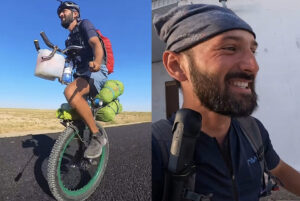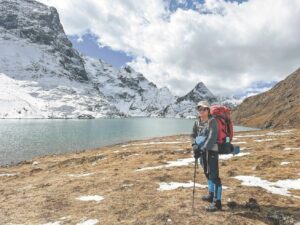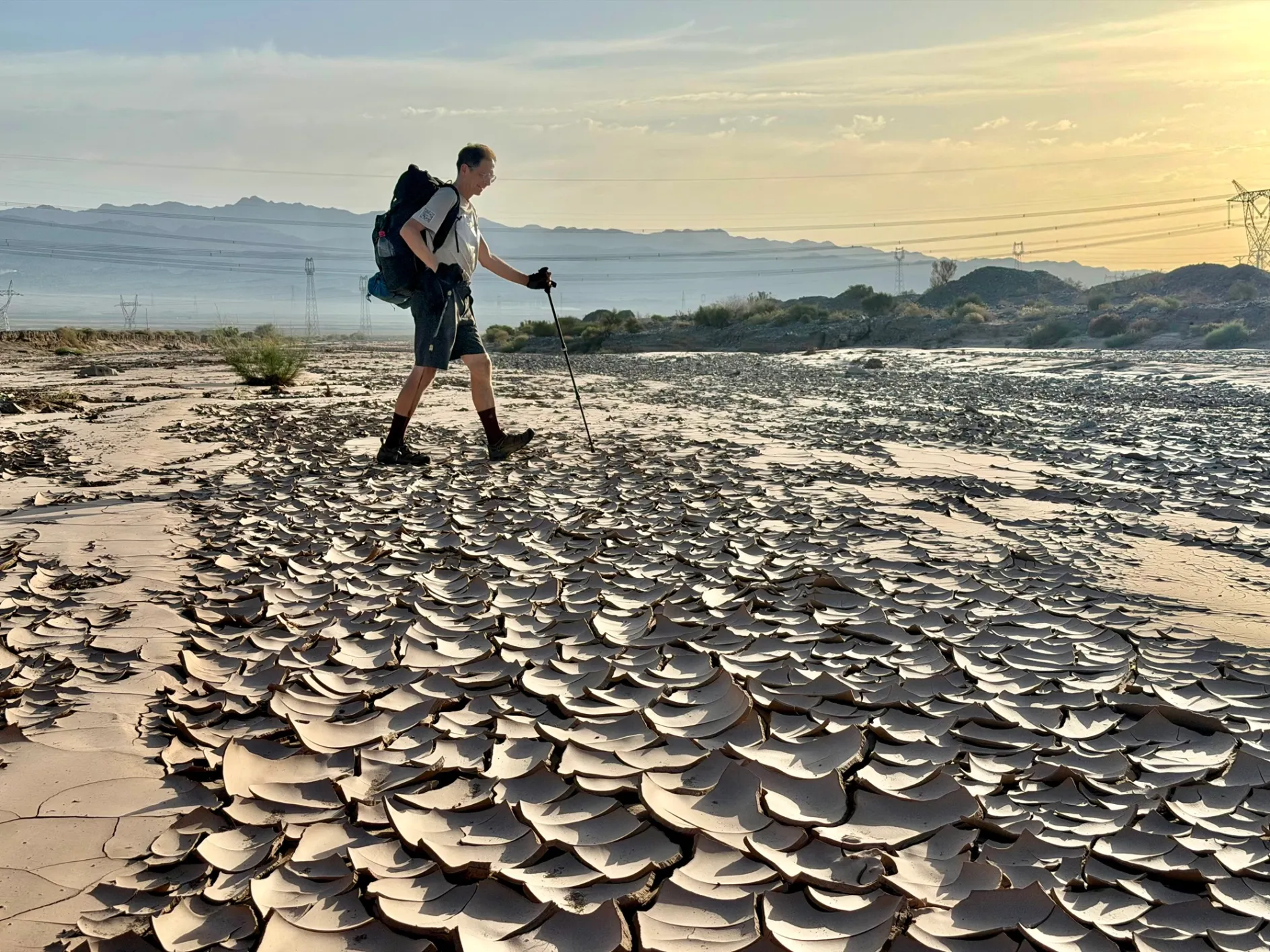
German long-distance walker Rainer Mautz left Cabo de São Vicente, Portugal, on February 26, 2025, bound for Singapore. Mautz, who is in his mid-50s, chose his 25,000km route to create the longest possible line across Eurasia. So far, he has covered 18,000km and is now trekking across China.
Mautz set himself strict rules: where possible, every meter should be walked; no interruptions using transport (no journeys home by plane, no using a bicycle to fetch supplies); and he needs to carry his gear, without a cart.
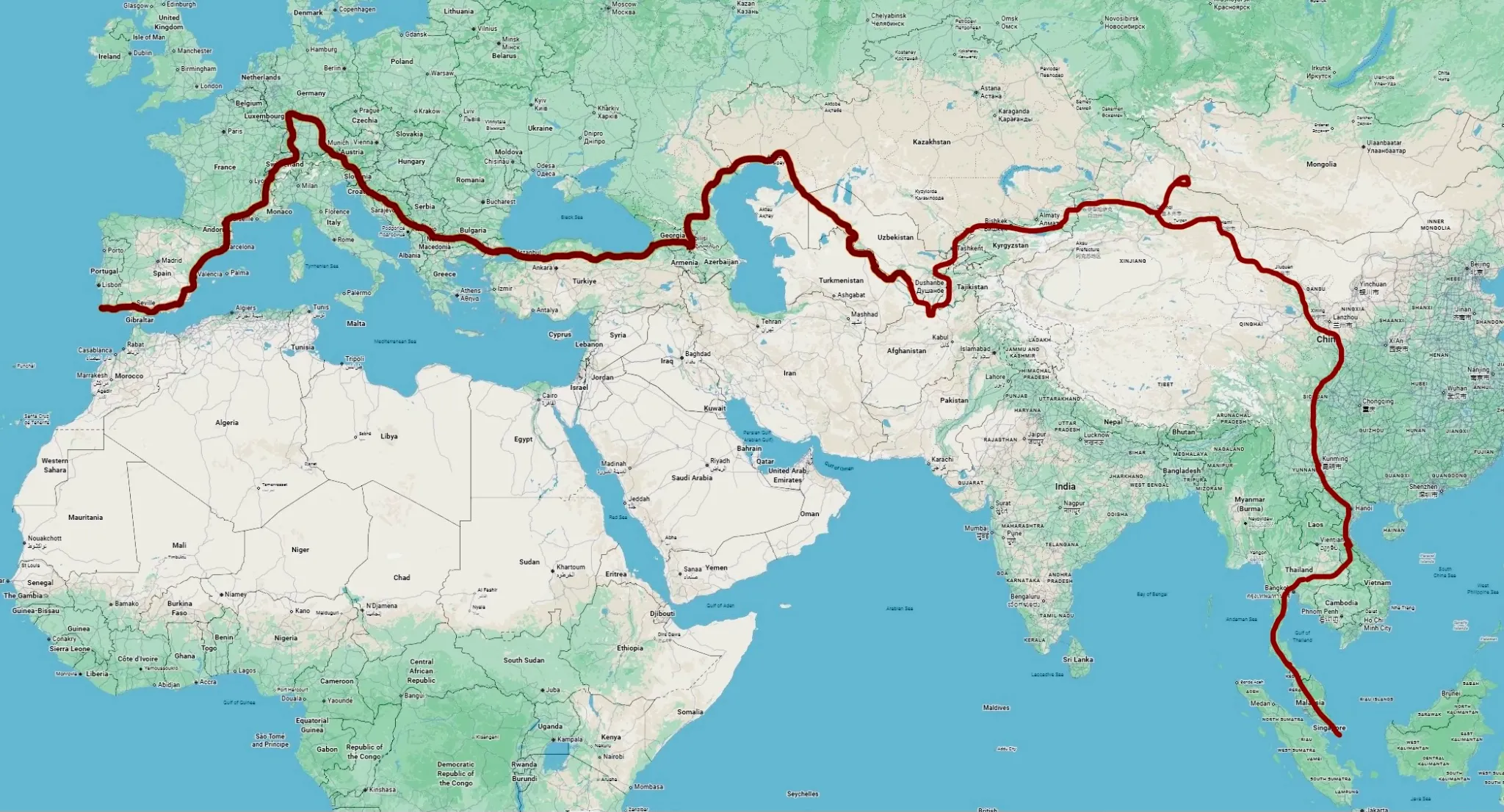
Mautz’s route, including a failed attempt to enter Mongolia. Photo: Rainer Mautz
Turkmenistan
His route included an extremely unusual stretch. The government permitted him to walk 600km across Turkmenistan over 18 days. “There has never been such a long tourist journey in this country before. According to research by the largest Turkmen travel agency, this set a new record,” Mautz wrote.
Turkmenistan requires government guides to accompany foreigners at all times, and most tourists stop through only briefly, perhaps visiting the Gates of Hell (the Darvaza gas crater, which is still burning decades after it was set alight).
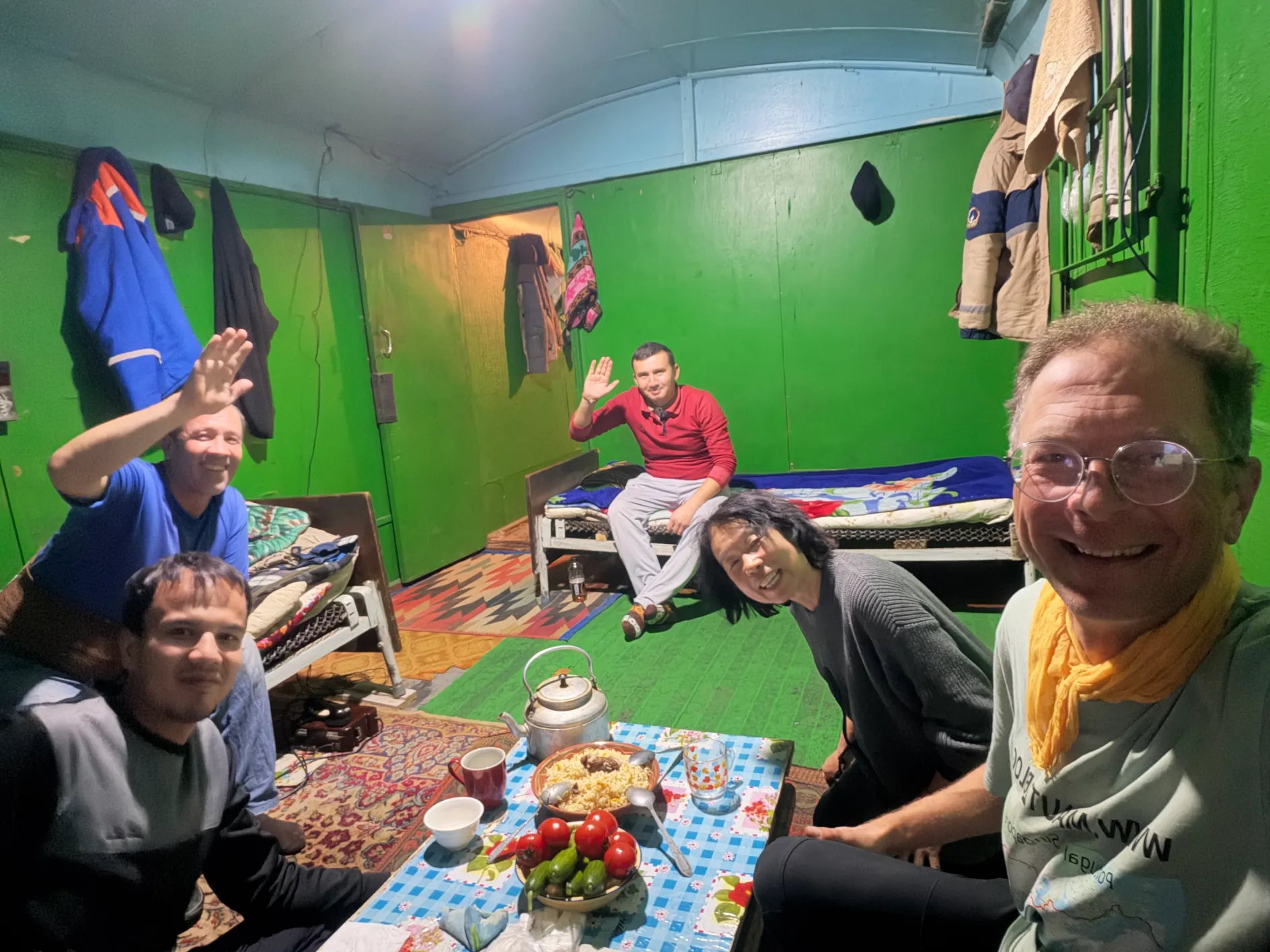
A night with gas pipeline workers in Turkmenistan. Photo: Rainer Mautz
Following the Amu Darya River along the border to Uzbekistan, Mautz walked with a guide named Geldish, followed by a government/tour agency vehicle. In a country so unused to tourists, locals often treated Mautz like a celebrity.
However, the increased attention also caused problems. In the village of Karaaygyr, they were forced to leave in the middle of the night when the owners of the private home they were staying in suddenly got cold feet about having strangers stay. “The villagers didn’t understand what we were doing there,” Mautz explained in his online journal. “When we left the apartment through the living room, it felt like running a gauntlet. Strangers with hostile expressions stood lined up on both sides.”
But curiosity and generosity outweighed fear over the 18 days. “People [repeatedly] handed us gifts from their cars. Each time, we are deeply impressed by how friendly the locals are. Today, we were both given iced tea and money. Resistance was futile; we had to accept 18 manat (about $1.60). After all, those traveling on foot are assumed to be in need. Our refusal was simply interpreted as modesty.”
A change of plans
Mautz’s route has changed a few times, both during the planning phase and on the road. He had planned to cross Mongolia but had to change plans at the last moment. He entered Mongolia in late May 2026 with his wife, Guang. They had walked only six kilometers before arriving at a police checkpoint blocking the road. A foot-and-mouth disease outbreak meant they could not continue.
Rather than wait indefinitely for the situation to improve, the couple chose to return to the border and re-enter China. Mautz then resumed his journey through China, heading southeast.

A scene from Yunnan, China. Photo: Rainer Mautz
He crossed the Gobi and continued to the Yellow River. During August, he crossed the highlands of northern Sichuan, and by September, he was in Yunnan. On September 23, he arrived in the provincial capital, Kunming. During the stretch to Kunming, he made excellent time. Between July 31 and September 23, he took no rest days, averaging nearly 40km per day over 53 consecutive walking days. His total distance now sits at over 18,000km, a little over 70% of his projected route to Singapore.
Though his route remains flexible, he plans to travel through parts of both Vietnam and Laos as he heads farther south to Singapore.