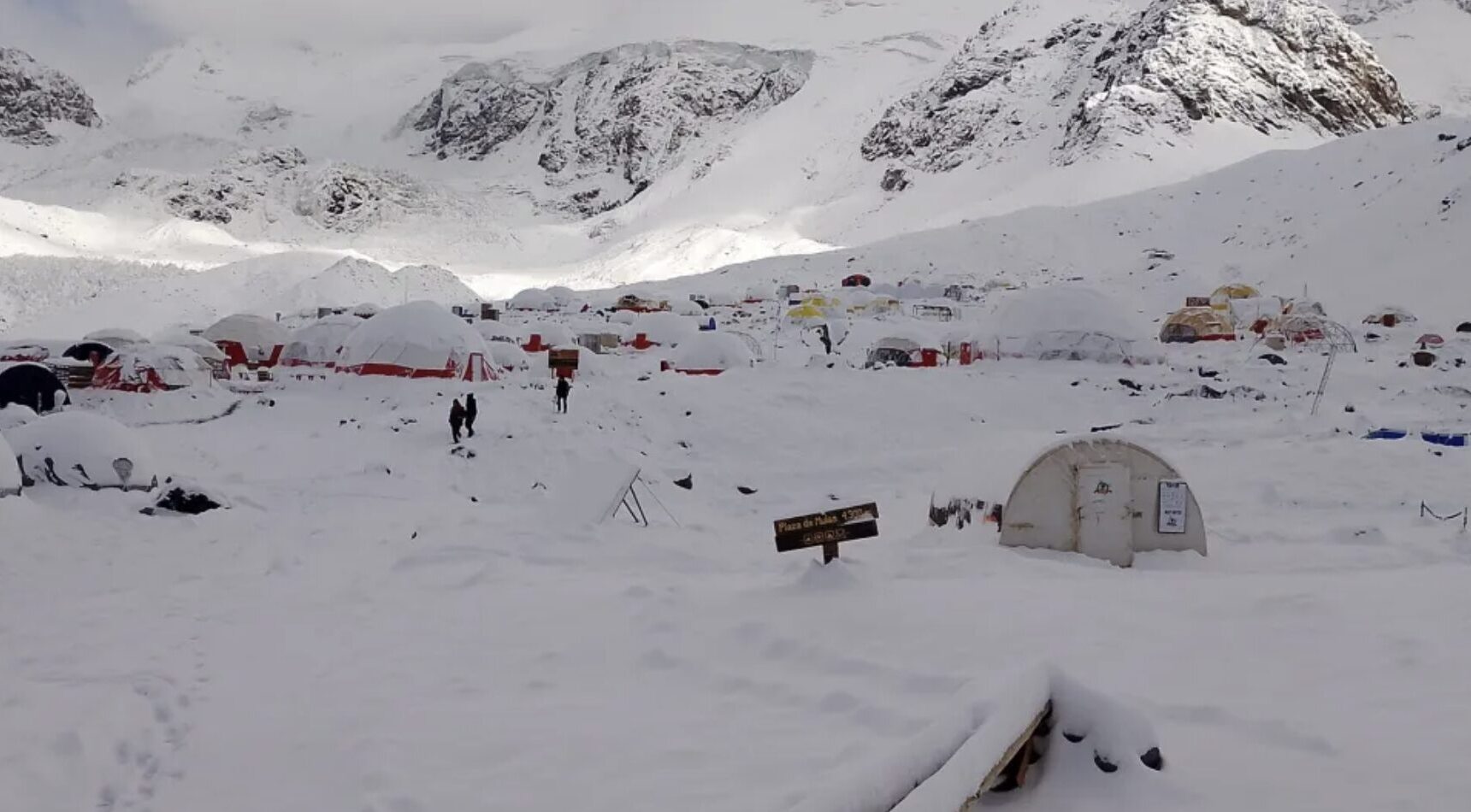
The Aconcagua climbing season is approaching, but the threat of unstable conditions linked to this year’s superniño is causing headaches for expedition operators, guides, climbers, and rescue teams.
Temperatures on the surface of the Pacific Ocean are so high that the weather phenomenon usually known as El Niño (the boy) has become a superniño for 2026. Warm, wet air from the ocean can result in massive precipitation inland, and for Aconcagua — South America’s highest peak — that means lots of snow.
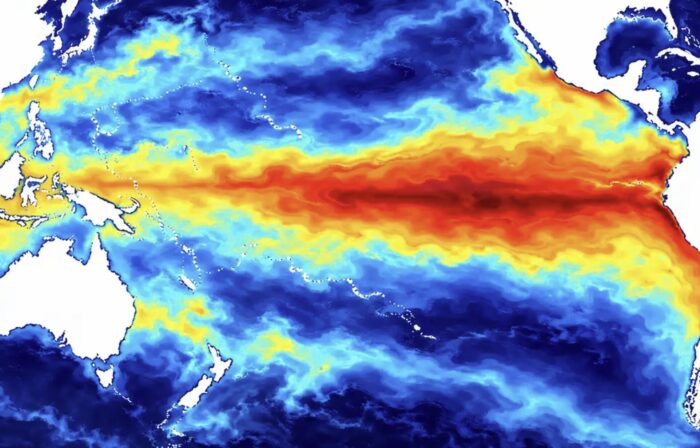
A graphic illustrating increasing temperatures in the Pacific Ocean.
Superboy is here
Argentina’s meteorological service forecasts a colder, more humid spring than usual, both in coastal areas and in Patagonia, the location of Aconcagua. Authorities in Argentina’s mountain province of Mendoza are issuing weather alerts that warn of flooding and intense snow. Several mountain passes are closed and neighboring Chile is also enduring intense rain and snowfall. The webcams at Portillo ski resort, 27km from Aconcagua, show winter-like images.
The effects of the superniño may unfold over several months. It will surely change conditions in mountain areas by the time the Aconcagua season starts in November for trekking groups, and on December 1 for climbing expeditions. Local guiding companies fear that snow-covered trails and flooded rivers may isolate lower camps. Further up the mountain, climbers might have to progress on icy ramps instead of scree slopes, and deal with significant avalanche risk.
Delayed opening dates
Given the circumstances, park authorities will wait before announcing when the season will begin. Local media suggest either December 5 or December 15 as tentative opening dates.
“The [super] niño will reach its maximum intensity in December, when the temperature of the Central Pacific Ocean will be +2.7°C higher than normal,” meteorologists told La Gaceta.
You can see more on the 2026 superniño here: